
On March 25, 2022, the Center for Buddhist Studies at Fo Guang University hosted an expert lecture as part of its "Buddhism and Psychotherapy" research project. The event took place at Yunshuixuan, featuring Dr. Chen Junlin, Director of the Mental Health Center at Far Eastern Memorial Hospital, who presented on the topic "A Dialogue between Jungian Psychology, Sandplay, and Buddhist Culture." The session was moderated by Prof. Guo Chao-Shun, General Director of the research project and Dean of the College of Buddhist Studies. Approximately thirty faculty members and students from the Department of Buddhist Studies, Department of Psychology, and Department of Religious Studies, as well as guests from outside the university, attended the event.
The dialogue began with practical experience in "Sandplay Therapy." Dr. Chen explained that Sandplay is a tool based on Jungian psychology. He noted that Sandplay allows for a flow between consciousness and the unconscious. The therapist makes every effort not to intervene or direct, allowing the client to unfold their own unconscious world within the sand tray. This creative process is the client's journey toward "individuation"—becoming gradually mature and independent. On-site, Dr. Chen arranged a sandbox and objects, inviting a volunteer to demonstrate the healing process between a therapist and a client. In just a few minutes, the room entered a state of non-intrusive, quiet, and observant companionship. Subsequently, Dr. Chen asked the audience, "What did you see?" and "What did you associate with it?" guiding everyone to experience the method of "Free Association." Not only the volunteer but also the observers entered a state of exchange between individual consciousness and the unconscious, gradually stepping into the flow of the collective unconscious.
Next, Dr. Chen introduced the autobiography of Carl Jung, The Red Book. He explained that this school of thought was built upon Jung's own experiences of exploring the unconscious. This discovery was not unique to Jung; it had long existed in the East, visible in Eastern philosophy, Taoism, Zen practice, deities, alchemy, and Yin-Yang thought. This was undoubtedly an important milestone in Jung's construction of the collective unconscious, presented through culture, mythology, and symbols. Dr. Chen introduced concepts and methods such as "Active Imagination," "Dreams," "Complexes," "Archetypes," "Shadow," "Anima and Animus" (Yin and Yang), and the "Self." Using the prompt "What do you associate with Father/Mother?", he let the audience experience "Active Imagination." Based on the responses, he explained Yin/Yang traits. Using the example of disliking a certain type of person in daily life, he introduced the influence of the "Shadow." By explaining Jungian concepts through life events, he illustrated the healing goal of the Jungian school: emphasizing human wholeness and the balance of Yin and Yang. Dr. Chen then used early, middle, and late-stage sand trays of clients to visualize the process of a person transforming into an independent and complete individual.
The dialogue was further expanded by Dean Guo Chao-Shun, who provided an integrative comparison. He touched upon the similarity of the "constantly changing mind" versus the difference of "no specific 'I'," and noted that "Buddhism tends to suppress/control imagination, whereas Jung encourages active imagination." He also discussed how mythology in Buddhism primarily elucidates Buddhist views on reincarnation, dependent origination, and non-self. This brought the dialogue to a more comprehensive perspective, deepening Dr. Chen’s connection to the Buddhist concept of "Ignorance" (Avidya). Dr. Chen mentioned that clients often fall into cyclic suffering because they are unaware and lack recognition of their condition, which echoes the Buddhist truth that suffering begins with ignorance.
During the Q&A, Prof. Chen Yi-Biao of the Department of Buddhist Studies and Prof. Lin Wei-Lun of the Department of Psychology raised questions regarding practical experience, such as "Is the unique phenomenon of the 'Earth God' (Tu Di Gong) or an Earth God archetype visible in Taiwanese people clinically?" and "Is Sandplay applicable to Borderline Personality Disorder?" Dr. Chen responded with personal experiences and extended the discussion to symbolic similarities in other religions and tribes. The entire dialogue wove back and forth between the individual, the collective, unique cultures, and shared cultural similarities.
At the conclusion of the event, Dean Guo summarized the core essence of healing: the use of different languages and methods is ultimately to allow the sufferer to express unspeakable suffering. This is exactly what both Buddhism and Psychology aim to do for those who suffer. This lecture, a dialogue encompassing consciousness, the unconscious, and collective consciousness, concluded under the long-awaited sunlight, shining upon everyone present like the light of Buddha-nature.
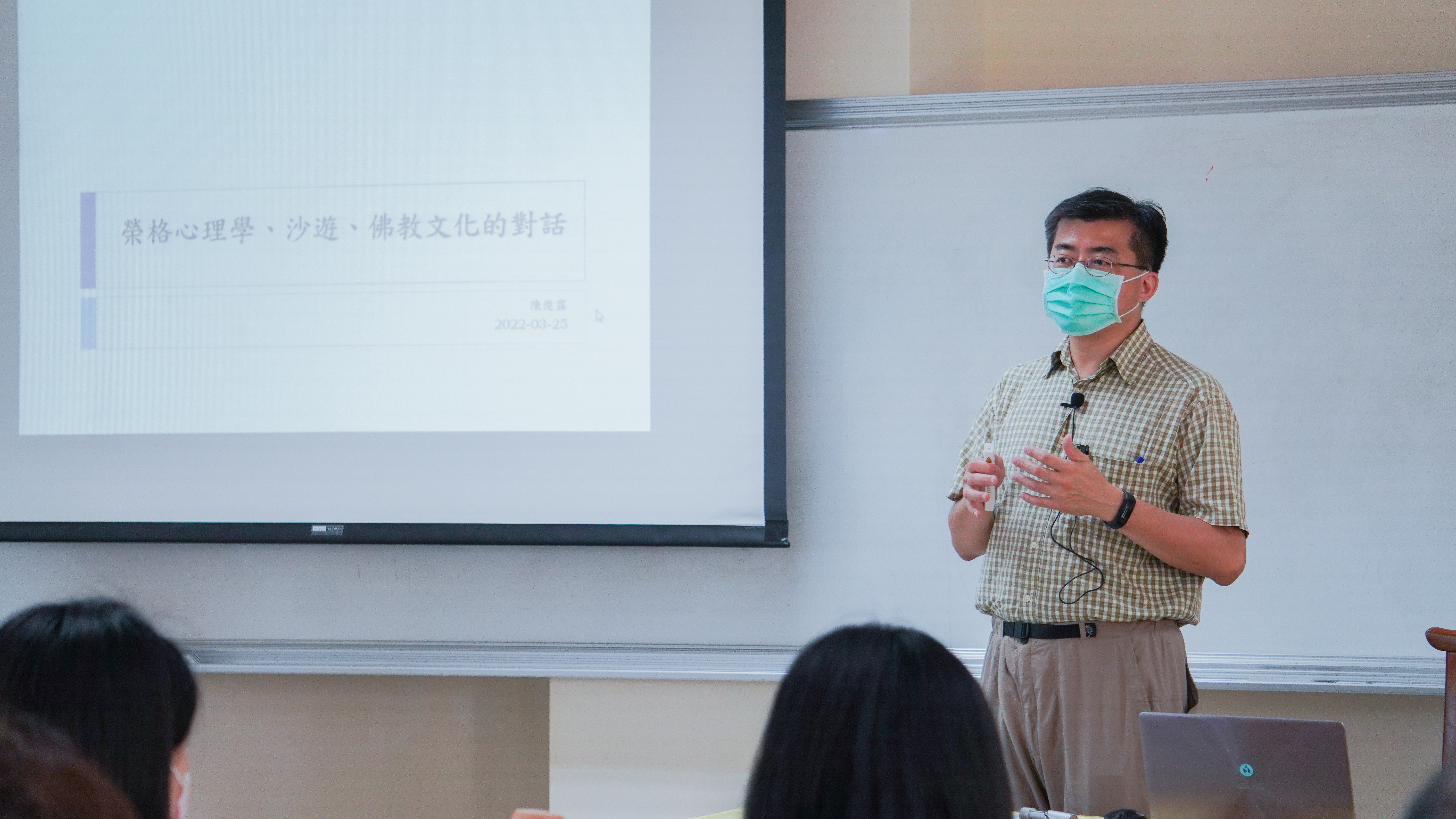
Dr. Chen Junlin, Director of the Mental Health Center at Far Eastern Memorial Hospital, delivering the lecture "A Dialogue between Jungian Psychology, Sandplay, and Buddhist Culture."
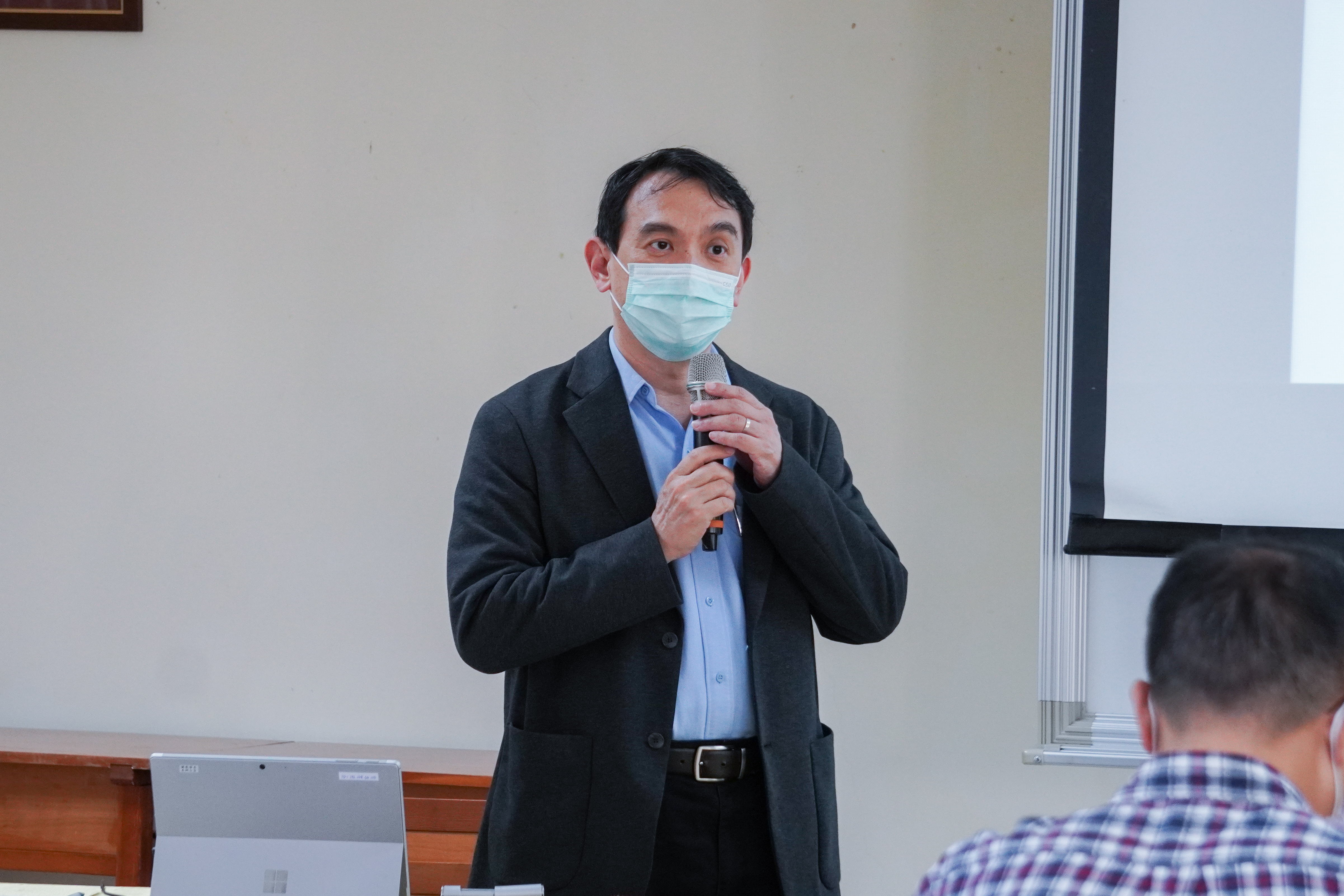
Moderated by Prof. Guo Chao-Shun, General Director of the research project and Dean of the College of Buddhist Studies.
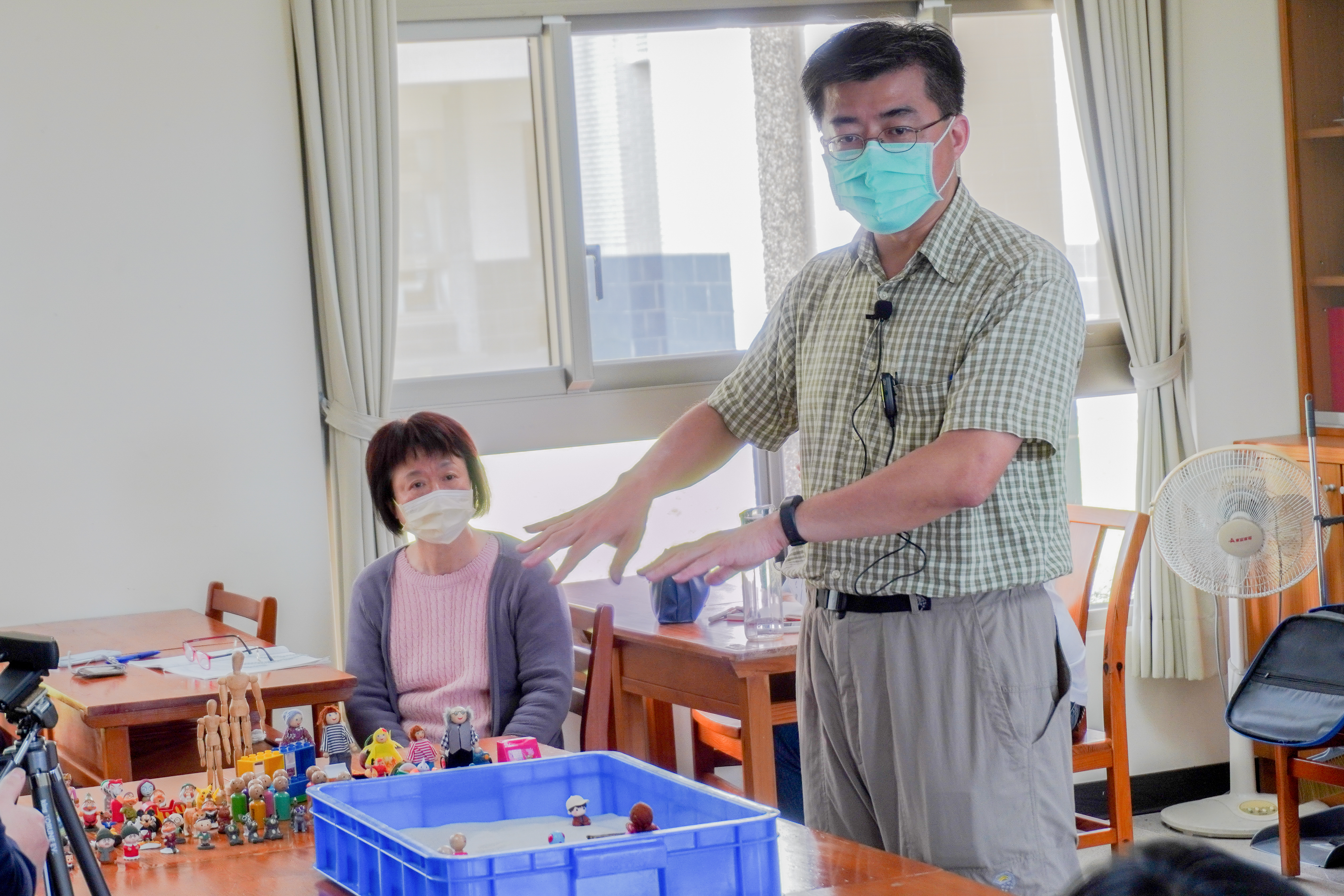
Dr. Chen demonstrating the therapeutic process between a therapist and a client using a sandbox and objects.

The lecture attracted professionals from various fields. Pictured is Ven. Zhen Yi, Director of the Xingfu Children's Home, engaging in an active exchange with the speaker.

The dialogue wove back and forth between the individual, the collective, unique cultures, and shared cultures. Pictured is Prof. Chen I-Biao of the Department of Buddhist Studies.
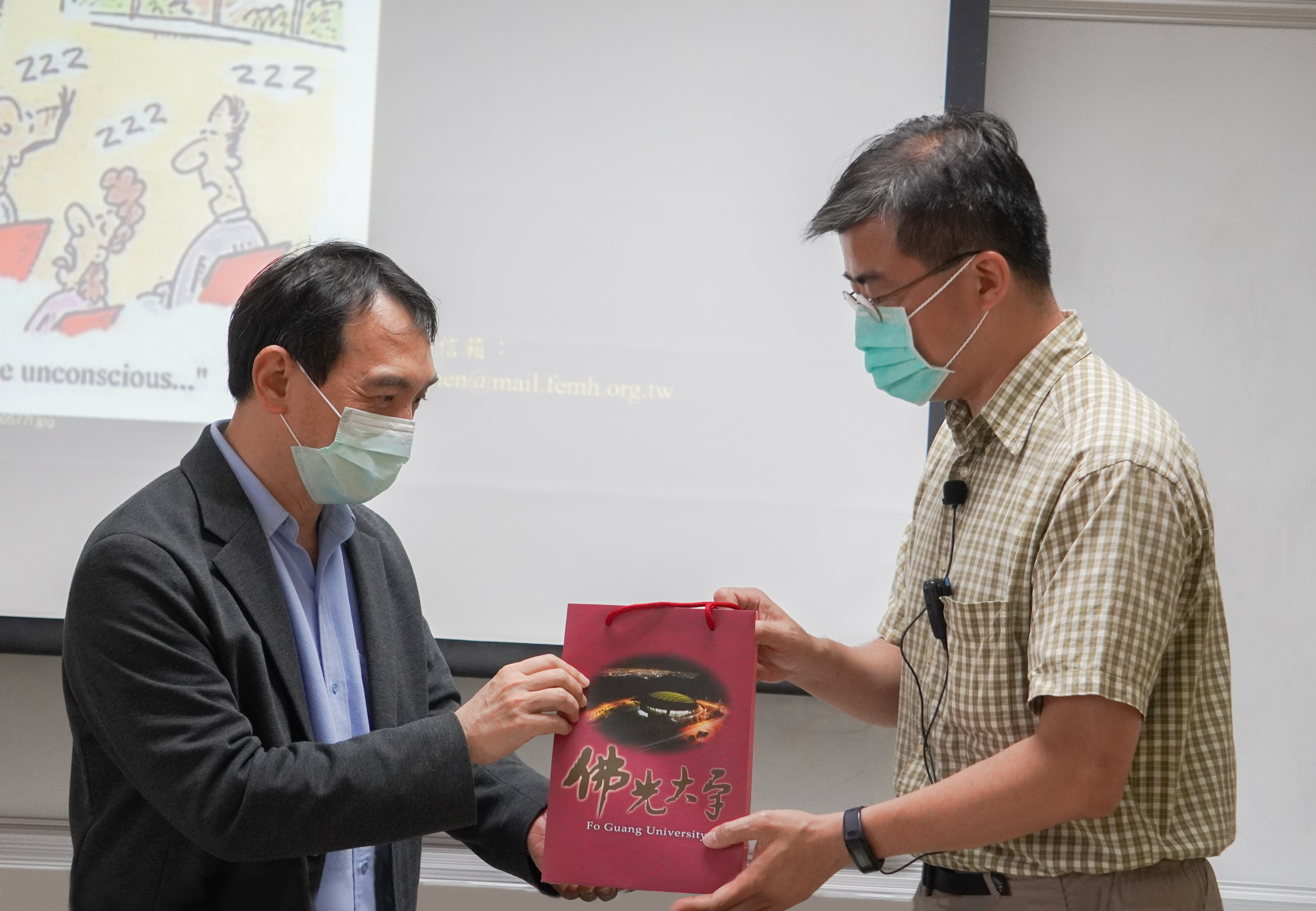
Prof. Guo Chao-Shun presenting a token of appreciation to the speaker, Dr. Chen, on behalf of the Research Center.

Approximately thirty faculty members, students, and guests from the Department of Buddhist Studies, Department of Psychology, Graduate Institute of Religious Studies, and outside the university attended the event.