
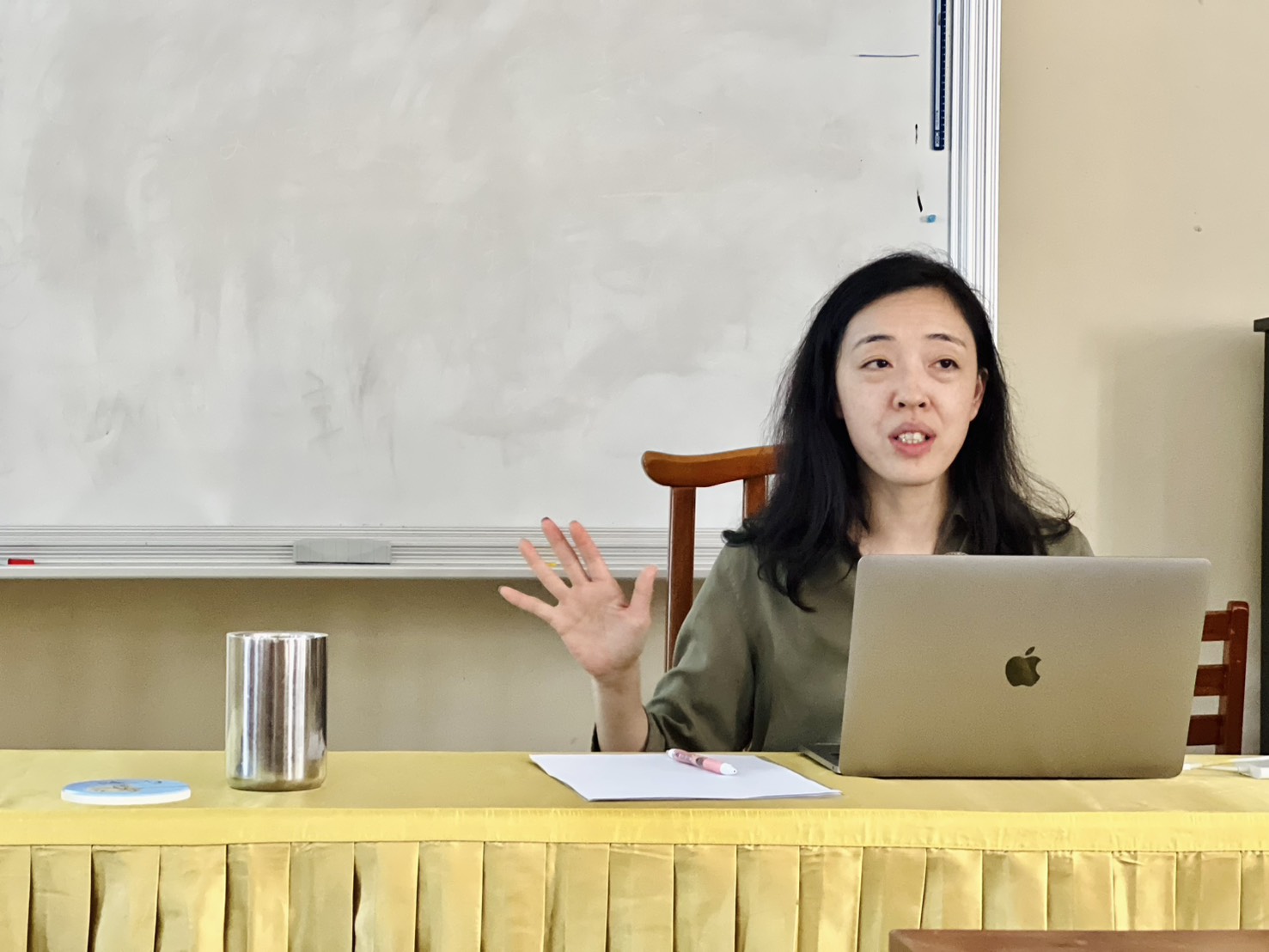
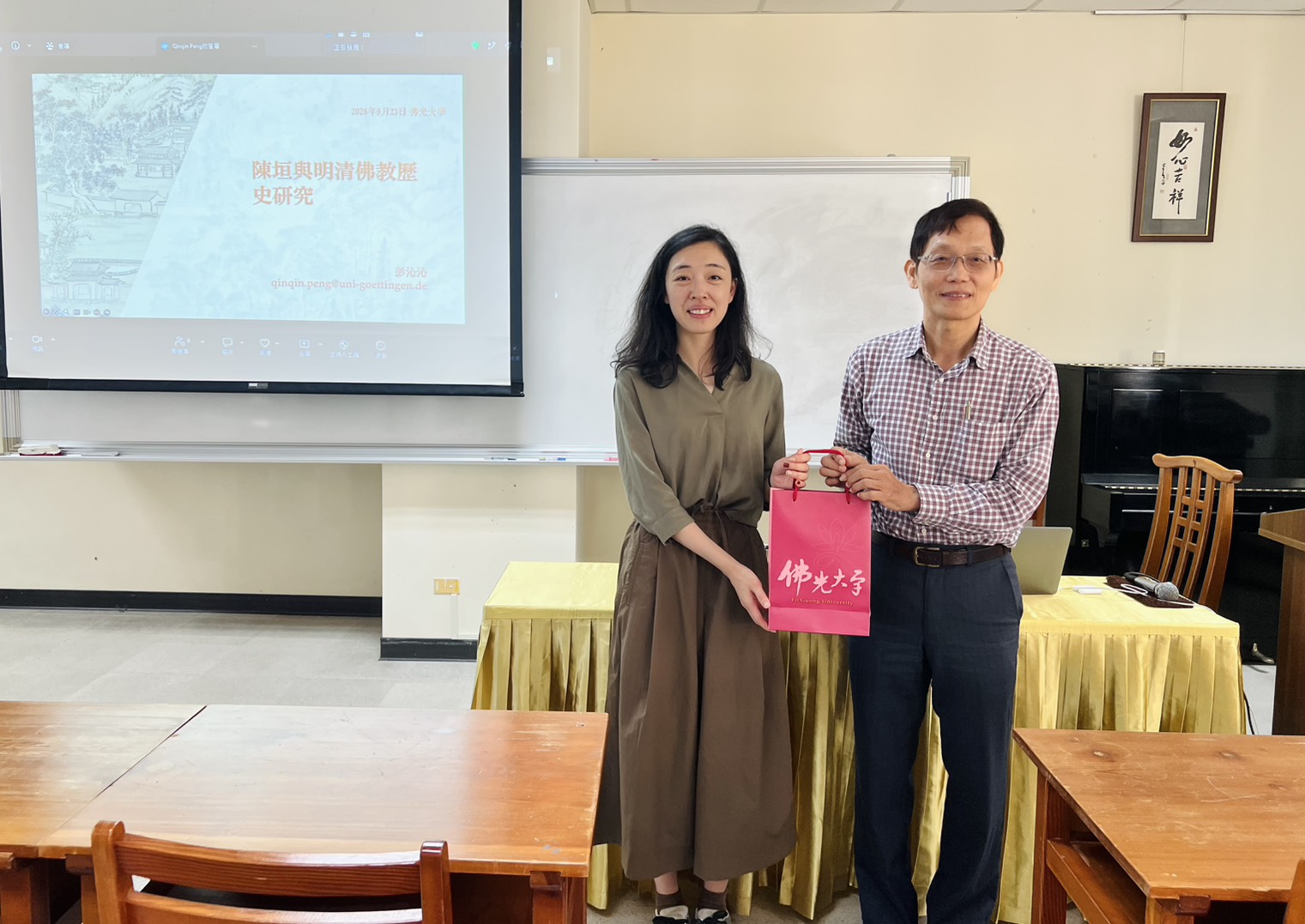
On September 23, 2026, the Center for Buddhist Studies at Fo Guang University hosted a session of its International Distinguished Scholars Lecture Series, inviting Assistant Professor Qinqin Peng of the Department of East Asian Studies at the University of Göttingen, Germany, to deliver a lecture titled “Chen Yuan and Modern Historical Research on Ming-Qing Buddhism.” Taking the formation of modern Buddhist historiography as its background, the lecture focused on Chen Yuan’s pioneering contributions to the study of Ming-Qing Buddhist history, while also examining his historical methods, use of sources, and awareness of religious studies.
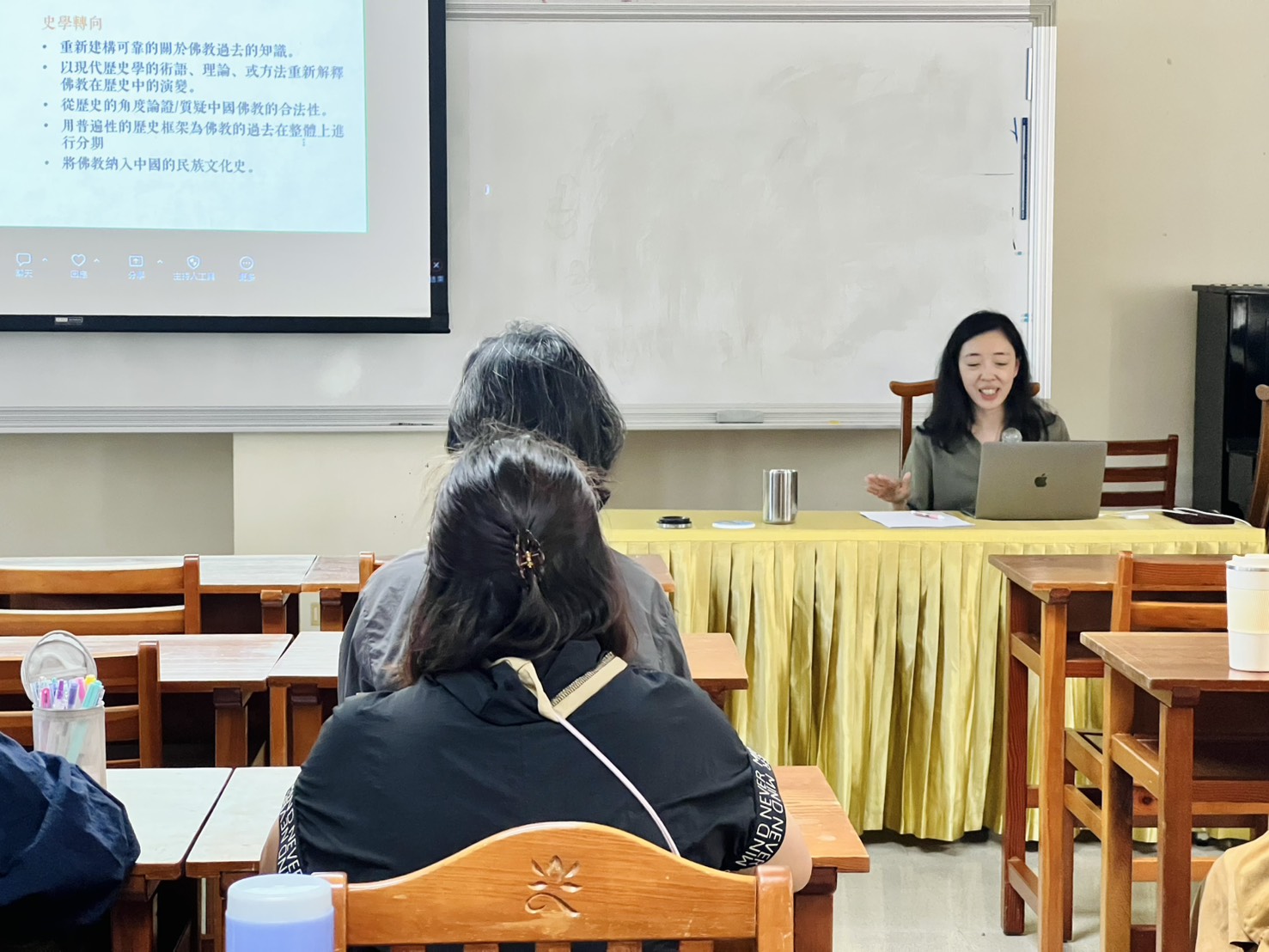
Assistant Professor Peng first pointed out that the rise of modern Buddhist historiography was closely connected to the historiographical turn of the twentieth century. Scholars began to reconstruct reliable knowledge of Buddhism’s past and to reinterpret the historical development of Buddhism in China through the terminology, theories, and methods of modern historical studies. In this context, Buddhism was no longer treated solely as an object of internal religious narration, but was also incorporated into discussions of Chinese national cultural history, social history, and intellectual history.
The lecture paid particular attention to Chen Yuan’s A Study of Buddhism in Yunnan and Guizhou during the Late Ming and A Record of Monastic Disputes in the Early Qing. The former focuses on the flourishing of Buddhism in Yunnan and Guizhou during the late Ming and demonstrates Chen Yuan’s method of “using recorded sayings as historical sources,” through which he explored the relationship between religion and culture. The latter examines disputes within the monastic community in the early Qing concerning doctrine, moral integrity, and reputation, revealing the complex relationship between religion and politics, which, though not identical, were often difficult to separate completely.
Assistant Professor Peng further explained that Chen Yuan placed great emphasis on the recovery of lost texts and the use of new historical materials. He likened the discovery of new materials to “mining copper from the mountains,” stressing that what is often described as “unverifiable” does not necessarily mean that no history exists. Rather, it may indicate that records are lacking, that they have not been transmitted, or that they have not yet been seen by researchers. For this reason, transmission records, recorded sayings, monastic biographies, inscriptions, and non-Buddhist sources may all serve as important materials for reconstructing Buddhist history.
In addition, Chen Yuan emphasized that while the study of Buddhist doctrine should be grounded in Buddhist scriptures, the study of Buddhist history must also be corroborated through sources outside the Buddhist tradition. Such non-Buddhist sources can supplement gaps in Buddhist historical records, verify occasional errors, and serve as comparative evidence alongside Buddhist materials, thereby situating Buddhist history within a broader historical and social context. Assistant Professor Peng noted that Chen Yuan’s scholarship became a “standard” precisely because of his rigorous handling of sources, careful organization, and sharp historical awareness.
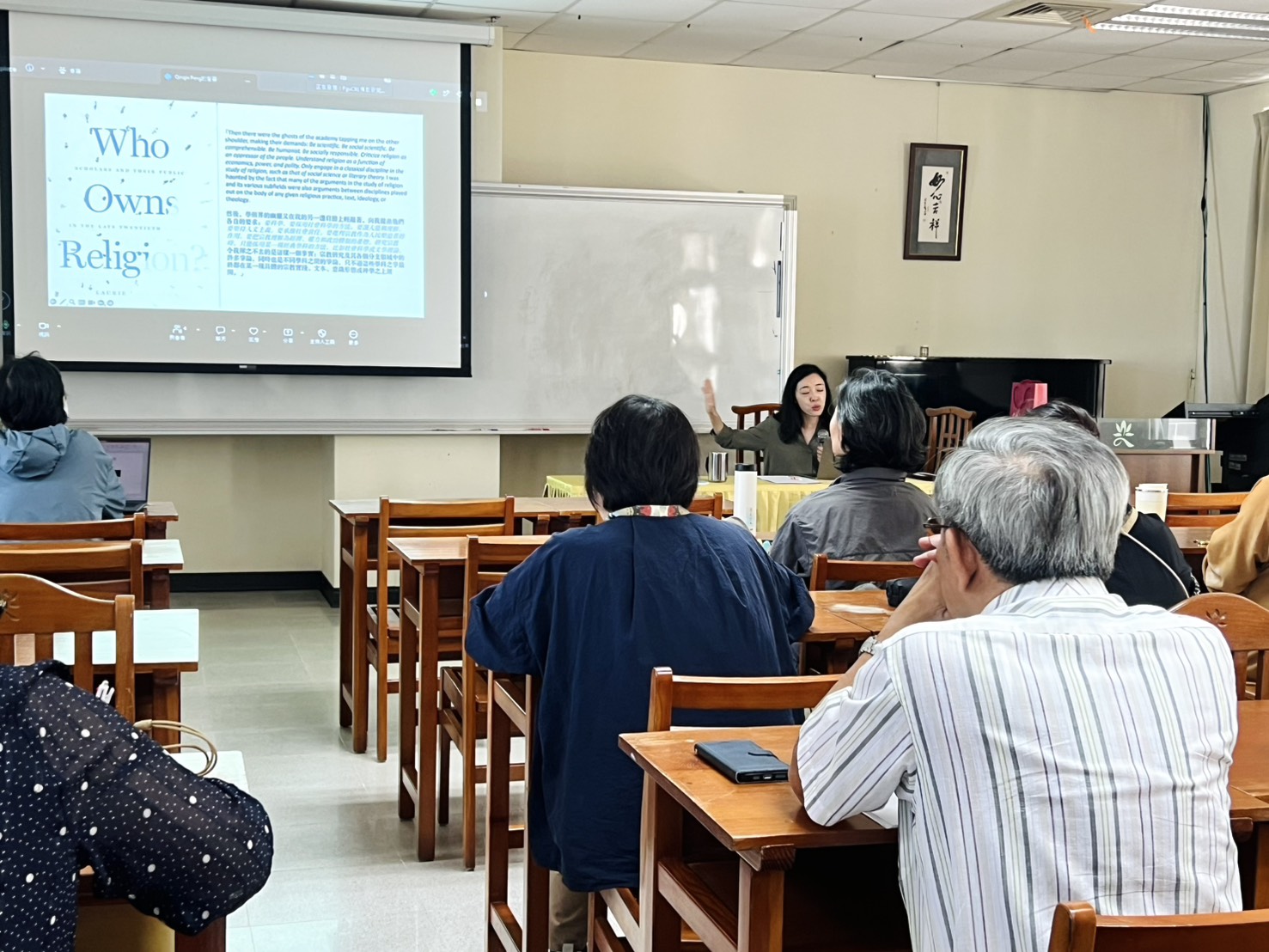
Through the discussion of Chen Yuan and modern historical research on Ming-Qing Buddhism, the lecture guided faculty and students to reconsider the formation of modern Buddhist historiography, the material foundations of Ming-Qing Buddhist studies, and the question of internal and external perspectives in the study of religion.

Assistant Professor Peng first pointed out that the rise of modern Buddhist historiography was closely connected to the historiographical turn of the twentieth century. Scholars began to reconstruct reliable knowledge of Buddhism’s past and to reinterpret the historical development of Buddhism in China through the terminology, theories, and methods of modern historical studies. In this context, Buddhism was no longer treated solely as an object of internal religious narration, but was also incorporated into discussions of Chinese national cultural history, social history, and intellectual history.
The lecture paid particular attention to Chen Yuan’s A Study of Buddhism in Yunnan and Guizhou during the Late Ming and A Record of Monastic Disputes in the Early Qing. The former focuses on the flourishing of Buddhism in Yunnan and Guizhou during the late Ming and demonstrates Chen Yuan’s method of “using recorded sayings as historical sources,” through which he explored the relationship between religion and culture. The latter examines disputes within the monastic community in the early Qing concerning doctrine, moral integrity, and reputation, revealing the complex relationship between religion and politics, which, though not identical, were often difficult to separate completely.
Assistant Professor Peng further explained that Chen Yuan placed great emphasis on the recovery of lost texts and the use of new historical materials. He likened the discovery of new materials to “mining copper from the mountains,” stressing that what is often described as “unverifiable” does not necessarily mean that no history exists. Rather, it may indicate that records are lacking, that they have not been transmitted, or that they have not yet been seen by researchers. For this reason, transmission records, recorded sayings, monastic biographies, inscriptions, and non-Buddhist sources may all serve as important materials for reconstructing Buddhist history.
In addition, Chen Yuan emphasized that while the study of Buddhist doctrine should be grounded in Buddhist scriptures, the study of Buddhist history must also be corroborated through sources outside the Buddhist tradition. Such non-Buddhist sources can supplement gaps in Buddhist historical records, verify occasional errors, and serve as comparative evidence alongside Buddhist materials, thereby situating Buddhist history within a broader historical and social context. Assistant Professor Peng noted that Chen Yuan’s scholarship became a “standard” precisely because of his rigorous handling of sources, careful organization, and sharp historical awareness.
Through the discussion of Chen Yuan and modern historical research on Ming-Qing Buddhism, the lecture guided faculty and students to reconsider the formation of modern Buddhist historiography, the material foundations of Ming-Qing Buddhist studies, and the question of internal and external perspectives in the study of religion.