
(Fo Guang University, Center for Buddhist Studies/Jiaoxi, Yilan)
The Center for Buddhist Studies' Buddhism & Psychology Interdisciplinary Collaboration was inaugurated by its first colloquium focused on "The Effectiveness and Limitations of Mindfulness-Based Therapies" was hosted at Yunshuixuan on Oct. 13, 2020 with simultaneous video conferencing and livestream. Prof. Guo Chaoshun of the Dept. of Buddhist Studies moderated a dialogue between Prof. Wan Jinchuan, Dean of the College of Buddhist Studies, and Prof. Huang Yulian of the Dept. of Psychology. Other featured guests from the Dept. of Psychology included Dean Prof. Lin Wenying and Dept. Head Lin Weilun and several monastics from the Fo Guang Shan Arts & Culture Initiative. An audience of more than 100 faculty and students from both departments fill the lecture hall.
"Mindfulness-based cognitive therapy is not the suppression of emotions, but the recognition and acceptance of emotions." Prof. Huang Yulian clarified the origins, mechanisms, semantics, and myths of mindfulness-based therapies.
She pointed out that the original intent of mindfulness lies in clinical treatment to help patients alleviate certain psychological issues. Its mechanism involves training an individual to accept stimuli with pure awareness and without judgment, thereby providing an opportunity to respond with wisdom. Prof. Huang also mentioned that Jon Kabat-Zinn, the founder of Western mindfulness-based therapies, views "mindfulness" as a universal human instinct and deliberately stripped it of its specific Buddhist philosophical context to facilitate its universal application.
However, Dean Wan pointed out: "The 'Clear Comprehension' (sampajañña) that immediately follows mindfulness has been neglected." What truly brings well-being is clear comprehension, not mindfulness acting merely as a "sedative." Clear comprehension involves ethics and value judgments, so it cannot simply emphasize "non-judgment" as mindfulness therapies do. Dean Wan further noted that mindfulness is not a universally applicable therapeutic tool. In the 19th century, Westerners translated the Pali word sati as "Mindfulness," giving the term a specific professional connotation. "Mindfulness" was then re-translated back into Chinese as "Zheng Nian" (Right Mindfulness), sparking a trend in the East. However, when mindfulness is decontextualized, combined with commercial interests to exaggerate its efficacy, and when medical evidence of its potential harms is ignored, we must be cautious. While acknowledging the limited effectiveness of Western mindfulness therapies, we must also be aware of their potential drawbacks and ethical issues. Finally, Dean Wan stated that Buddhism does not reject the idea of mindfulness therapies drawing resources from Buddhism for application. However, Buddhist scholars have a responsibility to remind people that true Buddhist mindfulness is not limited to treating illness and relieving stress; its ultimate goal is related to the liberation of life.
The discussion during the session was lively, focusing on the pros and cons of the "decontextualization" of mindfulness therapies. Participants probed the necessity of combining mindfulness therapies with ethical practices and values. They also proposed the possibility of bypassing the specifically colored term "mindfulness" and exploring the intersection of Buddhist studies and psychology through the broader topic of "meditation."
Students attending from the Department of Buddhist Studies, Department of Psychology, and Department of Communications found the event rewarding. One student shared, "As someone with a dual identity as a mindfulness-based stress reduction instructor and a Buddhist studies researcher, this lecture was very beneficial, and I hope it can be held again in the future." Another student remarked, "Through the theme of mindfulness, I understood the commonalities between Buddhist studies and psychology!"
(Text / Ven. Yan Ying, Ven. Zhi Wen; Photos / Zhang Gui-Ju, Ven. Zhi Wen) 2020.10.13
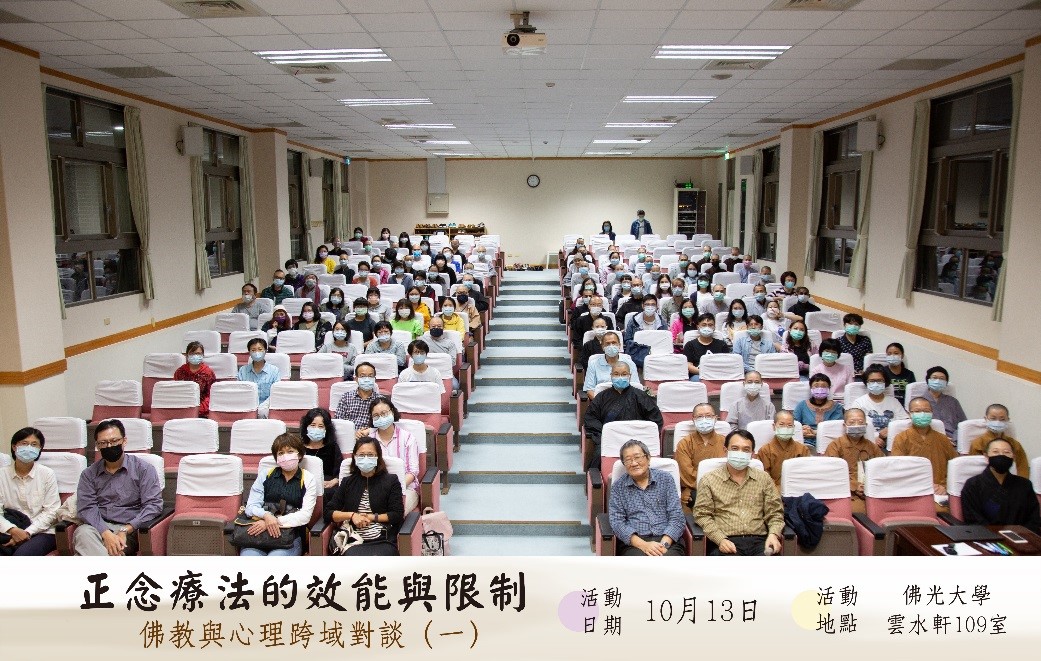
Group photo of the event.
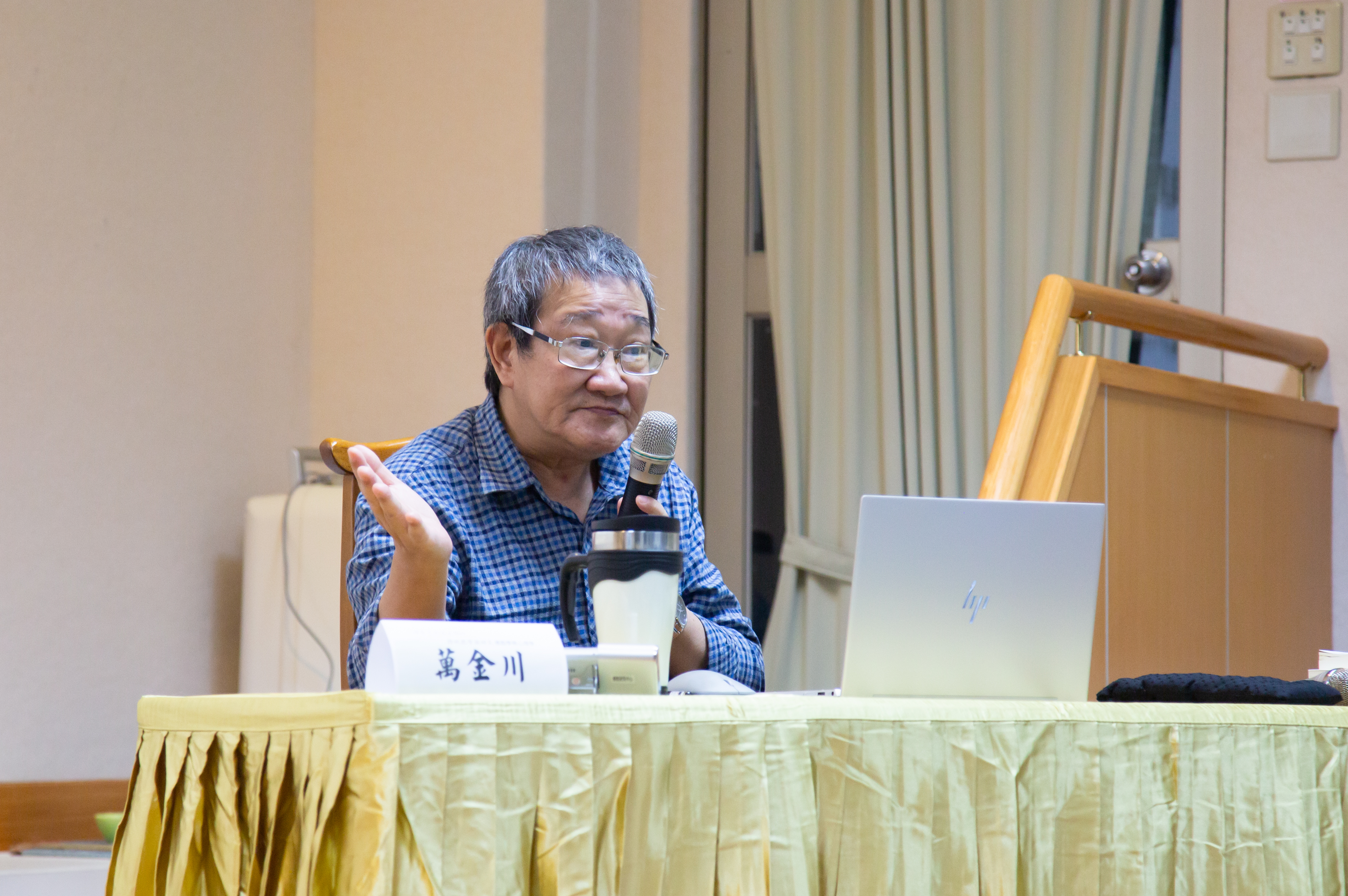

Discussant: Prof. Huang Yu-Lian, Department of Psychology.
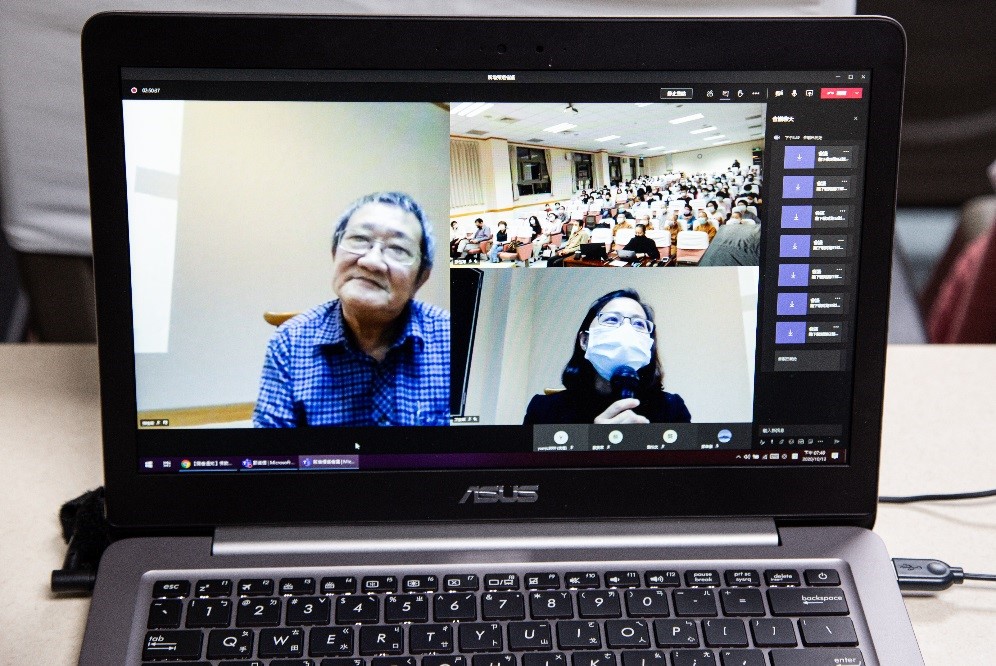
Simultaneous online video conference.

Prof. Guo Chao-Shun, Department of Buddhist Studies (Moderator):
-
Mindfulness can avoid an "immediate reaction" to external stimuli, but it does not necessarily produce a so-called "wise reaction." The key to producing a positive reaction lies in the teaching content that guides the person, which involves specific ideological colors and contextual backgrounds.
-
Kabat-Zinn claims to be influenced by Zen. Zen speaks of "thinking neither of good nor evil" and "a special transmission outside the scriptures." Is this also a form of "decontextualization"?
-
Suggests that instead of using "Mindfulness" with Kabat-Zinn's specific coloring, we could excavate various Buddhist meditation methods—such as counting the breath or walking meditation—to enrich the intersection of Buddhism and psychology.
-
Mindfulness has been overly simplified as merely a method for stress relief.
Prof. Chen, I-biau, Department of Buddhist Studies: Mindfulness allows one to break free from existing reaction patterns, but this does not necessarily mean the response is wise; otherwise, the contemplation of truth would need to be incorporated. Do the training courses for mindfulness-based therapies apply Buddhist practices such as the "Four Foundations of Mindfulness" (Satipatthana)? Especially the "observation of phenomena (dharmas) as non-self."
Prof. Lin Hsin-Yi, Department of Buddhist Studies: Historically, the process of "decontextualization" within Buddhism has never ceased. Therefore, Buddhism should perhaps allow mindfulness to be "decontextualized," but should a bottom line be set? Furthermore, can the goals of ethical practice, liberation, and altruism be allowed to be defined by standpoints outside of Buddhism?
Prof. Chih-mien Adrian TSENG, Department of Buddhist Studies: If one undergoes mindfulness therapy due to the stress of afflictions, does it only solve the immediate problem without preventing future relapse?
Prof. Lin Wen-Ying, Department of Psychology: Whether it is "mindfulness is inseparable from clear comprehension" as spoken of in Buddhism, or "responding to stimuli with wisdom" as mentioned by Prof. Huang, both aim to achieve a meaningful and beautiful life experience. This seems distinct from the cognitive levels of so-called "clear comprehension" or "wisdom."
Prof. Huang Kuo-Chang, Department of Psychology: There needs to be a clarification of the position of mindfulness therapies within psychotherapy, and a clearing up of the definition of "efficacy."
Shih, Chueh-guang, Department of Buddhist Studies: If mindfulness can be used by others to reduce even a little bit of human suffering, Buddhism should hold an affirmative attitude. As for the difference between "decontextualization" and "de-Buddhicization," this could be defined more clearly.