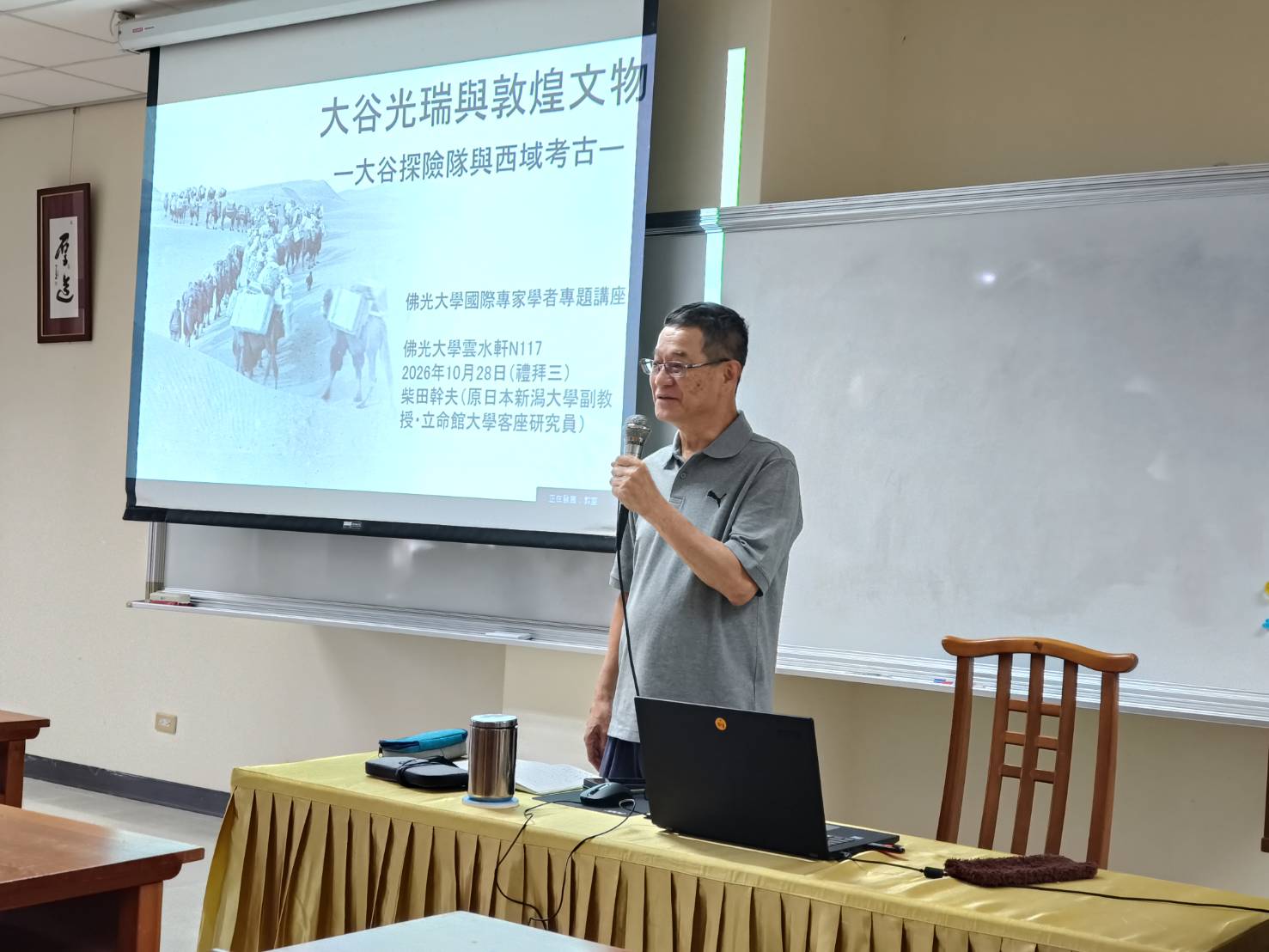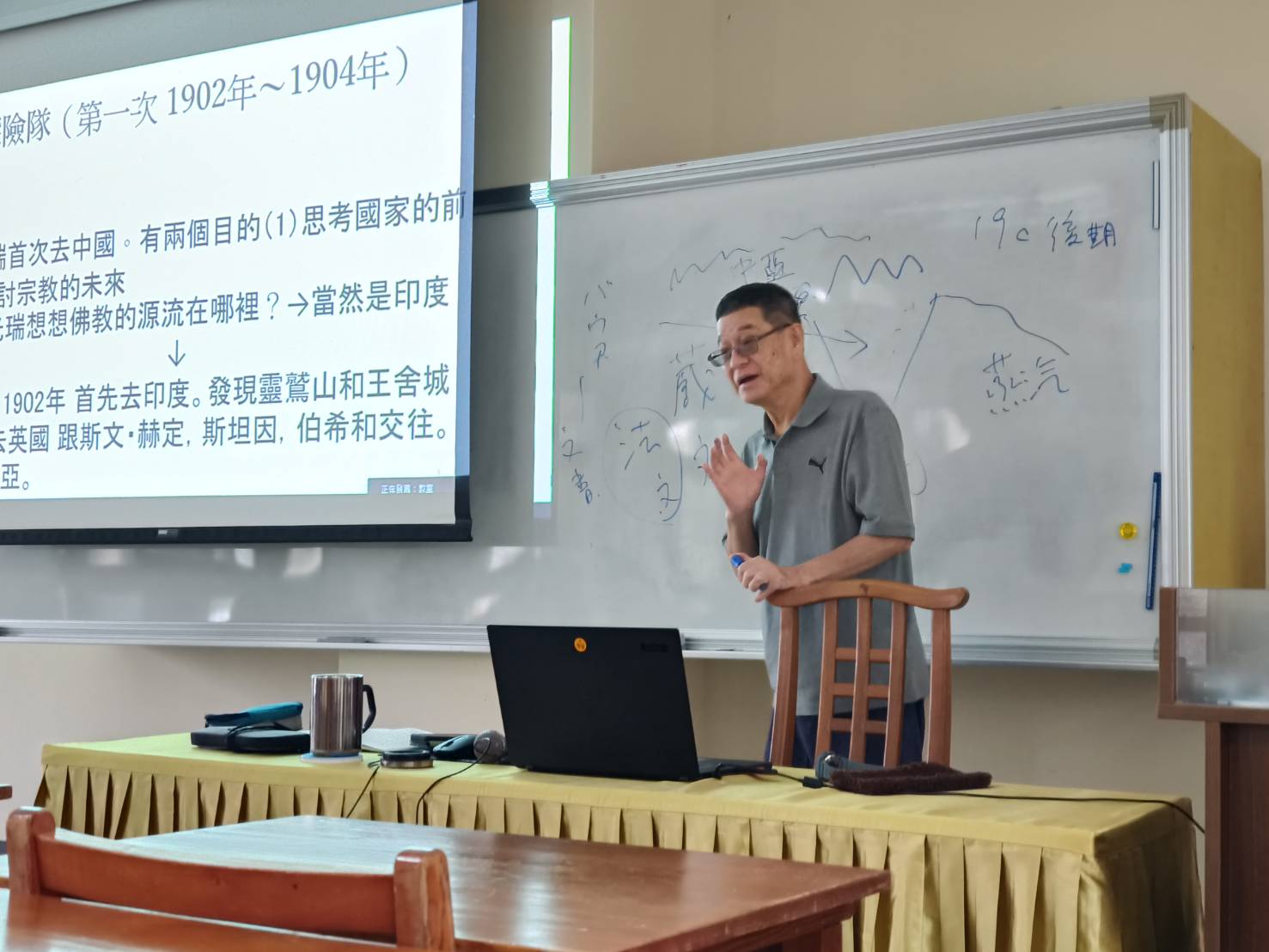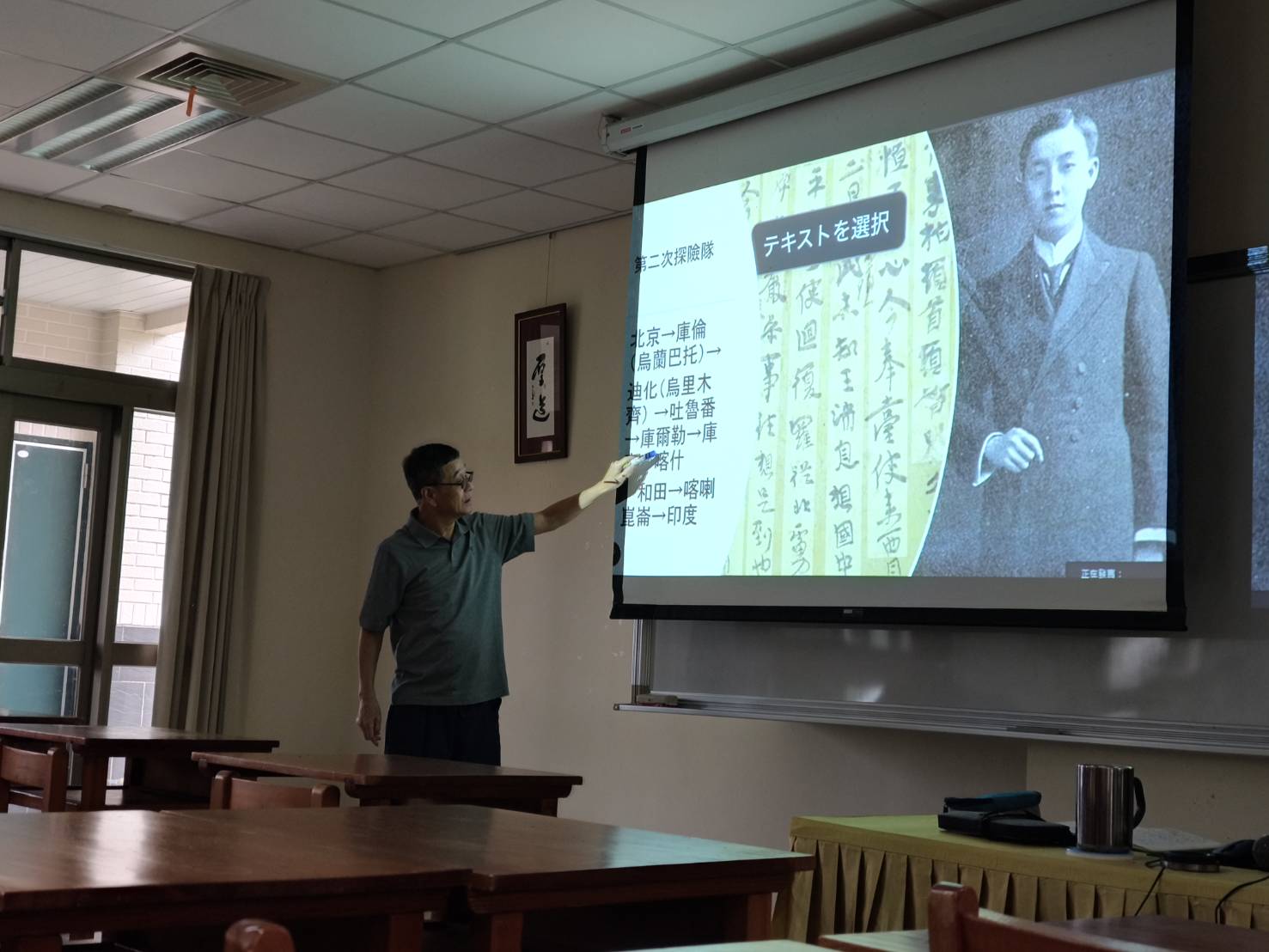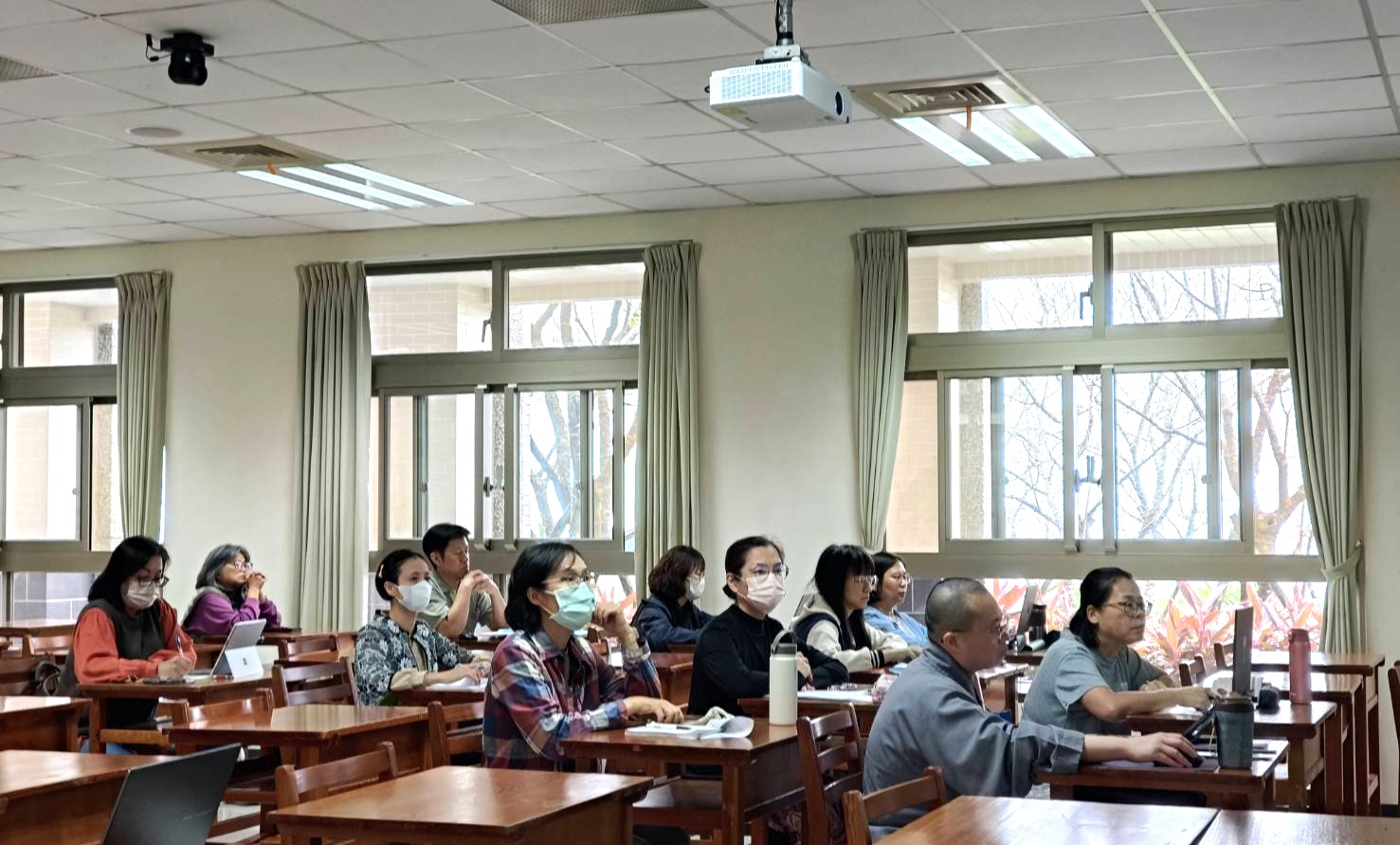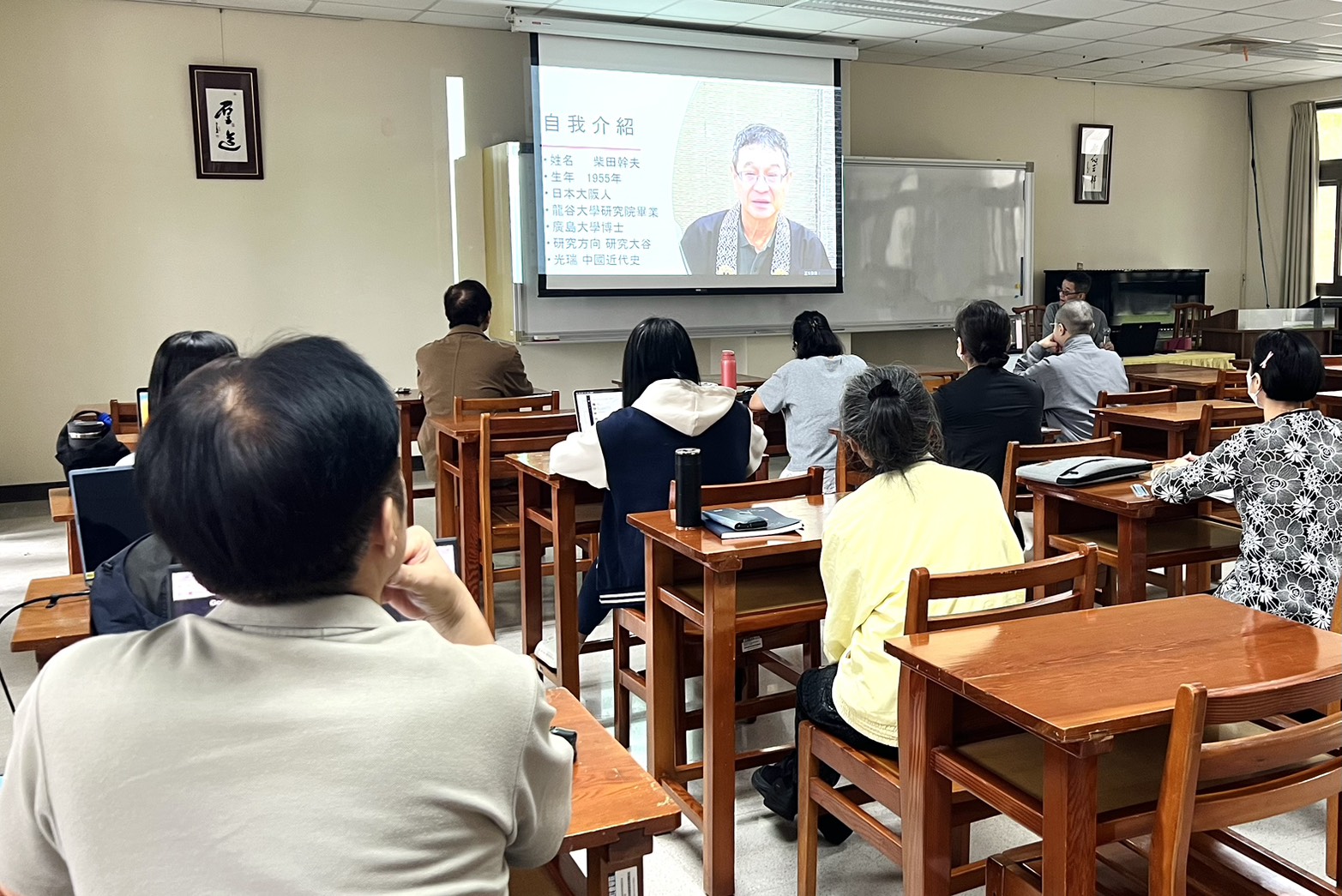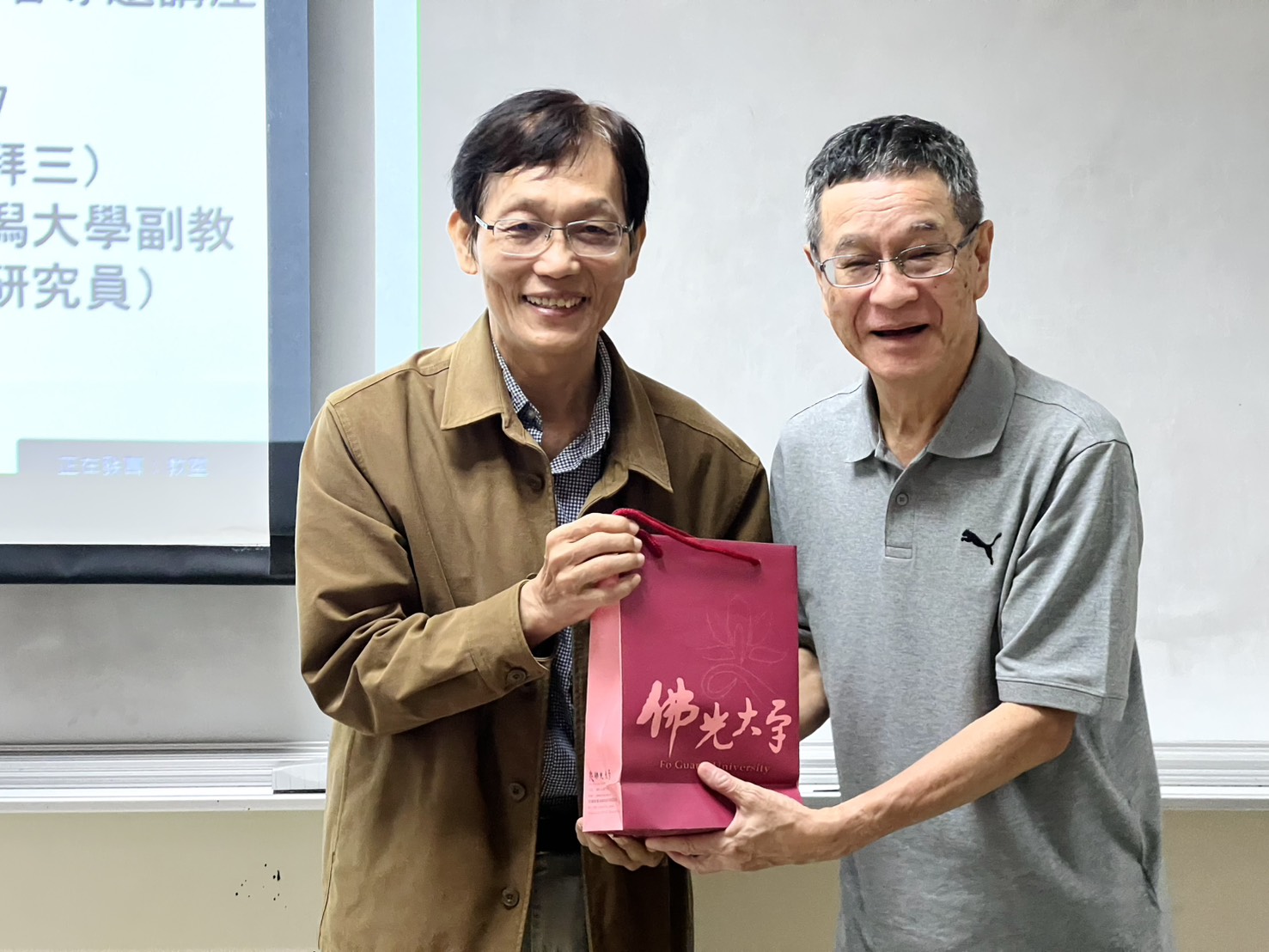

The Center for Buddhist Studies at Fo Guang University held a lecture in its International Experts and Scholars Lecture Series on October 28 in Room N117, Yunshuixuan Hall. The speaker, Professor Shibata Mikio, a scholar of Ōtani Kōzui and former associate professor at Niigata University, spoke on "Ōtani Kōzui and the Dunhuang Artifacts: The Ōtani Expeditions and Archaeology of the Western Regions." Drawing on a wealth of historical photographs and documents, Professor Shibata traced Ōtani's life to take the audience back to the archaeological sites of Central Asia in the early twentieth century, and shed light on this Japanese religious leader's deep ties with China and Taiwan.
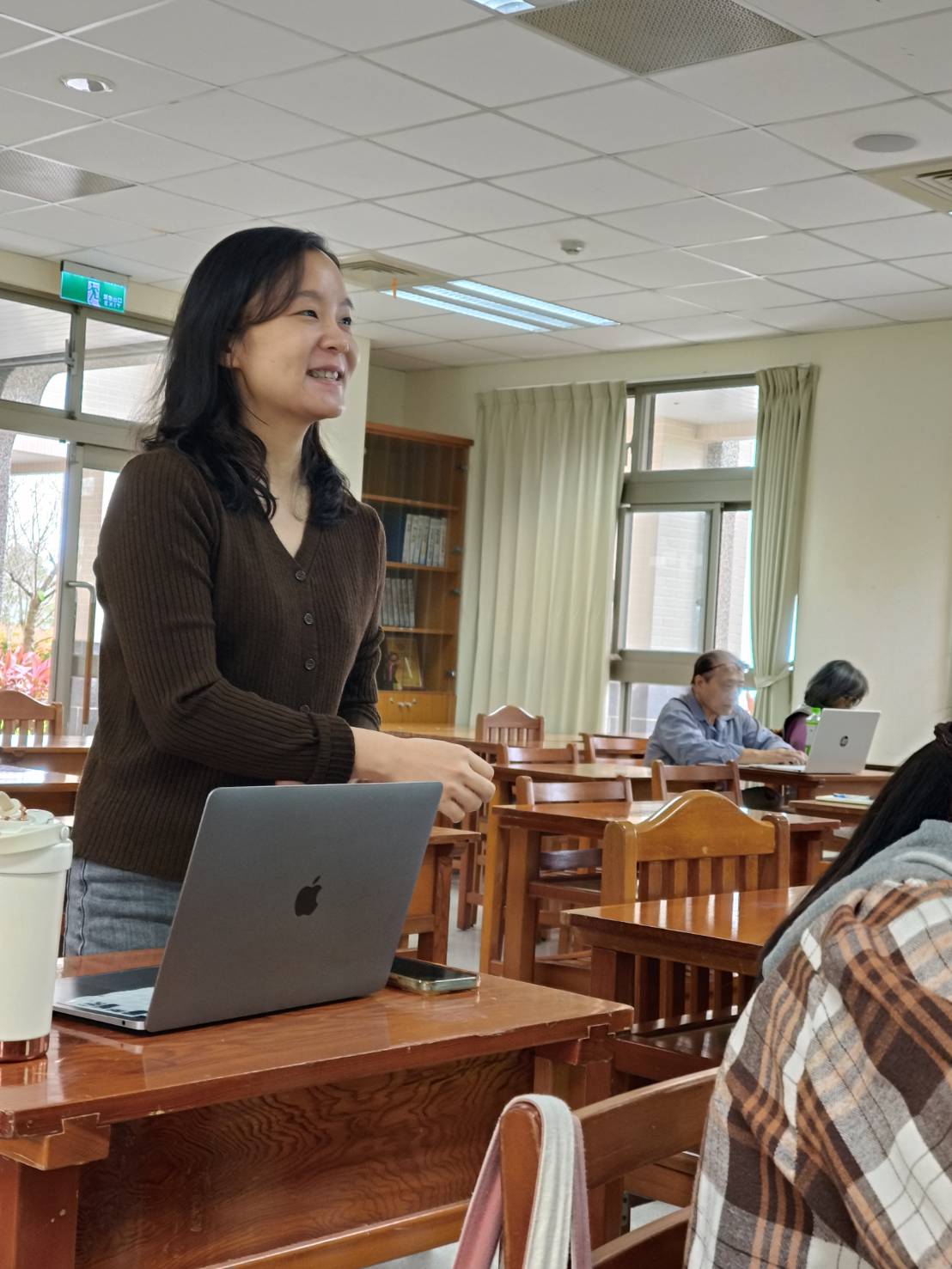
The lecture was moderated by Professor Kan Cheng-tsung of Fo Guang University's Department of Buddhist Studies, who specializes in the history of Taiwanese Buddhism and Sino-Japanese Buddhist exchange. Professor Shibata, born in Osaka in 1955, completed graduate studies at Ryukoku University and holds a doctorate from Hiroshima University. Now a visiting researcher at Ritsumeikan University, he has long studied Ōtani Kōzui and modern Chinese history.
Professor Shibata explained that Ōtani Kōzui (1876–1948) was the 22nd head of the Jōdo Shinshū Hongwanji-ha (Nishi Hongwanji) and a count in the Japanese peerage, yet his outlook extended far beyond religion: he was at once the organizer of the Central Asian expeditions, a supporter of the 1911 Revolution, and a pioneer of tropical agriculture. His first visit to China in 1899, undertaken to reflect on the future of his nation and of religion, led him to ask where Buddhism had come from. He went first to India, where he identified the sites of Vulture Peak and Rājagṛha, and later, after meeting explorers Sven Hedin, Aurel Stein and Paul Pelliot in Britain, resolved to send expeditions to Central Asia.
Turning to their results, Professor Shibata noted that the three expeditions dispatched between 1902 and 1914 reached Turfan, Kucha, Khotan, Loulan and Dunhuang. The second expedition unearthed the valuable Li Bo documents, while the third and largest brought back a great number of Dunhuang manuscripts, Turfan murals and Tang-dynasty mummies. He stressed that the Dunhuang Library Cave, discovered in 1900, held more than 60,000 items in many languages, including not only Buddhist scriptures but also contracts, letters and administrative records, making Dunhuang "not only a treasury of Buddhist history but also a vast archive of social history." These artifacts are now held at the Lüshun Museum, the National Museum of Korea, Ryukoku University and elsewhere.
The lecture also covered Ōtani's connections with Taiwan. Professor Shibata described how Nishi Hongwanji began missionary work in Taipei as early as 1896; the site of its Taipei branch temple has since been restored as a public plaza. In his later years Ōtani devoted himself to developing Taiwan's industries, and the Xiaoyao Garden he established in Kaohsiung in 1940 is today an important cultural heritage site of the city. He also had close ties with Sun Yat-sen, serving as chief adviser to Sun's Guangdong government, and the war-crimes charges brought against him after World War II were dropped through arrangements made by Chiang Kai-shek.
Assessing the expeditions, Professor Shibata argued that Ōtani believed Buddhism should be understood through history and archaeology, and the expeditions put that belief into practice. At the same time, his ideal of "reviving Asia and propagating Buddhism" carried Pan-Asianist overtones and must be viewed with care in the context of modern history.
The lecture brought together religious history, modern history, Taiwanese history and the archaeology of the Western Regions, opening interdisciplinary perspectives for students and faculty. The Center will continue to invite international scholars to the university to deepen academic exchange.
Login Center for Buddhist Studies, FGU