
On May 13, the Center for Buddhist Studies at Fo Guang University (FGU) convened the General Review Meeting for its annual research project, "The Theory and Practice of Buddhism and Psychotherapy." Presided over by Project Director and Dean of the College of Buddhist Studies, Prof. Guo Chao-Shun, the meeting brought together distinguished scholars from FGU, National Chengchi University (NCCU), National Dong Hwa University, and Tzu Chi University to foster an interdisciplinary dialogue between Buddhist studies and modern psychology.
2021 Achievement: A Preliminary Buddhist Psychotherapy Model
The centerpiece of the review was Prof. Guo’s presentation of the "Preliminary Proposal for a Buddhist Psychotherapy Model." This innovative framework redefines the ontological and existential basis of psychotherapy through the lens of Dependent Origination.
A fundamental distinction established in this model is the etiology of distress. Buddhism views human suffering as "Dukkha" (suffering) caused by delusion and karma, rather than as a pathological "Illness." Consequently, the path to healing is categorized into "Self-power" and "Other-power."
Prof. Guo elaborated on the "Self-power" approach via the Threefold Training:
-
Sila (Precepts): Establishes the "Bodily Self," utilizing the essence of precepts to replace the karmic body conditioned by past habits and culture.
-
Samadhi (Concentration): Achieves a "Trans-worldly Self," enabling the practitioner to view the world through a stable, ethical lens similar to Buddhas and Bodhisattvas.
-
Prajna (Wisdom): Deconstructs attachment to forms to realize Non-self, preventing the mental imbalance that can arise from rigid fixation on the "Self."
The group also discussed the Mahayana paradox of practicing altruism while maintaining detachment, and the role of language in healing. Prof. Guo argued for a "Critical Healing Approach to Linguistic Ontology," proposing that while Buddhism advocates abandoning language to reach ultimate truth, it simultaneously uses language as a "skillful means" for salvation. Thus, language should be viewed as a tool for healing rather than a substantial entity.
2022 Outlook: Text, Action, and Somatic Practice
Looking forward, the committee introduced the overarching project for the 2022 academic year: "Text, Action, and Healing: Reading, Observation, and Interpretation of Buddhist Scriptures and Practice Education."
This new phase will pivot toward the classic text, The Awakening of Faith in the Mahayana, and "Action Texts"—specifically the somatic "Practice Education" (Xingmen) at FGU. The interdisciplinary team aims to decode the mechanisms by which students achieve mental transformation through physical practice. Additionally, the team proposed compiling a "Buddhism and Psychology Comparative Dictionary" to standardize terminology and facilitate deeper cross-disciplinary understanding.
Interdisciplinary Dialogue: From Rare Diseases to the Practice of Patience
The meeting facilitated profound exchanges regarding the practical application of Buddhist concepts in clinical settings. Prof. Peng Rong-Bang (Tzu Chi University) and Prof. Lee Wei-Lun (NCCU) expressed enthusiasm for interpreting Eastern texts through phenomenological psychology.
Key topics of discussion included:
-
Reframing Enlightenment: Using the experience of families with rare diseases, scholars drew parallels between the repair of ethical relationships and the transition from "Non-enlightenment" to "Enlightenment." Here, "Enlightenment" (the realization of Suchness) is understood therapeutically as "freedom from suffering."
-
Patience as Therapy: The Buddhist practice of Patience (Ksanti) was analyzed not merely as a moral dogma, but as a psychological transformation method. When individuals acknowledge and fully accept incomprehensible suffering, resistance dissolves, leading to peace. This approach is applicable to both family dynamics and the therapist-client relationship.
-
Child Psychodynamics: Scholars explored interpreting the "Three Subtle and Six Coarse Marks" from The Awakening of Faith through the lens of child developmental psychology.
Upcoming Symposium
The culmination of these research efforts will be presented at the "Healing and Liberation: Dialogues Between Psychology and Buddhist Studies" Academic Symposium.
-
Date: June 10–11, 2022
-
Format: Fully Online
-
Registration: https://cbs.fgu.edu.tw/
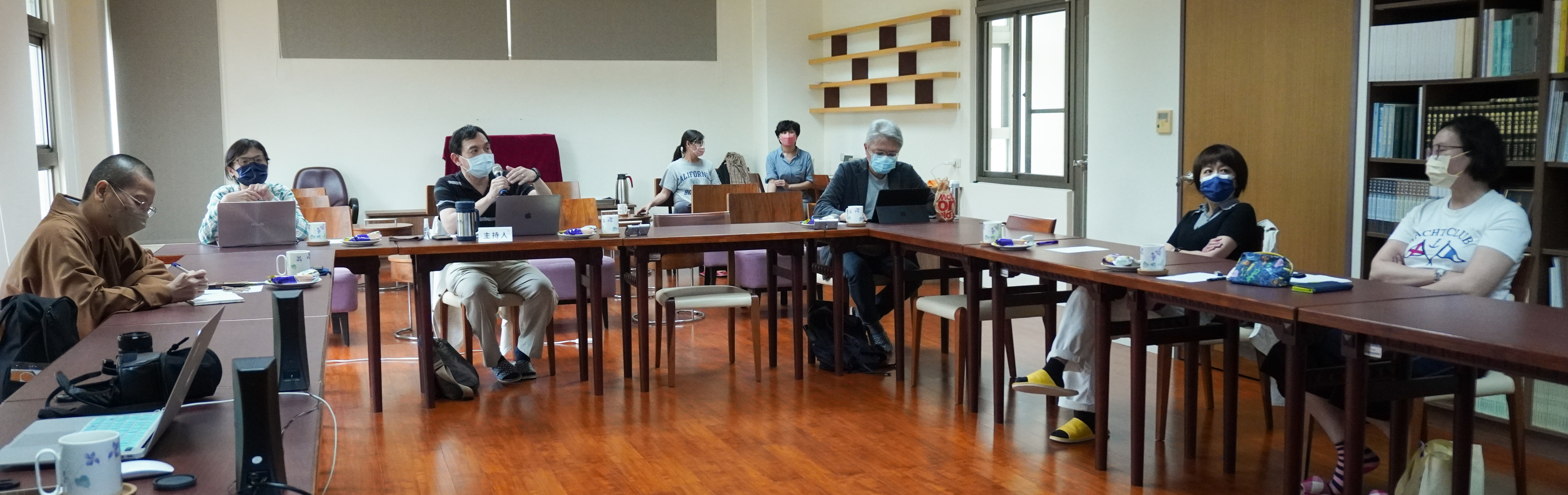
The general review of the academic community for the 2021 academic year "Theory and Practice of Buddhism and Psychotherapy" research project was held on May 13, 2022.
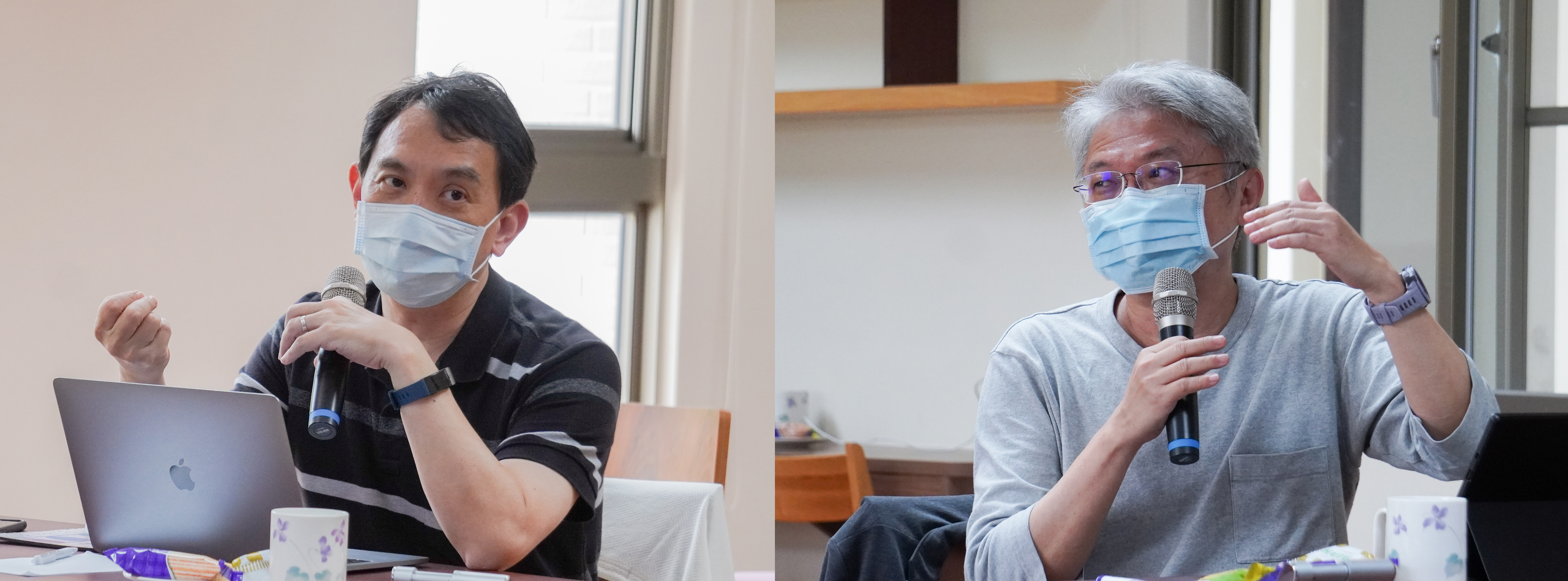
The session was introduced by General Director Prof. Guo Chao-Shun, Dean of the College of Buddhist Studies at Fo Guang University (Left). Prof. Lee Wei-Lun of the Department of Philosophy at National Chengchi University attended and engaged in spirited exchange (Right).
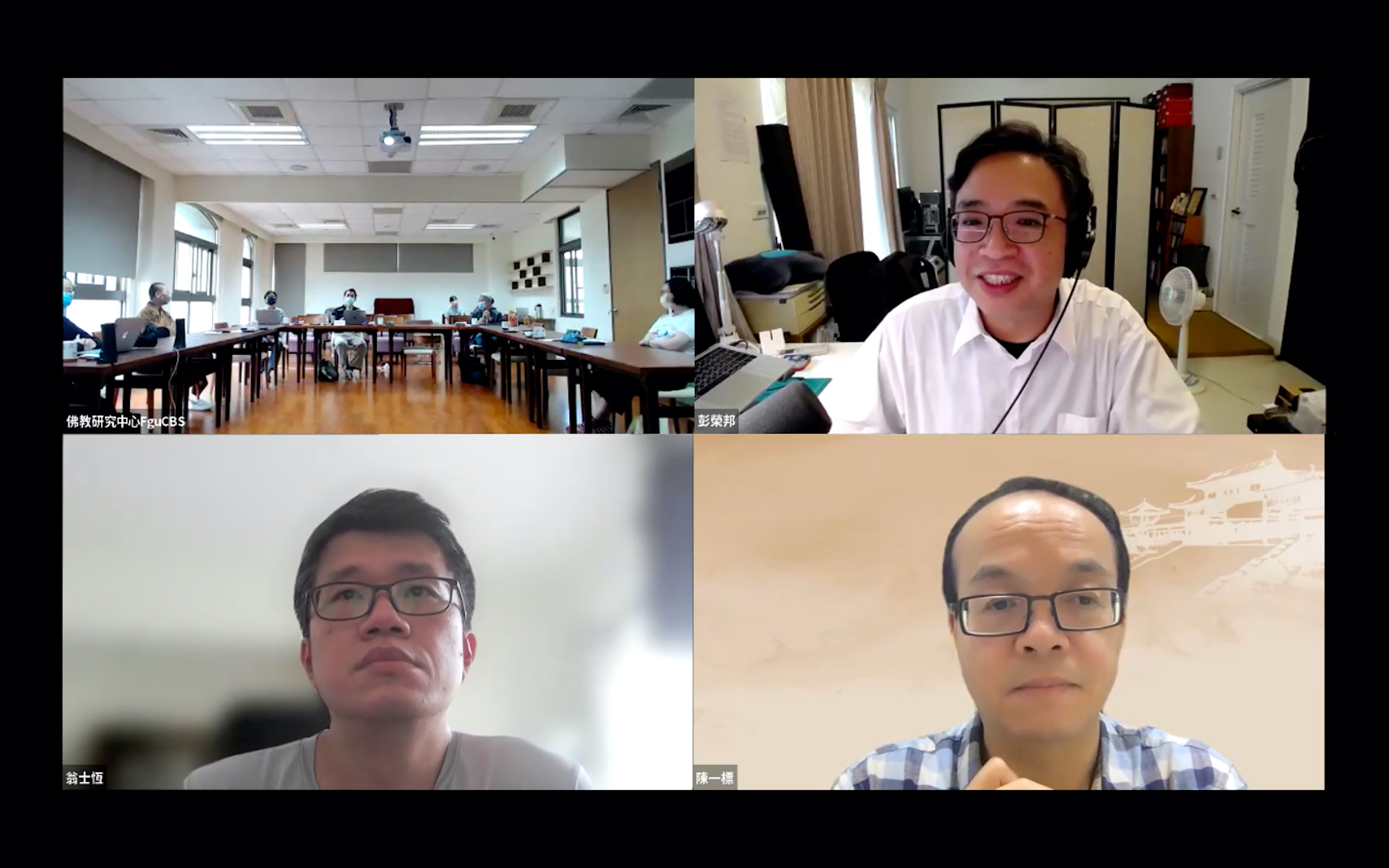
Prof. Weng Shih-Heng, Prof. Peng Rong-Bang, Prof. Chen I-Biao, Prof. Huang Guo-Zhang, Prof. Huang Yu-Lian, and student research assistants participated synchronously online.