
On the afternoon of Saturday, October 16, the Center for Buddhist Studies at Fo Guang University held the second academic community activity for the overarching project "The Theory and Practice of Buddhism and Psychotherapy." Participants included professors from the university's Department of Buddhist Studies and Department of Psychology, as well as Prof. Lee Wei-Lun of National Chengchi University, Prof. Peng Rong-Bang of Tzu Chi University, and Prof. Weng Shih-Heng of National Dong Hwa University. A total of 24 faculty members and students participated in the event, which unfolded enthusiastically through a hybrid format of in-person and online attendance.
First, Prof. Guo Chao-Shun of the Department of Buddhist Studies picked up from the theme of the first dialogue—"Does Buddhism need to establish a view of pathology?"—and shared a preliminary prototype of a Buddhist psychotherapy model he is constructing. Based on Buddhist ontology, the view of self, and the worldview, he constructed a path of healing involving both "self-power" and "other-power." Self-power healing explains the implications of different cultivation methods for healing, while other-power healing points to the unique healing forces in Buddhism, such as transcendence of the secular world, sacredness, and ritual. Prof. Guo further pointed out that Buddhist healing can borrow knowledge and skills from psychotherapy regarding the body, mental experiences, therapeutic techniques, and training. This would allow for a more modern and complete implementation of Buddhist doctrine, wisdom, and cultivation methods in the secular world, enabling more people to access the assistance of Buddhist healing when facing suffering.
The other keynote speaker, Prof. Weng Shih-Heng of National Dong Hwa University, shared the content of his joint research with Prof. Peng Rong-Bang of Tzu Chi University: "Exploring Suffering Experience and Healing Practice Guided by 'Non-Self': A Phenomenological Approach." He also shared his observations and reflections on the suffering experiences of families with rare diseases encountered during his work in the helping profession. Prof. Weng used a phenomenological perspective to explain the healing of universal human suffering. He emphasized shedding the stance of an "expert" and returning to the concepts of "original ethics" and "humanistic healing," which Prof. Yu De-Hui absorbed and transformed from French philosopher Emmanuel Lévinas's concept of ethics as first philosophy (the Other as priority). This approach realizes the reception of the sufferer's experience. In the "impossibility" of knowing one is powerless, one understands the unspeakable and incomprehensible pain of others. By opening oneself up and offering companionship, listening, and response—not as an expert but as a fellow human—the sufferer, even when the helper seems powerless and inactive, finds a way to transcend their own pain within this companionship and proceeds to make greater contributions to human society. It can be seen that the practice of healing lies in interpersonal relationships and profound care, transcending the pathological healing perspective based on a disease model.
The presentations by Prof. Guo and Prof. Weng sparked discussions on many issues during the dialogue session. The most discussed topics included "Language vs. Ineffability," "Can suffering experiences be articulated?", "The difference between linguistic incapacity and the concentration and wisdom beyond language," and "The similarities and potential for dialogue between helping professionals and Bodhisattva practice." The discussion was brilliant and lively, putting everyone present in a state where thoughts burst forth like fireworks, opening up and extending possibilities in every direction. The dialogue did not end with the event; a new wave of discussion and inquiry continued in the community's online group after the meeting.
From this, it is expected that the subsequent unfolding of Buddhism and Psychotherapy dialogue activities will reveal more healing paths we have yet to uncover and will gradually build a bridge for deep dialogue between the two disciplines.
The third community activity is scheduled for the afternoon of November 26, with reports to be presented by Prof. Peng Rong-Bang and Prof. Huang Guo-Zhang.
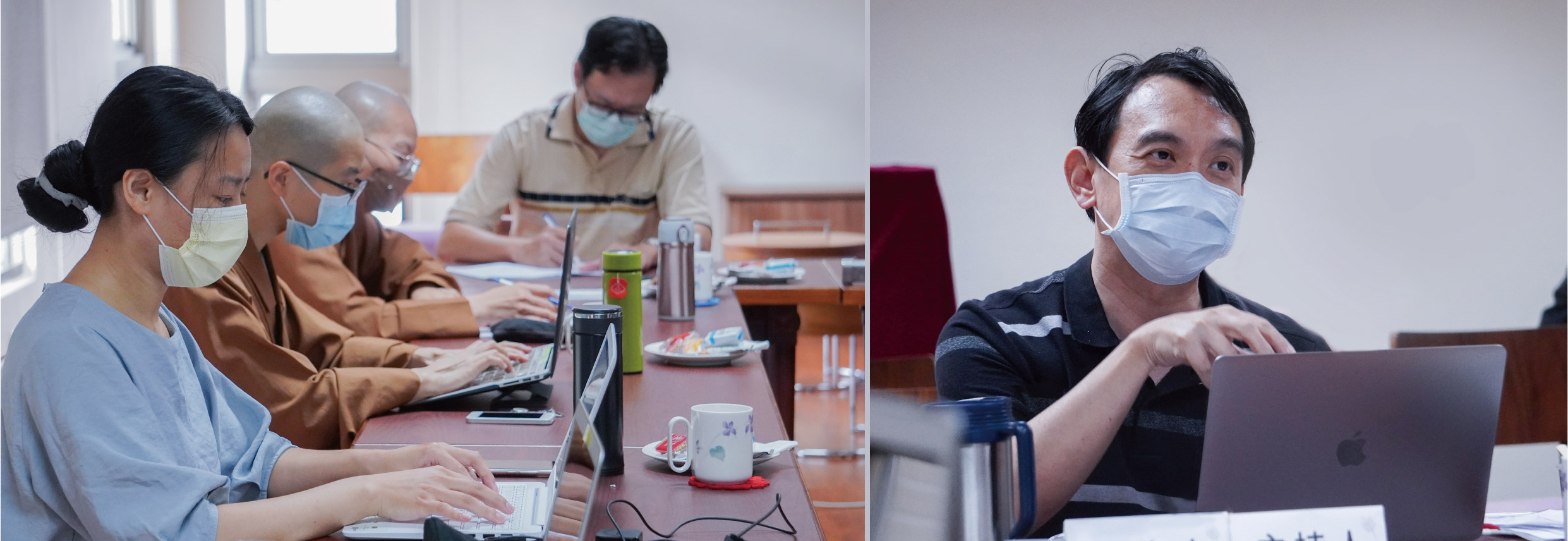
Prof. Guo Chao-Shun of the Department of Buddhist Studies (right) reporting on part two of "A Preliminary Proposal for a Buddhist Psychotherapy Model." Sub-project host Prof. Huang Guo-Zhang of the Department of Psychology (left, back) and other guests attended.
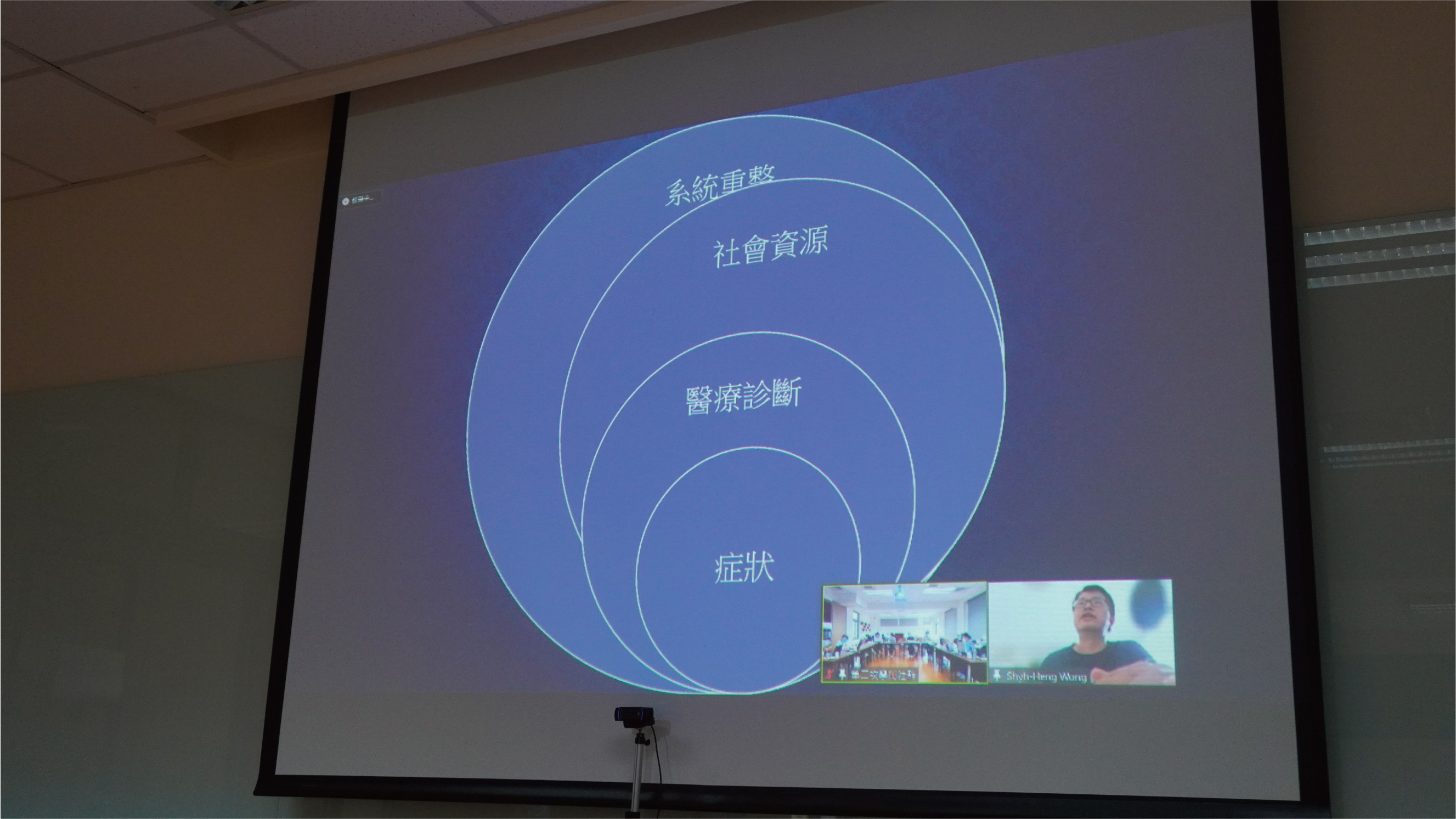
Prof. Weng Shih-Heng of the Department of Counseling and Clinical Psychology at National Dong Hwa University reporting on "Clinical Encounters and Reflexive Inquiry Concluded by Suffering: The Lived Experience of Families with Rare Diseases."
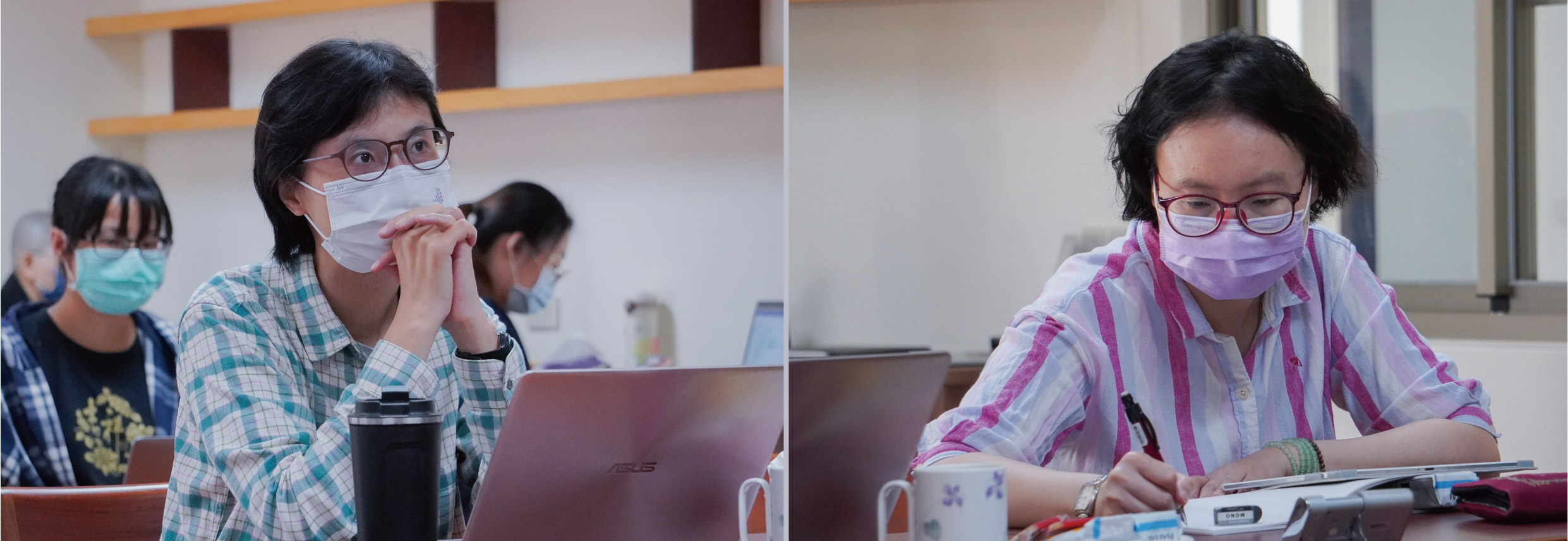
Sub-project hosts Prof. Tseng Chih-Mien (right) and Prof. Lin Hsin-Yi (left) of the Department of Buddhist Studies attending the meeting.
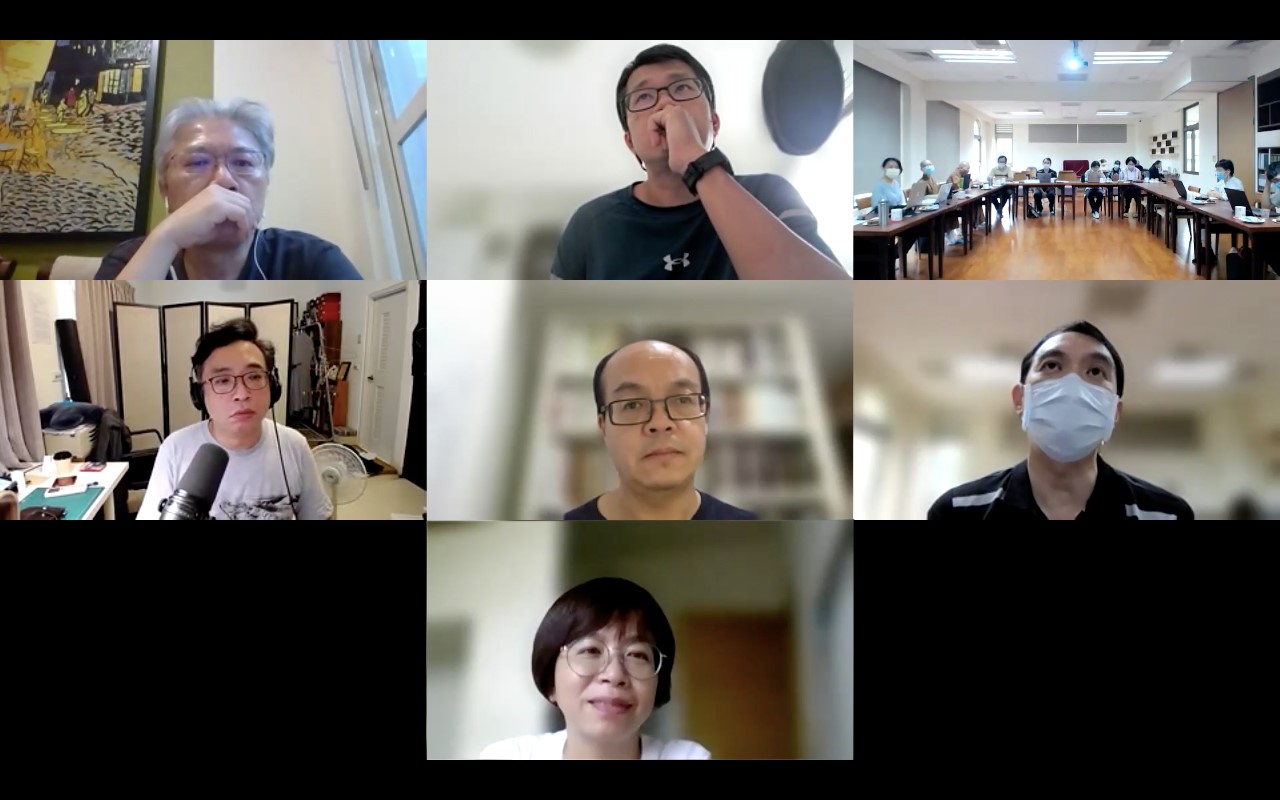
Online guests: Prof. Lee Wei-Lun (Department of Philosophy, National Chengchi University), Prof. Weng Shih-Heng (Department of Counseling and Clinical Psychology, National Dong Hwa University), Prof. Peng Rong-Bang (Department of Human Development and Psychology, Tzu Chi University), Prof. Chen, I-biau (Department of Buddhist Studies, Fo Guang University), and Prof. Lin Wei-Lun (Department of Psychology, Fo Guang University).
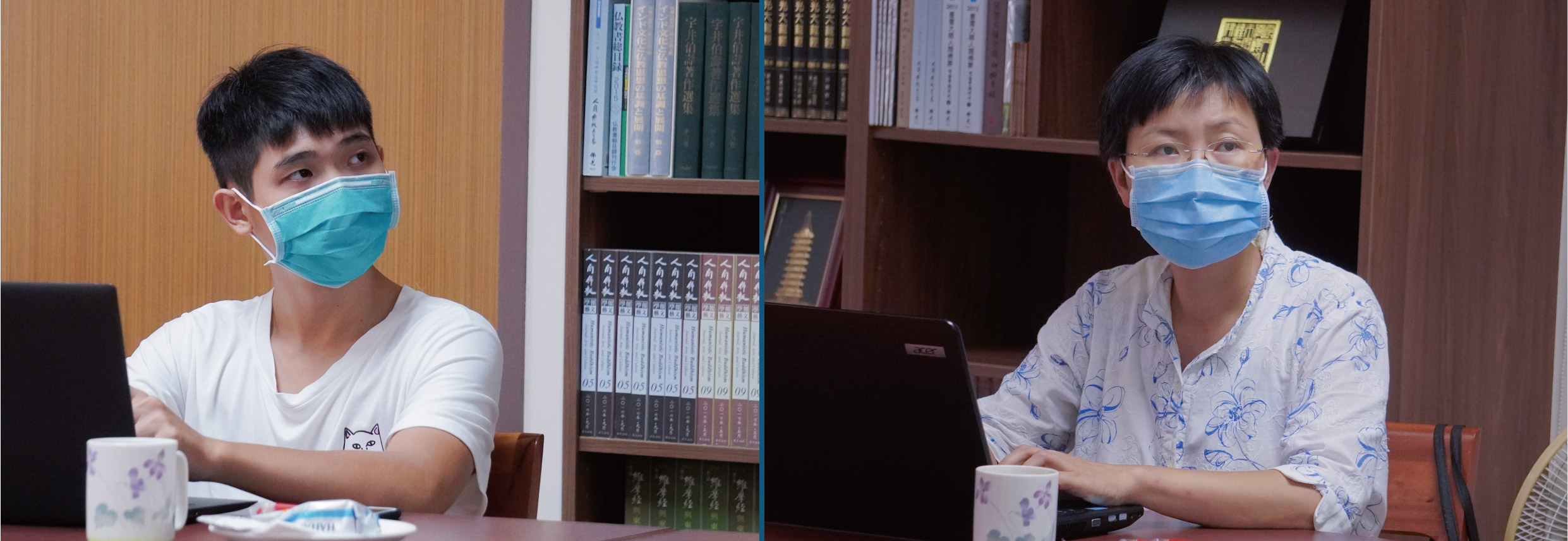
Research assistants auditing and learning. Left: Wang Kai-Yi (Department of Psychology, Fo Guang University). Right: Li Ying (Department of Buddhist Studies, Fo Guang University).
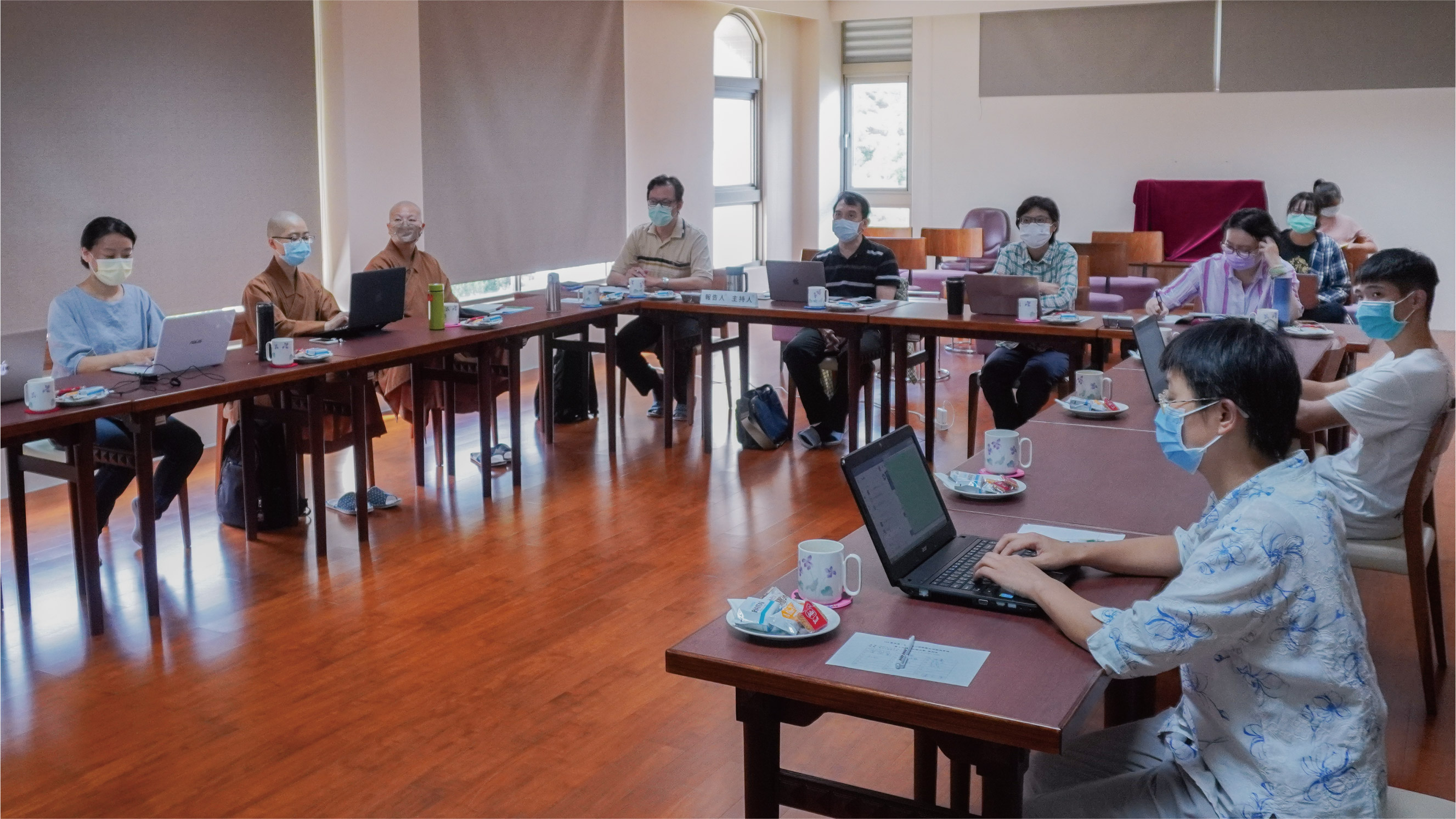
The second academic community activity was held at Yunshuixuan, Fo Guang University.