
The academic symposium "Liberation and Healing: A Dialogue between Buddhism and Psychology," held from June 10 to 11, 2022, was organized by the Center for Buddhist Studies at Fo Guang University (FGU), with co-organization by the Fo Guang Shan Foundation for Buddhist Culture and Education and the FGU College of Buddhist Studies. The event showcased the results of intensive exchange and brainstorming among ten Buddhist scholars and psychologists from Fo Guang University, National Chengchi University, Tzu Chi University, and National Dong Hwa University under the interdisciplinary research project "Buddhism and Psychotherapy." Five hundred participants from over 30 colleges and universities in Taiwan, various Buddhist institutions and temples, and more than ten countries and regions—including Mainland China, the USA, Japan, and Malaysia—attended online. Many expressed that this academic feast timely responded to the issues of suffering in modern society.
At the opening ceremony, Ven. Tzu Hui, Chairperson of the Board of Trustees of Fo Guang University, praised the research project for promoting teaching, research, and the breadth of student learning. She noted that the topics discussed met the needs of modern society and realized the spirit of Humanistic Buddhism. She also cited the expectations of FGU founder Ven. Master Hsing Yun for the Research Center: to become a platform for Buddhist research worldwide, with all research results benefiting society.
FGU President Ho Jow-fei expressed gratitude to Fo Guang Shan for helping the university connect with excellent Buddhist talents worldwide. He highlighted that the joint execution of research by the Departments of Buddhist Studies and Psychology, along with professors from other institutions, realized the university's philosophy of interdisciplinary exchange.
Prof. Wan Jin-chuan, Director of the FGU Center for Buddhist Studies, stated that the Center's achievements today are due to the long-term support of Ven. Master Hsing Yun, Ven. Tzu Hui, and the Fo Guang Shan Monastic Order. He revealed that future research will continue the interdisciplinary approach, focusing on the themes "Who is a Buddhist? Whose Buddhism?" and "Engaged Buddhism." This will look at the world and focus on the diverse engaged actions of Buddhists everywhere, "with the aim of hoping to give back to Humanistic Buddhism and Fo Guang Shan's next sixty years by providing a reference."
This symposium represented the results of the "Buddhism and Psychotherapy" research project led by Dean Guo Chao-Shun of the FGU College of Buddhist Studies during the 2021 academic year. At the closing ceremony, Prof. Guo also announced the launch of the 2022 academic year research project: "Text, Action, and Healing: Reading, Observation, and Interpretation of Buddhist Scriptures and Practice Education." This project invites Buddhist scholars and psychologists to explore the "Textual Classics" of Buddhism and the "Action Texts" of the College's practice education (Xingmen). He stated, "Promoting dialogue and resource sharing between psychology and Buddhist studies, the two disciplines join hands to make society better!"
The ten presenters, comprising Buddhist scholars and psychologists from FGU, NCCU, TCU, and NDHU, showcased the results of a year of intensive deep exchange. Topics included: reinterpreting Buddhist classics and ancient Chinese meditation narratives from the perspective of psychology or psychotherapy; combining advanced instruments and psychological methods to design scales to explore how Buddhist practice affects conscious control, quantifying the "Five Hindrances" emotions into psychological language; and combining clinical and counseling practical experience with university curriculum design to explore how Buddhist faith and mindfulness can help people leave suffering and enhance compassion. Additionally, a Young Scholars Forum was held where three graduate students from the Department of Buddhist Studies presented their insights from participating in this project under their professors. Each paper invited an expert to provide a penetrating response.
Interactions were enthusiastic in every session. More than half of the attendees expressed satisfaction with the symposium content, stating it would help their future research. One participant shared, "The symposium combined Buddhism and psychological healing, which is beneficial for helping the world be liberated from suffering!" Another said, "I am both a Buddhist and a counselor; this was a very practical academic feast for me." Another shared, "I just started learning Buddhism, and the symposium showed me that Buddhist studies have such a deep connection to life!"
Approximately 500 people attended, including representatives from over 30 colleges and universities in Taiwan, Buddhist groups such as the Fo Guang Shan Institute of Humanistic Buddhism, Dharma Drum Institute of Liberal Arts, Luminary Buddhist Institute, Bliss and Wisdom Group, Fuyan Buddhist Institute, Compassion Academy, and Chueh Feng Buddhist Art & Culture Foundation, as well as individuals from the USA, Japan, Mainland China, Hong Kong, India, Thailand, Sri Lanka, Singapore, Vietnam, Malaysia, and New Zealand.
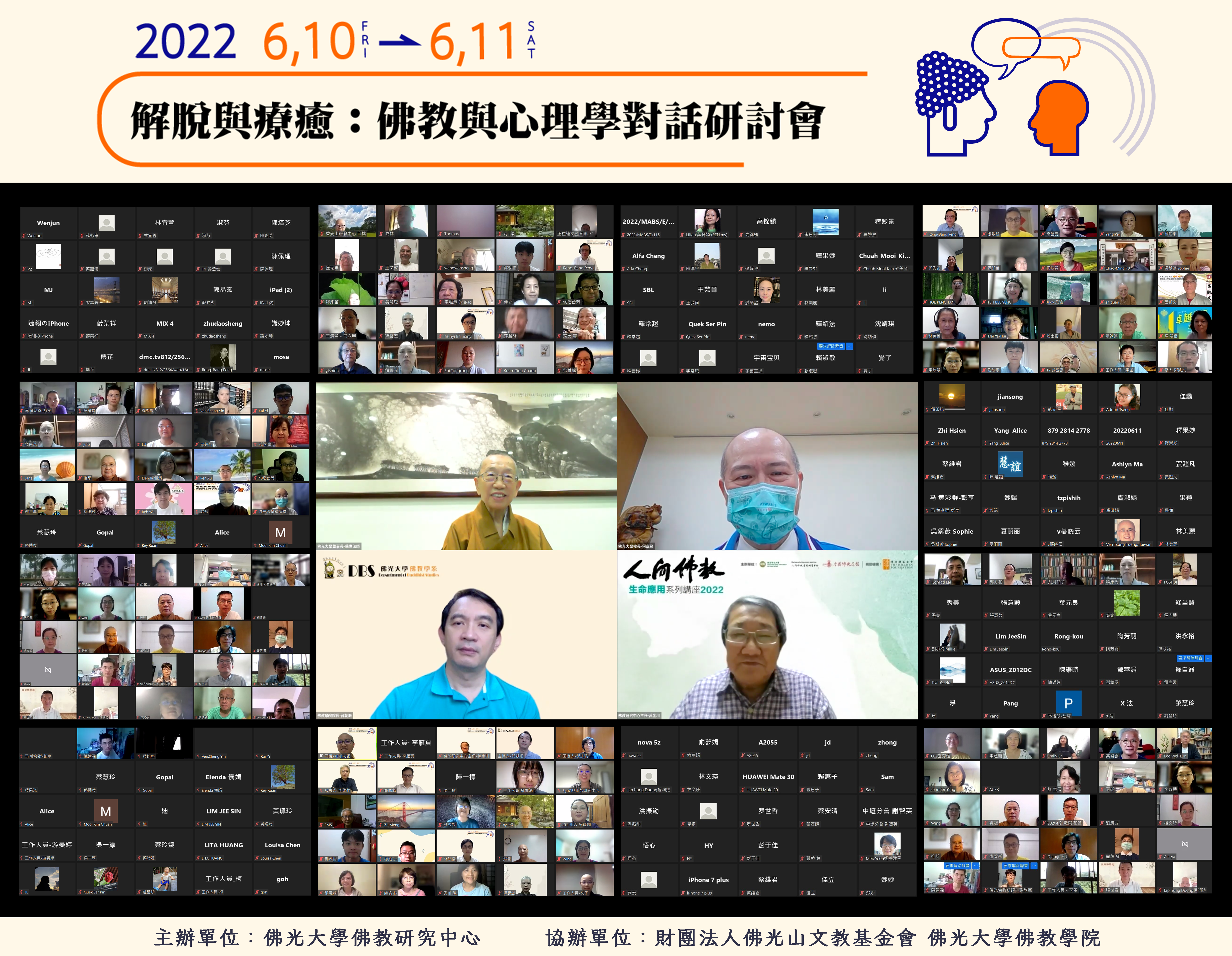
Group photo. Guests included Ven. Tzu Hui (Chairperson of the FGU Board of Trustees), President Ho Jow-fei (FGU), Director Wan Jin-chuan (Center for Buddhist Studies), and Dean Guo Chao-Shun (College of Buddhist Studies).
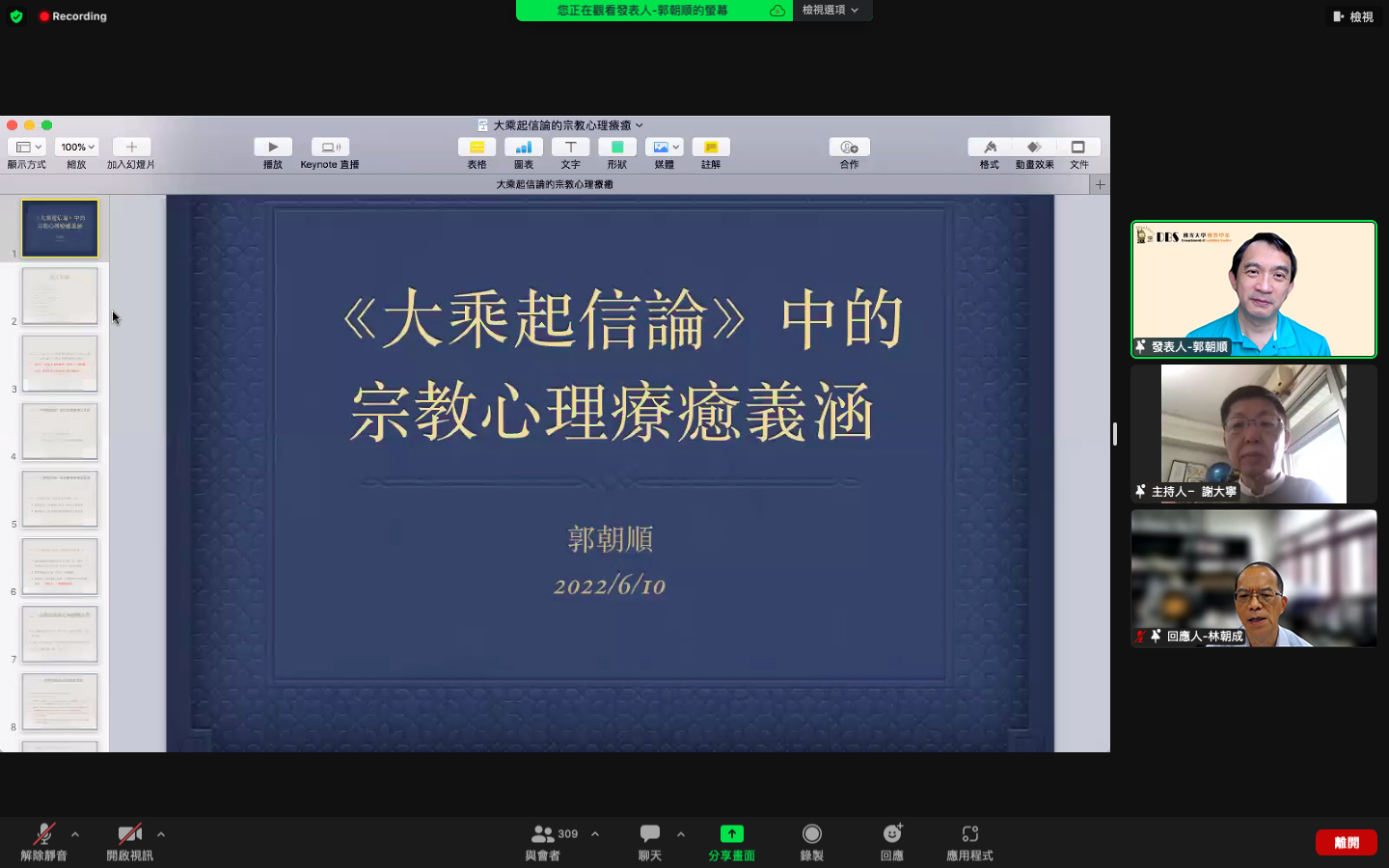
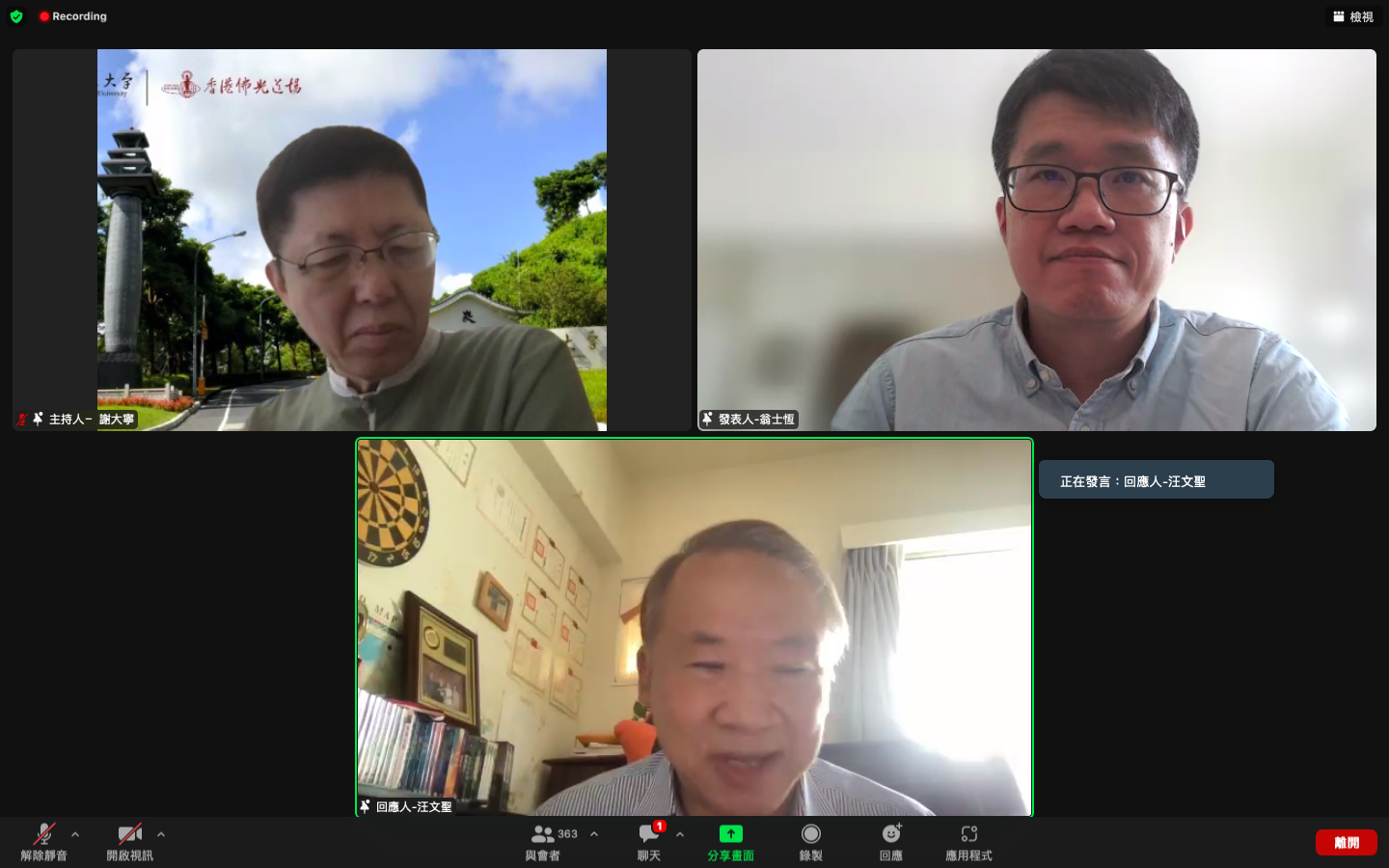
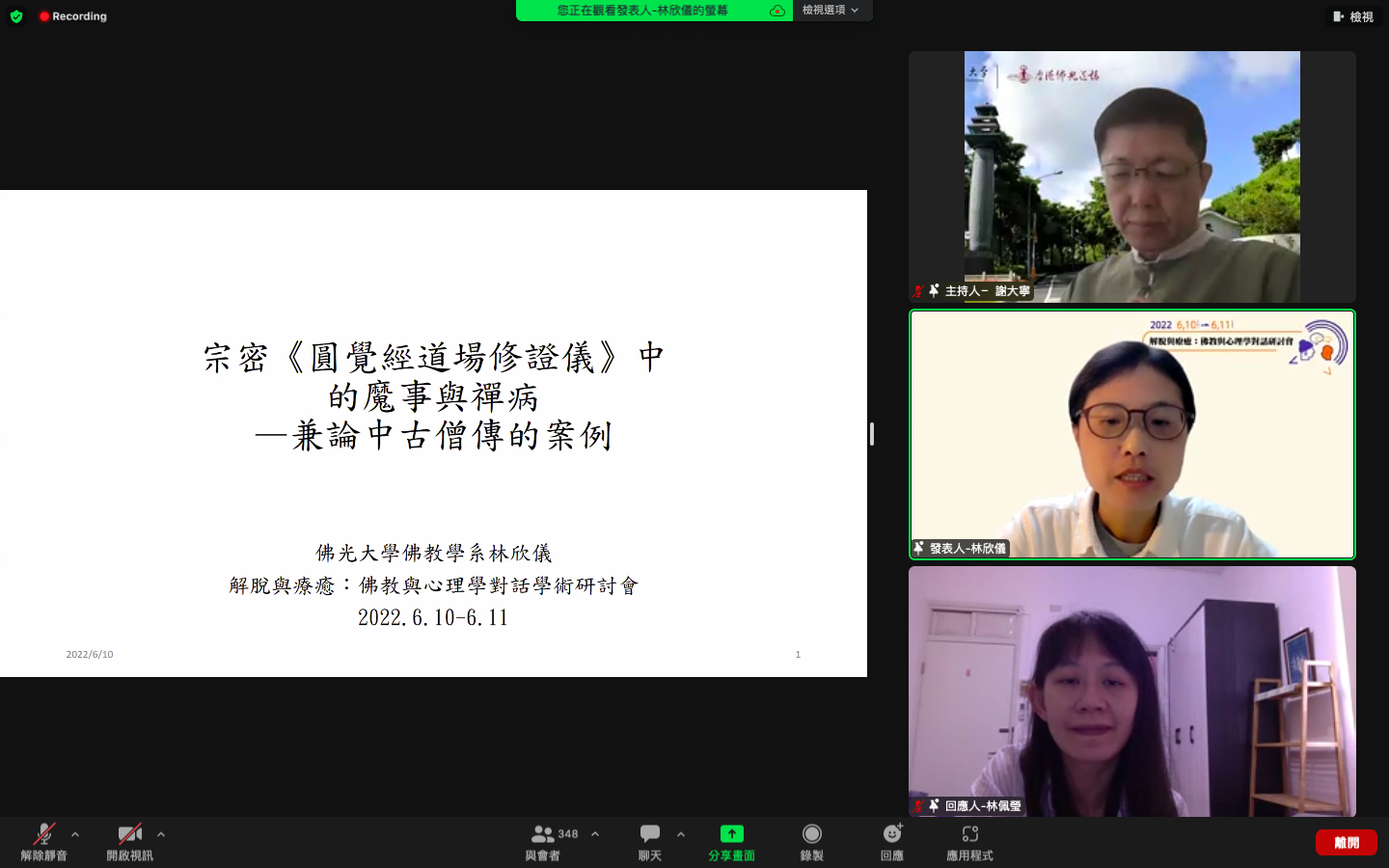
Session 1 (Moderator: Prof. Hsieh Ta-ning).
-
1-1: Prof. Guo Chao-Shun presented "The Implications of Religious Psychological Healing in the Awakening of Faith in the Mahayana." Respondent: Prof. Lin Chao-cheng.
-
1-2: Prof. Weng Shih-Heng presented "Kinship and Suffering: Inquiry into the Kinship Predicament and Possibility of Transcendence in Families with Rare Diseases from Silent Experiences." Respondent: Prof. Wang Wen-sheng.
-
1-3: Prof. Lin Hsin-Yi presented "Demonic Events and Chan Illness in Zongmi’s Manual of Procedures for the Cultivation and Realization of the Scripture of Perfect Enlightenment—With a Discussion on Cases in Biographies of Monks." Respondent: Prof. Lin Pei-ying.
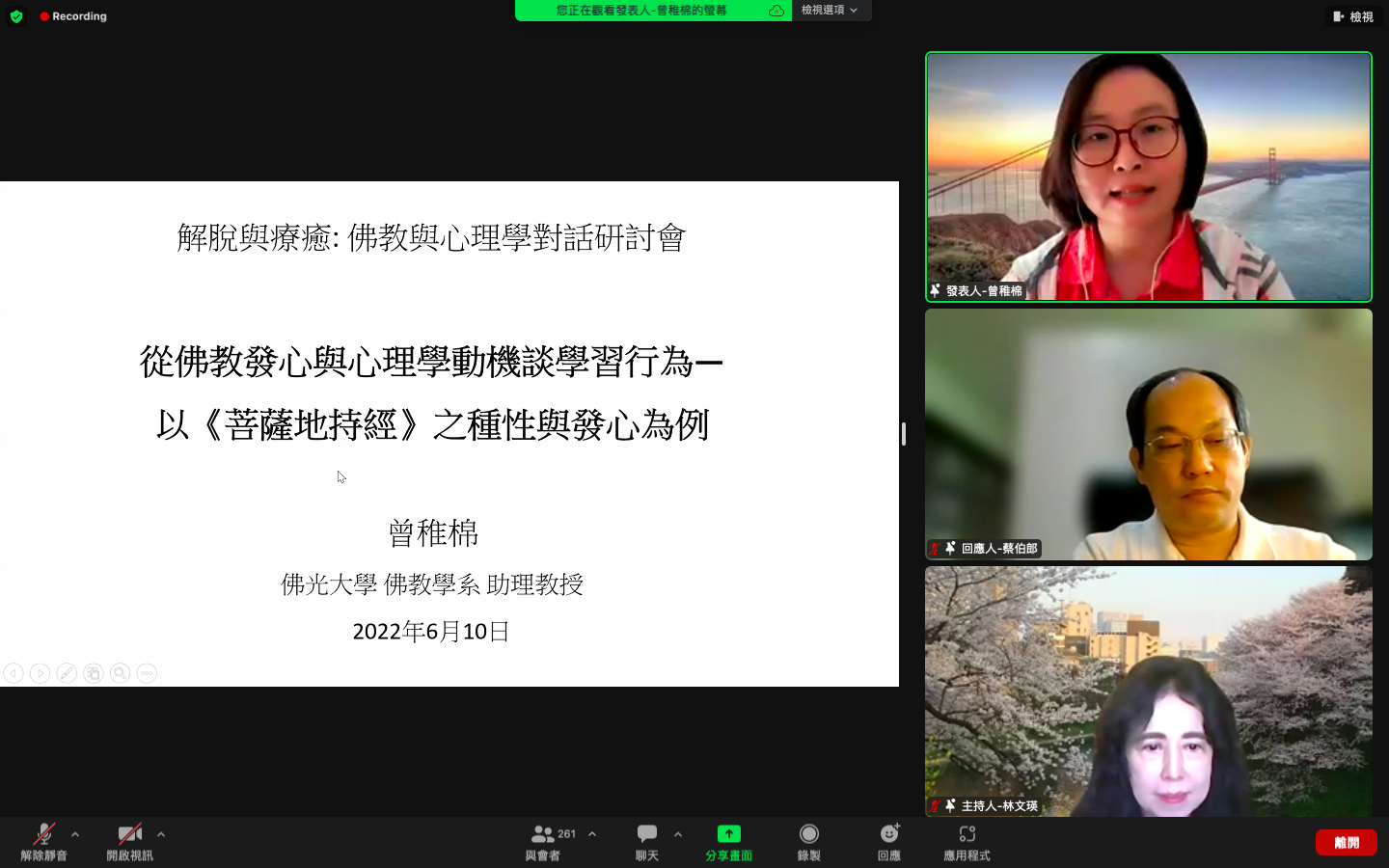
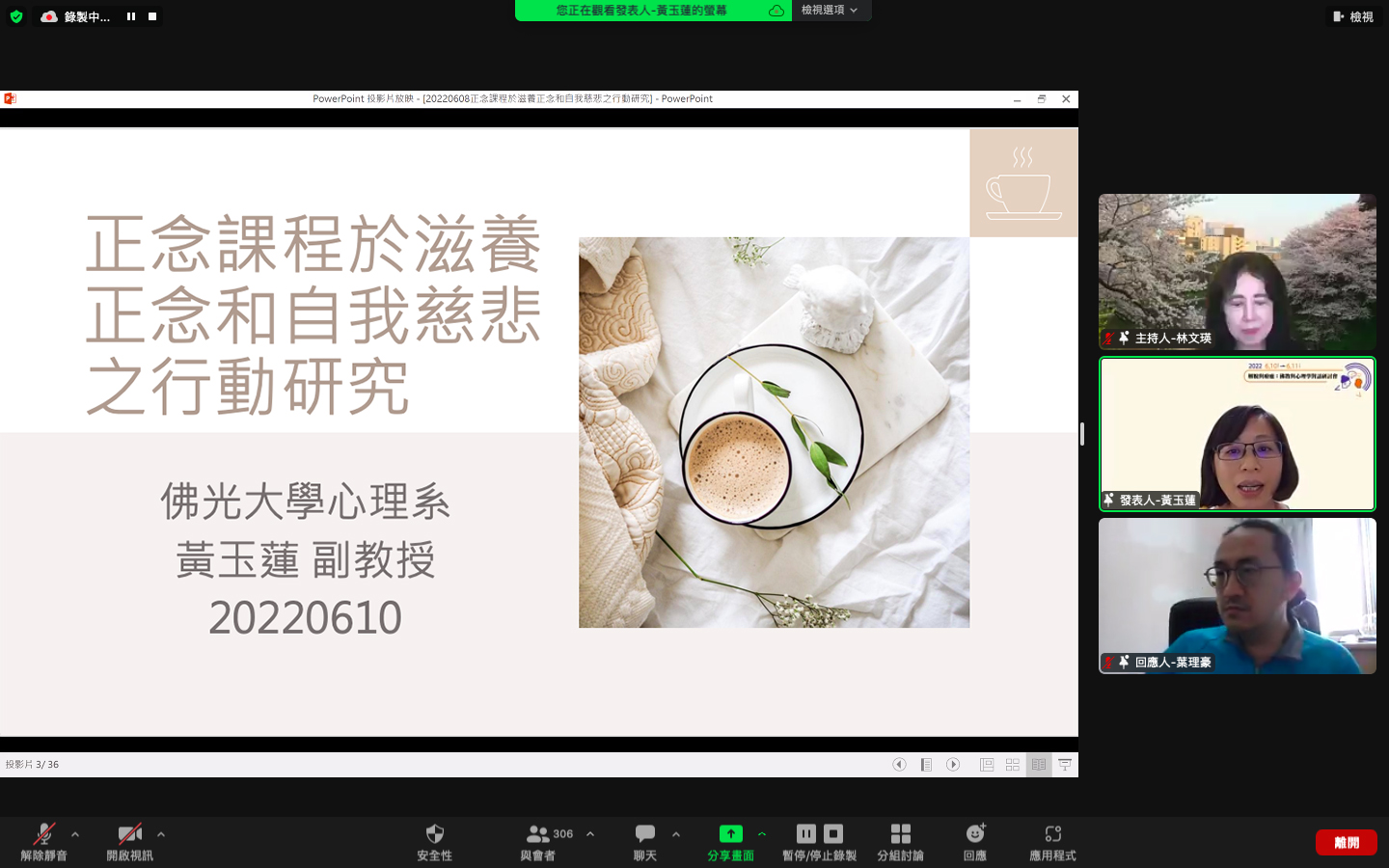
Session 2 (Moderator: Prof. Lin Wen-ying).
-
2-1: Prof. Tseng Chih-Mien presented "Discussing Learning Behavior from Buddhist Aspiration and Psychological Motivation—Using Lineage (Gotra) and Aspiration (Bodhicitta) in the Bodhisattvabhumi as Examples." Respondent: Prof. Tsai Po-lang.
-
2-2: Prof. Huang Yu-Lian presented "Action Research on Mindfulness Courses in Nourishing Mindfulness and Self-Compassion." Respondent: Prof. Yeh Li-hao.
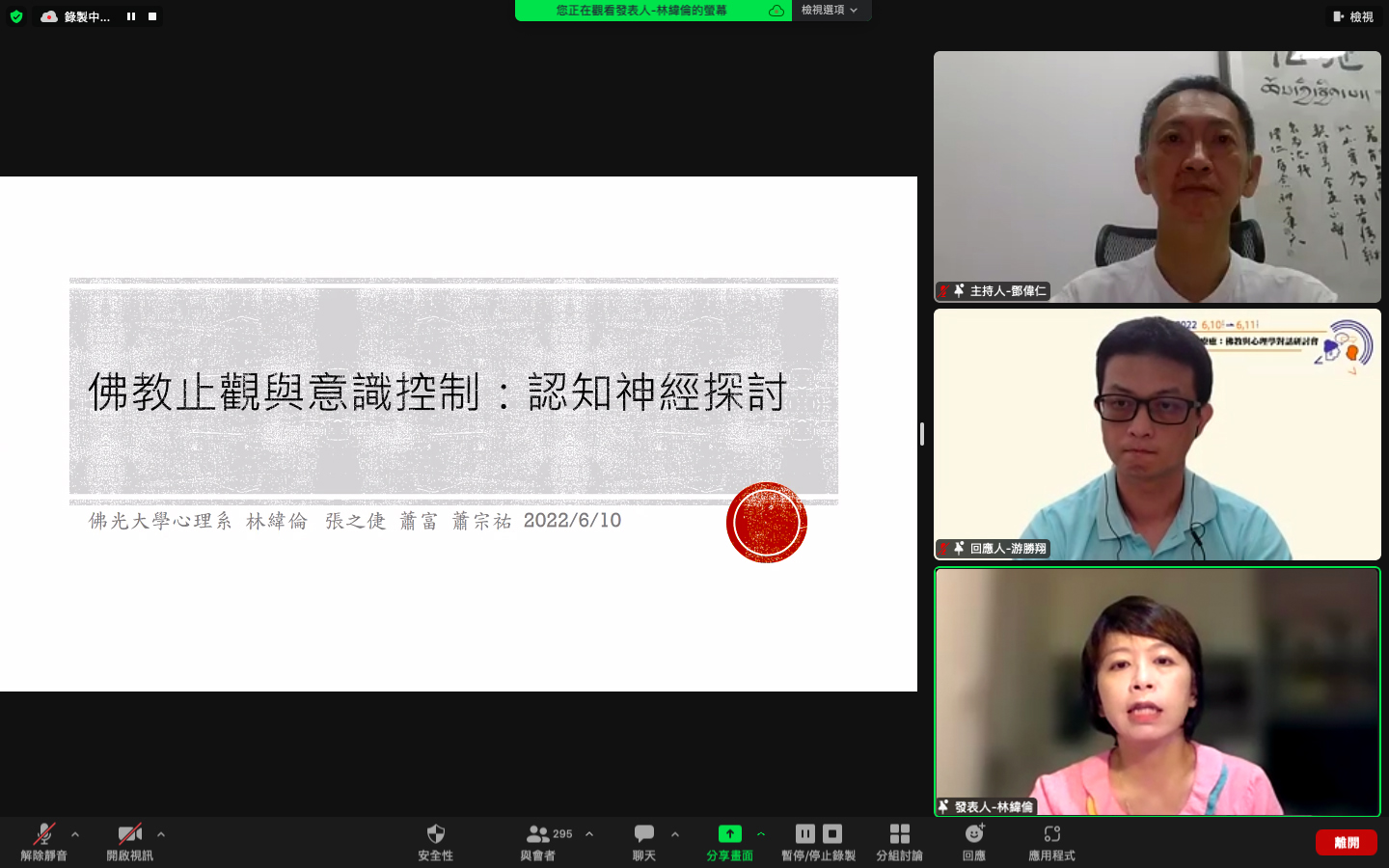
Session 3 (Moderator: Prof. Teng Wei-jen).
-
3-1: Prof. Lin Wei-Lun presented "A Cognitive Neuroscience Exploration of Buddhist Samatha-Vipassana and Consciousness Control." Respondent: Prof. Yu Sheng-hsiang.
-
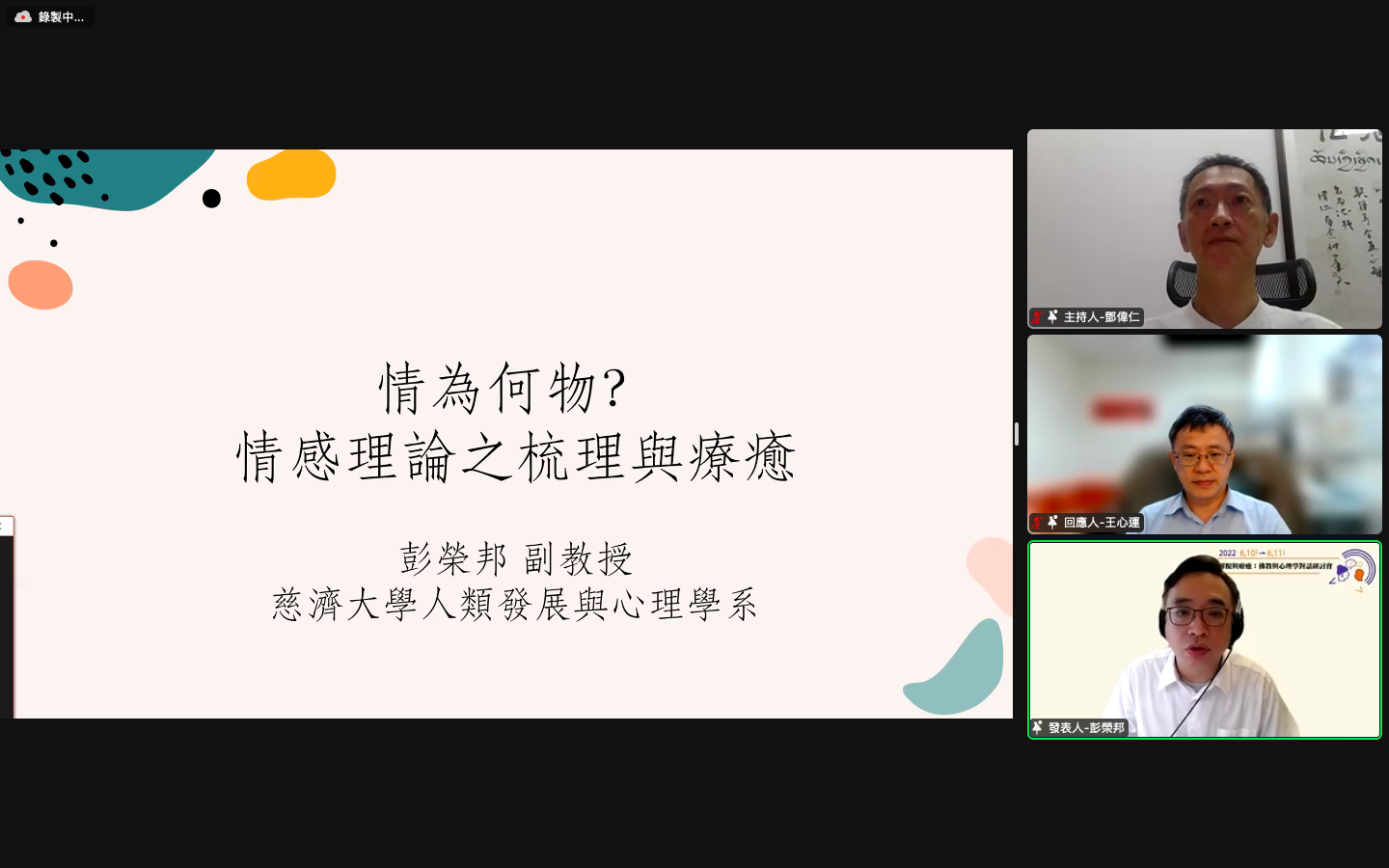
3-2: Prof. Peng Rong-Bang presented "What is Emotion? The Sorting and Healing of Emotion Theory." Respondent: Prof. Wang Hsin-yun.
Session 4 (Moderator: Prof. Guo Chao-Shun).
-
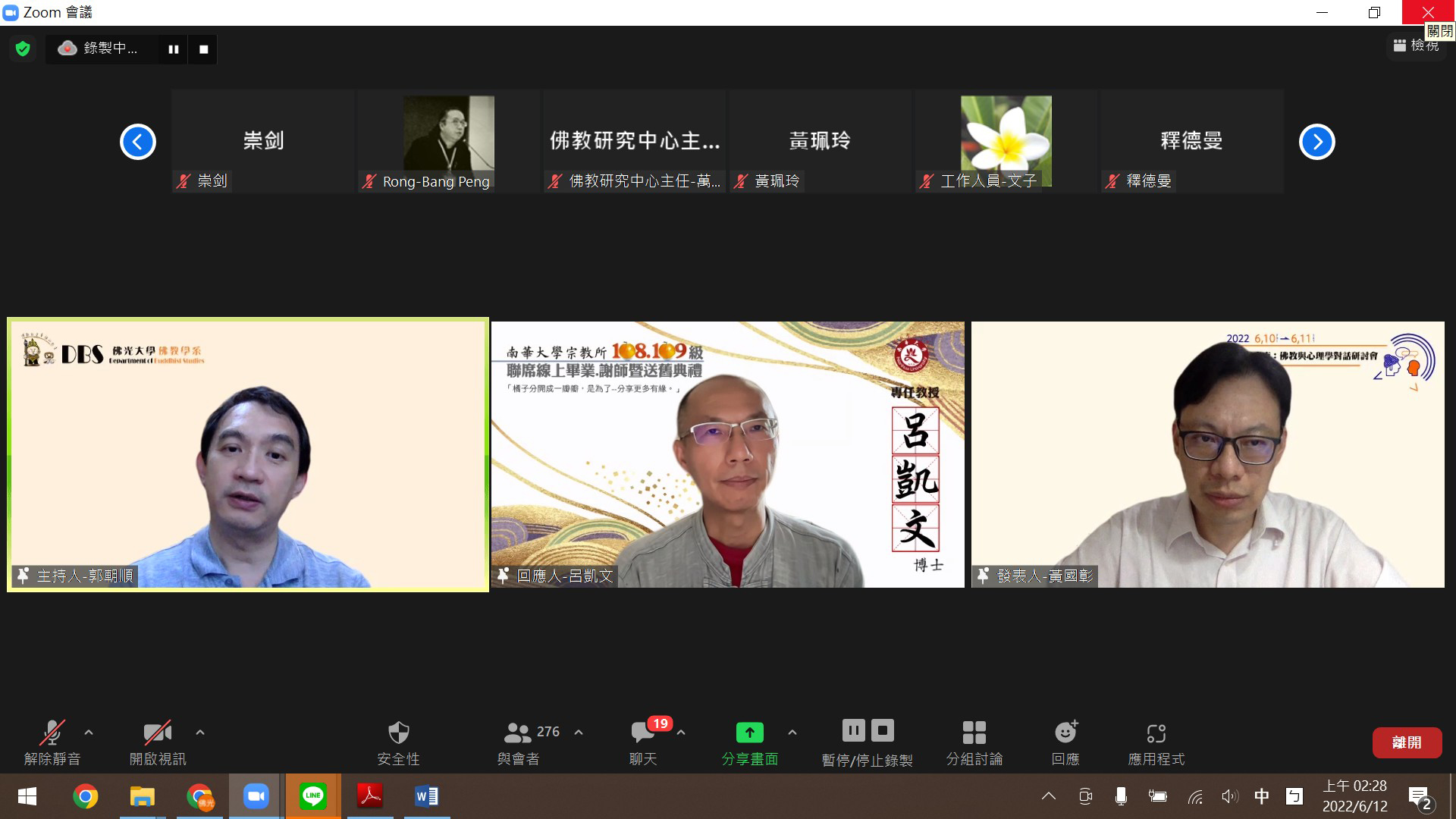
4-1: Prof. Huang Guo-Zhang presented "Exploration of the Correlation between Self-Concept, Emotional Attachment, and Suffering in Buddhism." Respondent: Prof. Lu Kai-wen.
-
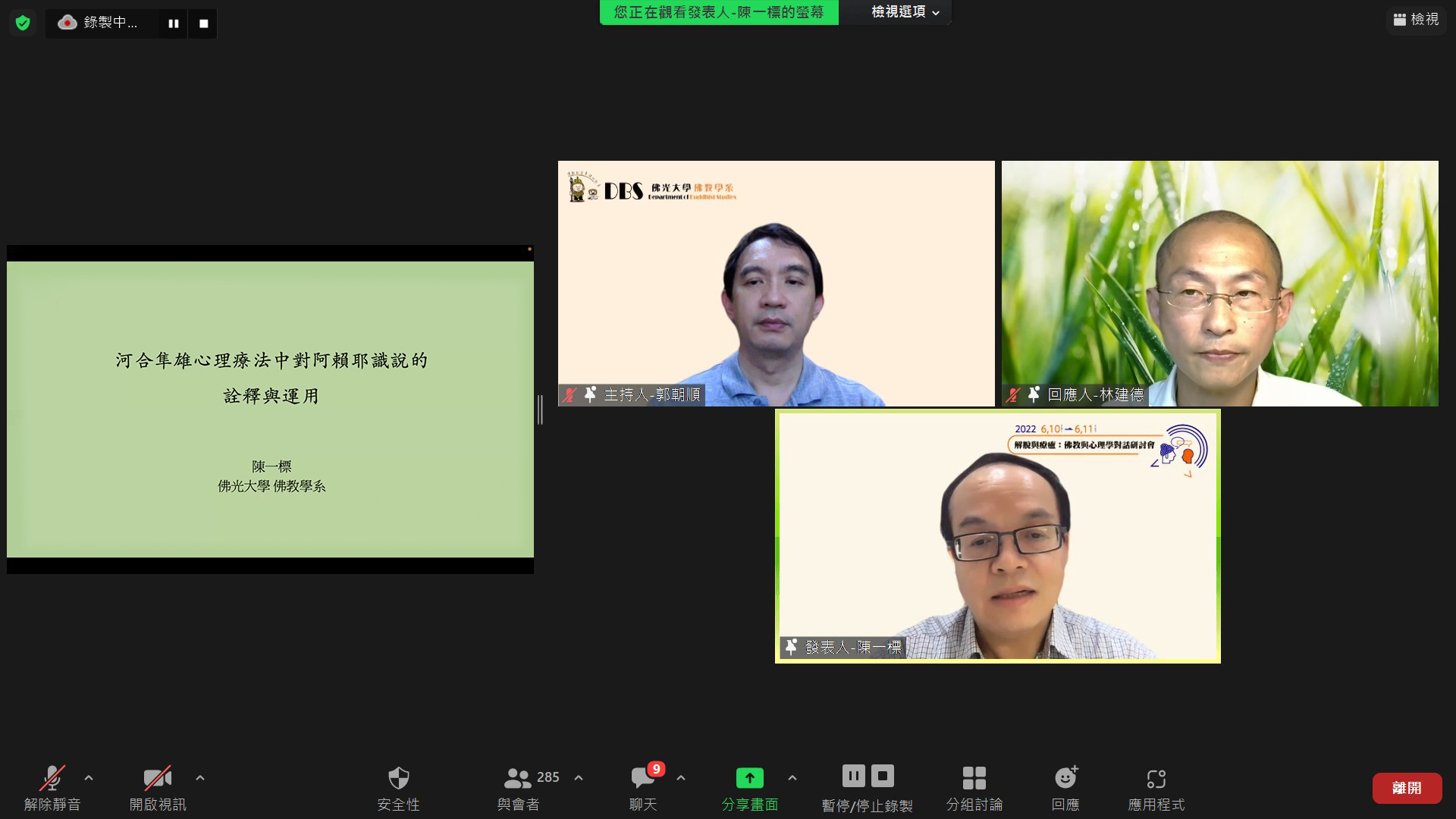
4-2: Prof. Chen Yi-Biao presented "Interpretation and Application of the Alaya-vijnana Doctrine in Hayao Kawai's Psychotherapy." Respondent: Prof. Lin Chien-te.
-
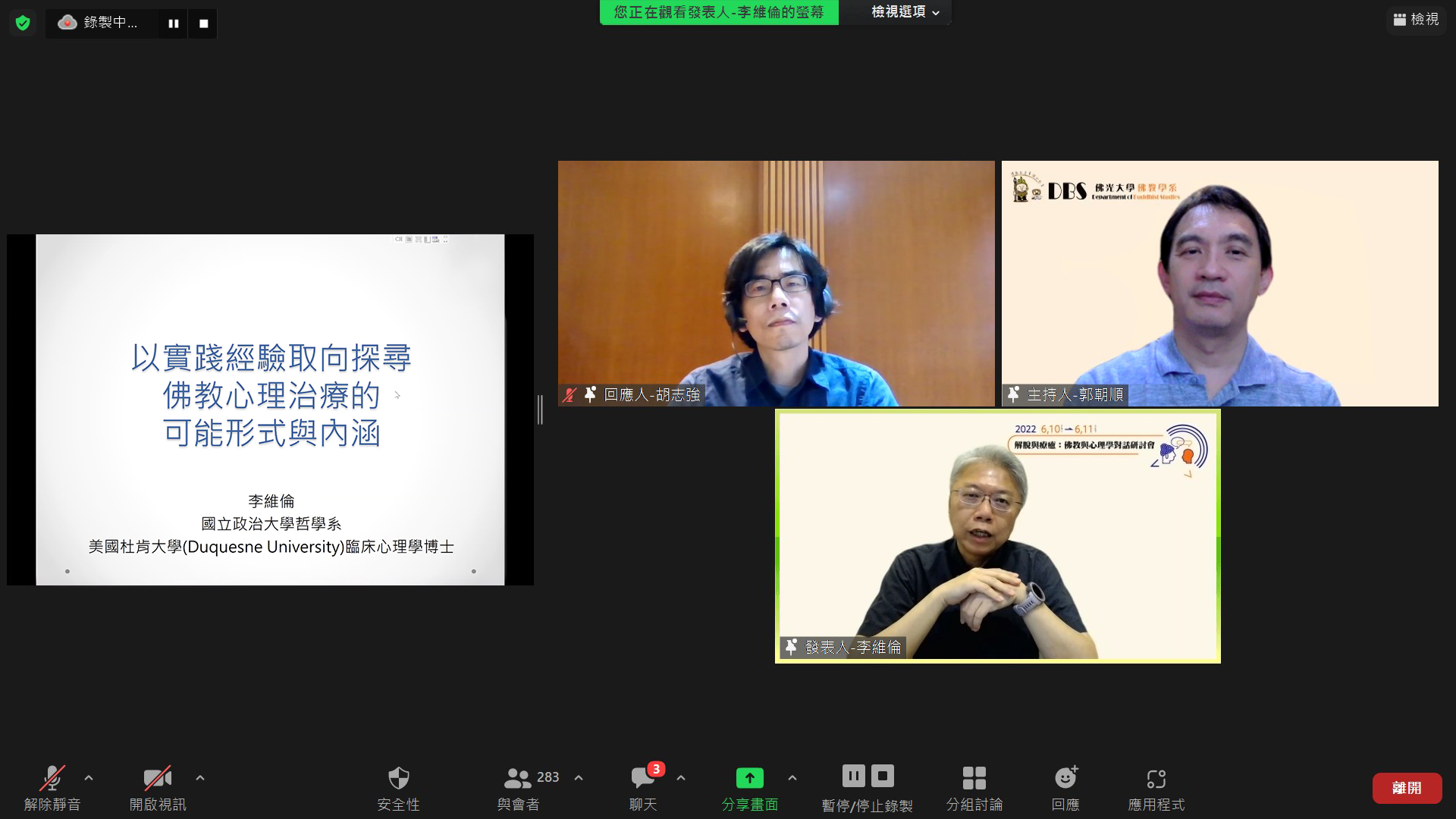
4-3: Prof. Lee Wei-Lun presented "Exploring Possible Forms and Contents of Buddhist Psychotherapy via a Practice-Based Approach." Respondent: Prof. Hu Chih-chiang.
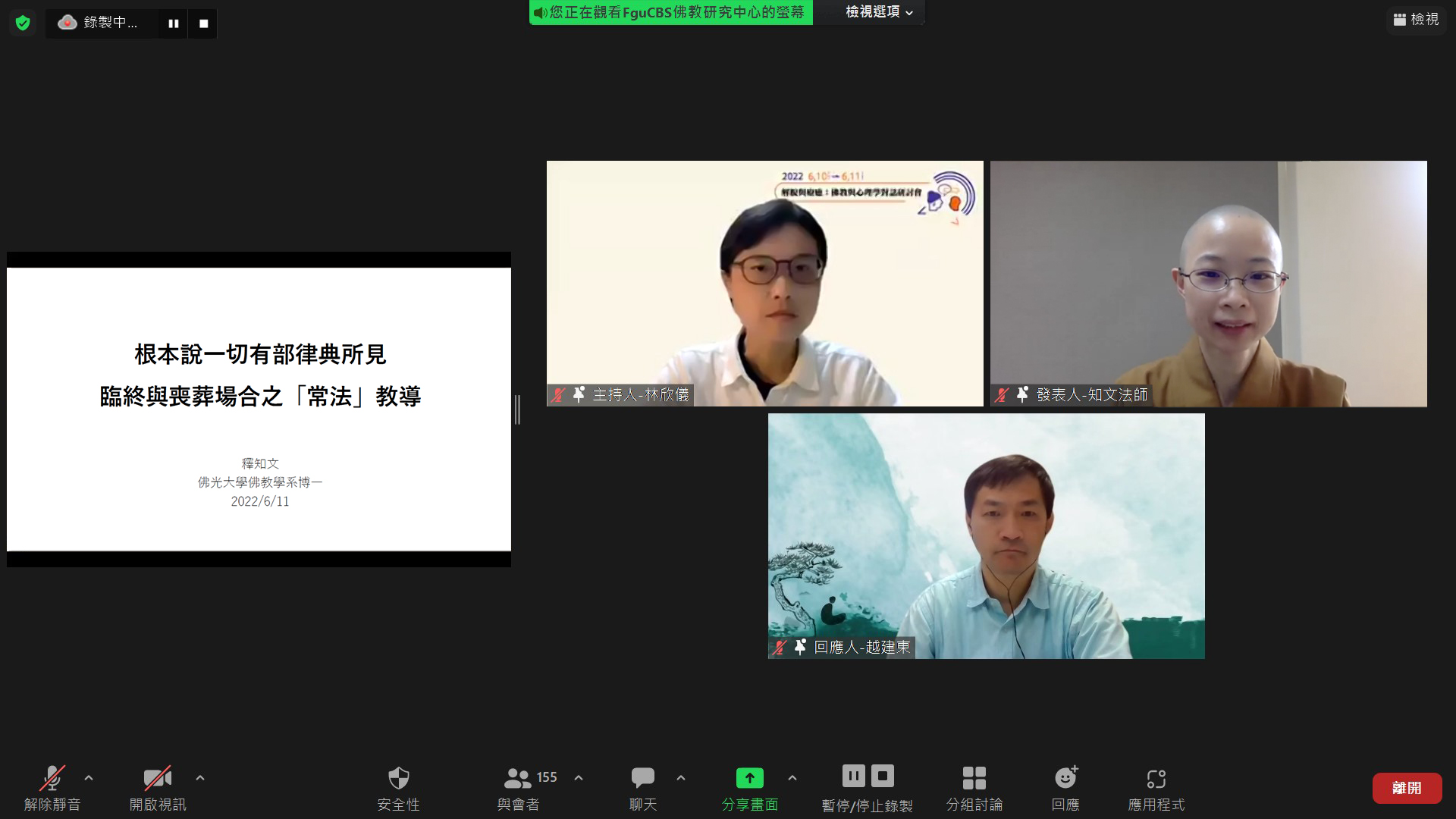
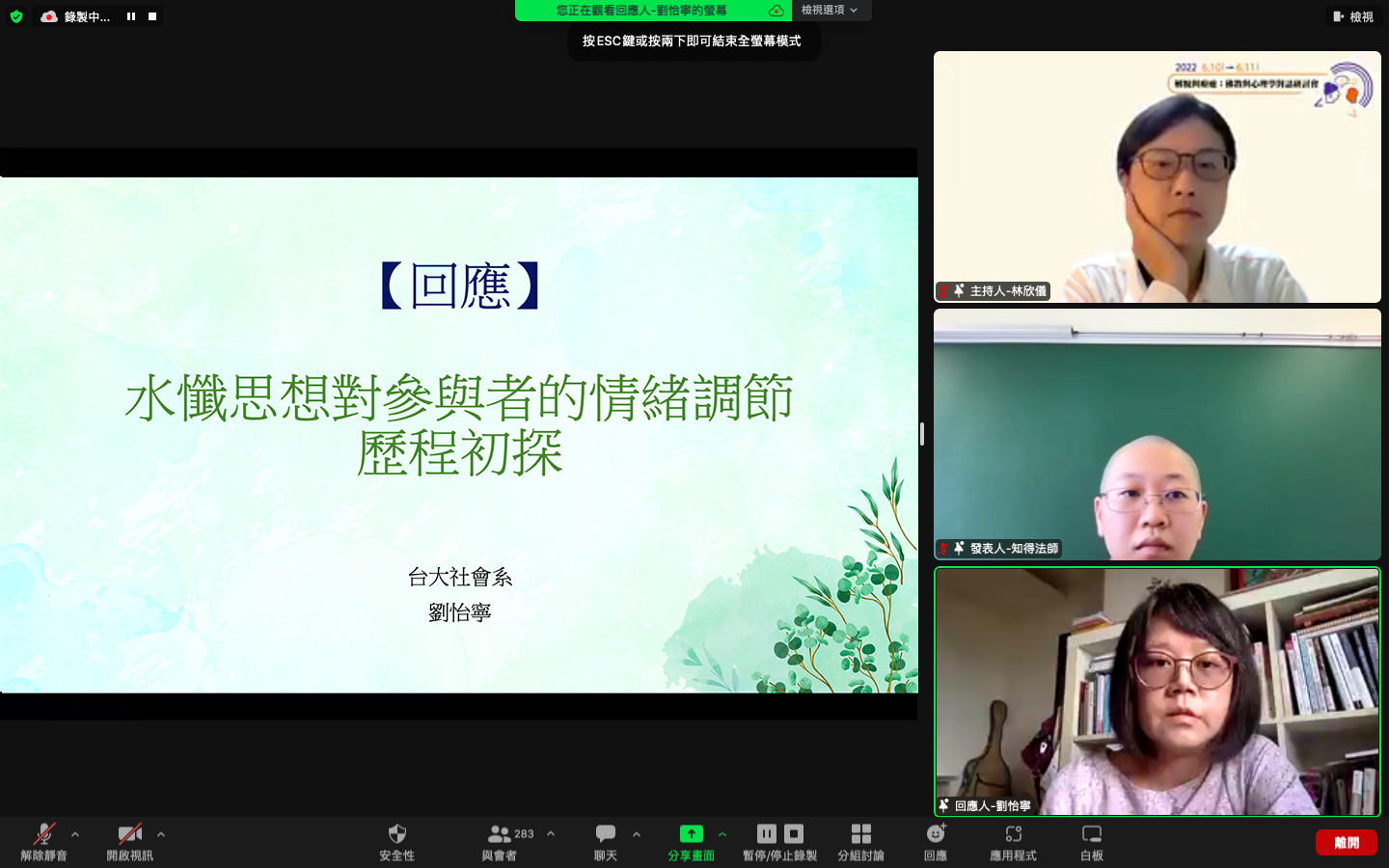
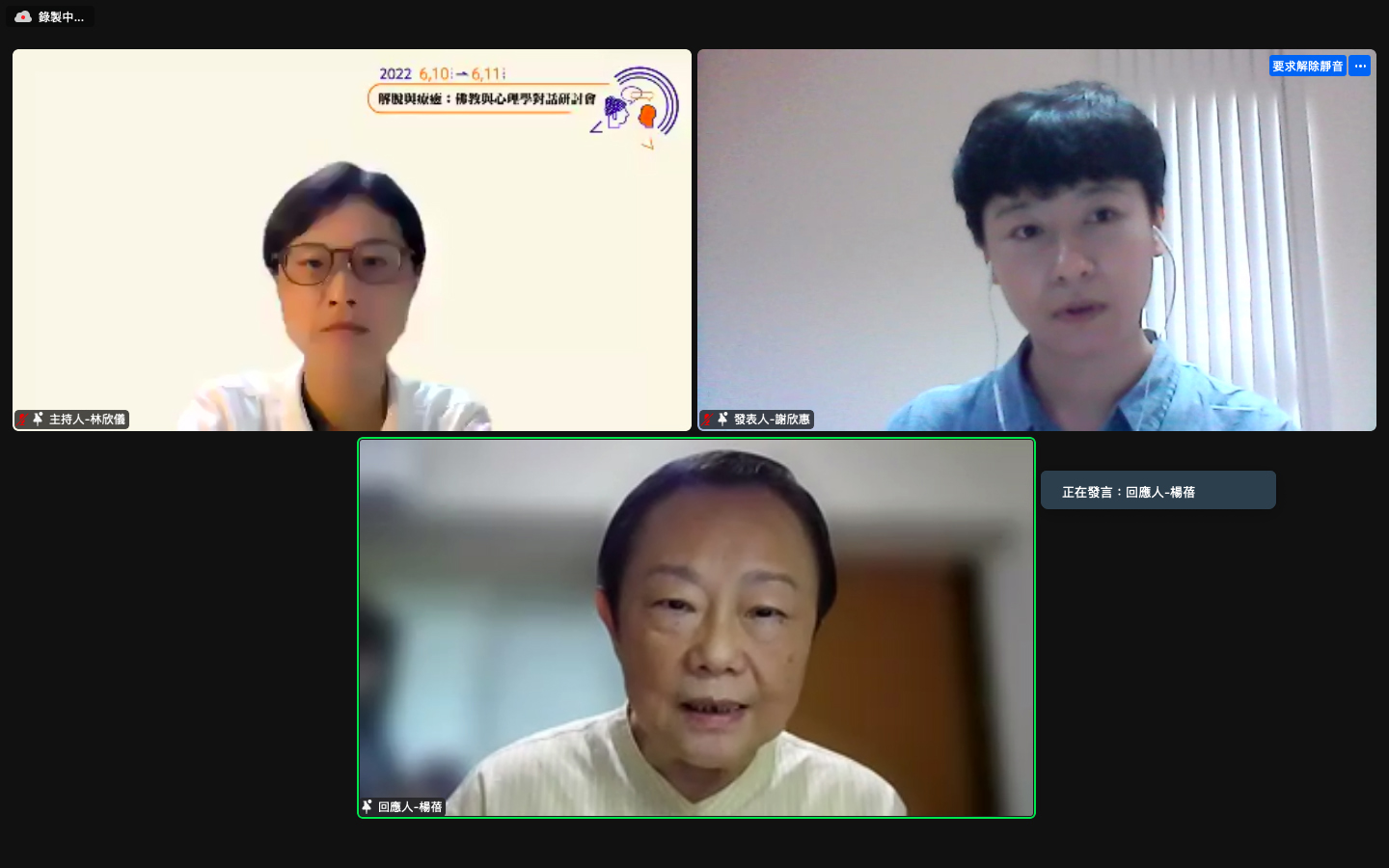
Young Scholars Forum (Moderator: Prof. Lin Hsin-Yi).
-
1: Ven. Zhi Wen (1st-year Ph.D. student) presented "Teachings on 'Standard Methods' for Deathbed and Funeral Occasions as Seen in the Mulasarvastivada Vinaya." Commentator: Prof. Yue Chien-tung.
-
2: Ven. Zhi De (2nd-year Master's student) presented "A Preliminary Exploration of the Emotion Regulation Process of Participants through the Thought of the Water Repentance." Commentator: Prof. Liu Yi-ning.
-
3: Hsieh Hsin-hui (1st-year Master's student) presented "Experiences and Observations of Using the Satir Iceberg Model to Regulate Relationship Afflictions in Buddhist Couples." Commentator: Prof. Yang Pei.