
On October 19, 2022, at the invitation of Prof. Guo Chao-Shun—General Director of the "Text, Action, and Healing: Reading and Interpretation of Buddhist Scriptures and Practice Education" research project and Dean of the College of Buddhist Studies at Fo Guang University—Director Huang Kuan-Min of the Institute of Chinese Literature and Philosophy at Academia Sinica visited the College to deliver a lecture titled "Papañca or Game Samadhi? The Affect of Imagination and Metaphor." Approximately 80 faculty members and students attended the event.
Combining his decade-long research on "imagination" in philosophy, Director Huang pointed out that "imagination" plays a key role in explaining the metaphors and symbols found in Buddhist texts. However, he cautioned that one must also be wary of "imagination" devolving into prapañca (conceptual proliferation/idle discourse).
Regarding "imagination," rather than defining it as conceiving of "non-existent things" or referring to "unreal" objects, Director Huang suggested it is better understood as a "deviation" or "offset" from reality. It allows people to shift angles and re-examine what is real. For example, mathematical estimation and the persistence of vision are ways in which imagination supplements what sensory perception cannot fully encompass.
"Metaphor" also utilizes imagination to generate new semantics, which can trigger authentic experiences. In the context of Buddhist sutras, metaphors expand the imagination to facilitate the understanding of scripture, broadening a narrow worldview into a multiple, layered worldview.
"Imagination" involves two types of action:
-
Social Imagination: For instance, social reform is based on the imagination of an alternative society, initiating thoughts and actions that deviate from the existing order.
-
Cosmic Imagination: For example, Buddhist sutras often open with descriptions of the Buddha entering "Playful Samadhi" (Game Samadhi) and shaking the lands with supernatural powers. This functions to loosen conventional viewpoints and expand the imagination of the world, serving as a preparation for entering into the understanding of the Dharma.
Director Huang discussed the usage of prapañca and metaphor in Buddhist texts. In the Sutra on the Buddha's Bequeathed Teaching, prapañca is linked to concepts of delusion and a chaotic mind that must be tamed. Conversely, the "Seven Parables of the Lotus Sutra" imply a double metaphor: firstly, stories are used to allegorize the main purport of the Lotus Sutra; secondly, the protagonists within these stories also use metaphors to guide sentient beings away from suffering. For instance, in the "Parable of the Poor Son," it is only when the impoverished son abandons his imagination regarding immediate, meager wealth that the possibility of another kind of wealth appears. These methods may seem like deception, but they are actually "skillful means" (upaya) intended to bring about awakening and reveal the truth.
From this, it is evident that "imagination" oscillates between "Playful Samadhi" and "prapañca." For ordinary beings, imagination easily descends into prapañca; however, as one’s cultivation deepens, imagination can manifest as the activity of Playful Samadhi. While imagination has affirmable functions, one must remain aware that it is always situated within the danger of prapañca; only then can one utilize it effectively.
During the exchange and discussion session, Prof. Huang used the perspective of "imagination" to explain the functions of visualization, prostration (bowing to the Buddha), and chanting in facilitating the understanding of scripture. The key lies in their ability to open the practitioner's capacity for thought and loosen understandings bound by specific conditions, allowing for the possibility of new adjustments. If a person has a closed personality, bowing to the Buddha can allow the Buddha to inhabit their inner self, opening up their body and mind. Beyond religious acts, daily tasks such as washing vegetables, cleaning, and interacting with sentient beings can trigger reflections on the various modes of correspondence between oneself and the world. This renews one's existential meaning and allows religious content to flow inward, leading to liberation.
The discussion further touched upon issues of management and education. For example, teaching someone to practice is not about "action for action's sake" or merely for the sake of serving others; it must return to the goal of renewing the life meaning of the subject performing the action. Take sitting meditation as an example: one might be hit with the incense board (kyosaku) for dozing off. However, the strike should not just be about waking the person up; it is about offering the other party a possibility for renewal. This is the profound meaning that both the person holding the board and the person receiving the strike must contemplate.
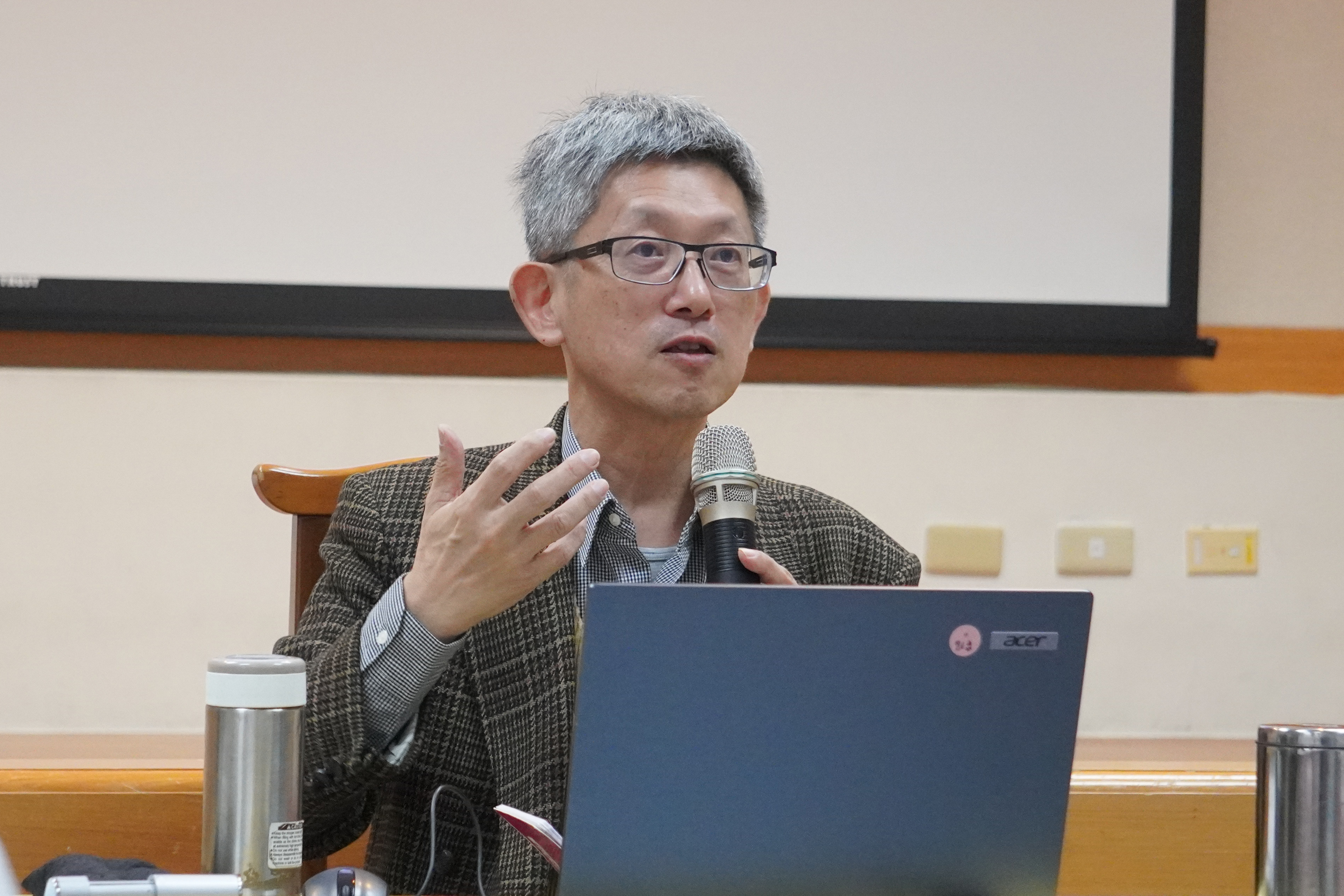
Director Huang Kuan-Min visiting the College of Buddhist Studies to lecture on "Papañca or Game Samadhi? The Affect of Imagination and Metaphor."
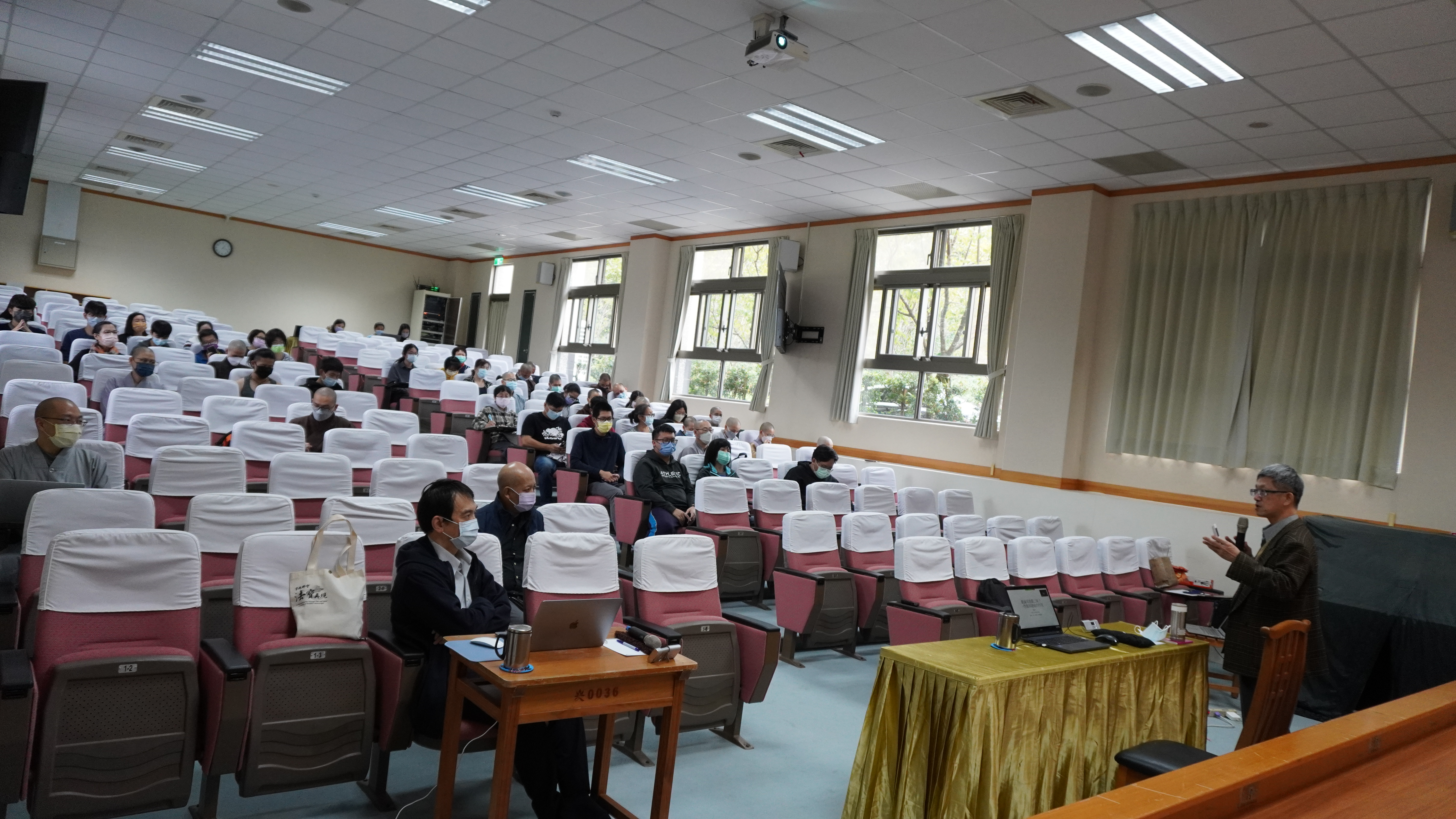
The lecture was held in a hybrid format (video conference and in-person), with approximately 80 faculty and students attending.
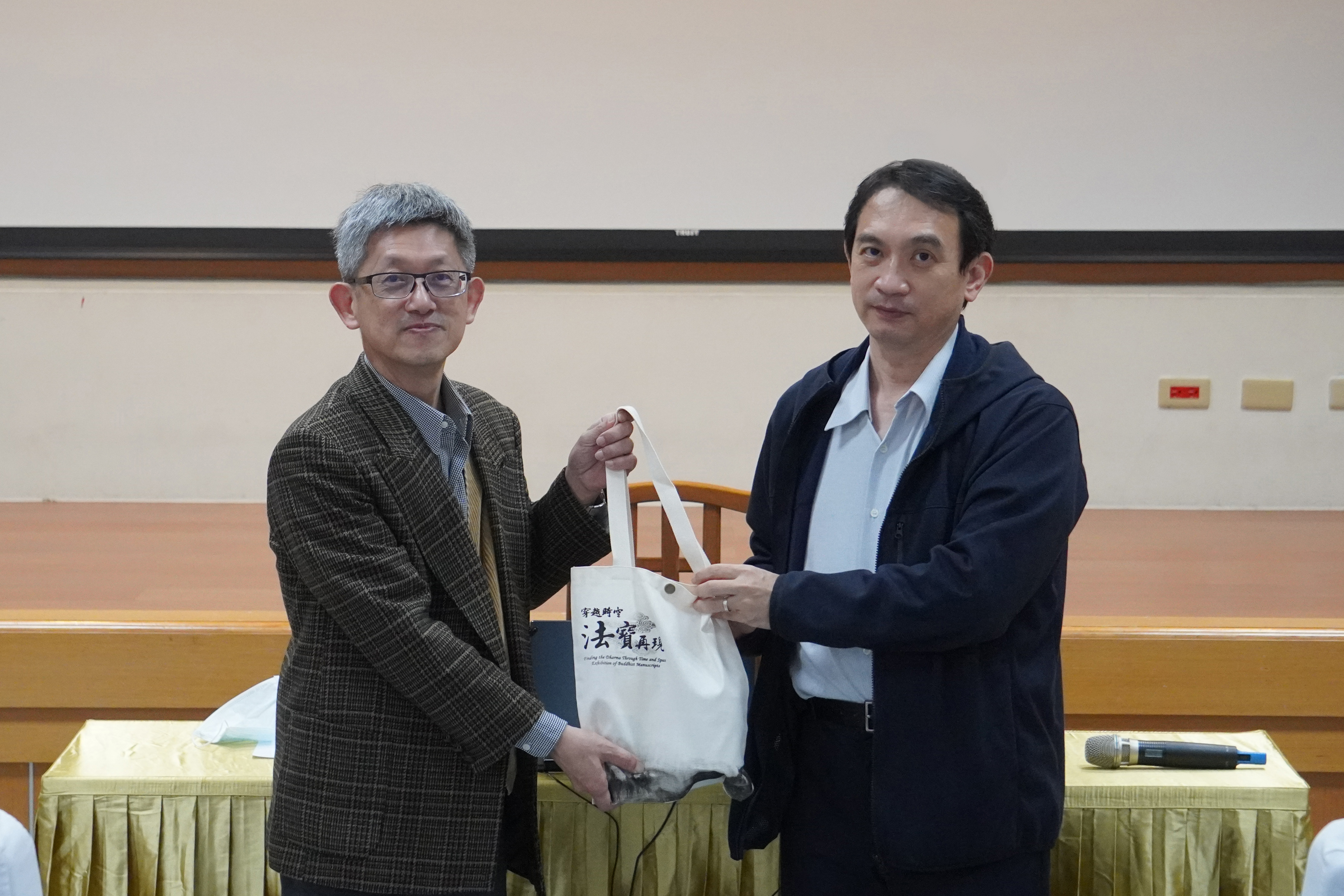
Director Huang Kuan-Min with the moderator, Prof. Guo Chao-Shun.