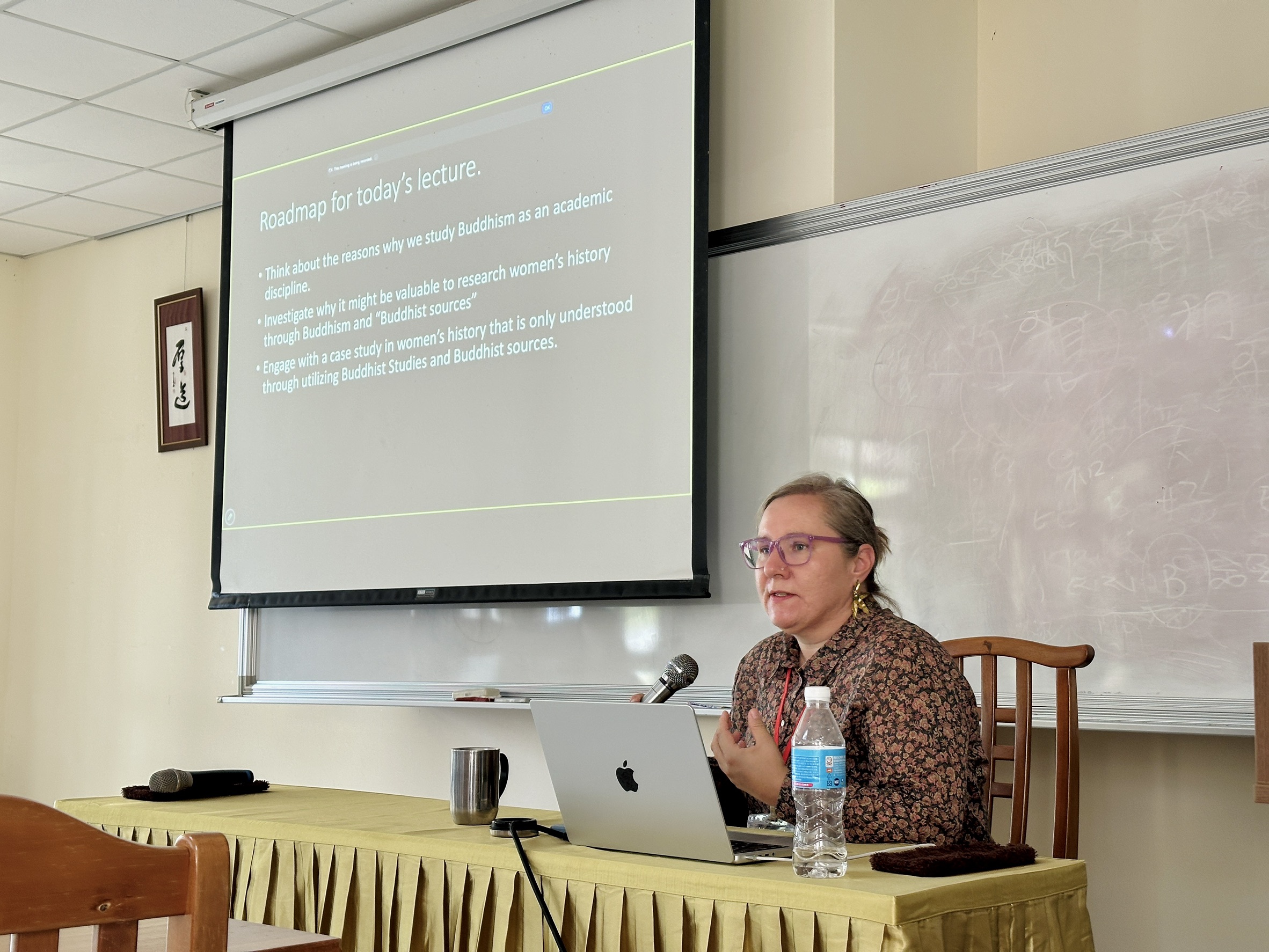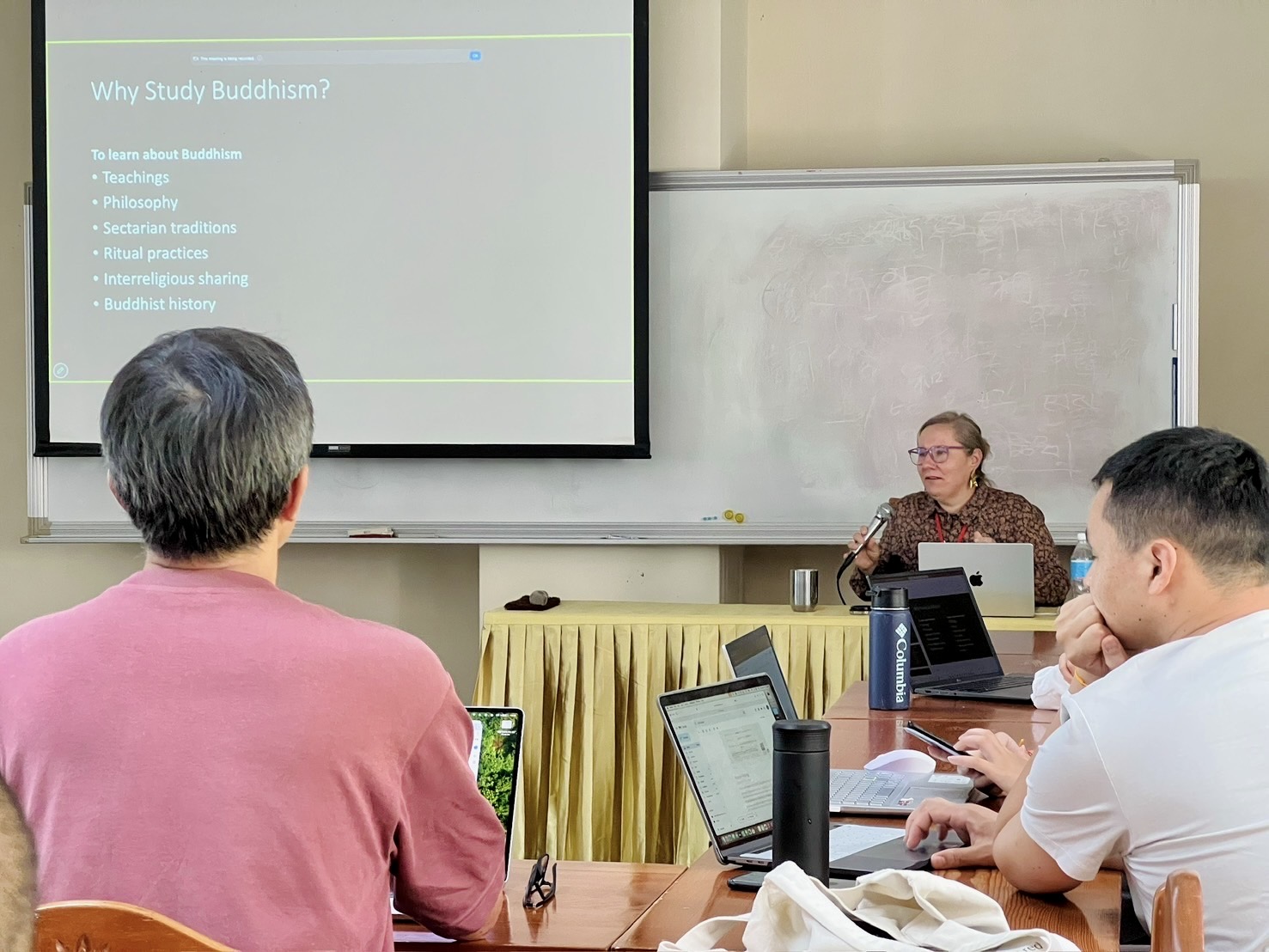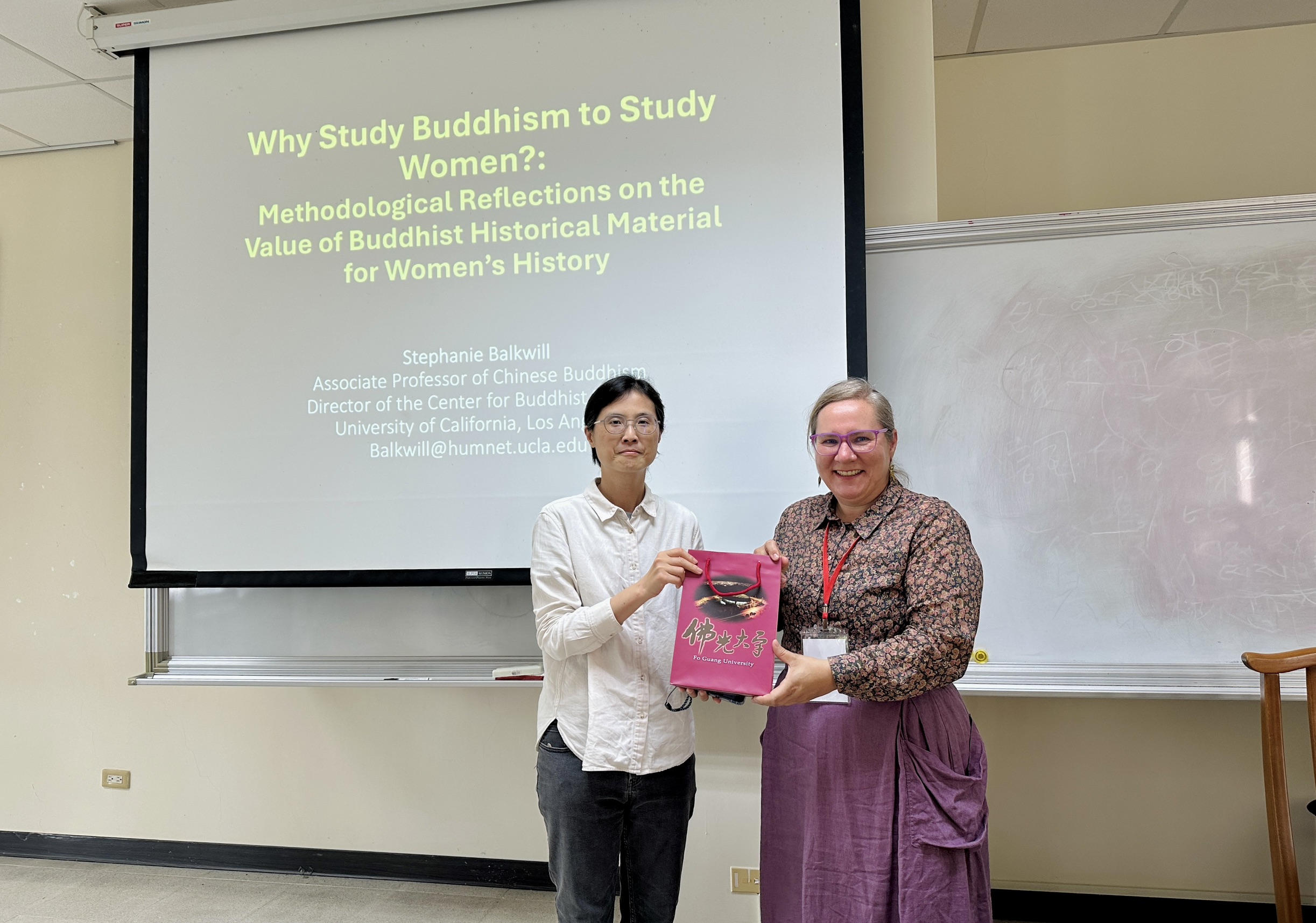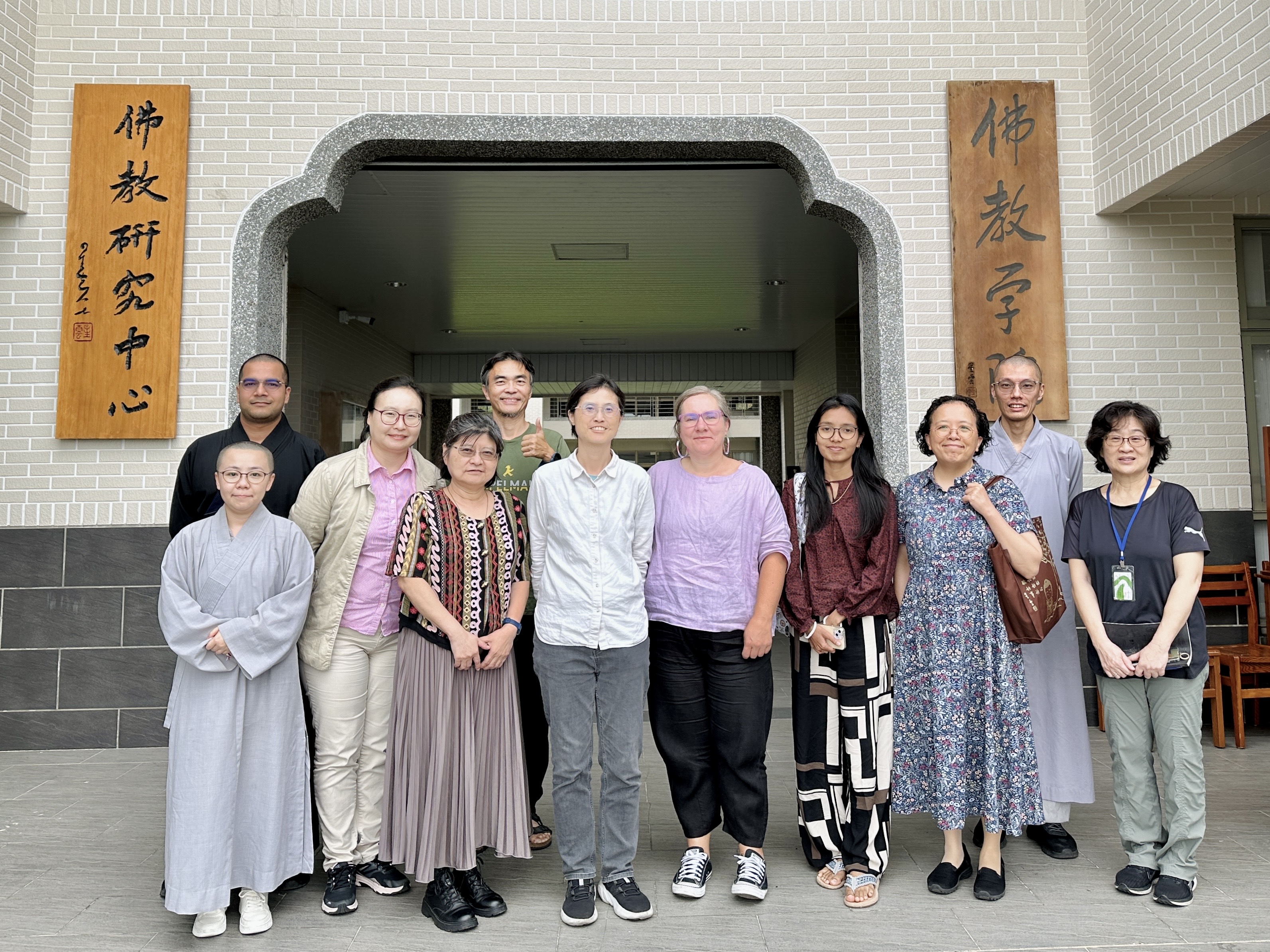

On April 14-15,2026, the Center for Buddhist Studies at Fo Guang University hosted an installment of its International Distinguished Scholars Lecture Series, featuring Associate Professor Stephanie Balkwill of the University of California, Los Angeles (UCLA). Over two days, through a lecture and a reading group, she explored key issues in Buddhism and gender studies, focusing on women’s history methodologies and interpretations of gender and the body in Mahāyāna Buddhist texts.
In the first lecture, “Why Study Buddhism to Study Women? Methodological Reflections on the Value of Buddhist Historical Material for Women’s History,” Professor Balkwill addressed the limitations of traditional historical sources, in which women are often underrepresented. In contrast, Buddhist materials—including inscriptions, donor records, and textual sources—preserve substantial evidence of women’s participation, offering crucial resources for reconstructing women’s history.
She proposed a framework of “Buddhist feminist historiography,” emphasizing the importance of centering Buddhist sources in the study of women’s history. Compared to other historical domains, women’s participation in Buddhist contexts was often more visible, allowing scholars to recover women’s voices, activities, and agency through textual and visual evidence.
The lecture also presented a case study linking Empress Dowager Ling of the Northern Wei and Empress Wu Zetian, demonstrating how Buddhist sources provide new perspectives on women’s political and religious authority, revealing historical narratives that are otherwise obscured in conventional historiography.
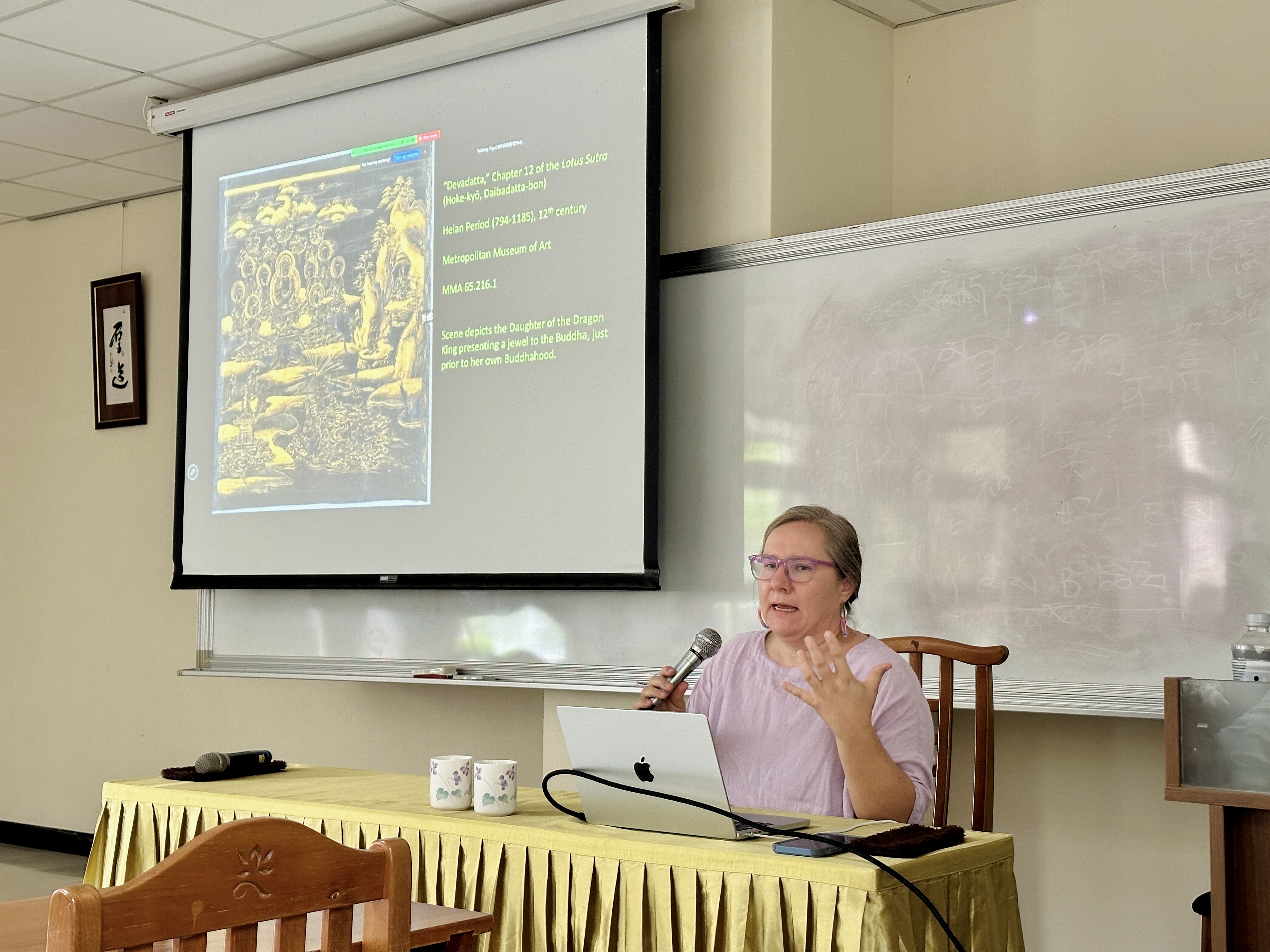
The second day’s reading group focused on “Interpreting Women’s Bodies in Mahāyāna Buddhism,” examining the question of whether women must transform into men to attain Buddhahood. Drawing on narratives such as the Dragon King’s Daughter in the Lotus Sūtra and the transformation episodes in the Vimalakīrti Sūtra, Professor Balkwill analyzed different meanings of bodily transformation. She argued that these narratives are not primarily concerned with physical change, but rather illustrate the Buddhist doctrine of emptiness, demonstrating that gender and the body lack inherent, fixed essence.
The discussion further introduced the doctrine of the “Two Truths,” explaining how Buddhism simultaneously affirms the emptiness of gender while recognizing its functional reality in conventional existence. Through this framework, Buddhist texts offer valuable insights not only into historical gender perspectives but also into contemporary discussions of sex and gender.
The two-day event attracted active participation and lively discussion among students and faculty. Professor Balkwill also shared her recent publications and encouraged students to cultivate critical thinking and intellectual resilience in their academic pursuits.
Professor Stephanie Balkwill’s recently published book is now available for download and is provided for reference by both scholars and the general public: