Hosted by the Center for Buddhist Studies at Fo Guang University (FGU), and co-organized by the Fo Guang Shan Foundation for Buddhist Culture and Education and the FGU Department of Buddhist Studies, the academic conference "Text, Action, and Healing: A Dialogue Between Buddhism and Psychotherapy" was held from May 26 to 27, 2023, at the Yunshui Hall of Fo Guang University. Approximately 250 guests attended the event.
The conference showcased the results of a one-year "Interdisciplinary Research Project on Buddhist Studies and Psychology," jointly executed by scholars from FGU’s Department of Buddhist Studies and Department of Psychology, the Department of Philosophy at National Chengchi University (NCCU), the Department of Counseling and Clinical Psychology at National Dong Hwa University (NDHU), and the Department of Human Development and Psychology at Tzu Chi University. The event aimed to pioneer new themes and methodologies in academic research and teaching practices for both Buddhist studies and psychology.
During the opening ceremony, Venerable Tzu Hui, Chair of the Board of Fo Guang University, affirmed the research project for opening a door to deep dialogue between Buddhist studies and psychology. She stated that the "Three Canons and myriad Dharma gates" of Buddhism are all ultimately aimed at healing the mind. She noted that the Center for Buddhist Studies created an excellent learning opportunity by introducing modern psychology to interact with the Dharma. This fulfills the expectation of the founder, Venerable Master Hsing Yun, for the Center to serve as a platform for research across various fields. She also praised the Youth Forum as an effective learning method, allowing students to receive guidance from senior scholars.
FGU President Ho Jow-fei remarked that while both Buddhist studies and psychology "point directly to the original mind," psychology excels in science, whereas Buddhism, as a religion, touches not only upon personality but also transcends it, opening new prospects for the human sciences. He thanked the Center for Buddhist Studies for building a bridge for interdisciplinary dialogue to achieve complementary effects and expressed his hope that the Center would act as a "locomotive" driving interdisciplinary academic research.
FGU Vice President Fu Chao-ming mentioned that concepts such as "Buddhist Psychology" and "Buddhist Sociology" are gaining attention in other educational institutions. By assuming the role of facilitating dialogue between Buddhist studies and other fields, the Center opens prospects for cross-university cooperation rooted in Buddhist studies. He suggested potential directions for dialogue, such as the Alaya-vijnana (storehouse consciousness), the Avatamsaka worldview, and Chan (Zen) Buddhism, adding, "The deeper I delve into neural network research, the more I admire the insights of the Dharma!"
Professor Wan Jin-chuan, Director of the Center for Buddhist Studies, stated that for Humanistic Buddhism to enter society and economics, it inevitably involves various forms of knowledge. The Center is delighted to provide a platform for such interdisciplinary dialogue. He recalled that Master Hsing Yun once instructed that the vast resources of Buddhism could support various research institutes, such as Buddhist architecture, art, and literature, all of which rely on collective effort.
Director Wan concluded by thanking Professor Kuo Chao-shun, the project’s general director, for stepping out of his own area of expertise to continuously build bridges across disciplines. He credited Prof. Guo for allowing psychology experts to receive Buddhist discourse and wisdom while introducing useful psychological concepts into Buddhist studies, noting that this was truly an act of "Buddha's heart" (great kindness). He hoped this would serve as a beginning, upholding Master Hsing Yun’s philosophy of "opening the main gate and walking the main road," to engage in future dialogues with sociology and communication studies.
The event concluded with a Comprehensive Panel Discussion moderated by Professor Wan Jinchuan. The panel featured Professor Lin Wen-Ying (Department of Psychology, FGU), Professor Lee Wai-Lun (Department of Philosophy, NCCU), and Professor Chai Pen-Jui (Department of Cooperative Economics, Feng Chia University). They discussed the topic "Stress and Healing in University Education," analyzing environmental factors contributing to stress in higher education and proposing possible countermeasures.
Professor Lin Wen-Ying pointed out that student stress is closely tied to broader environmental factors. Students often lack goals, face time pressure to complete credits and internships quickly, and feel uncertain about the future. She suggested adjustments in the educational environment: 1) Provide space to "pause" so students can reflect on "what kind of person I want to be," which relies on deep care from mentors; 2) Implement flexible academic systems that align learning with personal goals; 3) Connect learning with social issues, such as through Problem-Based Learning (PBL), allowing students to see the impact of their studies and generate a sense of meaning in life.
Professor Lee Wai-Lun argued that the university environment cannot escape a paternalistic mindset. The Ministry of Education’s attempt to make all schools "nationally uniform" has led to a system where failure to meet standards is often masked by fabrication and tacit compliance. Furthermore, ranking culture, elitism, and "career planning" filled with comparison and competition are sources of stress. He proposed replacing "Family Vision" (lineage-based pressure) with "Homeland Vision" (inclusive of diversity) and replacing the concept of "Career Planning" with "Ecological Planning."
Professor Chai Pen-Jui shared his practical experience in teaching and administration. Addressing issues such as fear of hardship, "lying flat" (tang ping), poor attitude, and seeking easy-pass courses, he suggested creating an educational environment that sparks "passion and imagination." He emphasized that students must know "why they are fighting," noting, "The point is not that students are unwilling to endure hardship, but that they don't know what they are fighting for." He cited Master Hsing Yun’s One Hundred Lessons from the Monastery, highlighting the significance of "seeing the truth in the ordinary." Concepts such as willingness, playing second fiddle, mutual joy, and having affection and righteousness are "the most difficult yet core philosophies of life. If we can help teachers and students experience a sense of achievement in ordinary life, perhaps we can solve part of the stress problem in universities."
Online participants included Venerable Yong Ben, Executive Director of FGU, and other distinguished guests.
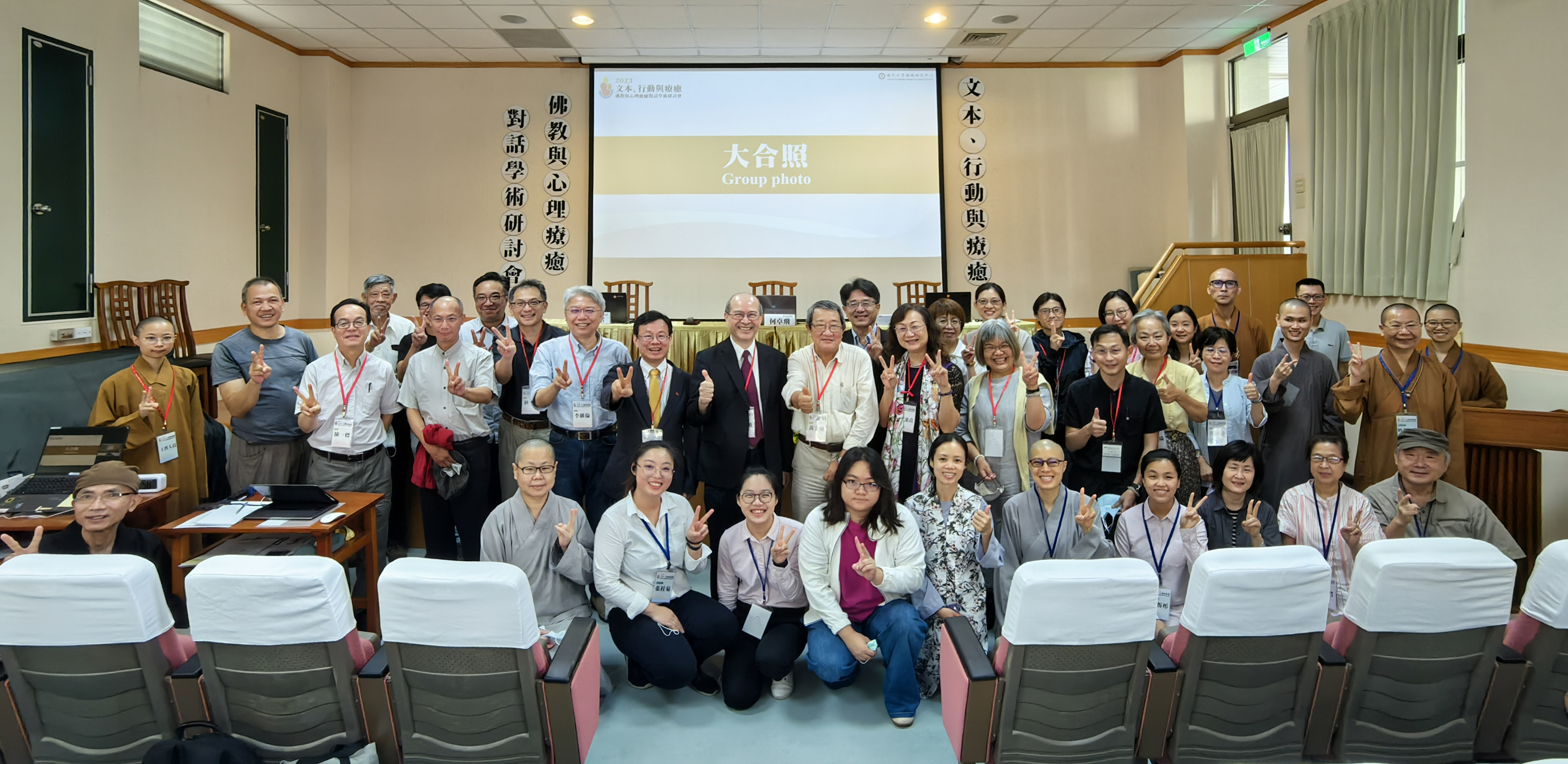
Group photo of the scholars.
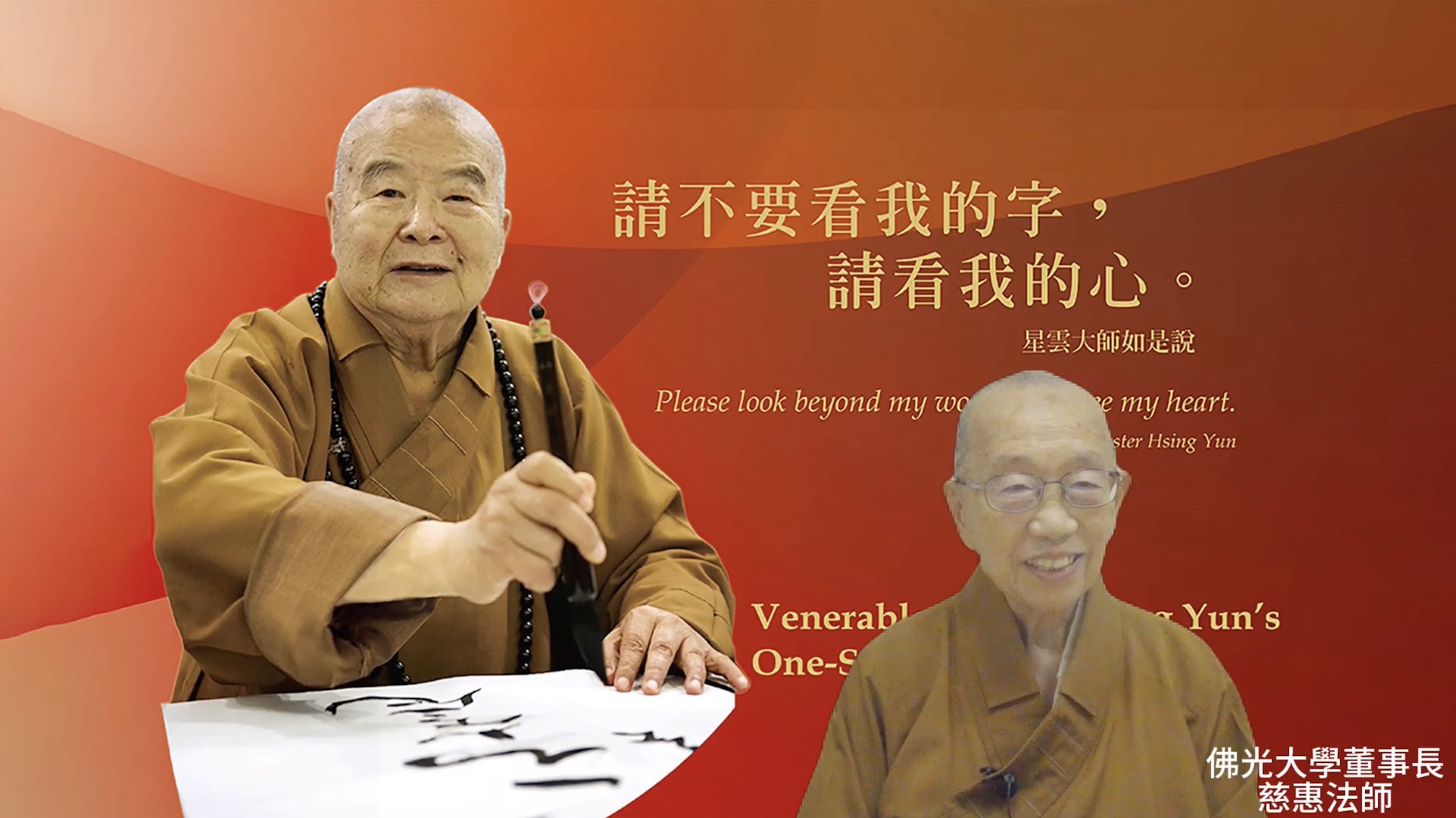
Venerable Tzu Hui, Chair of the Board of Fo Guang University, affirms the research project for opening the door to deep dialogue between Buddhist studies and psychology. She noted that the Center for Buddhist Studies has fulfilled the Founder Master Hsing Yun's high expectations for it to serve as a platform for research in various fields.
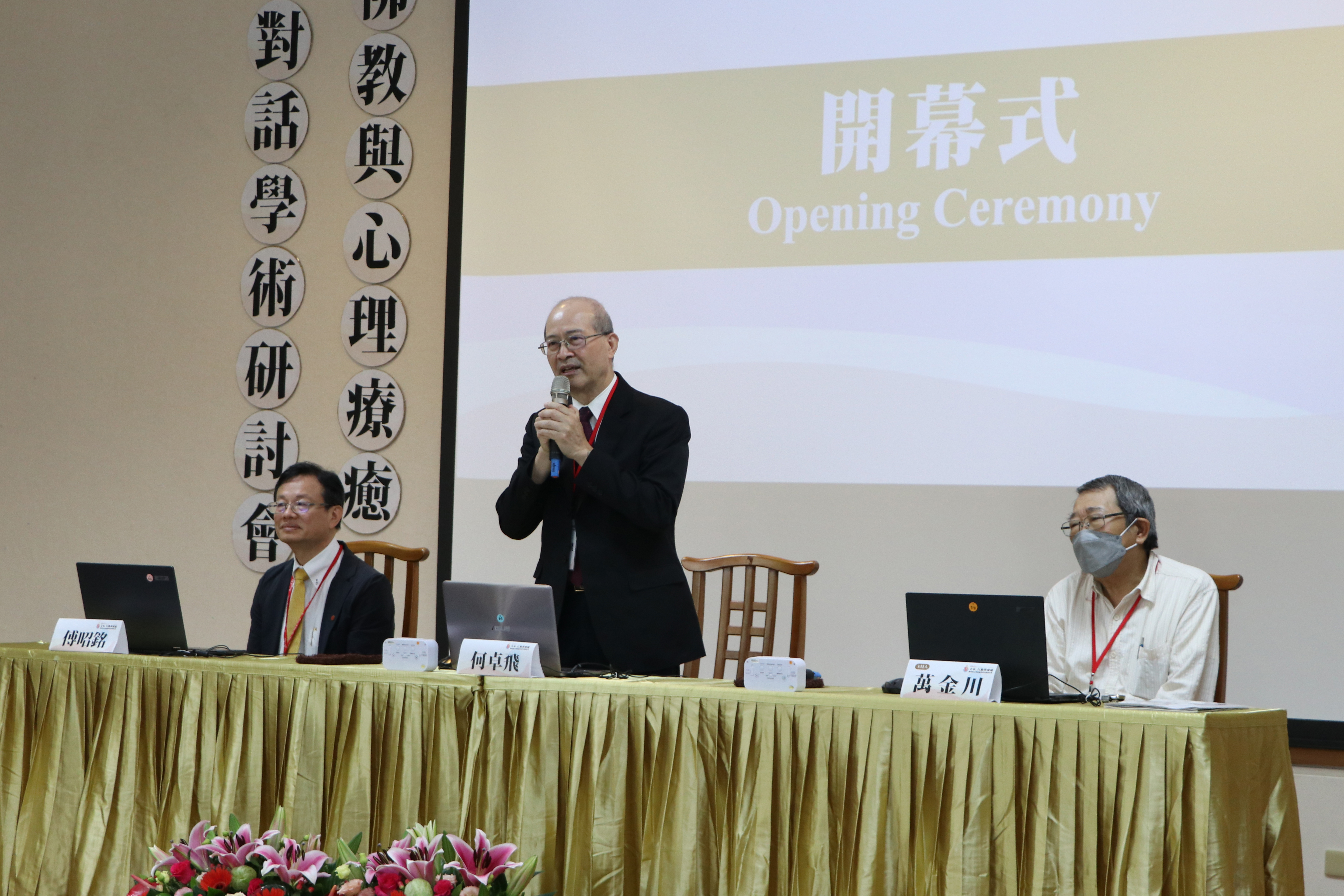
Fo Guang University President He Cho-fei delivers a speech, stating that the Center for Buddhist Studies builds a bridge for interdisciplinary dialogue, achieving complementary effects.
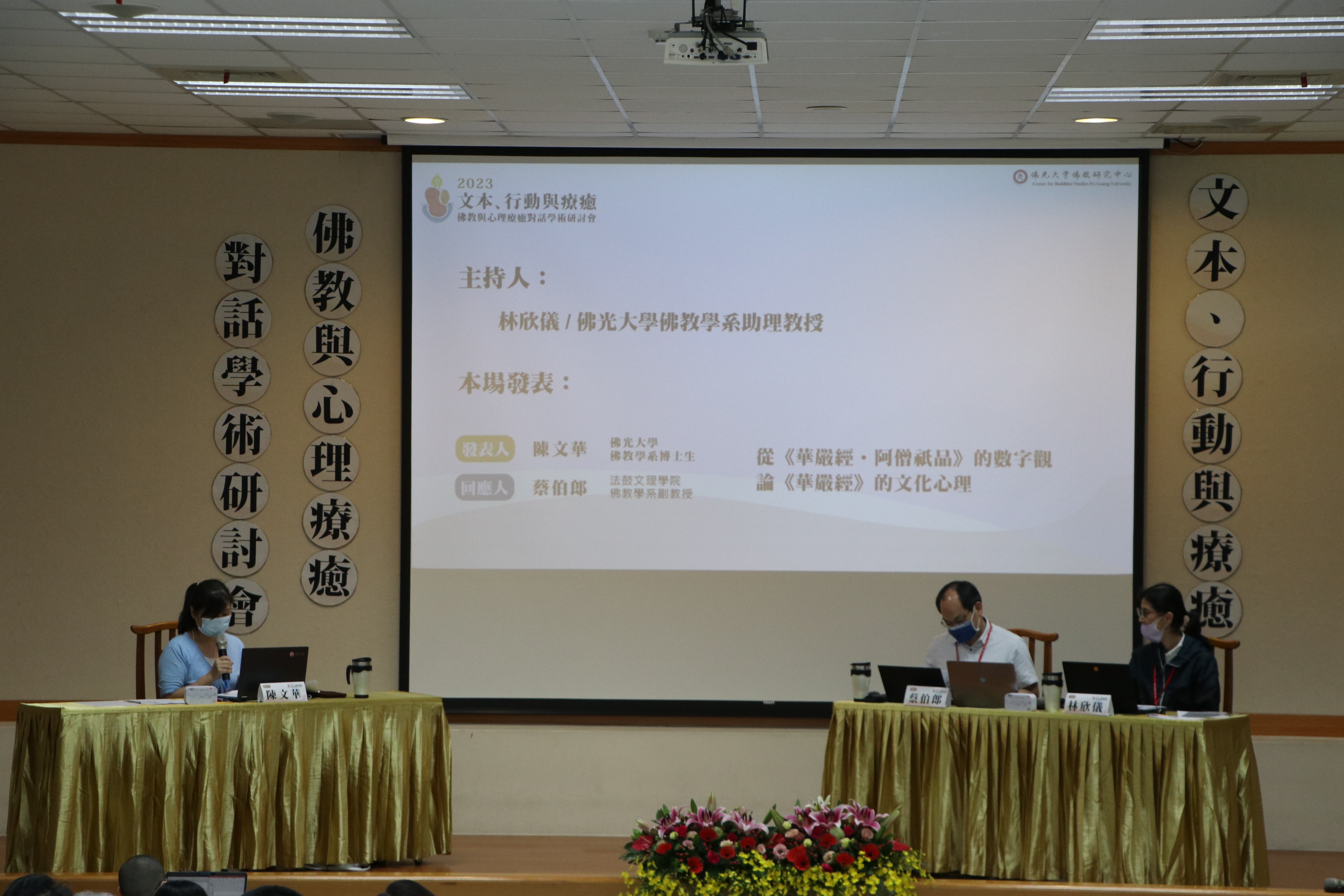
The conference included a Youth Forum, providing students the opportunity to receive guidance from senior scholars.
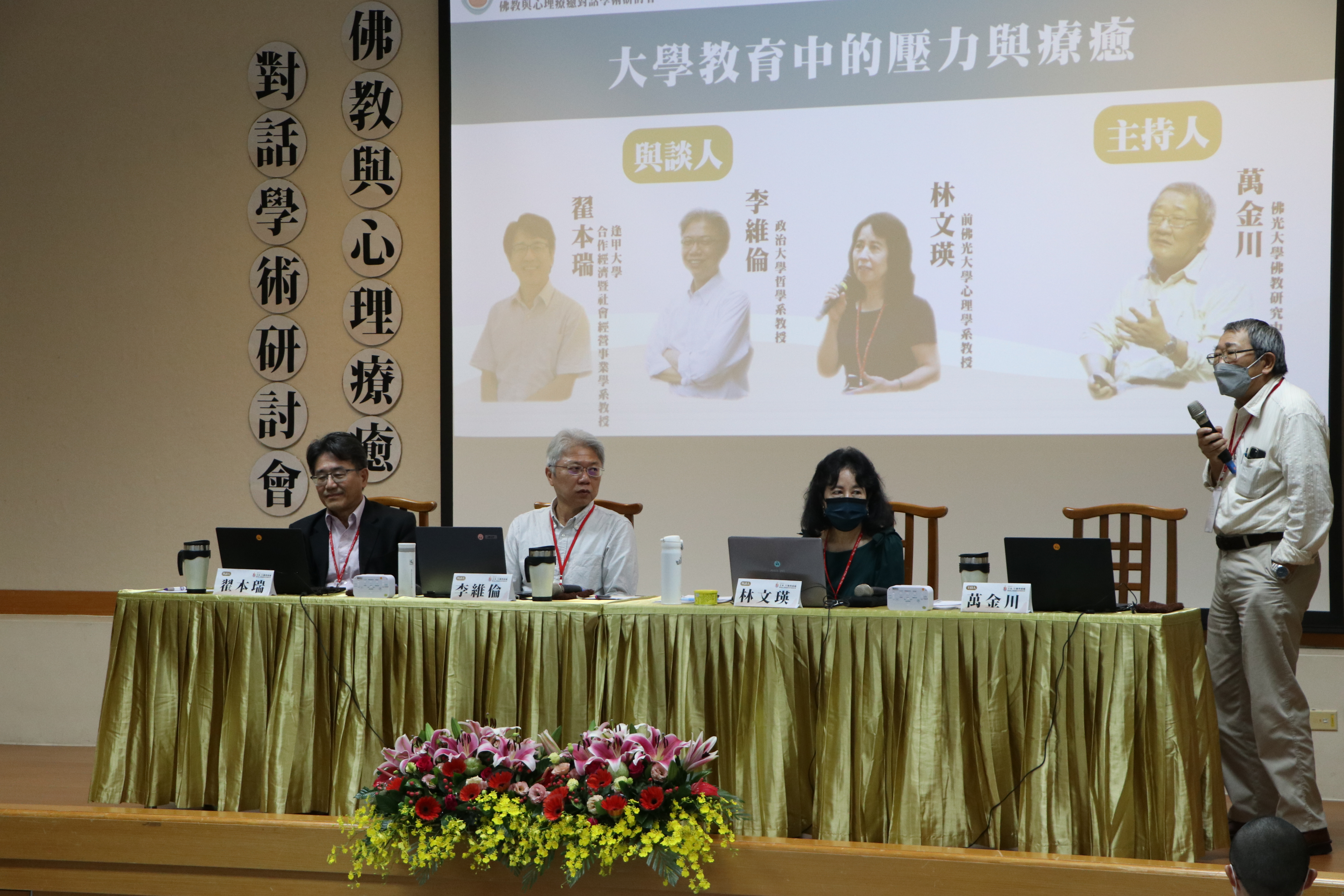
The Comprehensive Panel Discussion focused on the topic of "Stress and Healing in University Education."
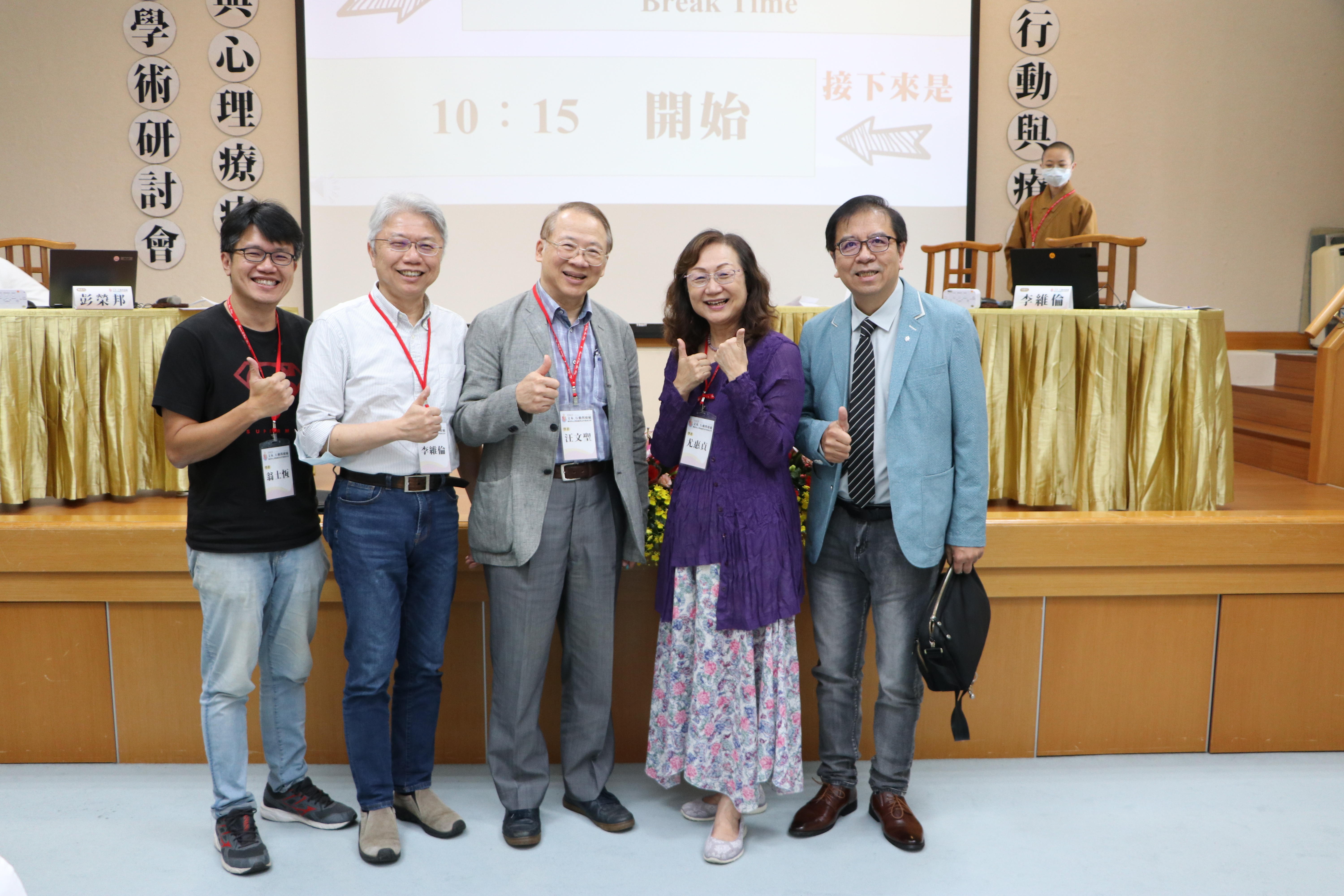
Commemorative group photo of the scholars.
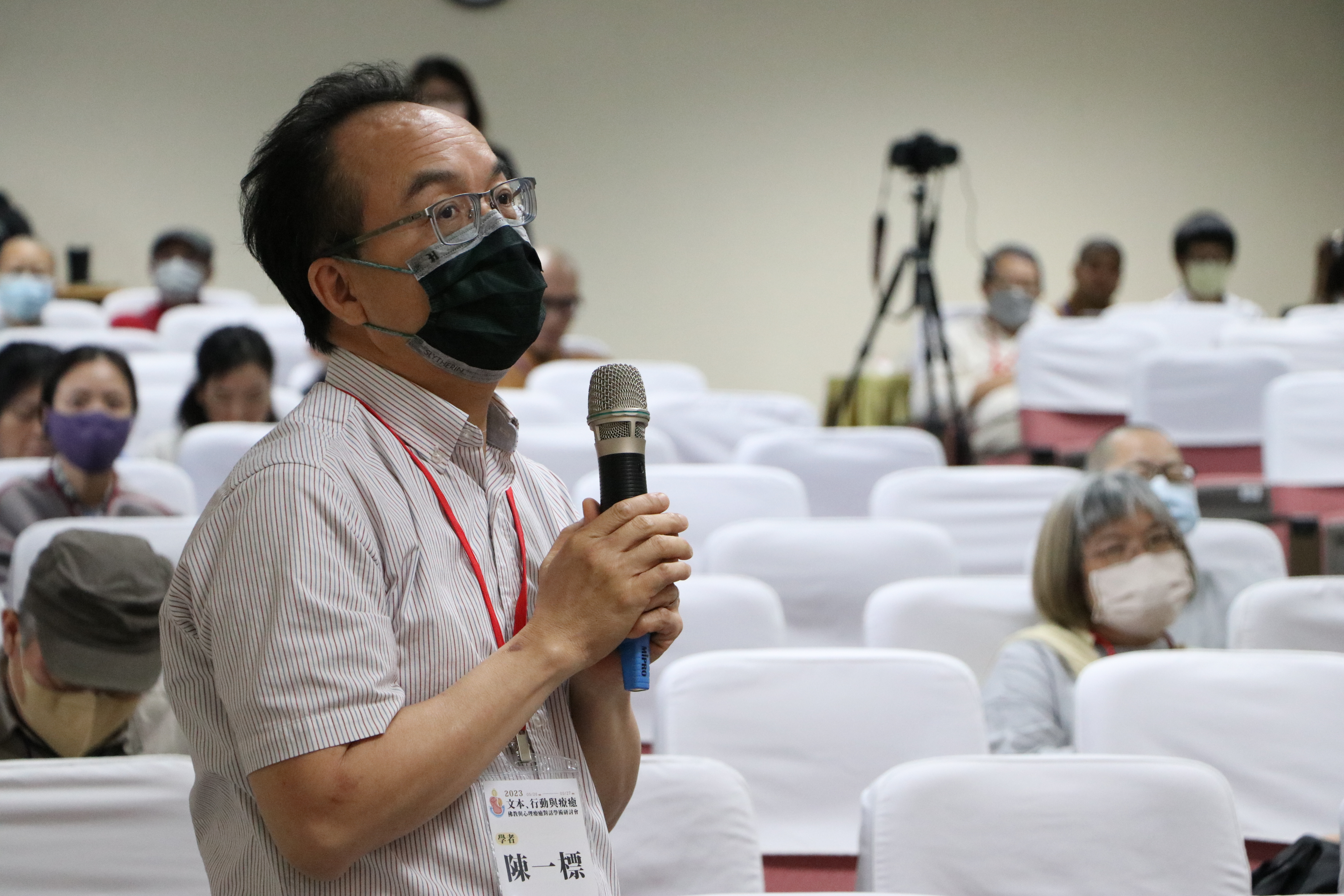
Enthusiastic exchanges and discussions at the venue.
The conference showcased the results of a one-year "Interdisciplinary Research Project on Buddhist Studies and Psychology," jointly executed by scholars from FGU’s Department of Buddhist Studies and Department of Psychology, the Department of Philosophy at National Chengchi University (NCCU), the Department of Counseling and Clinical Psychology at National Dong Hwa University (NDHU), and the Department of Human Development and Psychology at Tzu Chi University. The event aimed to pioneer new themes and methodologies in academic research and teaching practices for both Buddhist studies and psychology.
During the opening ceremony, Venerable Tzu Hui, Chair of the Board of Fo Guang University, affirmed the research project for opening a door to deep dialogue between Buddhist studies and psychology. She stated that the "Three Canons and myriad Dharma gates" of Buddhism are all ultimately aimed at healing the mind. She noted that the Center for Buddhist Studies created an excellent learning opportunity by introducing modern psychology to interact with the Dharma. This fulfills the expectation of the founder, Venerable Master Hsing Yun, for the Center to serve as a platform for research across various fields. She also praised the Youth Forum as an effective learning method, allowing students to receive guidance from senior scholars.
FGU President Ho Jow-fei remarked that while both Buddhist studies and psychology "point directly to the original mind," psychology excels in science, whereas Buddhism, as a religion, touches not only upon personality but also transcends it, opening new prospects for the human sciences. He thanked the Center for Buddhist Studies for building a bridge for interdisciplinary dialogue to achieve complementary effects and expressed his hope that the Center would act as a "locomotive" driving interdisciplinary academic research.
FGU Vice President Fu Chao-ming mentioned that concepts such as "Buddhist Psychology" and "Buddhist Sociology" are gaining attention in other educational institutions. By assuming the role of facilitating dialogue between Buddhist studies and other fields, the Center opens prospects for cross-university cooperation rooted in Buddhist studies. He suggested potential directions for dialogue, such as the Alaya-vijnana (storehouse consciousness), the Avatamsaka worldview, and Chan (Zen) Buddhism, adding, "The deeper I delve into neural network research, the more I admire the insights of the Dharma!"
Professor Wan Jin-chuan, Director of the Center for Buddhist Studies, stated that for Humanistic Buddhism to enter society and economics, it inevitably involves various forms of knowledge. The Center is delighted to provide a platform for such interdisciplinary dialogue. He recalled that Master Hsing Yun once instructed that the vast resources of Buddhism could support various research institutes, such as Buddhist architecture, art, and literature, all of which rely on collective effort.
Director Wan concluded by thanking Professor Kuo Chao-shun, the project’s general director, for stepping out of his own area of expertise to continuously build bridges across disciplines. He credited Prof. Guo for allowing psychology experts to receive Buddhist discourse and wisdom while introducing useful psychological concepts into Buddhist studies, noting that this was truly an act of "Buddha's heart" (great kindness). He hoped this would serve as a beginning, upholding Master Hsing Yun’s philosophy of "opening the main gate and walking the main road," to engage in future dialogues with sociology and communication studies.
The event concluded with a Comprehensive Panel Discussion moderated by Professor Wan Jinchuan. The panel featured Professor Lin Wen-Ying (Department of Psychology, FGU), Professor Lee Wai-Lun (Department of Philosophy, NCCU), and Professor Chai Pen-Jui (Department of Cooperative Economics, Feng Chia University). They discussed the topic "Stress and Healing in University Education," analyzing environmental factors contributing to stress in higher education and proposing possible countermeasures.
Professor Lin Wen-Ying pointed out that student stress is closely tied to broader environmental factors. Students often lack goals, face time pressure to complete credits and internships quickly, and feel uncertain about the future. She suggested adjustments in the educational environment: 1) Provide space to "pause" so students can reflect on "what kind of person I want to be," which relies on deep care from mentors; 2) Implement flexible academic systems that align learning with personal goals; 3) Connect learning with social issues, such as through Problem-Based Learning (PBL), allowing students to see the impact of their studies and generate a sense of meaning in life.
Professor Lee Wai-Lun argued that the university environment cannot escape a paternalistic mindset. The Ministry of Education’s attempt to make all schools "nationally uniform" has led to a system where failure to meet standards is often masked by fabrication and tacit compliance. Furthermore, ranking culture, elitism, and "career planning" filled with comparison and competition are sources of stress. He proposed replacing "Family Vision" (lineage-based pressure) with "Homeland Vision" (inclusive of diversity) and replacing the concept of "Career Planning" with "Ecological Planning."
Professor Chai Pen-Jui shared his practical experience in teaching and administration. Addressing issues such as fear of hardship, "lying flat" (tang ping), poor attitude, and seeking easy-pass courses, he suggested creating an educational environment that sparks "passion and imagination." He emphasized that students must know "why they are fighting," noting, "The point is not that students are unwilling to endure hardship, but that they don't know what they are fighting for." He cited Master Hsing Yun’s One Hundred Lessons from the Monastery, highlighting the significance of "seeing the truth in the ordinary." Concepts such as willingness, playing second fiddle, mutual joy, and having affection and righteousness are "the most difficult yet core philosophies of life. If we can help teachers and students experience a sense of achievement in ordinary life, perhaps we can solve part of the stress problem in universities."
Online participants included Venerable Yong Ben, Executive Director of FGU, and other distinguished guests.
Group photo of the scholars.
Venerable Tzu Hui, Chair of the Board of Fo Guang University, affirms the research project for opening the door to deep dialogue between Buddhist studies and psychology. She noted that the Center for Buddhist Studies has fulfilled the Founder Master Hsing Yun's high expectations for it to serve as a platform for research in various fields.
Fo Guang University President He Cho-fei delivers a speech, stating that the Center for Buddhist Studies builds a bridge for interdisciplinary dialogue, achieving complementary effects.
The conference included a Youth Forum, providing students the opportunity to receive guidance from senior scholars.
The Comprehensive Panel Discussion focused on the topic of "Stress and Healing in University Education."
Commemorative group photo of the scholars.
Enthusiastic exchanges and discussions at the venue.