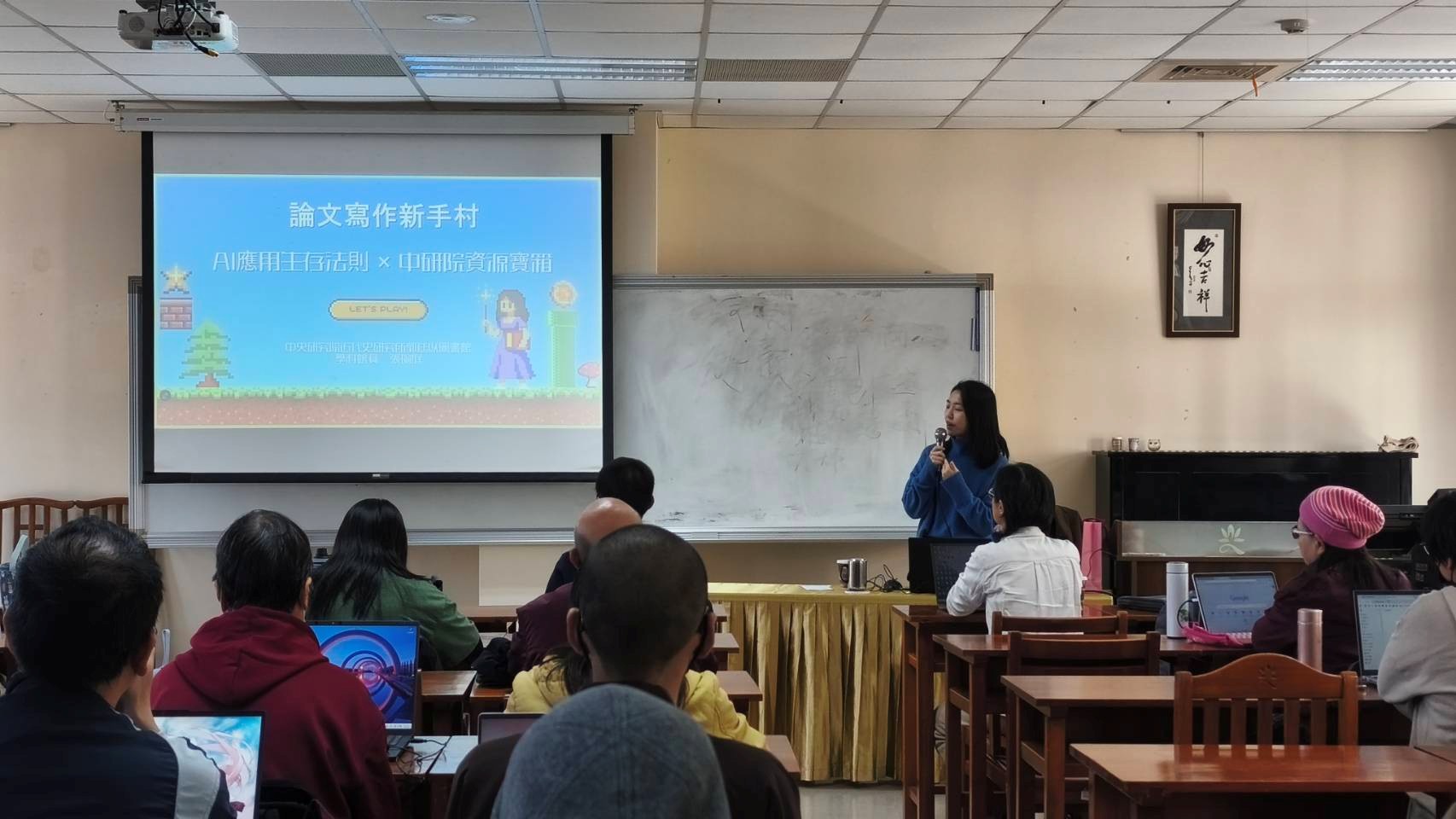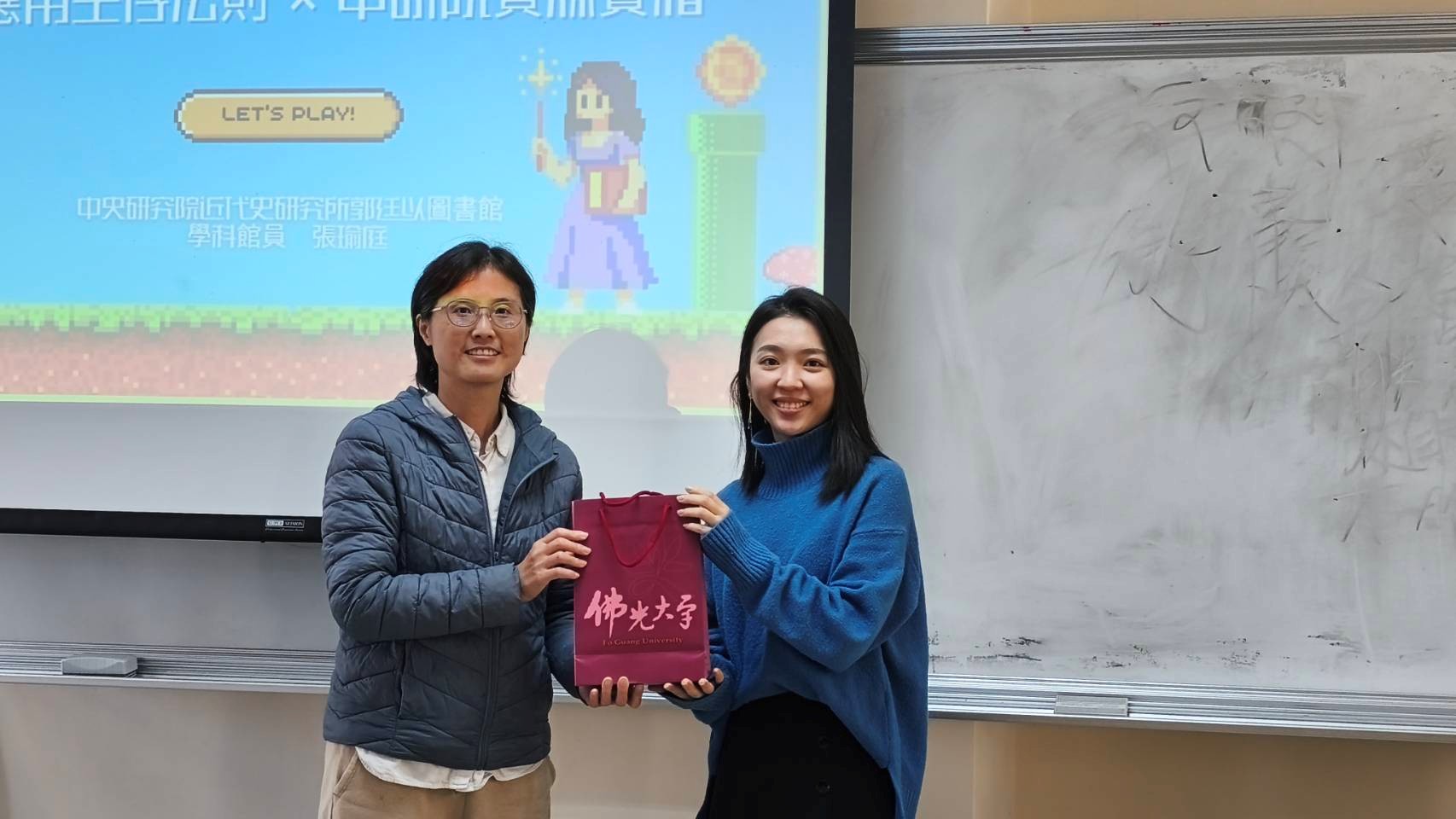

To assist students and researchers in navigating the academic challenges of the Generative AI era, the Buddhist Pedagogy Workshop at Fo Guang University hosted a special lecture on the afternoon of January 5 titled "Thesis Writing Novice Village: Survival Rules for AI Application." Ms. Chang Yu-ting (張瑜庭), a librarian at the Kuo Ting-yee Library of the Institute of Modern History, Academia Sinica, was invited to share insights on the practical application and risk identification of AI tools in humanities research.
Chang emphasized that AI is not a "replacement" for academic research but an auxiliary tool to assist the research process. Using humanities research as an example, she illustrated AI's advantages in brainstorming, data reorganization, language editing, and presentation creation. However, she cautioned that Generative AI is still incapable of conducting in-depth analysis of historical materials or genuine knowledge production and may generate errors or biases. Consequently, researchers must possess the skills to verify information and exercise critical judgment.
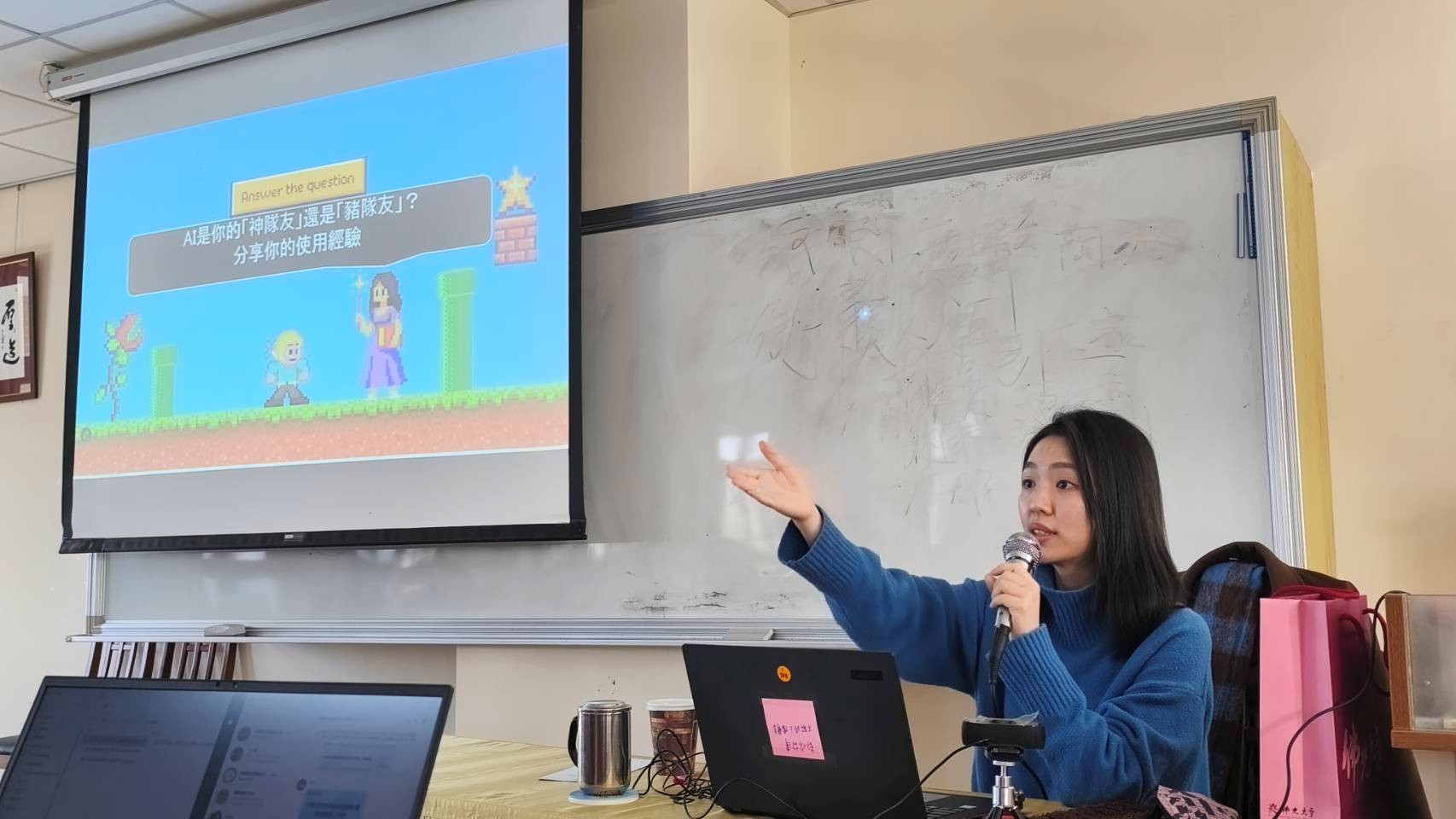
During the lecture, Chang used real-world case studies to guide the audience in considering whether AI acts as an "invaluable ally or an incompetent liability" (a "God-like teammate" vs. a "Pig-like teammate"). She proposed a "Red Light, Green Light" research principle to help beginners master the boundaries of AI usage. She also placed special emphasis on academic ethics, explaining the importance of disclosing AI usage. Providing concrete examples, she reminded researchers: "It is not that you cannot use it, but you must clearly articulate how you used it."
Furthermore, the session introduced the rich collection resources and digital databases of the Academia Sinica library—ranging from primary historical sources and secondary research to reference tools—to help students establish a solid starting point for research and avoid over-reliance on AI at the expense of fundamental academic training.
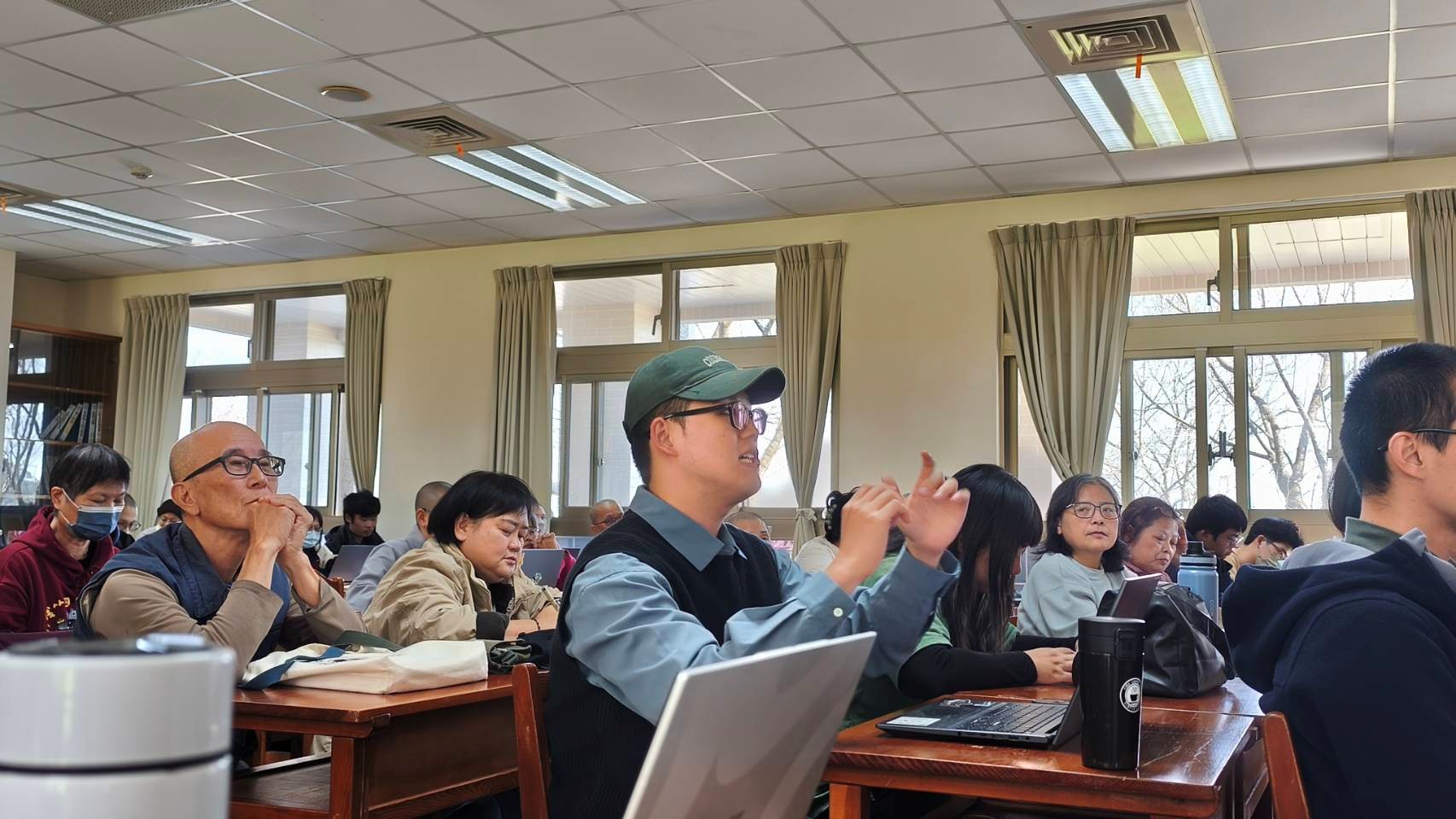
As the finale of the Buddhist Pedagogy Workshop series, the event saw enthusiastic interaction, with attendees gaining a clearer understanding of AI application and research ethics. Through this lecture, the organizers hope to guide students in enhancing research efficiency amidst the technological wave while upholding the depth and responsibility of humanities scholarship.