
From November 12 to 17, Ven. Jue Guan (覺冠), Principal Investigator of the Center for Buddhist Studies' sub-project "Research on Silk Road Buddhist Sound Culture: Focusing on the 'Chanting Scrolls' (念卷) of Liangzhou," visited Wuwei, Gansu, and surrounding areas to conduct fieldwork on the music of Hexi Baojuan.
Ven. Jue Guan (Department of Buddhist Studies, Fo Guang University), the principal investigator of the sub-project "Silk Road Buddhist Sound Culture Research: Focusing on the 'Chanting Scrolls' (念卷) of Liangzhou," visited Wuwei, Gansu, to conduct fieldwork on the music of Hexi Baojuan. This research is part of the larger 2024 integrated project executed by the Center for Buddhist Studies at Fo Guang University titled "Dialogue between Text, Image, and Sound."
The research team visited the Liangzhou Baojuan Institute (Liangzhou Baojuan Training Center), located in Team 1, Dengshan Village, Zhangyi Town, Liangzhou District, Wuwei City. There, they interviewed a dedicated team led by Mr. Zhao Xufeng, a National-level Intangible Cultural Heritage (ICH) Inheritor, and Mr. Li Weishan, a Provincial-level ICH Inheritor, along with other ICH enthusiasts. Thanks to Mr. Zhao’s meticulous organization and his efforts to rally the local community, Liangzhou Baojuan was inscribed on the National List of Intangible Cultural Heritage in 2006. Moved by this spirit of dedication, Ms. Li Guifang (wife of Mr. Zhao) and Ms. Niu Yuelan (wife of Mr. Li) have also joined the ranks of those preserving the "Nianjuan" (chanting scroll) tradition.
Hexi Baojuan is widely distributed across the Hexi Corridor. This fieldwork focused specifically on the Liangzhou Baojuan in the Wuwei region. Originating from the "Bianwen" (Transformation Texts) of the Tang Dynasty, the "Shuojing" (Sutra lecturing) of the Song Dynasty, and various historical folk entertainment activities used to propagate religion and promote good over evil, Liangzhou Baojuan is a unique literary form indigenous to the region. It combines storytelling with chanting. Its rich content encompasses Confucian, Buddhist, and Taoist classics, the transmission of filial piety, and folk tales, reflecting the people's aspirations for a good life and societal moral standards. Consequently, Liangzhou Baojuan not only transmits Buddhist scriptural culture but also fuses operatic styles from various dynasties, possessing profound artistic and cultural value as a vessel of wisdom.
Mr. Zhao Xufeng was originally a teacher of Chinese literature before becoming an associate researcher at the Tiantishan Grottoes Protection Institute. He devoted his personal savings to supporting the Liangzhou Baojuan Institute. Over "thirty years of accumulating frost and snow on the Qilian Mountains"—a metaphor for the passage of time and enduring hardship—he gradually established the current Tiantishan Folk Nianjuan Art Troupe. According to elderly locals, families in Wuwei used to gather around a stove, wash their hands, burn incense, and listen to chanters during festivals. In the past, one could see blind inheritors in cultural squares sitting on small stools, playing string instruments and clapping wooden boards while crowds gathered to listen to the call-and-response performances. However, times have changed, and those lively scenes have vanished. Liangzhou Baojuan now faces significant pressure due to rapid modernization, the passing of elderly inheritors, and weak public awareness of conservation. Whether there will be successors to inherit and promote this tradition remains a critical crisis.
During the five-day fieldwork in Wuwei, Mr. Zhao and his team demonstrated "Speaking and Singing Baojuan" evolved from Buddhist themes, such as the Guanyin Baojuan (Precious Scroll of Guanyin) and Mulian Sanshi Baojuan (Precious Scroll of Mulian’s Three Lives). Accompanied by instruments like the jianban (clappers), bells, drums, and Buddhist ritual instruments such as the wooden fish, cymbals, and large singing bowls, the teaching follows the traditional oral transmission method between master and apprentice. The discussions covered the structure of the performances, including the opening poems, closing poems, and the Huixiang Je (Dedication of Merit Verse). It was noted that the lyrics for the "Vow to be Born in the Western Pure Land" dedication verse are the same in Baojuan as in standard Buddhism, though the melodies differ. On-site, Ven. Jue Guan demonstrated the chanting style of the Dedication of Merit Verse used at Fo Guang Shan. This exchange of professional passion recreated a scene reminiscent of the millennial transmission of Buddhist scriptures. In this relaxed atmosphere, the troupe members introduced the team to a local specialty—fire-roasted potatoes—while Ven. Jue Guan shared pineapple cakes brought from Taiwan.
Throughout the days of interviews, Mr. Zhao shared his knowledge and efforts tirelessly, embodying the sentiment: "I do not speak of the bitterness of spring labor, only fearing I might fail my aspirations." On the final day, Mr. Zhao invited the team to the Tiantishan Grottoes to watch a Nianjuan performance. As the early winter snow began to fall in Wuwei, the chanting of the performers resonated, allowing everyone present to feel a firm and powerful transmission of heritage transcending time and space—a reenactment of the mission to continue civilization generation after generation.
Liangzhou Baojuan is a witness to past history, a flowing wealth of the present, and a cultural hope for the future. For thousands of years, the torch has been passed down, and it is hoped that we can continue to chase the light and carry this tradition far.
(Text/Photos by Tan Weiji)
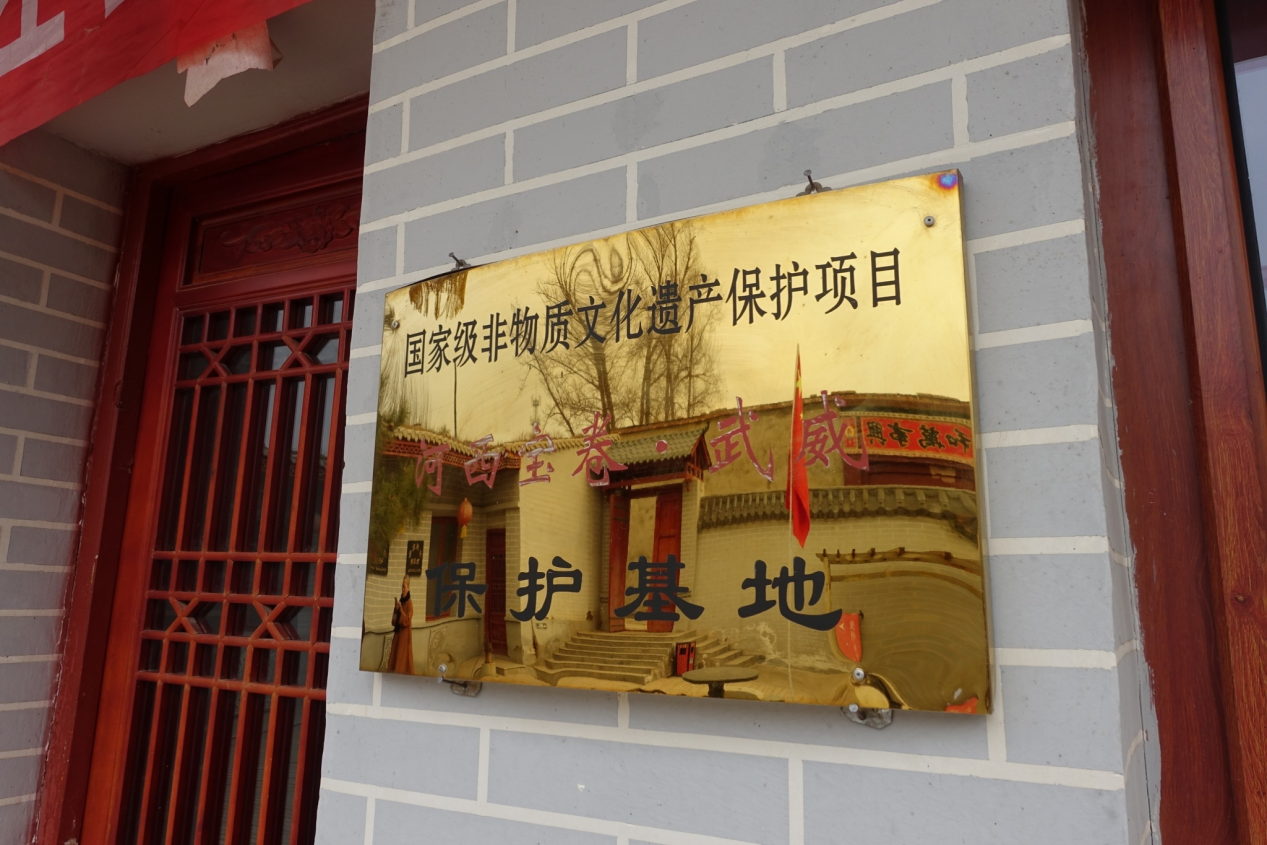
The Liangzhou Baojuan Training Institute, located at Team 1, Dengshan Village, Zhangyi Town, Liangzhou District, Wuwei City.
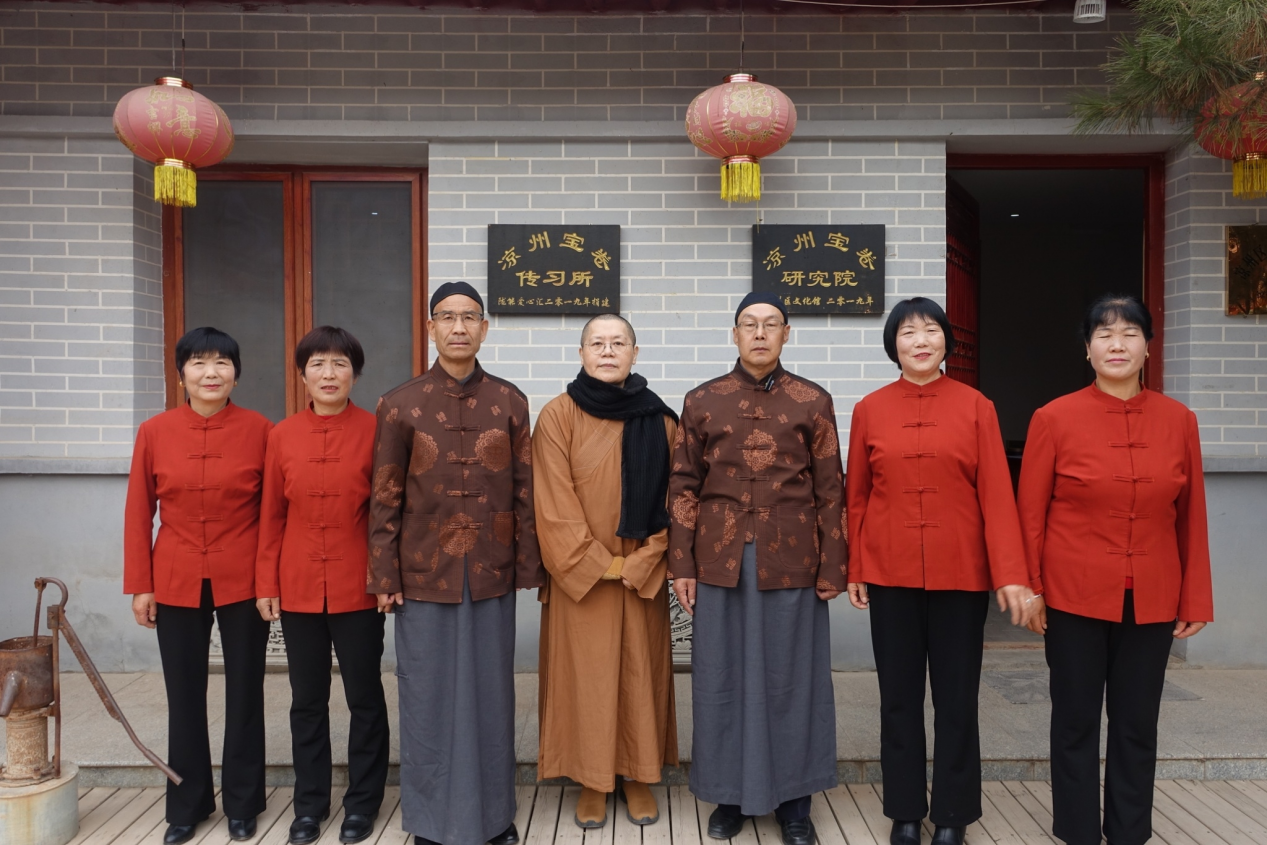
Group Photo [Right to Left]:
Li Chunlian [City-level Inheritor]; Niu Yuelan [Nianjuan Enthusiast] (Mrs. Li); Zhao Xufeng [National-level Inheritor]; Ven. Jue Guan (Center, Dept. of Buddhist Studies); Li Weishan [Provincial-level Inheritor]; Li Yuping [Nianjuan Enthusiast]; Li Guifang [Nianjuan Enthusiast] (Mrs. Zhao).
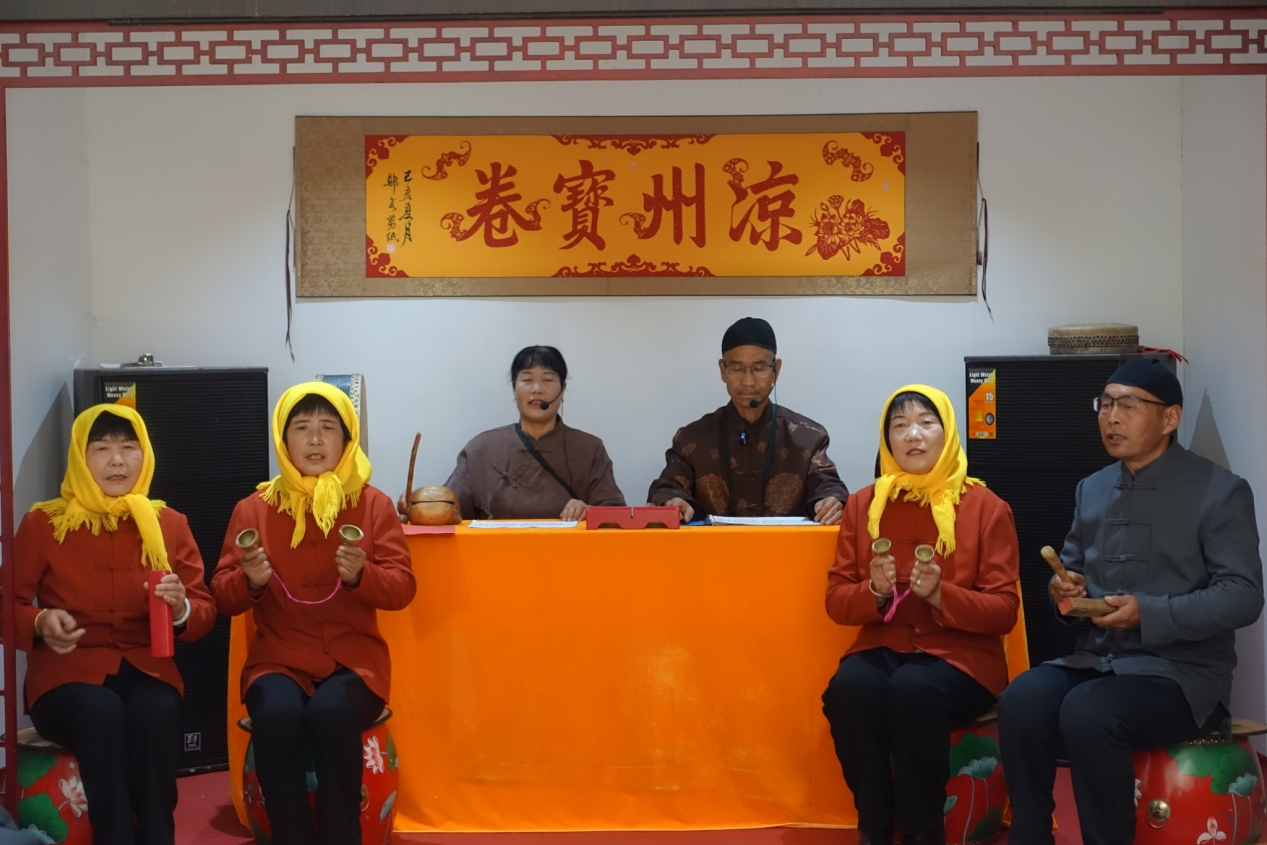
Tiantishan Folk Nianjuan Art Troupe [Right to Left]:
-
Lead Chanters: (1) Li Weishan [Provincial-level Inheritor] (Center-Right); (2) Li Chunlian [City-level Inheritor] (Center-Left).
-
Harmony/Chorus: (1) Zhao Xuzhong [District-level Inheritor]; (2) Niu Yuelan [Nianjuan Enthusiast] (Mrs. Li); (3) Li Guifang [Nianjuan Enthusiast] (Mrs. Zhao); (4) Li Yuping [Nianjuan Enthusiast].
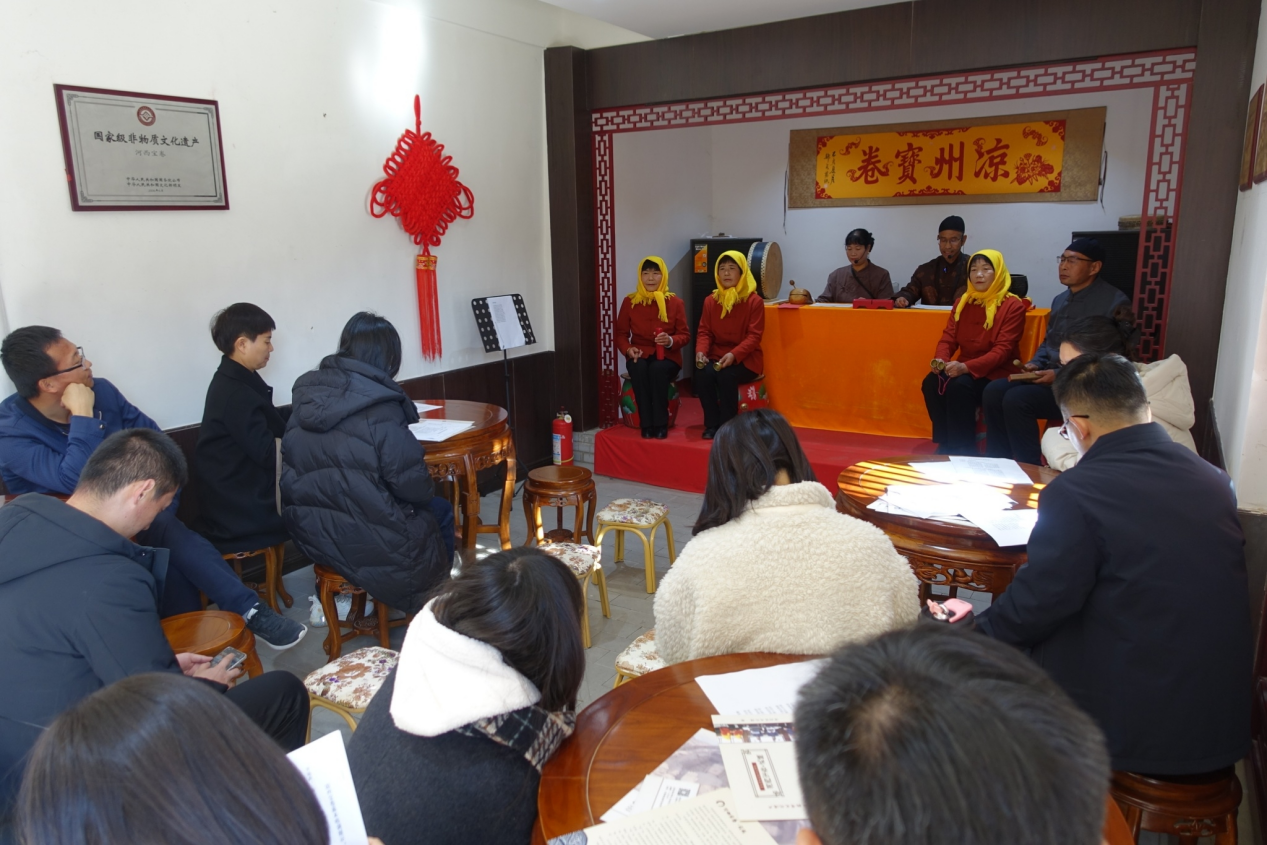
November 14: The city government arranged for talents from various regions to come and learn Liangzhou Baojuan.
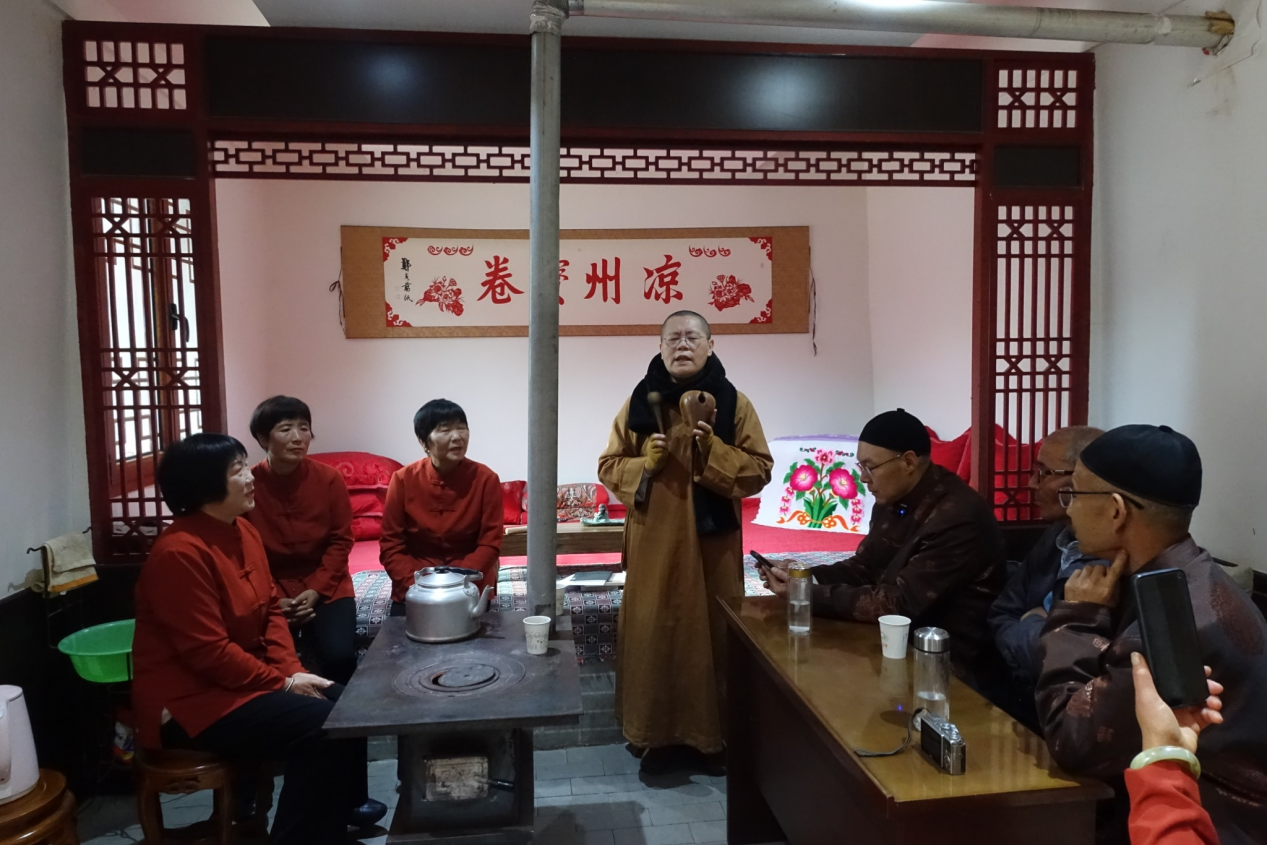
Ven. Jue Guan sharing and exchanging the Fo Guang Shan chanting style: The "Vow to be Born in the Western Pure Land" Dedication of Merit Verse.
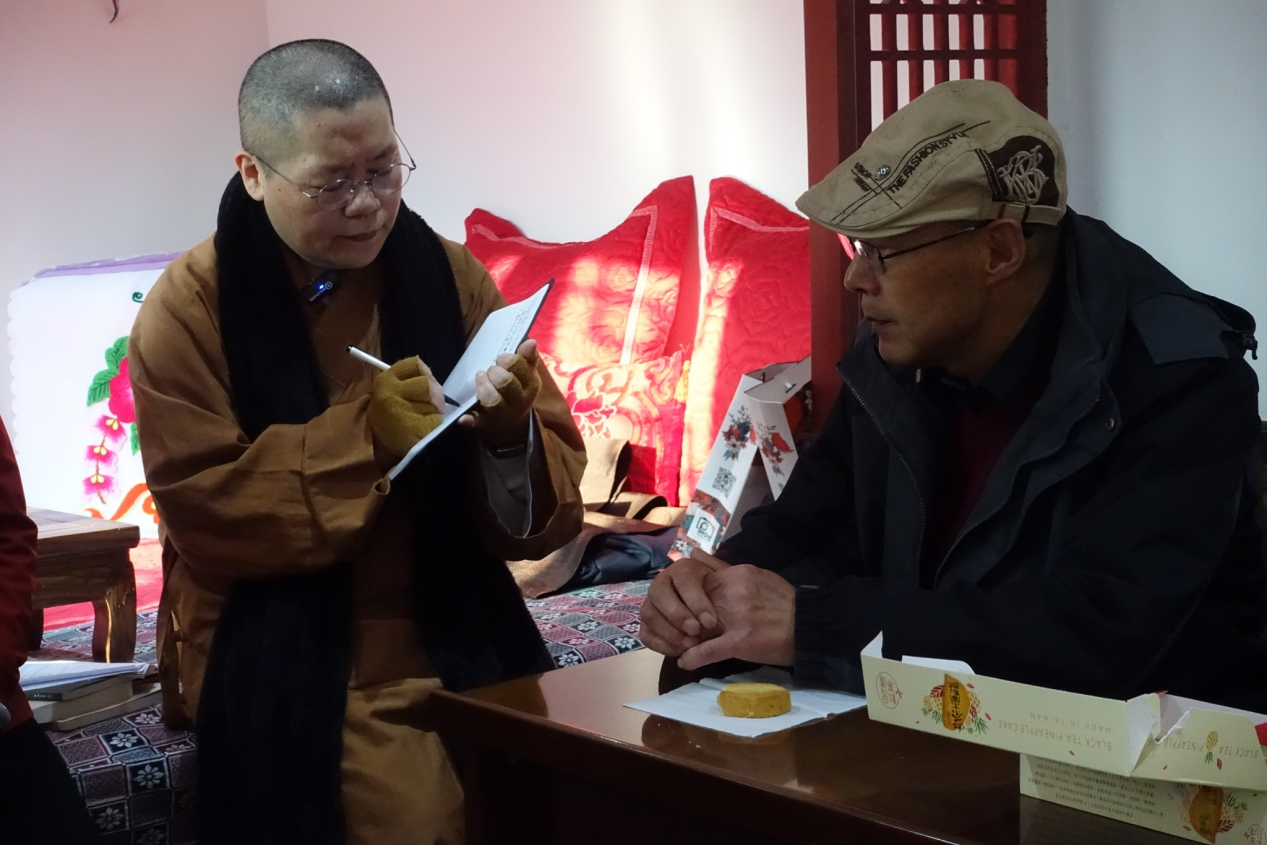
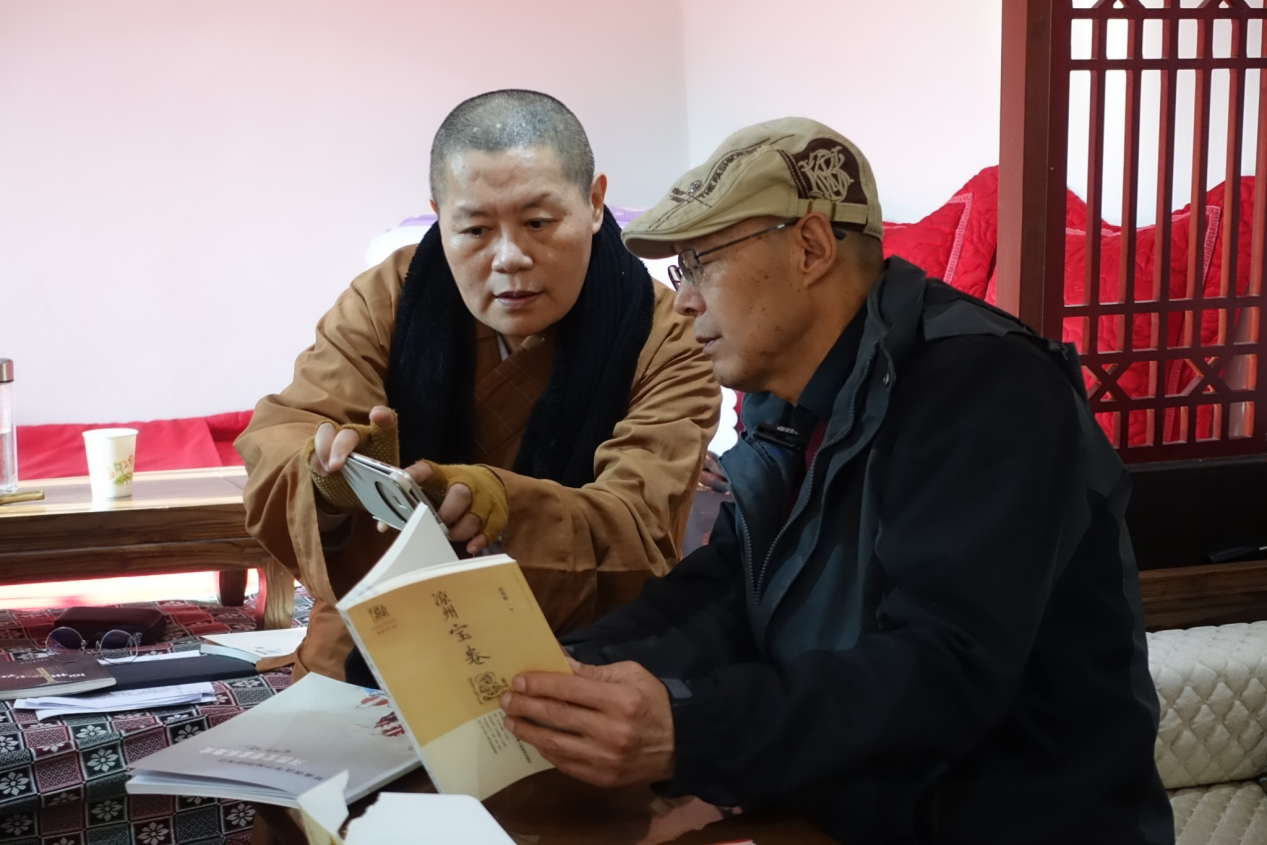
Mr. Zhao Xufeng sharing his self-authored book, Liangzhou Baojuan.
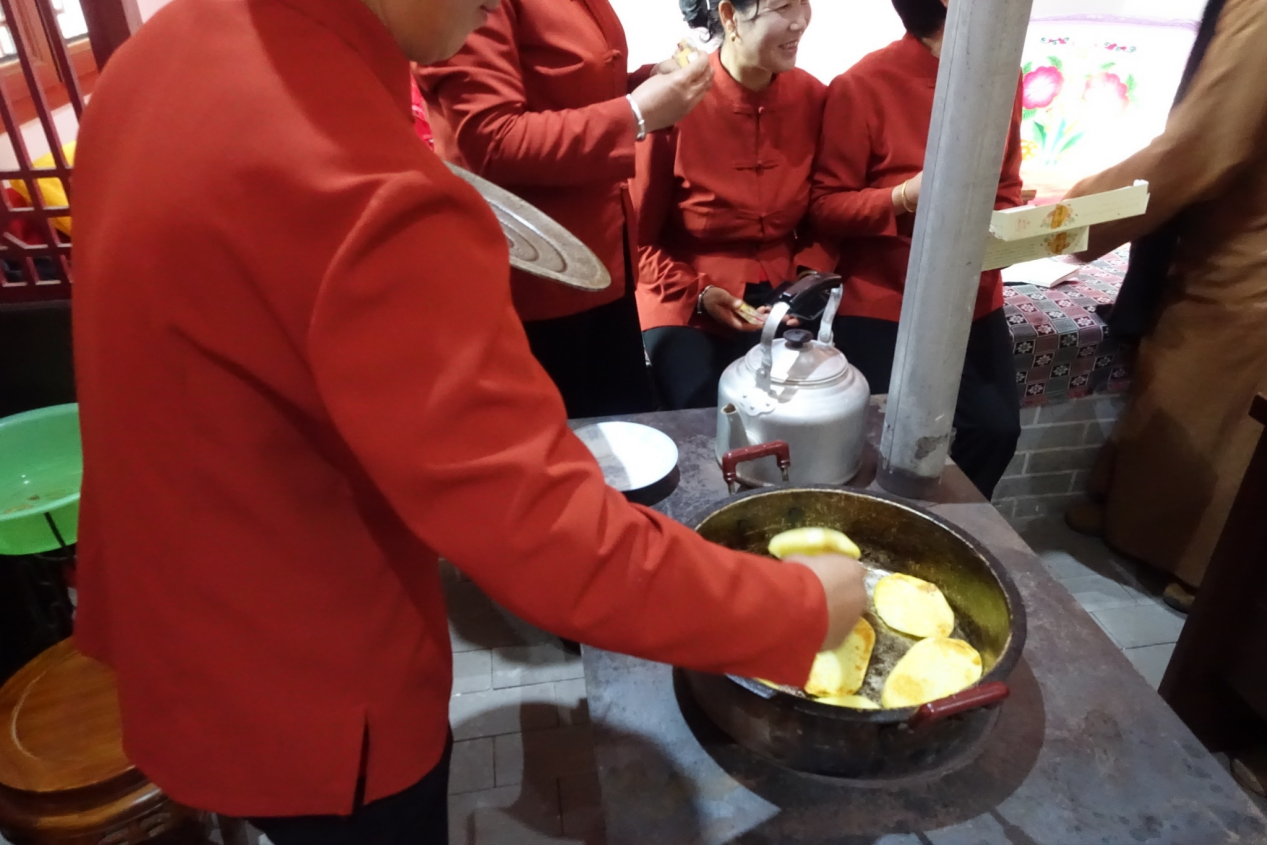
Enjoying the local specialty of Zhangyi Town's Dengshan Village: Fire-roasted potatoes; Ven. Jue Guan sharing Taiwanese pineapple cakes.
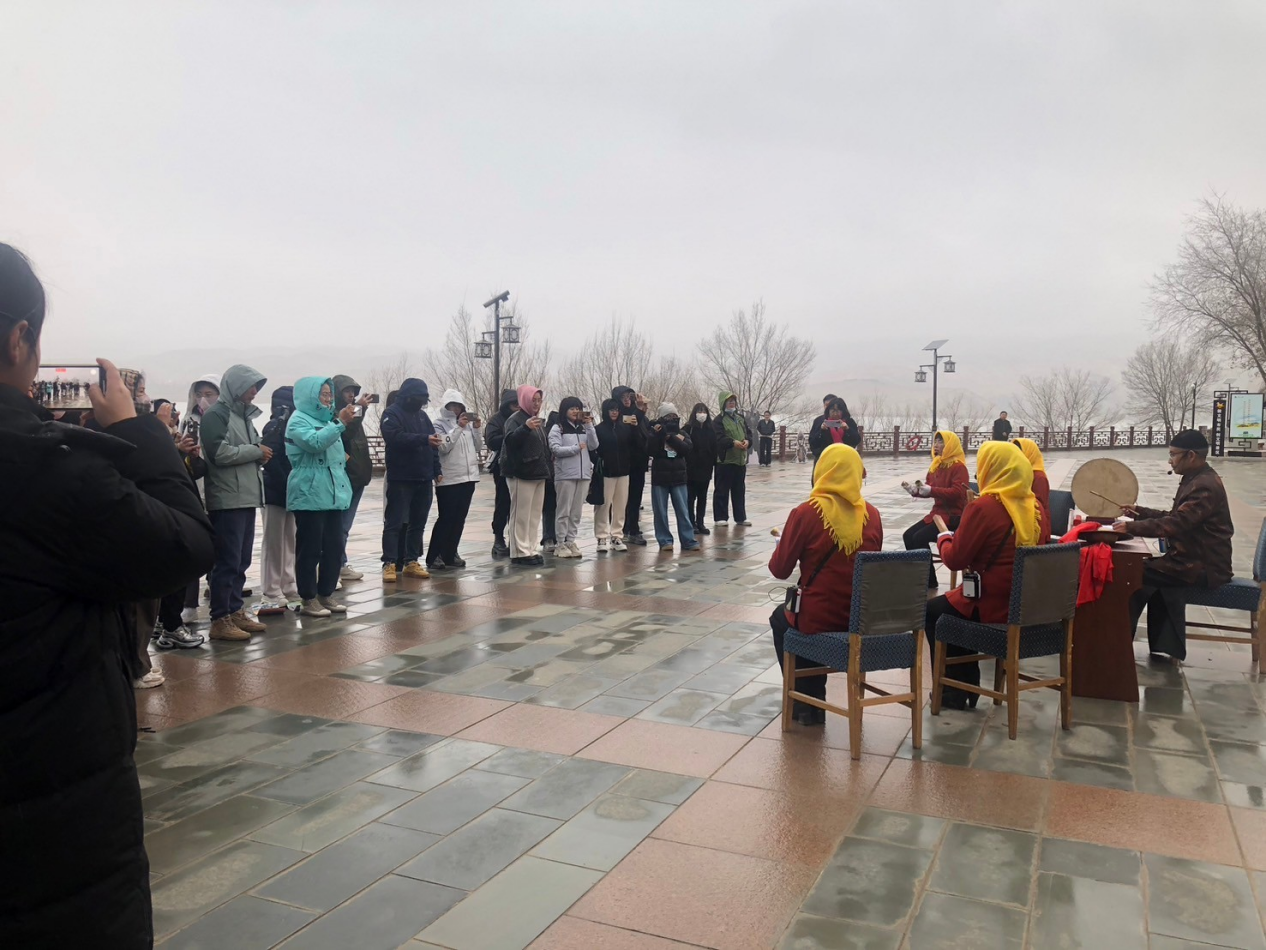
November 15: The Tiantishan Folk Nianjuan Art Troupe performing at the Tiantishan Grottoes.
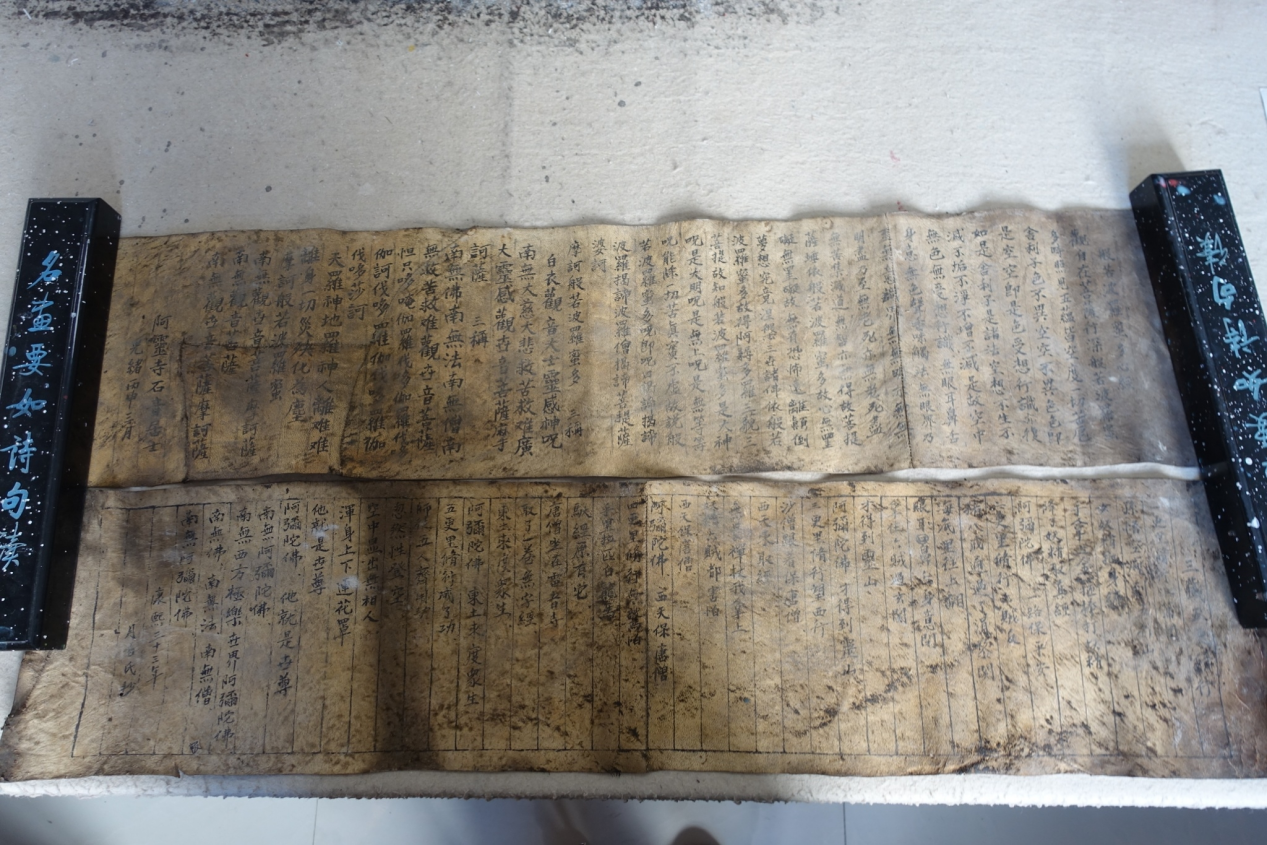
A small Baojuan manuscript made from sheepskin.