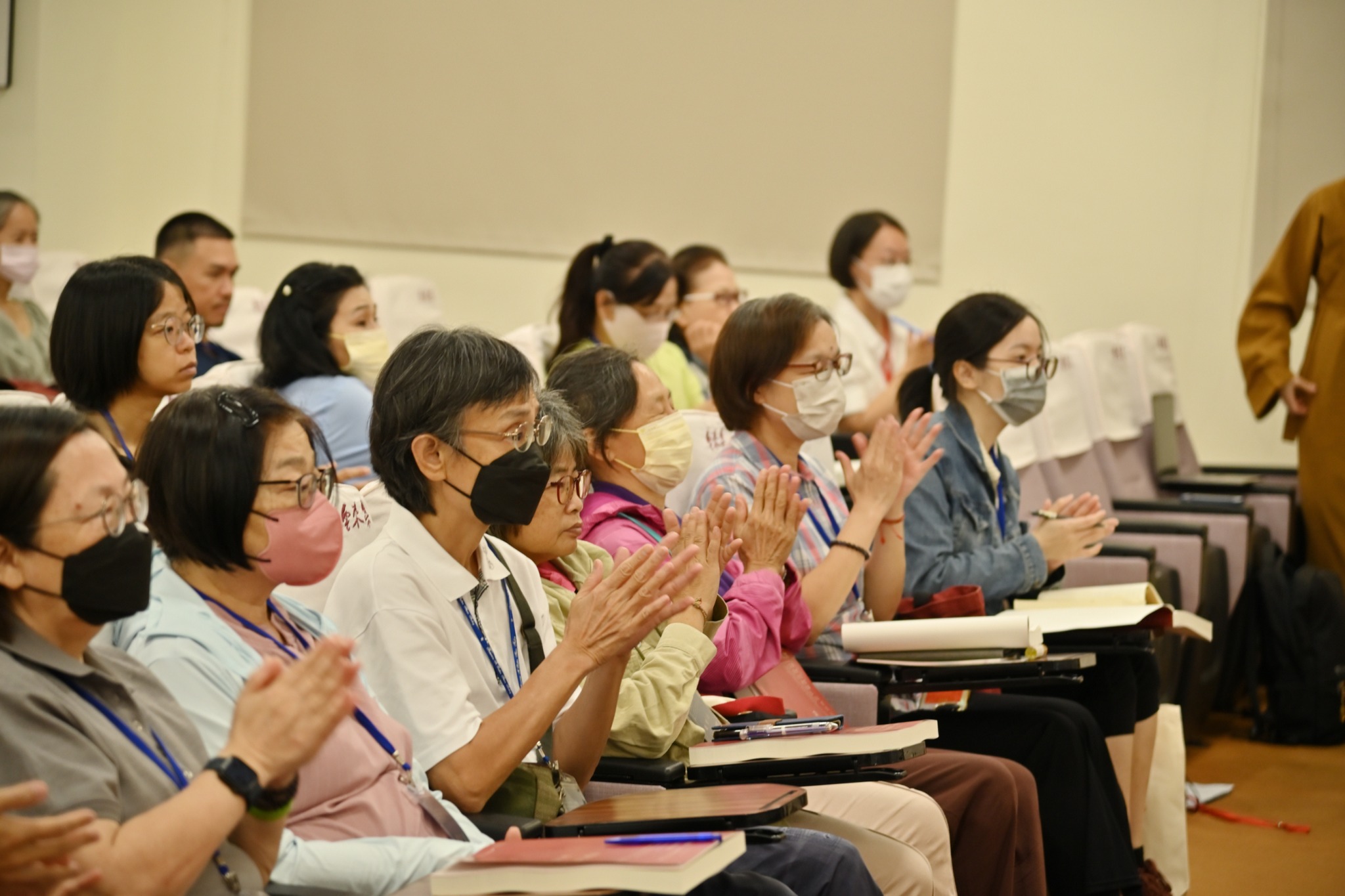

The International Conference on "Boundless Ocean of the Dharma Treasury: Images, Sound, and Textual Dissemination of Buddhism" was held from August 13 to 14, 2025, at Fo Guang Shan’s Yunlaiji Hall. Sixteen scholars from Germany, the United States, China, and Taiwan presented academic papers employing methodologies from archaeology, art history, and musicology. The event attracted over 130 participants from Hong Kong, Taiwan, Beijing, and other regions.
Jointly organized by the Fo Guang University (FGU) Center for Buddhist Studies, the Fo Guang Shan Institute of Humanistic Buddhism, and the Fo Guang Shan Buddha Museum, the conference explored how historical Buddhist propagation utilized mediums such as grottoes, statues, and music. These ancient techniques serve as precursors to the modern use of multimedia and artificial intelligence in spreading the Dharma. The conference ran concurrently with popular lectures on the Buddhist Canon and the "Fo Guang Treasures" exhibition, highlighting that the pathways for disseminating the Dharma are limitless.
At the opening ceremony, Venerable Tzu Hui, Chairperson of the FGU Board, praised the novelty of the conference topics. She emphasized that while the academic focus on "sound" is fresh, the use of music for propagation dates back to early Buddhism. She highlighted Founding Master Hsing Yun’s lifelong dedication to promoting Buddhist music and spreading Fanbei (liturgical chanting) globally.
Director Wan Jin-chuan of the FGU Center for Buddhist Studies noted that ancient Buddhists developed diverse visual and auditory methods to overcome the limitations of text—a tradition reflected today in the unstoppable trend of short-form video propagation. Prof. Lin Pao-yao (TNUA) commended the inclusion of "musical propagation" and the archaeological study of "Music Caves" like those at Yungang.
Scholars examined a wide range of artifacts, including stupas, mandalas, and woodblock prints, and conducted fieldwork on traditions such as the Water-Land Dharma Service and Sino-Tibetan musical fusion. Prof. Lidu Yi (Florida International University) noted the rare convergence of three generations of scholars, which inspired deep cross-cultural exploration.
The conference showcased the outcomes of the research project "Dialogue between Image, Sound, and Text," led by Prof. Lin Hsin-yi (FGU) and a team of international researchers. Over the past year, the project has facilitated interdisciplinary exchange through academic communities and lecture series, significantly broadening the horizons of Buddhist studies.
Attendees included Lin Tsong-ming (Vice President, Fo Guang Shan University Consortium), Ma Yuan-rong (Vice President, Fo Guang University), Venerable Ru Chang (Director, Buddha Museum), Venerable Miao Fan (Director, Institute of Humanistic Buddhism), and other prominent scholars and monastics.
Jointly organized by the Fo Guang University (FGU) Center for Buddhist Studies, the Fo Guang Shan Institute of Humanistic Buddhism, and the Fo Guang Shan Buddha Museum, the conference explored how historical Buddhist propagation utilized mediums such as grottoes, statues, and music. These ancient techniques serve as precursors to the modern use of multimedia and artificial intelligence in spreading the Dharma. The conference ran concurrently with popular lectures on the Buddhist Canon and the "Fo Guang Treasures" exhibition, highlighting that the pathways for disseminating the Dharma are limitless.
At the opening ceremony, Venerable Tzu Hui, Chairperson of the FGU Board, praised the novelty of the conference topics. She emphasized that while the academic focus on "sound" is fresh, the use of music for propagation dates back to early Buddhism. She highlighted Founding Master Hsing Yun’s lifelong dedication to promoting Buddhist music and spreading Fanbei (liturgical chanting) globally.
Director Wan Jin-chuan of the FGU Center for Buddhist Studies noted that ancient Buddhists developed diverse visual and auditory methods to overcome the limitations of text—a tradition reflected today in the unstoppable trend of short-form video propagation. Prof. Lin Pao-yao (TNUA) commended the inclusion of "musical propagation" and the archaeological study of "Music Caves" like those at Yungang.
Scholars examined a wide range of artifacts, including stupas, mandalas, and woodblock prints, and conducted fieldwork on traditions such as the Water-Land Dharma Service and Sino-Tibetan musical fusion. Prof. Lidu Yi (Florida International University) noted the rare convergence of three generations of scholars, which inspired deep cross-cultural exploration.
The conference showcased the outcomes of the research project "Dialogue between Image, Sound, and Text," led by Prof. Lin Hsin-yi (FGU) and a team of international researchers. Over the past year, the project has facilitated interdisciplinary exchange through academic communities and lecture series, significantly broadening the horizons of Buddhist studies.
Attendees included Lin Tsong-ming (Vice President, Fo Guang Shan University Consortium), Ma Yuan-rong (Vice President, Fo Guang University), Venerable Ru Chang (Director, Buddha Museum), Venerable Miao Fan (Director, Institute of Humanistic Buddhism), and other prominent scholars and monastics.
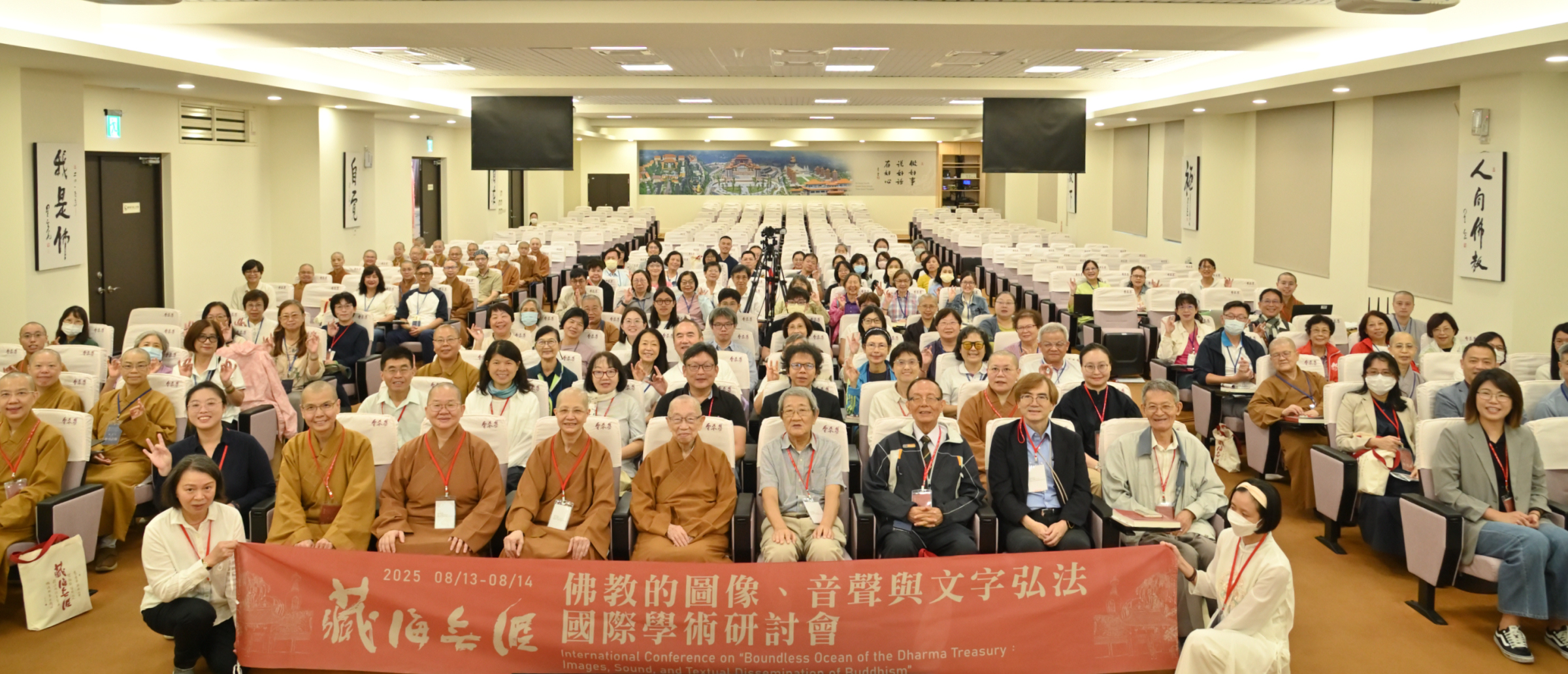
Group photo of distinguished guests.
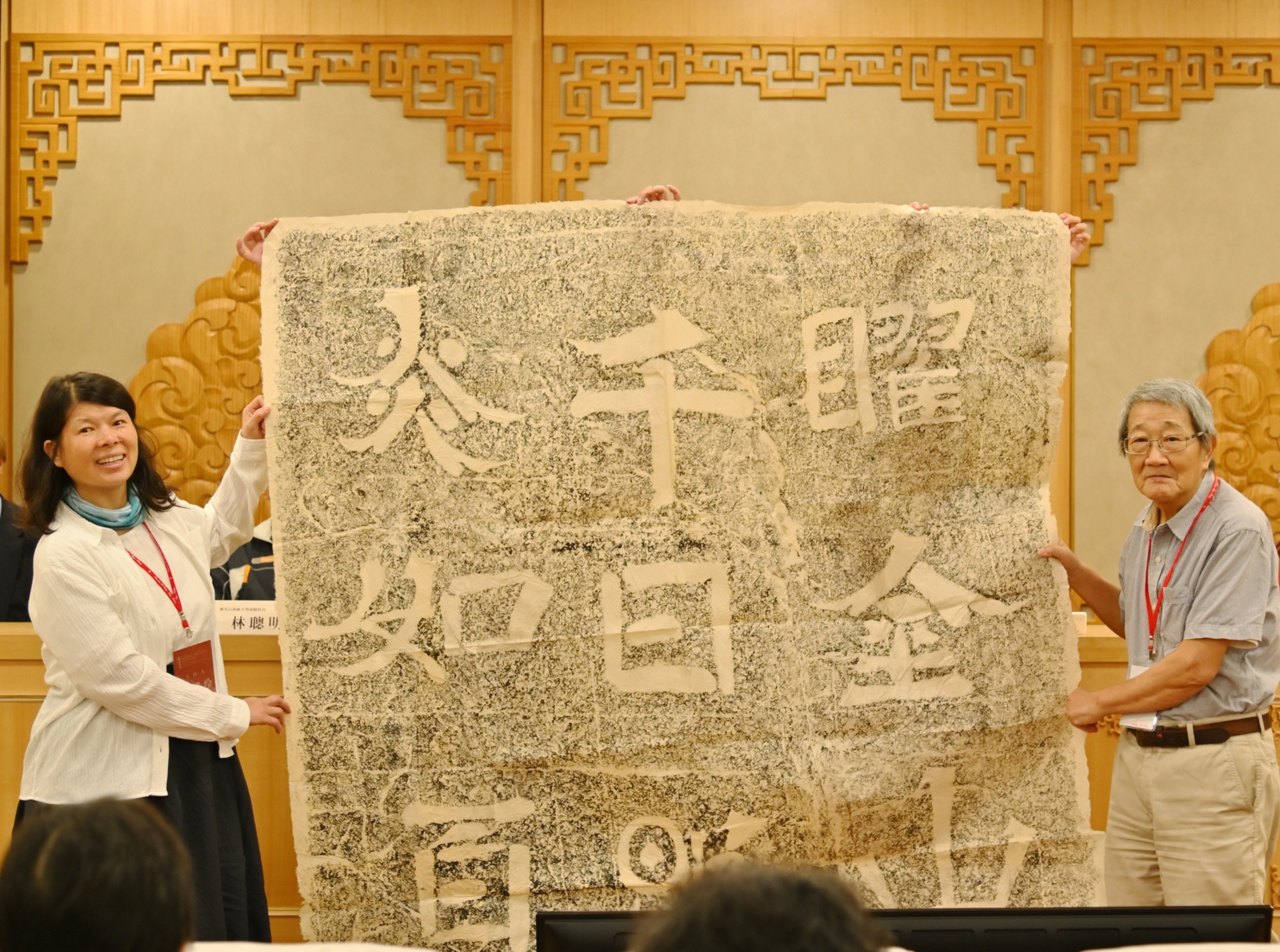
Professor Tsai Suey-ling (Researcher, Heidelberg Academy of Sciences and Humanities, Germany) presenting a rubbing as a gift.
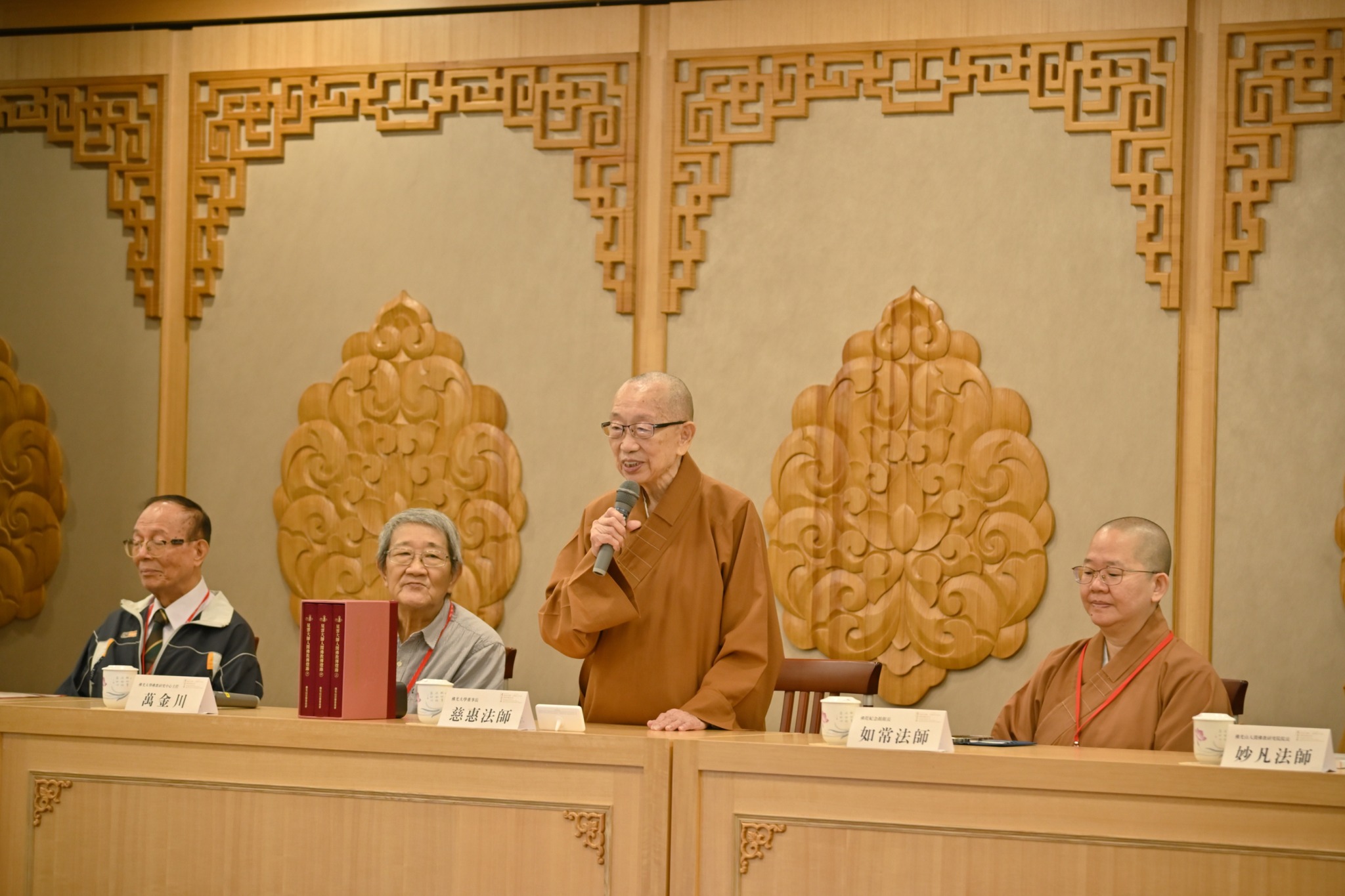
Speech by Venerable Tzu Hui (Chairperson of the Fo Guang University Board and Special Assistant to the Fo Guang Shan Founding Master’s Office).
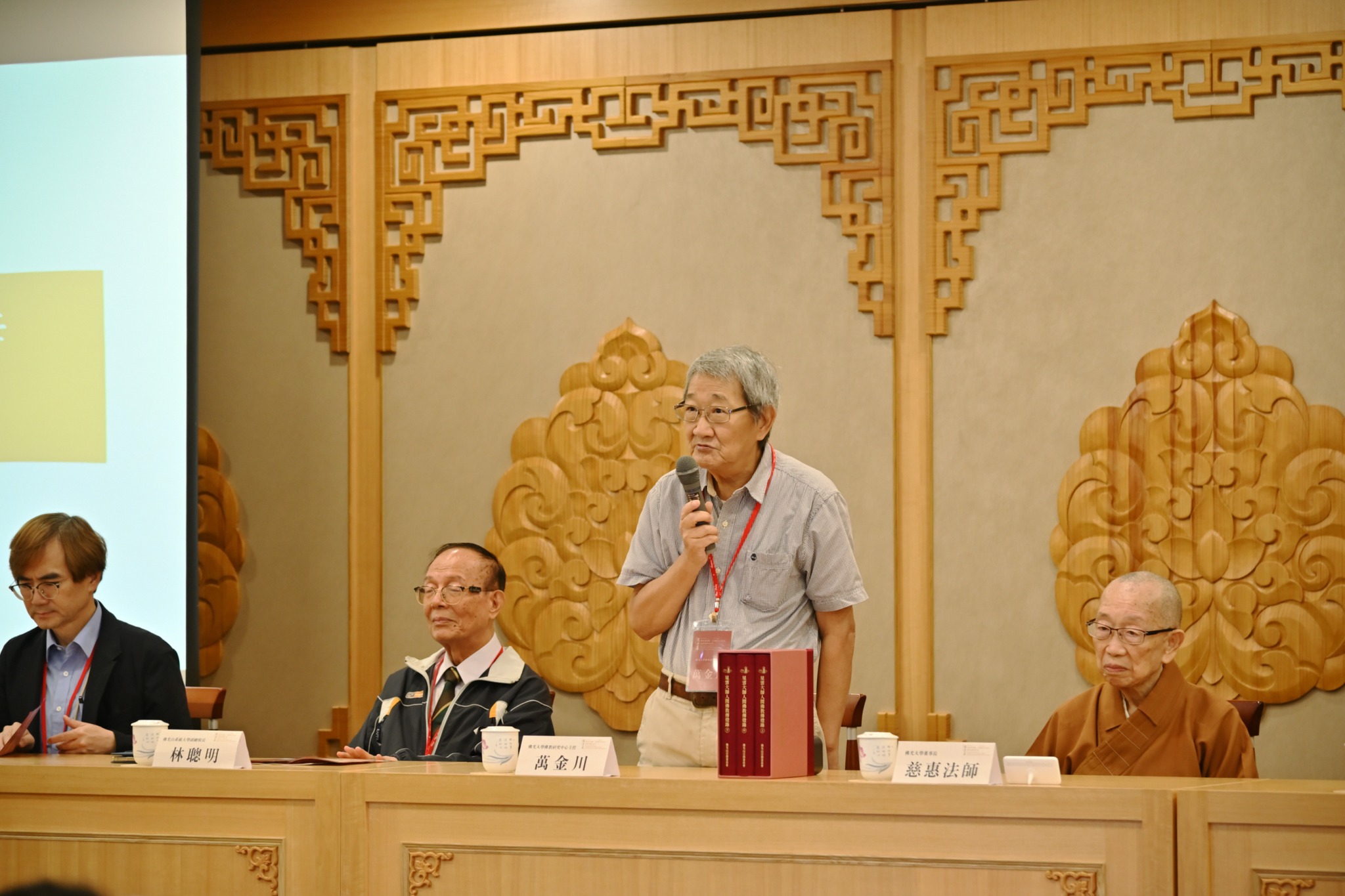
Speech by Professor Wan Jin-chuan (Director, Center for Buddhist Studies, Fo Guang University).
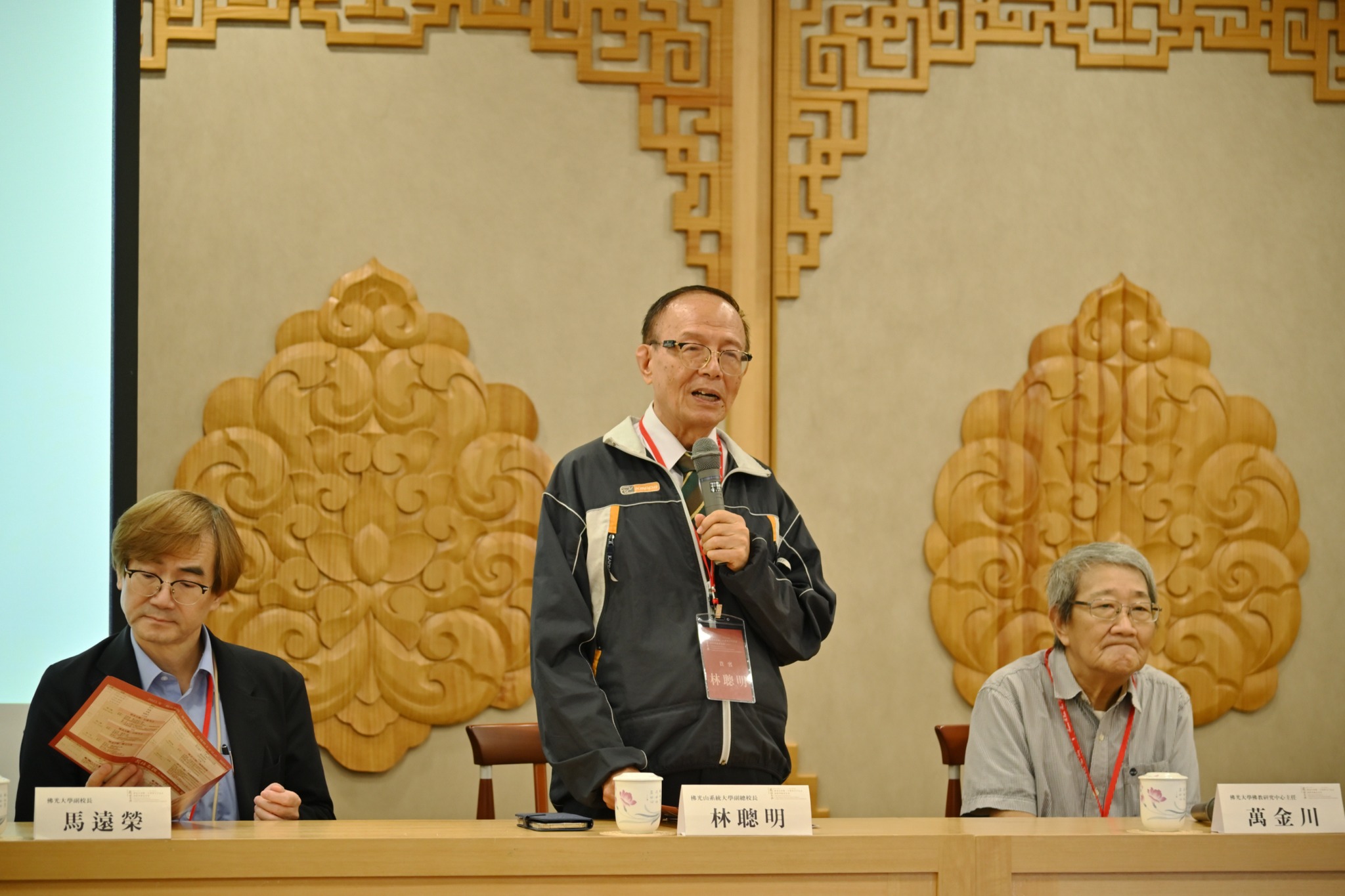
Speech by Vice President Lin Tsong-ming (Fo Guang Shan University Consortium).
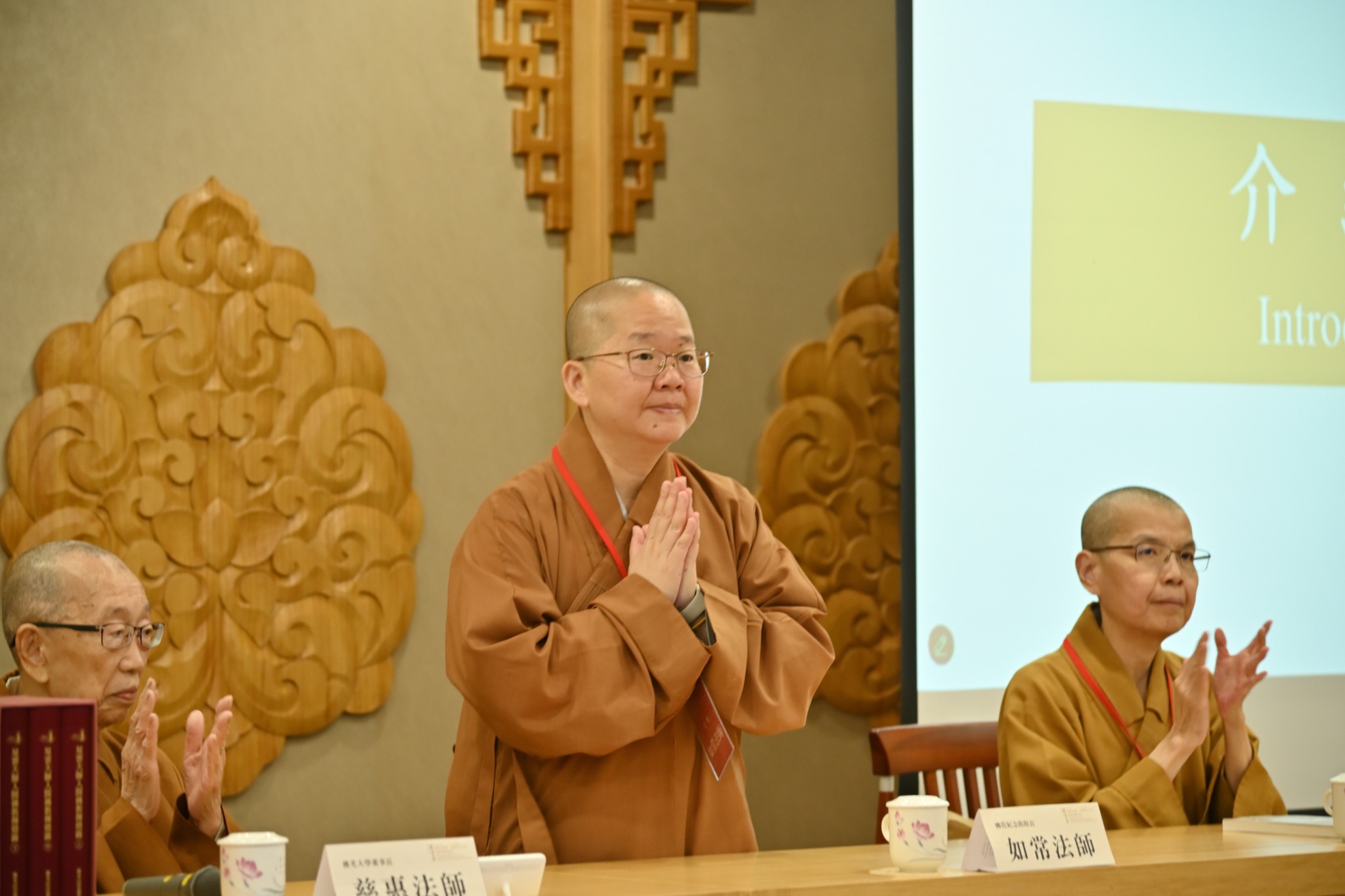
Attendance by Organizer Venerable Ru Chang (Director, Buddha Museum).
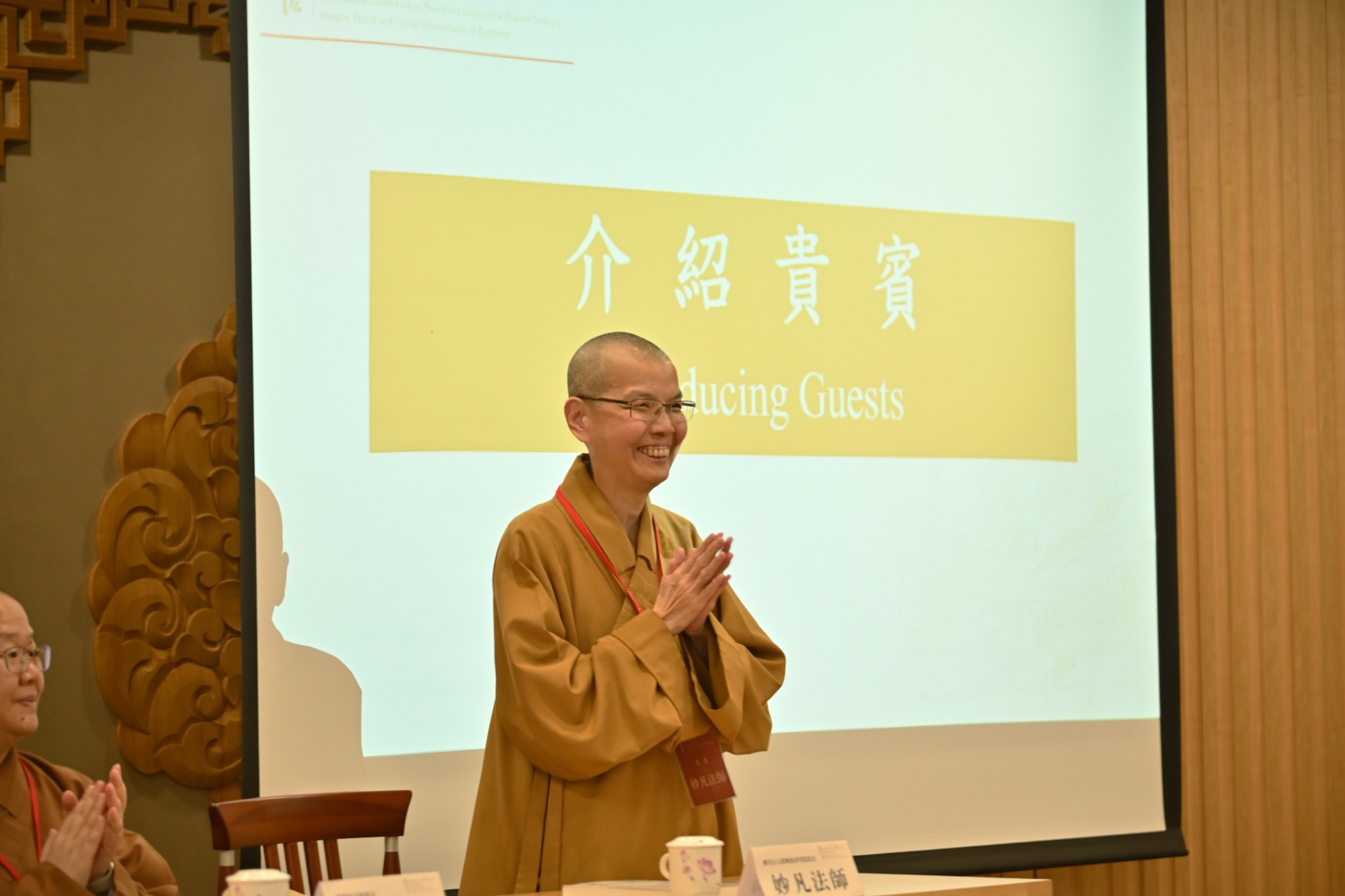
Attendance by Organizer Venerable Miao Fan (Director, Fo Guang Shan Institute of Humanistic Buddhism).
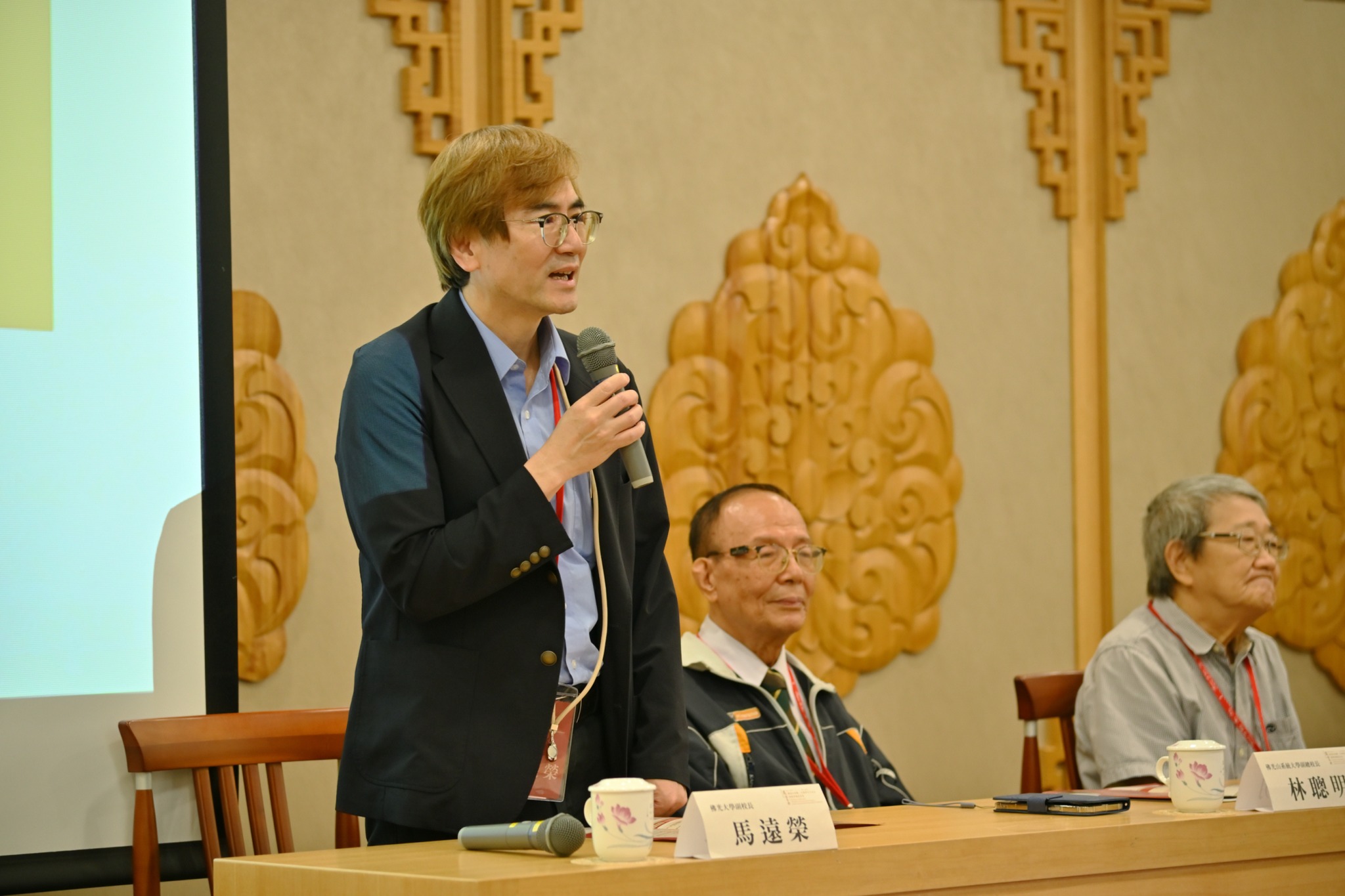
Attendance by Vice President Ma Yuan-rong (Fo Guang University).
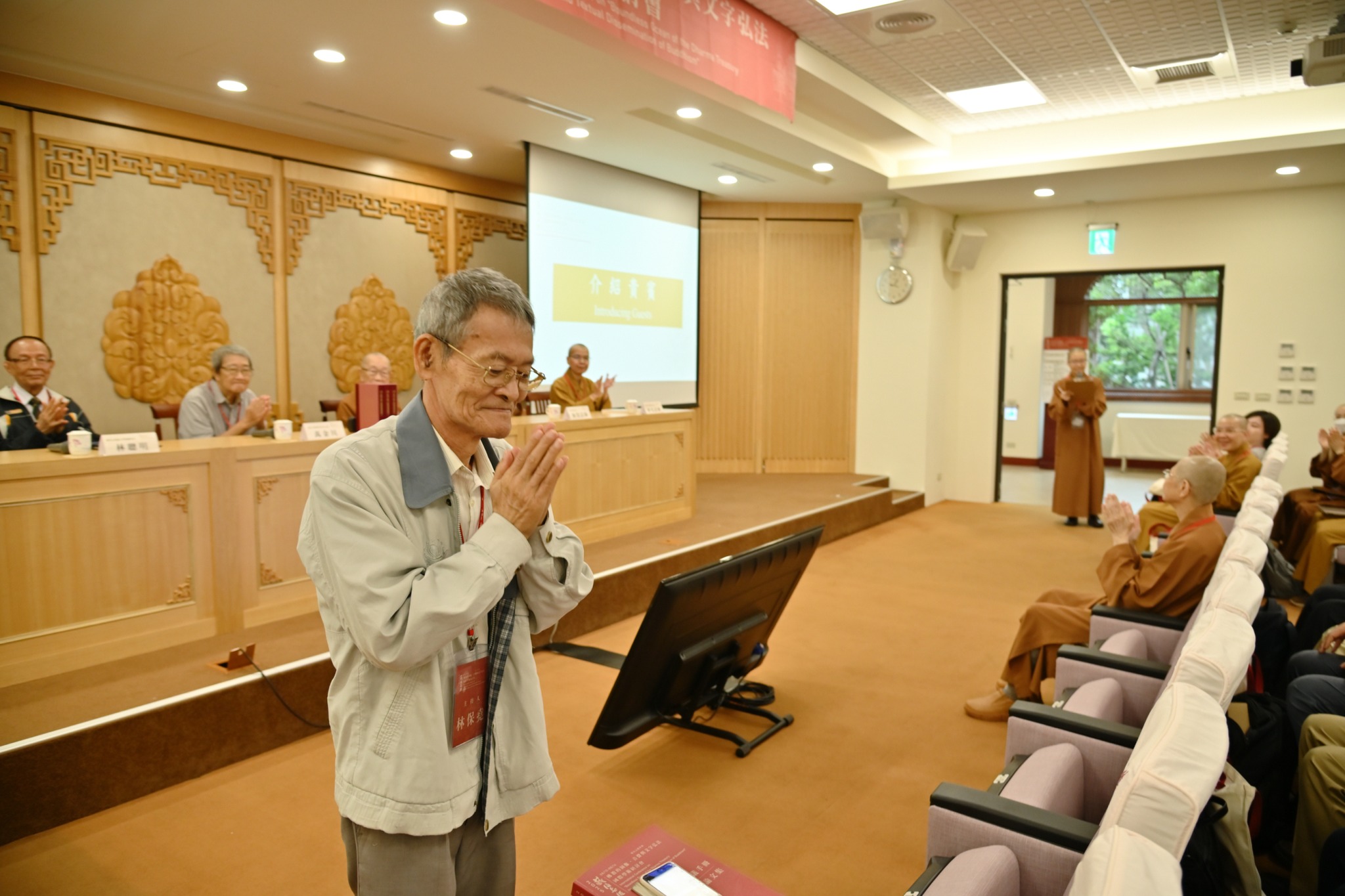
Attendance by Professor Lin Pao-yao (Honorary Professor, Taipei National University of the Arts).