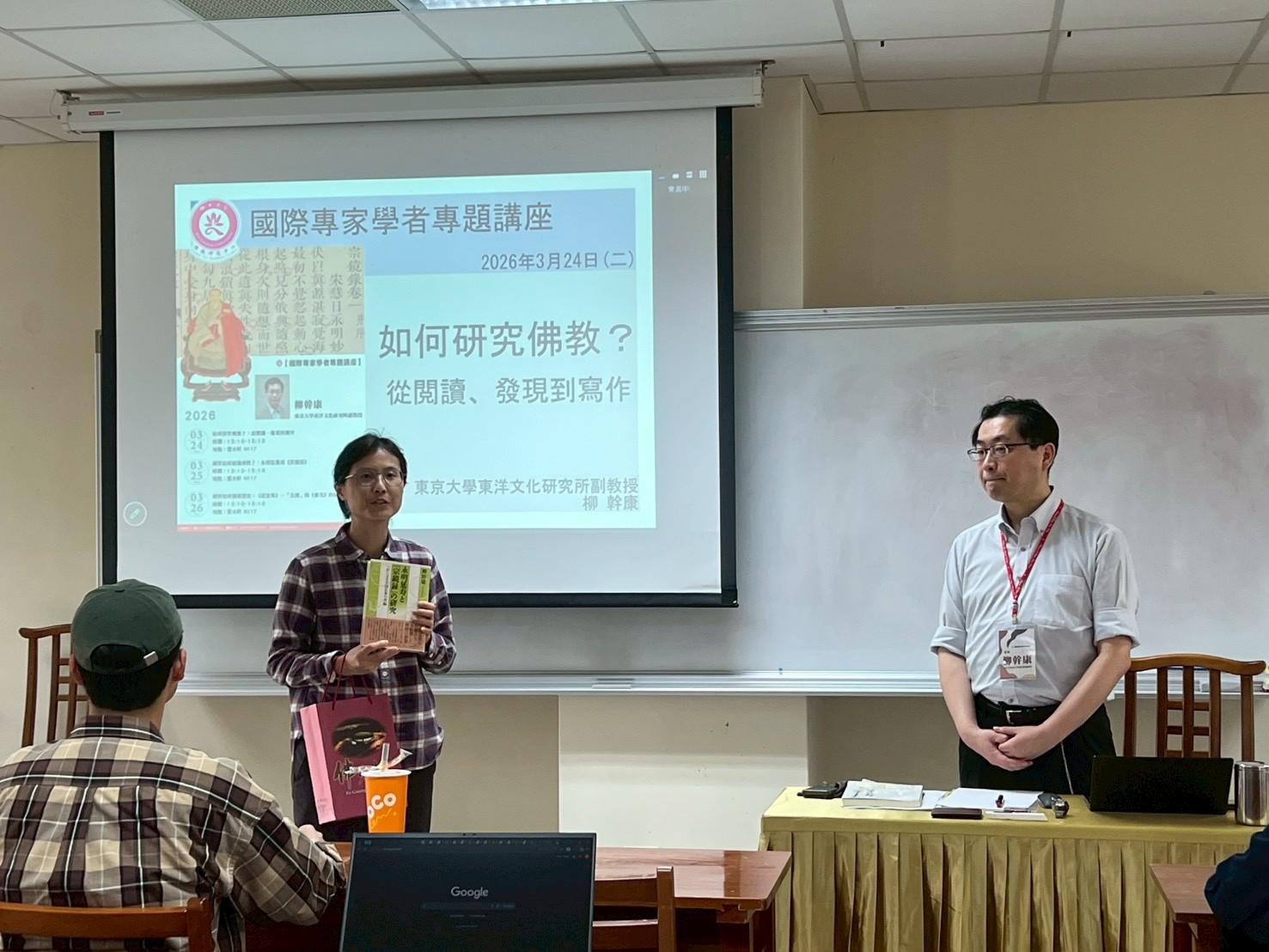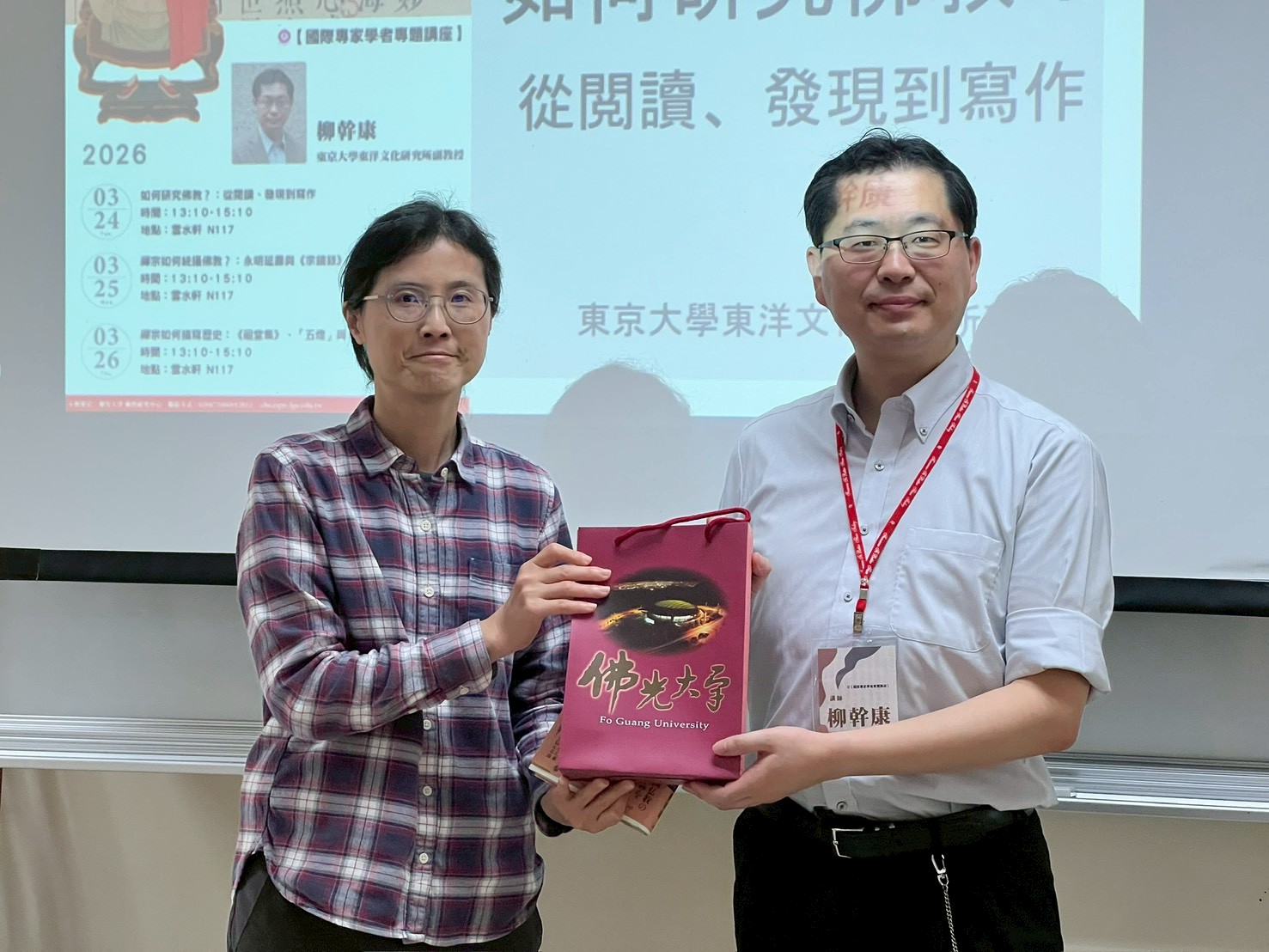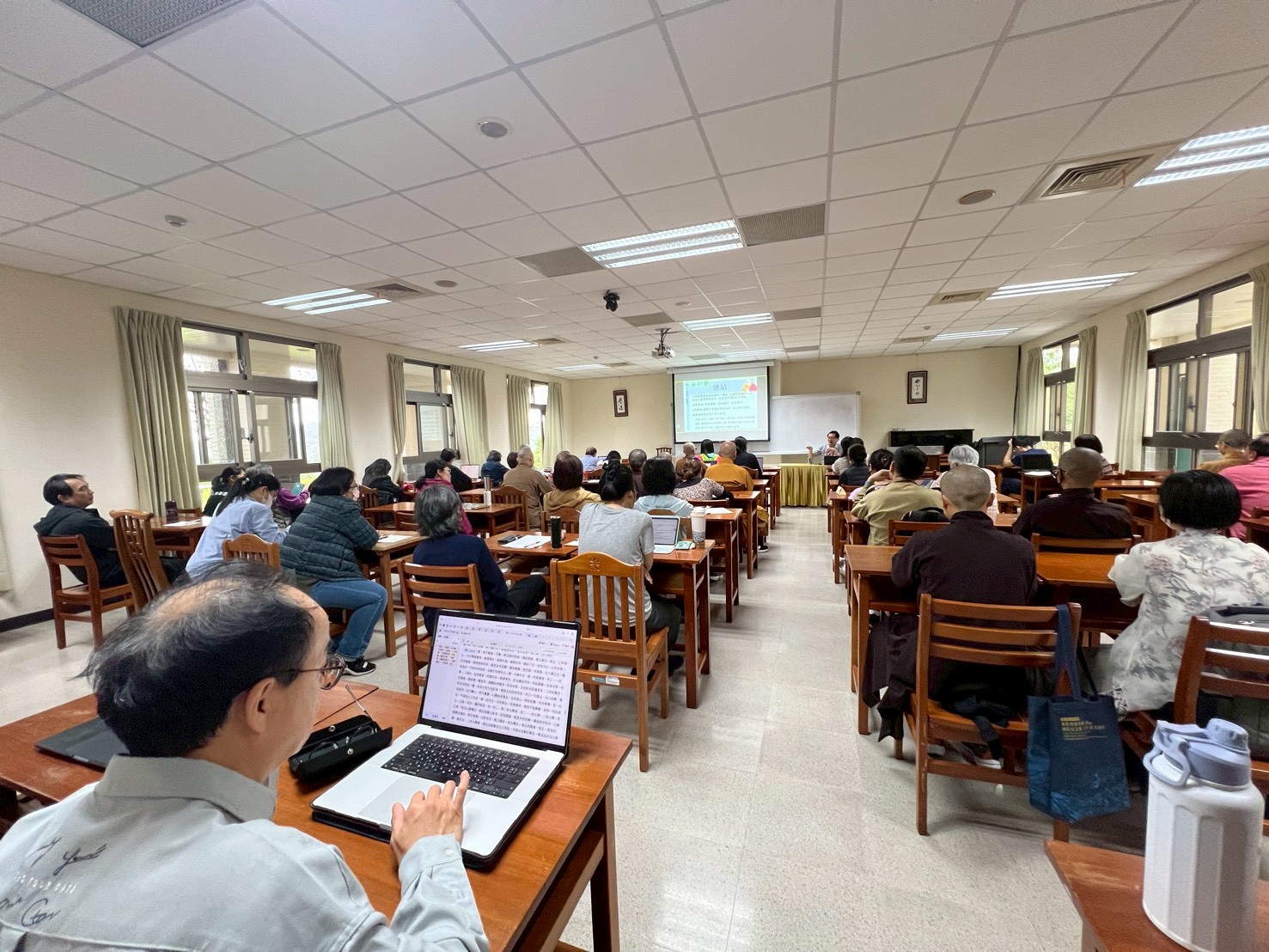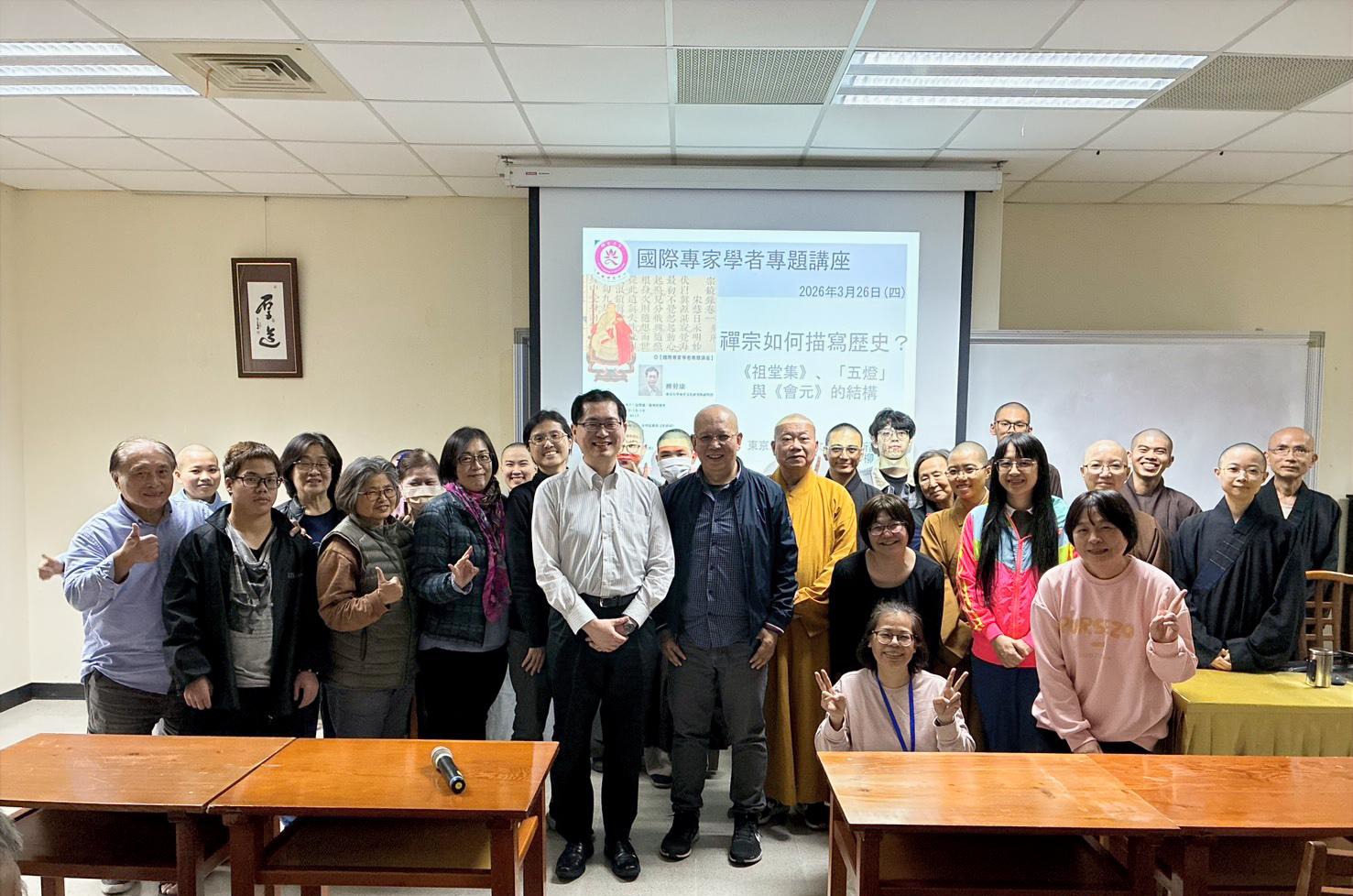
From March 24 to 26, 2026, the Center for Buddhist Studies at Fo Guang University hosted the International Distinguished Scholars Lecture Series, featuring Dr. Yanagi Mikiyasu, Associate Professor at the Institute for Advanced Studies on Asia, University of Tokyo. Delivered over three consecutive days, the lecture series offered a comprehensive exploration of Buddhist Studies, guiding audiences from research methodology to doctrinal integration and, ultimately, to the construction of historical narratives in Chan Buddhism.
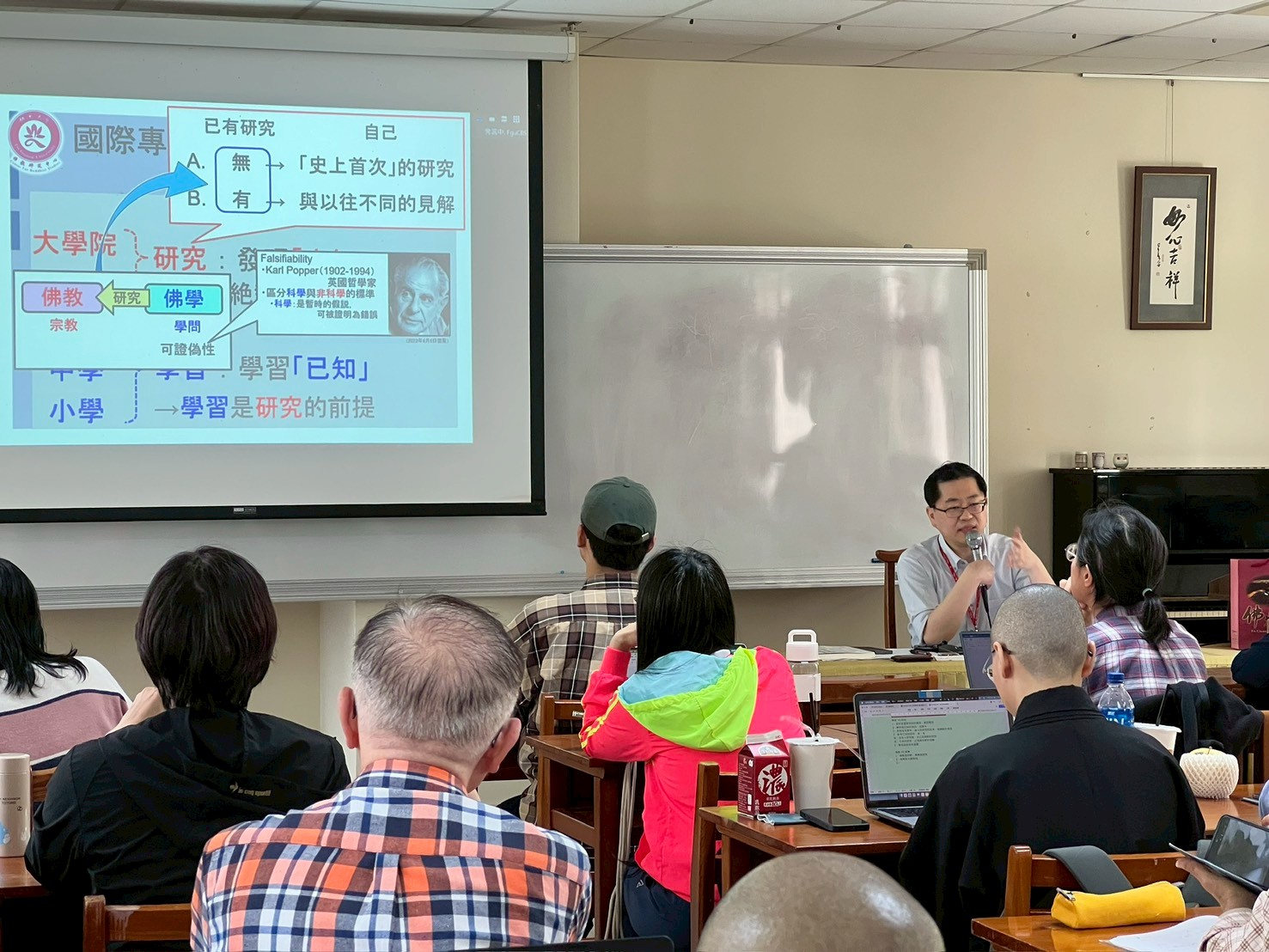
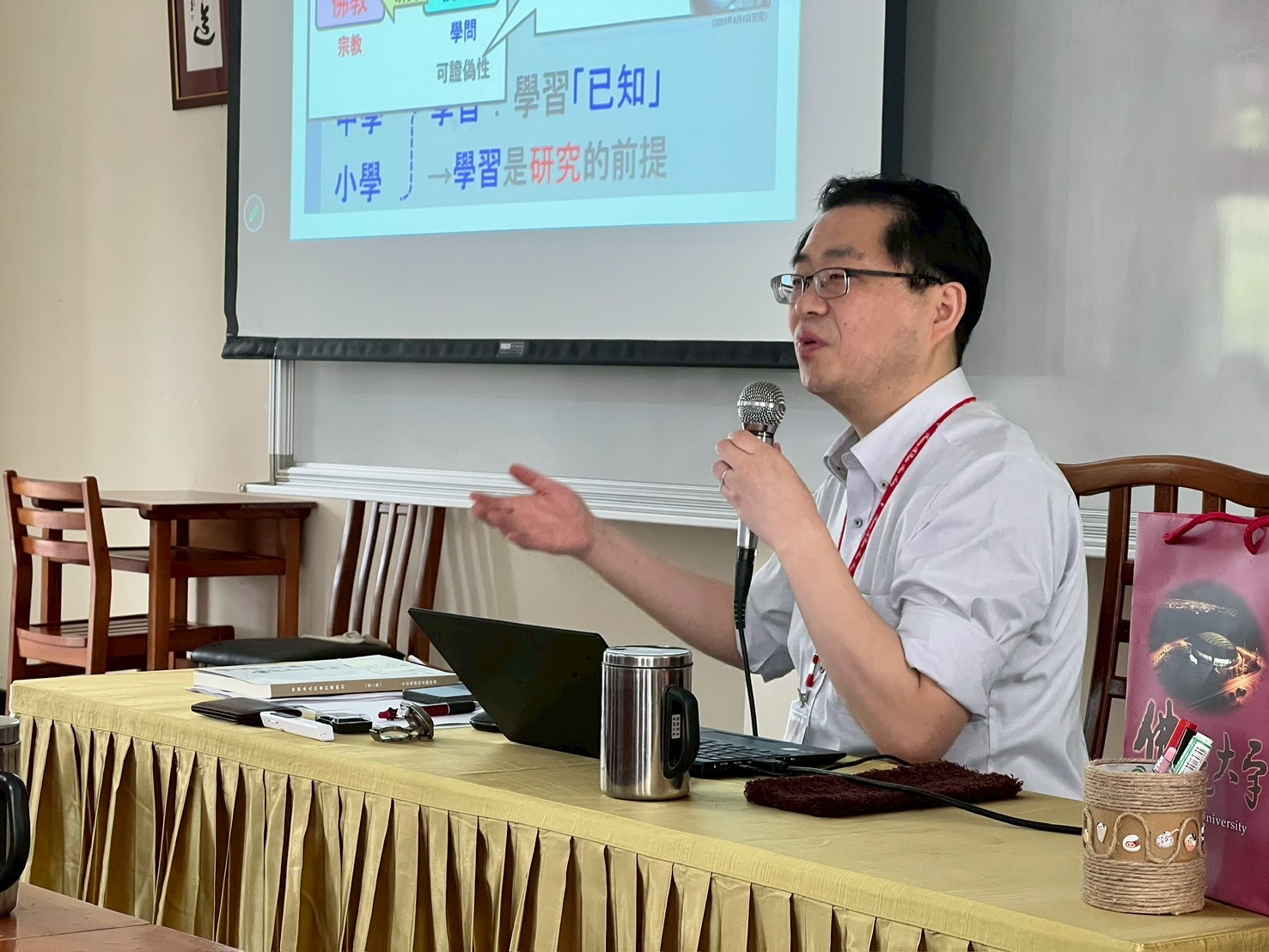
The opening lecture, “How to Study Buddhism: From Reading and Discovery to Writing,” addressed the foundations of scholarly practice. Dr. Yanagi emphasized that Buddhist Studies is grounded in sustained engagement with primary sources and existing scholarship. Through repeated and critical reading of canonical texts in dialogue with secondary literature, researchers cultivate both methodological rigor and interpretive clarity. He underscored that academic writing is not a reflection of personal impressions, but a disciplined process rooted in verifiable evidence and clearly articulated research questions. A well-crafted study, he noted, is driven by a central problem and structured through a coherent question-and-answer framework.
The second lecture, “How Does Chan Integrate Buddhism? Yongming Yanshou and the Zongjing lu,” turned to intellectual history. Focusing on Yongming Yanshou (904–976), Dr. Yanagi examined how Buddhist thought responded to internal fragmentation during a period of profound socio-political transformation. He demonstrated that Yanshou’s Zongjing lu articulates a synthetic vision centered on the concept of the “One Mind,” integrating doctrinal study, meditative practice, and ethical discipline. This model of a “complete Buddhism” not only addressed sectarian divisions of the time but also shaped later developments in East Asian Buddhism, particularly in the convergence of Chan, doctrinal traditions, and Pure Land practices.
The third lecture, “How Does Chan Write History? The Structure of Zutang ji, the ‘Five Lamps,’ and the Huiyuan,” examined historiography and the construction of religious memory. Dr. Yanagi highlighted that historical narratives are not neutral records of fact but are formed through processes of selection, organization, and interpretation. By analyzing major Chan historical texts—from the Zutang ji to the Song dynasty “Five Lamps” corpus and the Wudeng huiyuan—he showed how lineage structures based on transmission and hierarchical ordering were used to construct a coherent narrative of orthodoxy. These textual strategies played a crucial role in establishing the framework of the “Five Houses and Seven Schools” within Chan Buddhism. He further noted that the preservation of historical records is shaped by institutional factors, as figures associated with monastic leadership and lineage transmission were more likely to be recorded and remembered.
Taken together, the three lectures formed a coherent intellectual progression—from how Buddhism is studied, to how Buddhist thought is systematized, and finally to how Buddhist history is constructed. The series provided participants with a nuanced understanding of contemporary approaches in Buddhist Studies and highlighted the methodological and interpretive frameworks that define current international scholarship.
The Center for Buddhist Studies remarked that the lecture series not only deepened students’ engagement with Buddhist texts, thought, and history, but also fostered meaningful dialogue between local and global academic perspectives, further strengthening Fo Guang University’s role in international Buddhist Studies.