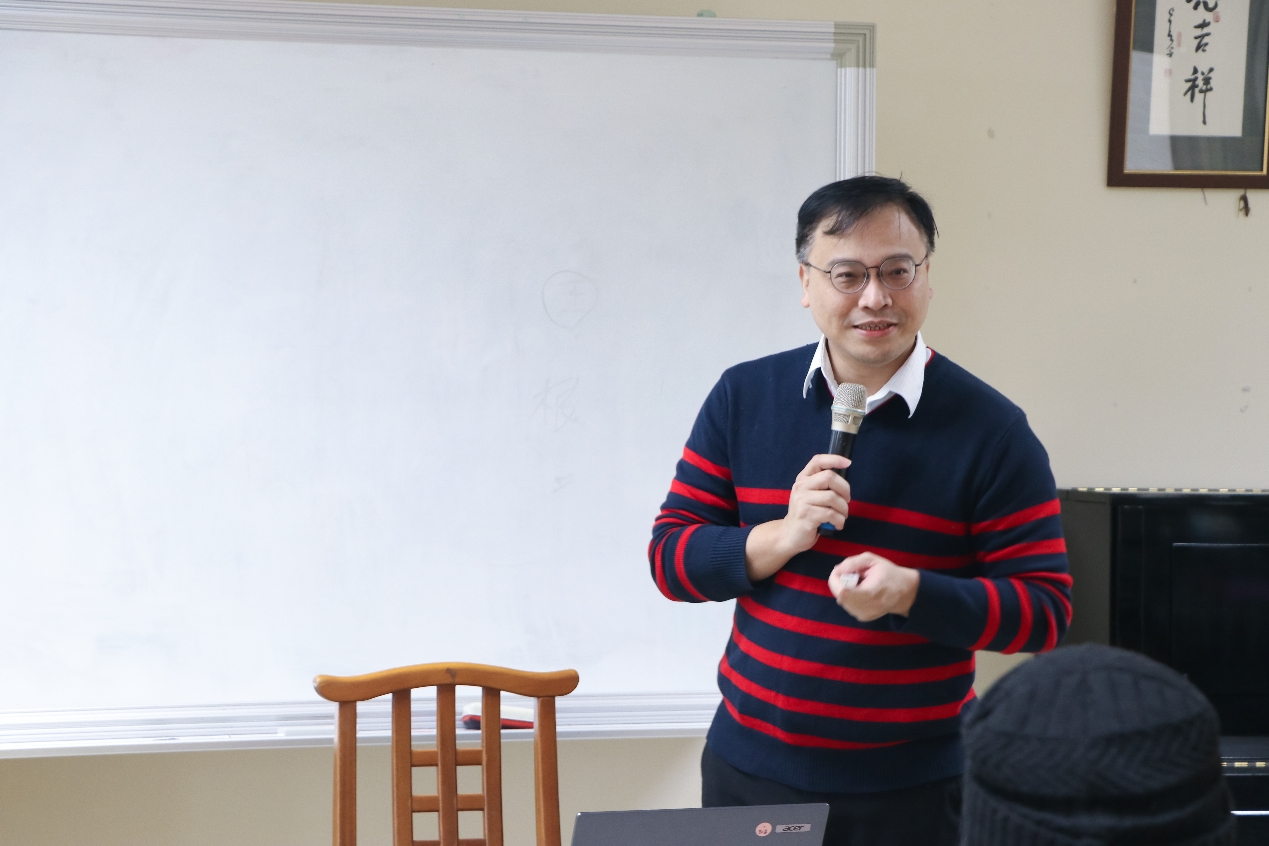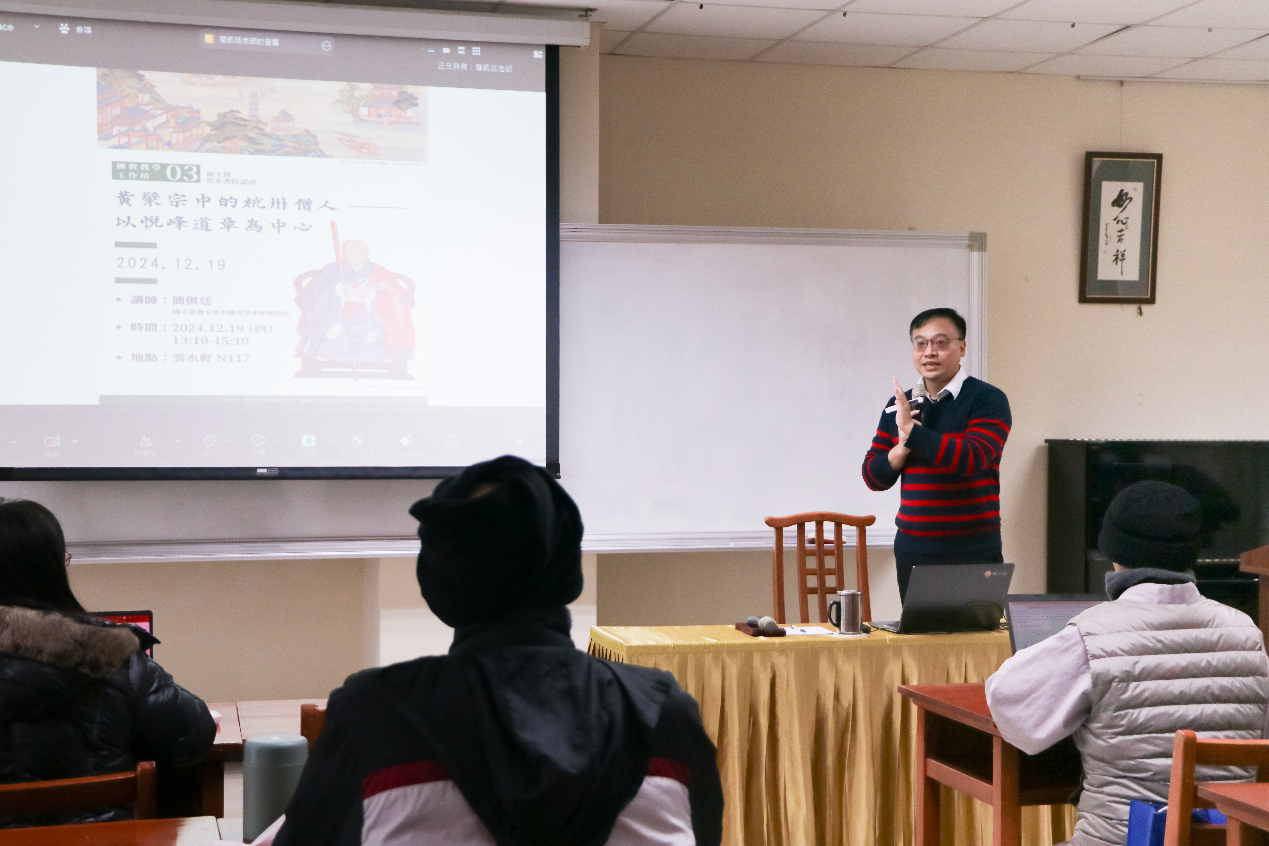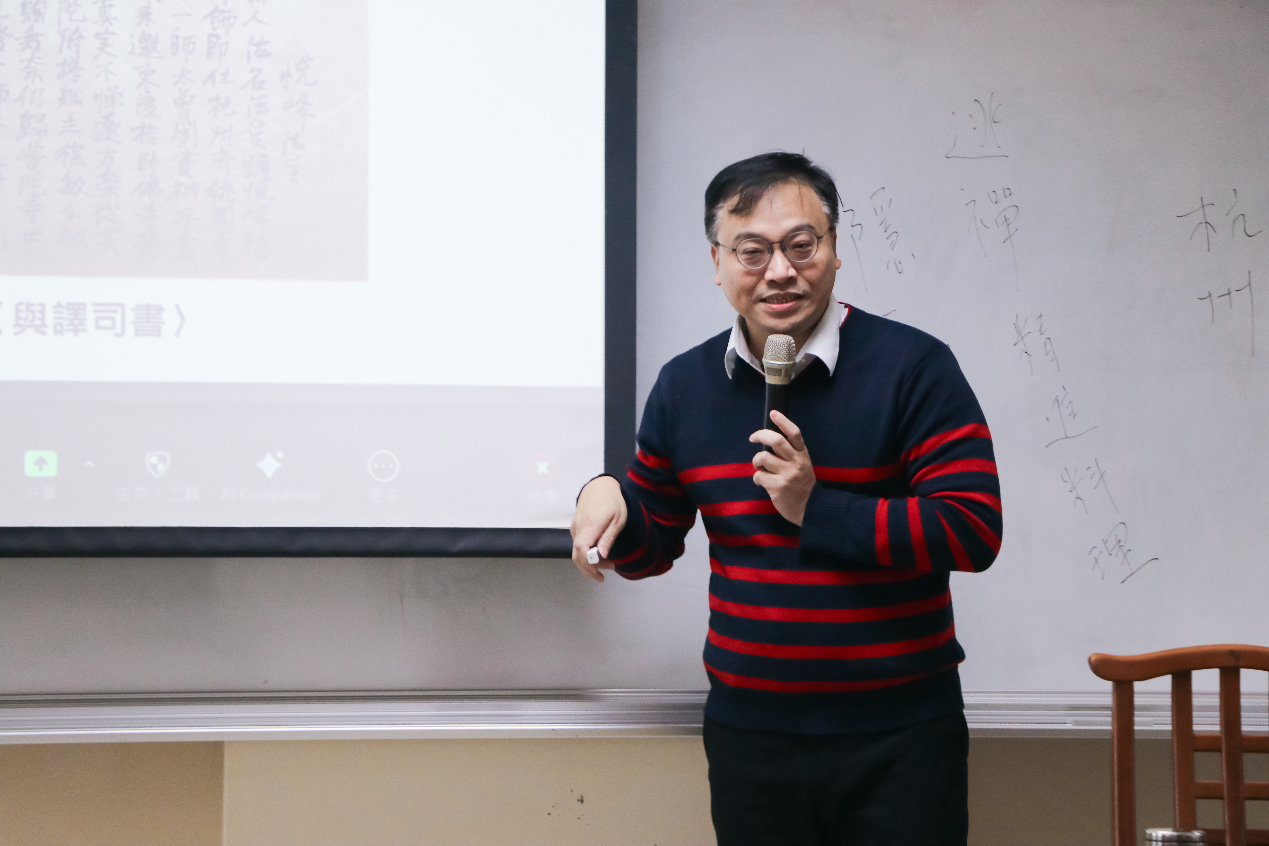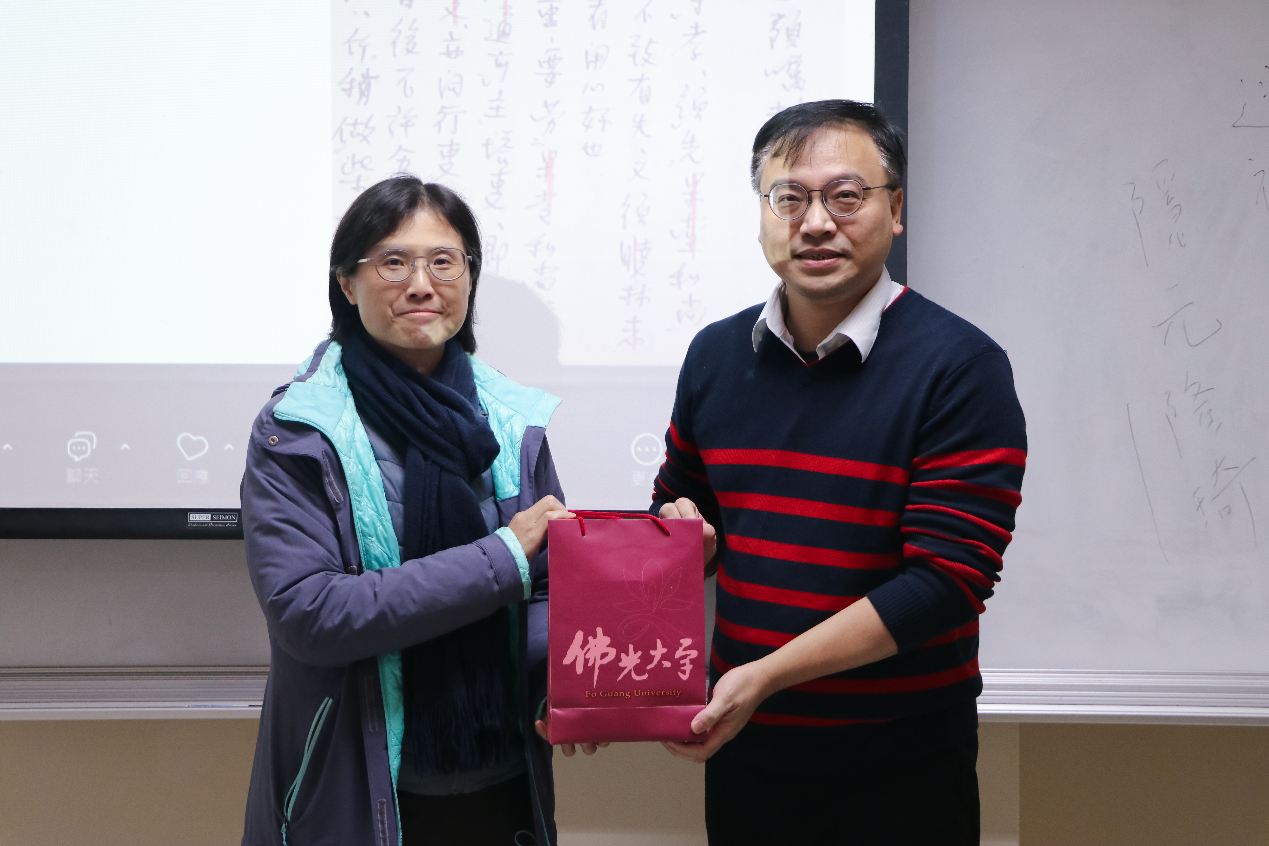

On December 18, 2024, a lecture titled "Hangzhou Monks of the Ōbaku Sect: Focusing on Yuefeng Daozhang" was held featuring Assistant Professor Jian Kaiting (簡凱廷) from the Department of Chinese Literature at National Taiwan University. The lecture explored in depth the life of the Ōbaku monk Yuefeng Daozhang (1655–1734) and his pivotal role in Sino-Japanese Buddhist exchanges during the Qing Dynasty, shedding light on the forgotten historical contributions of this monk from Hangzhou.
Yuefeng Daozhang (悅峰道章) was born in Qiantang, Hangzhou, with the secular surname Gu. He was ordained at the age of ten and studied under the masters at Yaoyuan Temple. In 1685, at the invitation of Cheng'yi Daoliang (Jp: Chō'itsu Dōryō), the abbot of Kofuku-ji (興福寺) in Nagasaki, he crossed the sea to Japan and formally assumed the position of abbot the following year. Deeply influenced by Linji (Rinzai) Zen teachings, Yuefeng Daozhang received dharma transmission from Duzhan Xingying (Jp: Dokutan Shōkei), the fourth patriarch of the Ōbaku School, becoming one of the sect's most significant figures.
In the lecture, Professor Jian shared that Yuefeng Daozhang not only promoted the academic and cultural heritage of Hangzhou Buddhism in Japan but also engaged in extensive "brush talk" (written conversation) exchanges with Japanese monks and scholars, utilizing his outstanding academic abilities. For instance, his dialogues with the renowned Japanese Confucian scholar Ogyū Sorai covered the scenery of West Lake in Hangzhou and the contemporary state of the Zen, Teaching, and Vinaya schools at Yunqi Temple, demonstrating his profound Buddhist literacy. Furthermore, he was dedicated to the publication of Buddhist texts; his assistance in publishing the Illustrated Explanation of the Western Sacred Realm Woven with Lotus Threads by the Manifested Buddha of Taima-dera stands as a testament to this cultural exchange.
The lecture also detailed Yuefeng Daozhang's deep roots in Hangzhou Buddhism. The speaker noted that Hangzhou has long been known as the "Buddhist Kingdom of the Southeast" and remained a core region for Buddhist development and foreign exchange during the Qing Dynasty. Yuefeng Daozhang's activities during the Kangxi era exemplify the intermediary role played by Hangzhou monks in facilitating Sino-Japanese Buddhist relations. Kofuku-ji in Nagasaki, which he presided over, along with Fukusai-ji and Sofuku-ji, was known as one of the "Three Chinese Temples" (Kara-sankaji), serving as a crucial hub for the dissemination of Buddhist culture between China and Japan.
The lecture concluded by emphasizing that Yuefeng Daozhang’s life and missionary career reflect the significant status of Hangzhou Buddhism in the history of globalization. His efforts not only fostered the development of Buddhist thought in Japan but also deepened religious and cultural ties between the two nations. This research injects new vitality into the historical study of the Ōbaku sect and provides a fresh perspective on the history of Sino-Japanese exchange.