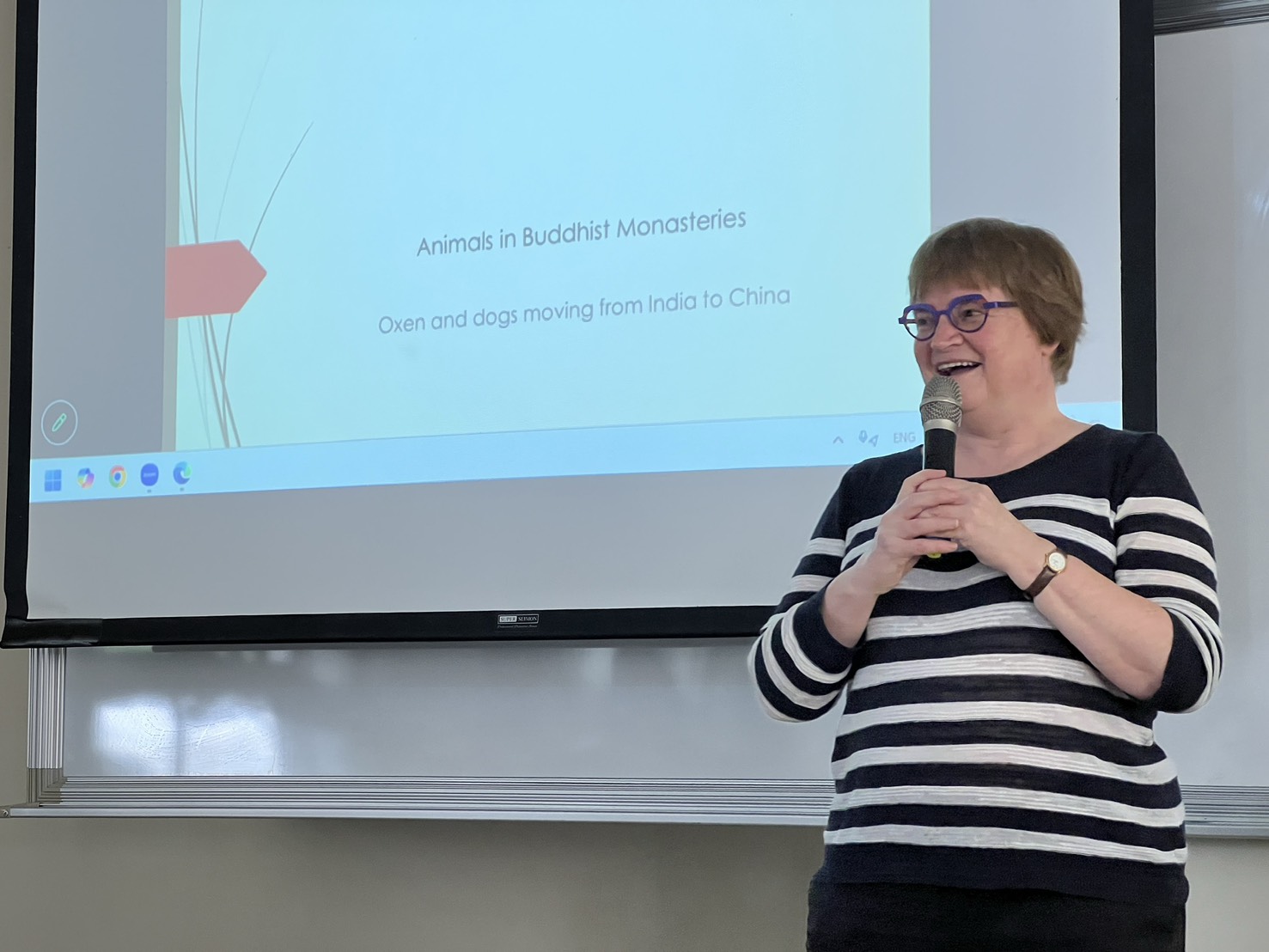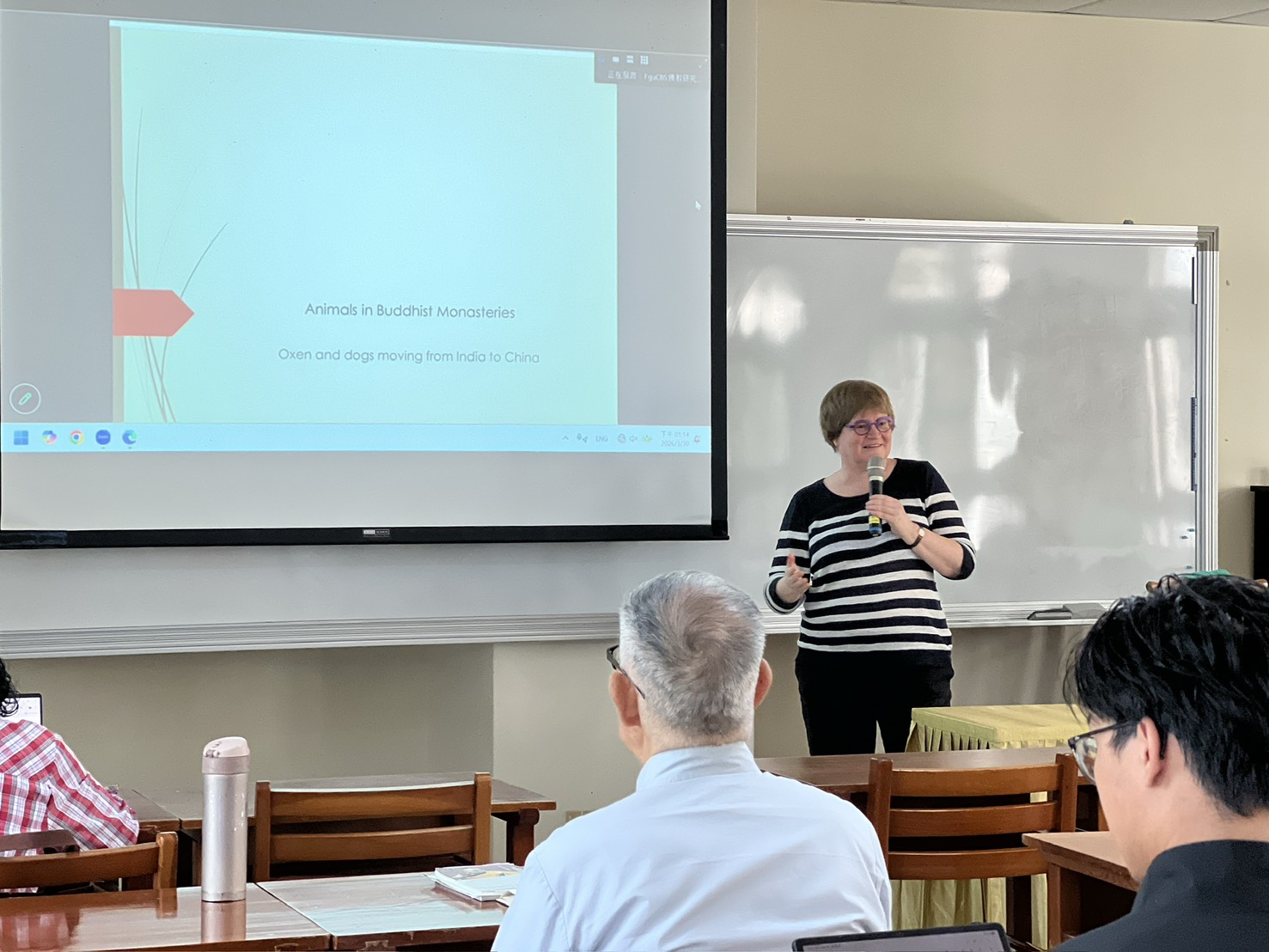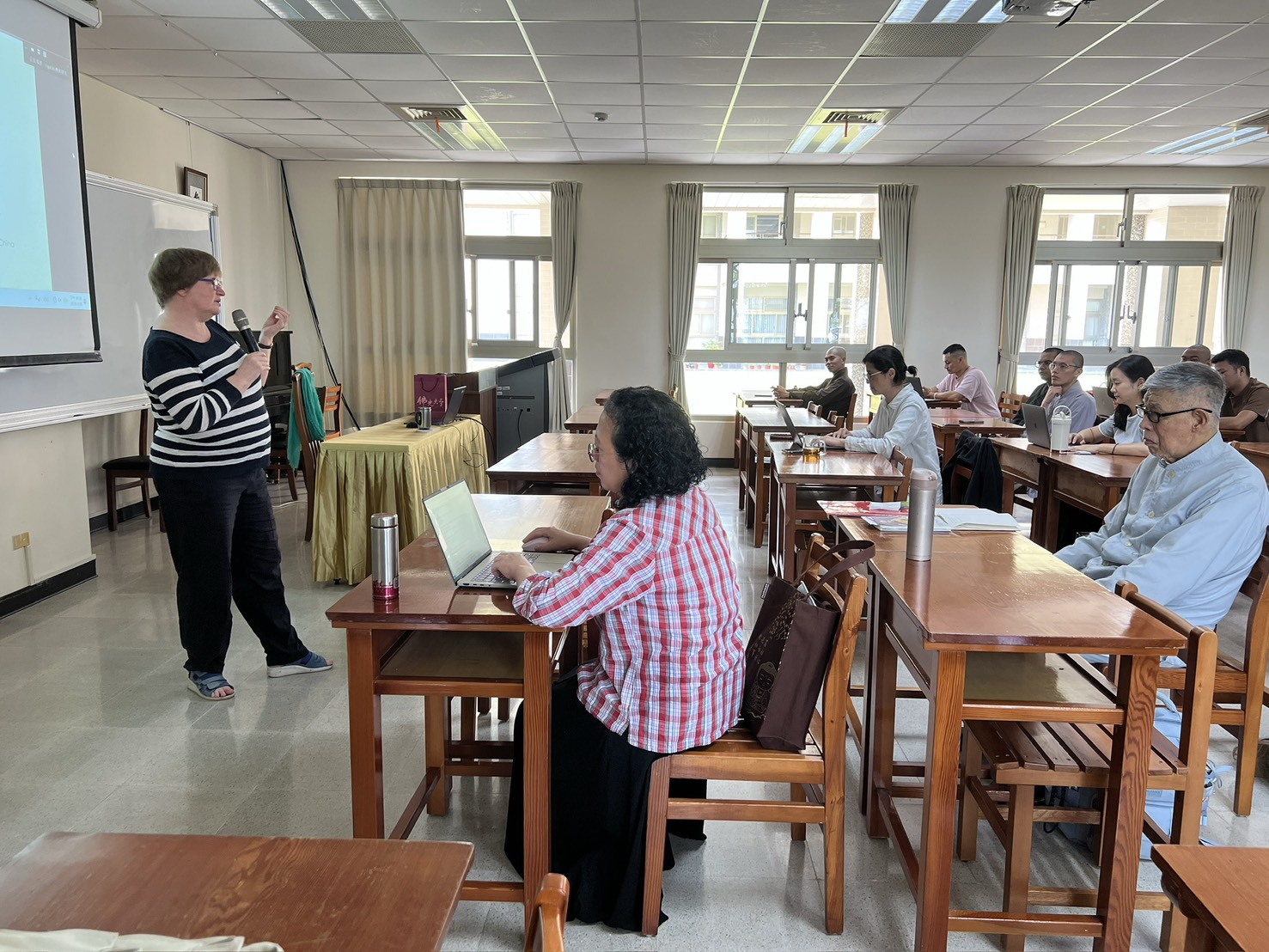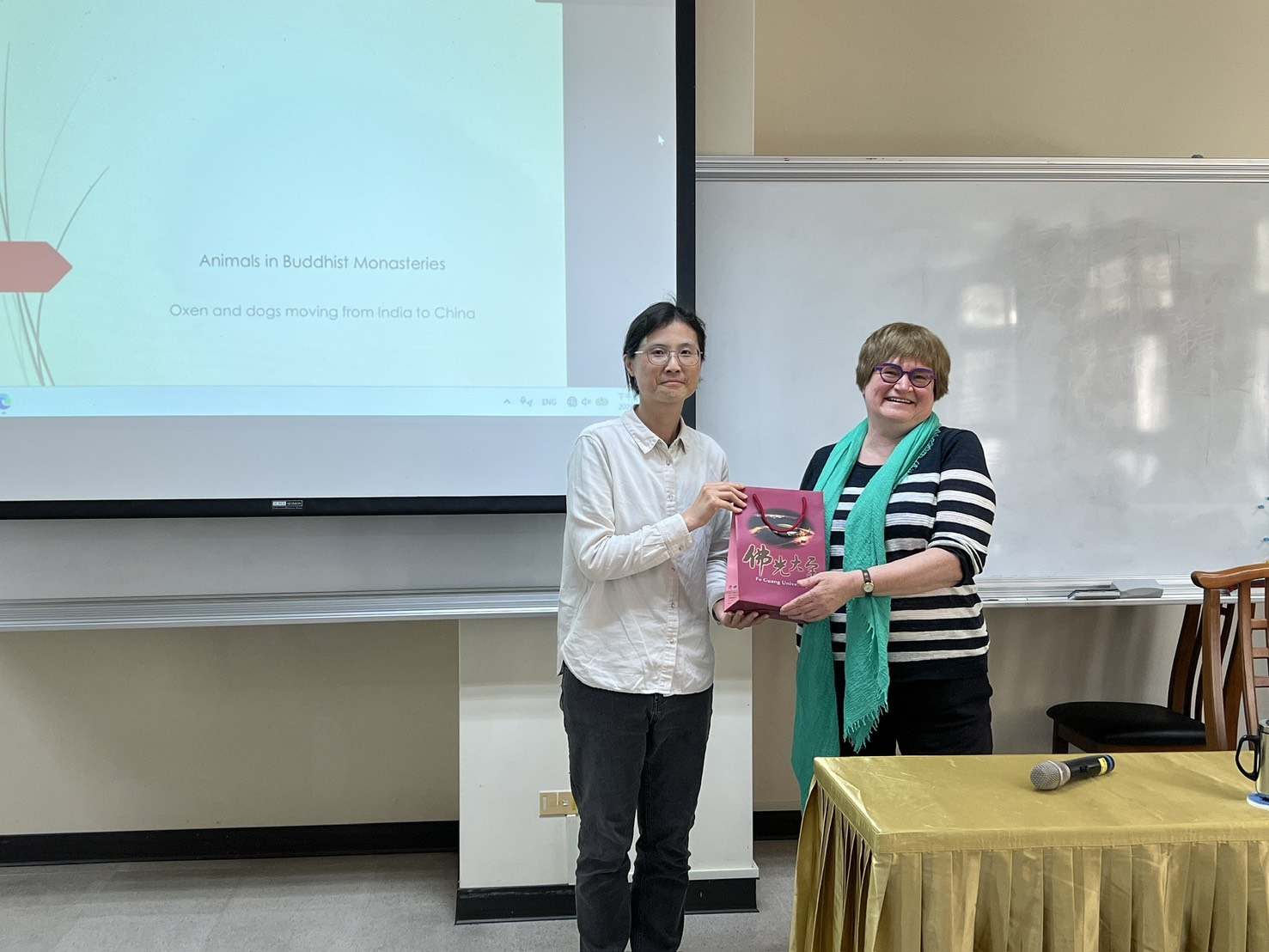

On March 30, 2026, the Center for Buddhist Studies at Fo Guang University hosted an International Distinguished Scholars Lecture Series, inviting Professor Ann Heirman of Ghent University, Belgium, to deliver a lecture titled “Animals in Buddhist Monasteries: From India to China—Oxen and Dogs.” Drawing on vinaya literature, the lecture explored the relationship between Buddhist monastic communities and animals, as well as how disciplinary regulations shaped monastic life and ethical practice.
The lecture was based on a wide range of vinaya sources, including the Pāli Vinaya, the Sarvāstivāda Vinaya, the Dharmaguptaka Vinaya, and the Mahāsāṃghika Vinaya. Adopting a comparative approach across different traditions and cultural contexts, Professor Heirman analyzed how Buddhist disciplinary texts regulated and conceptualized animals. She noted that although vinaya texts are normative in nature and aim to construct an ideal monastic life, they also preserve rich details of everyday practices, offering valuable insights into the reconstruction of ancient monastic life.
In her discussion of oxen, Professor Heirman highlighted their multifaceted role in Buddhist texts. On the one hand, oxen are often regarded as impure and associated with “animalistic” behavior, leading monastic communities to maintain physical boundaries—such as walls and gates—to keep them at a distance. On the other hand, oxen played a crucial role in daily life, serving as draft animals for agriculture and transportation, while their by-products, such as dung, were used in construction and cleaning. In addition, dairy products were permitted for medicinal and everyday use, whereas leather was subject to restrictions, reflecting the tension between the Buddhist principle of non-killing and practical necessities.
The discussion of dogs revealed an even more complex relationship. Vinaya texts record behaviors such as stealing food, barking, and aggression, while also acknowledging instances of friendly interactions between humans and animals. The consumption of dog meat is generally prohibited, and monks are advised not to bring dogs into lay society in order to preserve the public image of the saṃgha. At the same time, narratives concerning the release of animals demonstrate that even acts motivated by compassion may involve complex issues related to property ownership and disciplinary boundaries.
Professor Heirman further examined the interpretations of the Tang dynasty vinaya master Daoxuan (596–667). She pointed out that in his Sifen lü shanfan buque xingshi chao, Daoxuan emphasized the importance of non-killing and compassion, while also criticizing the keeping of animals in monasteries when driven by improper intentions, such as pest control. Such practices, he argued, could constitute improper conduct, reflecting how Chinese Buddhism deepened and localized vinaya ethics.
Through the cases of oxen and dogs, the lecture demonstrated how fundamental Buddhist values—such as non-killing, non-harming, and compassion—were interpreted and negotiated in everyday life. It also revealed how, as Buddhism spread from India to China, ethical perspectives on animals were continuously reinterpreted within different cultural contexts.