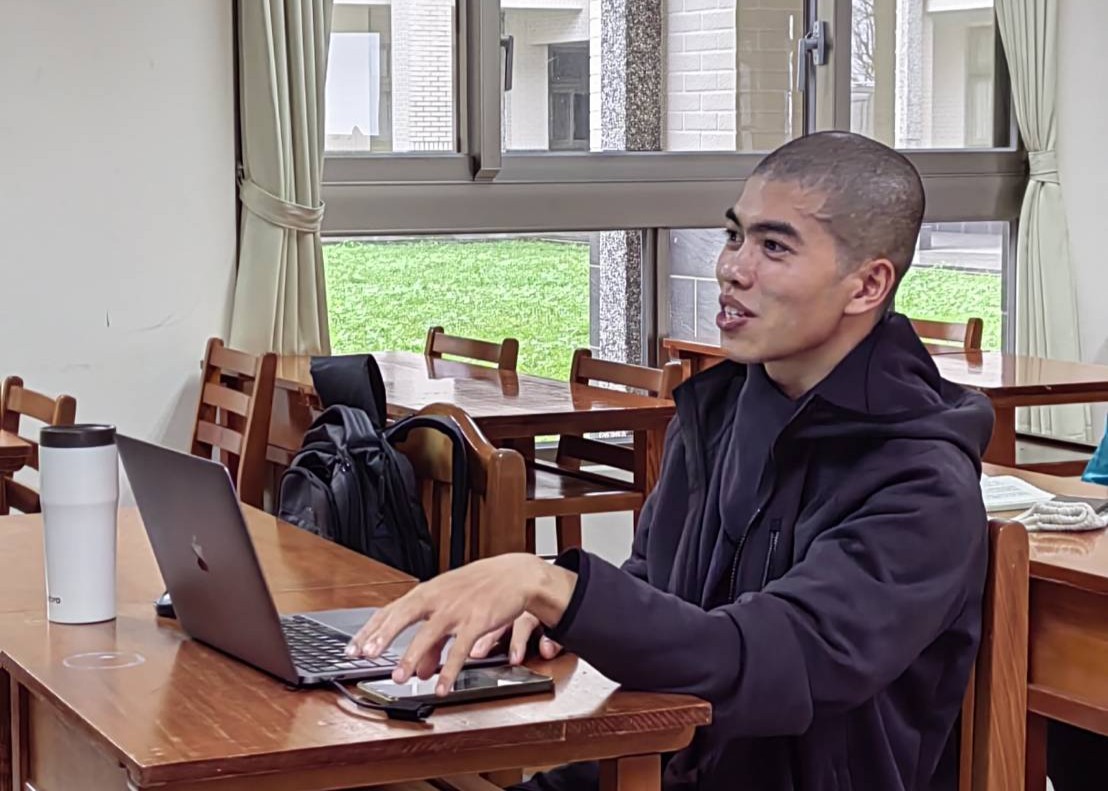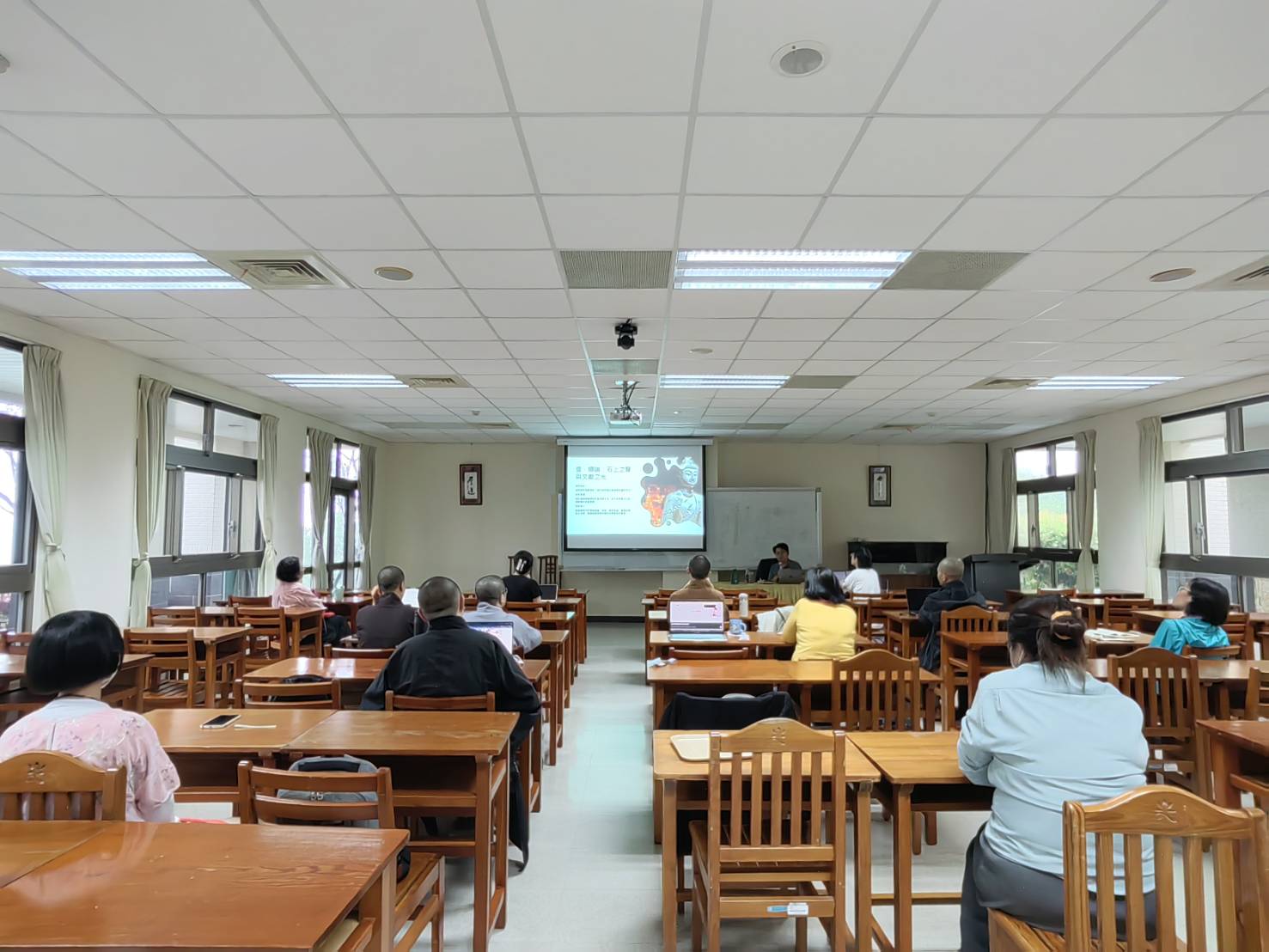
On October 28, 2025, the Center for Buddhist Studies at Fo Guang University inaugurated its "Buddhist Pedagogy Workshop" lecture series. The session featured Professor Li Kuei-min from the Department of History at National Cheng Kung University, who presented on the topic "Dharma Voice on Stone: The Interweaving of Buddhist Literature and Regional History in Vietnamese Inscriptions."
Professor Li began by emphasizing that epigraphy is not merely a form of religious commemoration but a critical historical source that fills gaps left by traditional chronicles. These "voices on stone" allow modern scholars to hear the authentic echoes of how the Dharma was propagated within local societies.
Focusing on the Trần (Chen) Dynasty, Li illustrated how Buddhism was state-sponsored and deeply intertwined with political power. He cited the Thanh Mai Vien Thong Stupa Inscription (青梅圓通塔碑) as a key example. This artifact records the lineage of the Trúc Lâm Zen School (竹林禪派), revealing how Zen was localized in Vietnam through a synthesis of imperial authority and indigenous belief.
Professor Li outlined three major periods of Vietnamese Buddhist epigraphy:
-
The Formation Period (11th–14th C.): Represented by the Tran Dynasty, marking the institutionalization of Zen.
-
The Revival Period (17th–18th C.): Characterized by the transmission of the Linji Zhusheng lineage from China, representing a peak in Sino-Vietnamese religious exchange.
-
The Modern Period (19th C. onward): Under the Nguyen Dynasty, inscription styles became standardized, reflecting stricter state management of religious spaces.
The lecture highlighted the interplay between Confucianism and Buddhism, specifically through the 18th-century scholar Lê Quý Đôn. Li explained how Le used Confucian terminology to interpret the Surangama Sutra, transforming Buddhist meditative concepts into a Confucian philosophy of self-reflection.
Additionally, Li shared recent advancements in digital humanities, noting that the Institute of Han-Nom Studies has collected over 50,000 rubbings and published the General Collection of Han-Nom Inscriptions, laying a solid foundation for future research.
Professor Li concluded that inscriptions serve as bridges connecting regional society with religious culture. They reveal how temples functioned as centers for education and documentation, consolidating the spiritual capital of social elites. The lecture ended with a vibrant Q&A session, reaffirming the irreplaceable value of epigraphy in understanding the history of East Asian Buddhism.
Professor Li concluded that inscriptions serve as bridges connecting regional society with religious culture. They reveal how temples functioned as centers for education and documentation, consolidating the spiritual capital of social elites. The lecture ended with a vibrant Q&A session, reaffirming the irreplaceable value of epigraphy in understanding the history of East Asian Buddhism.