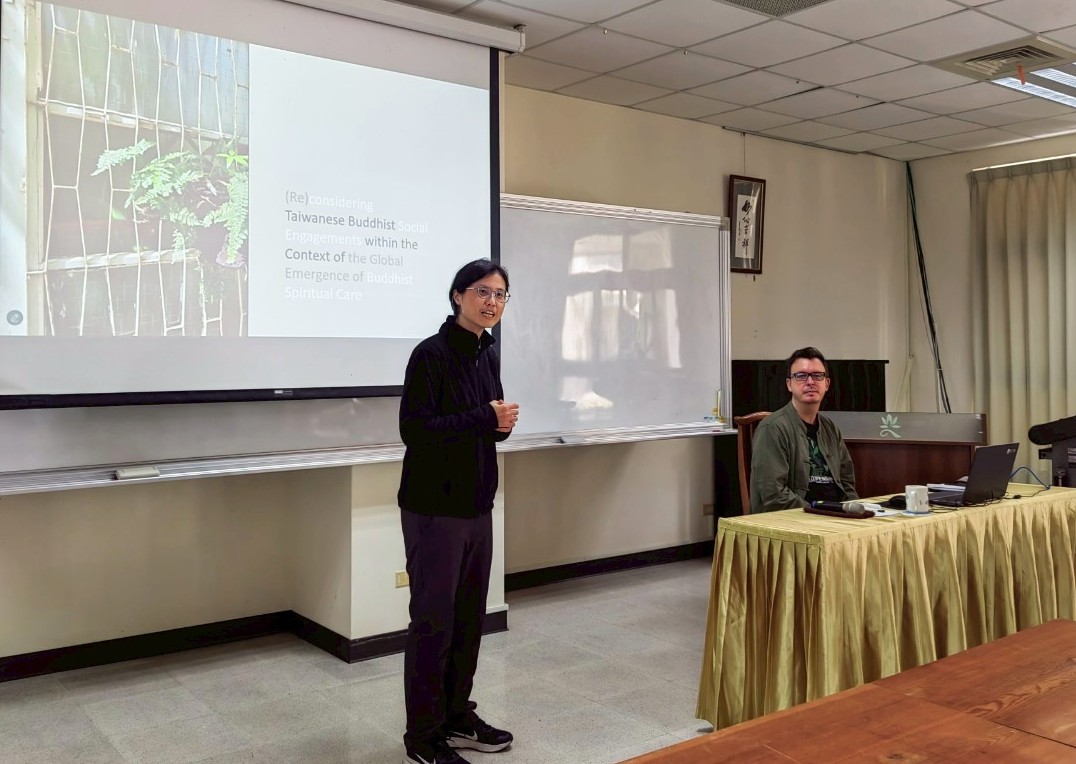

In this lecture focusing on Taiwanese Buddhist spiritual care within the context of globalization, Assistant Professor Jens Reinke (黃穎思) of the Faculty of Religion and Theology at Vrije Universiteit Amsterdam shared his cross-national comparative research on Buddhist spiritual care (BSC). He delved into the developments and challenges faced by Taiwanese Buddhist groups in this field. Reinke noted that the term "spiritual care" originated from the Christian pastoral tradition, where clergy initially provided spiritual and emotional support to patients, inmates, and soldiers. Today, however, it has expanded into a mode of care that values both diverse religious approaches and secularization. Over the past decade or two, many departments of religious studies in Europe and North America have also established relevant curricula for chaplaincy training.
Using the Netherlands as a case study, Reinke explained that Buddhist spiritual care was initially developed to address the needs of inmates. It received official recognition in 2000 and has since been institutionalized and professionalized at both government and private levels, including the establishment of a Buddhist Supervision Committee and integration into university curricula. Buddhist spiritual counselors in the Netherlands often operate non-denominationally, emphasizing a client-centered approach that combines Buddhism with secular mindfulness techniques to provide support.
Regarding Taiwan, Reinke observed that while groups grounded in Humanistic Buddhism—such as Tzu Chi—have launched spiritual care services in medical, correctional, and military settings, the overall system is not yet fully mature. Furthermore, constrained by the legal framework regarding the separation of religion and state, the role of chaplains in public institutions is not as clearly defined as in the Netherlands, nor does it follow the Dutch model of government-private partnership. Interestingly, Reinke mentioned that while spiritual care in Taiwan is sometimes provided by Buddhist groups, the actual recipients may include indigenous people of Christian faith, presenting a practical landscape that is both inter-religious and cross-cultural.
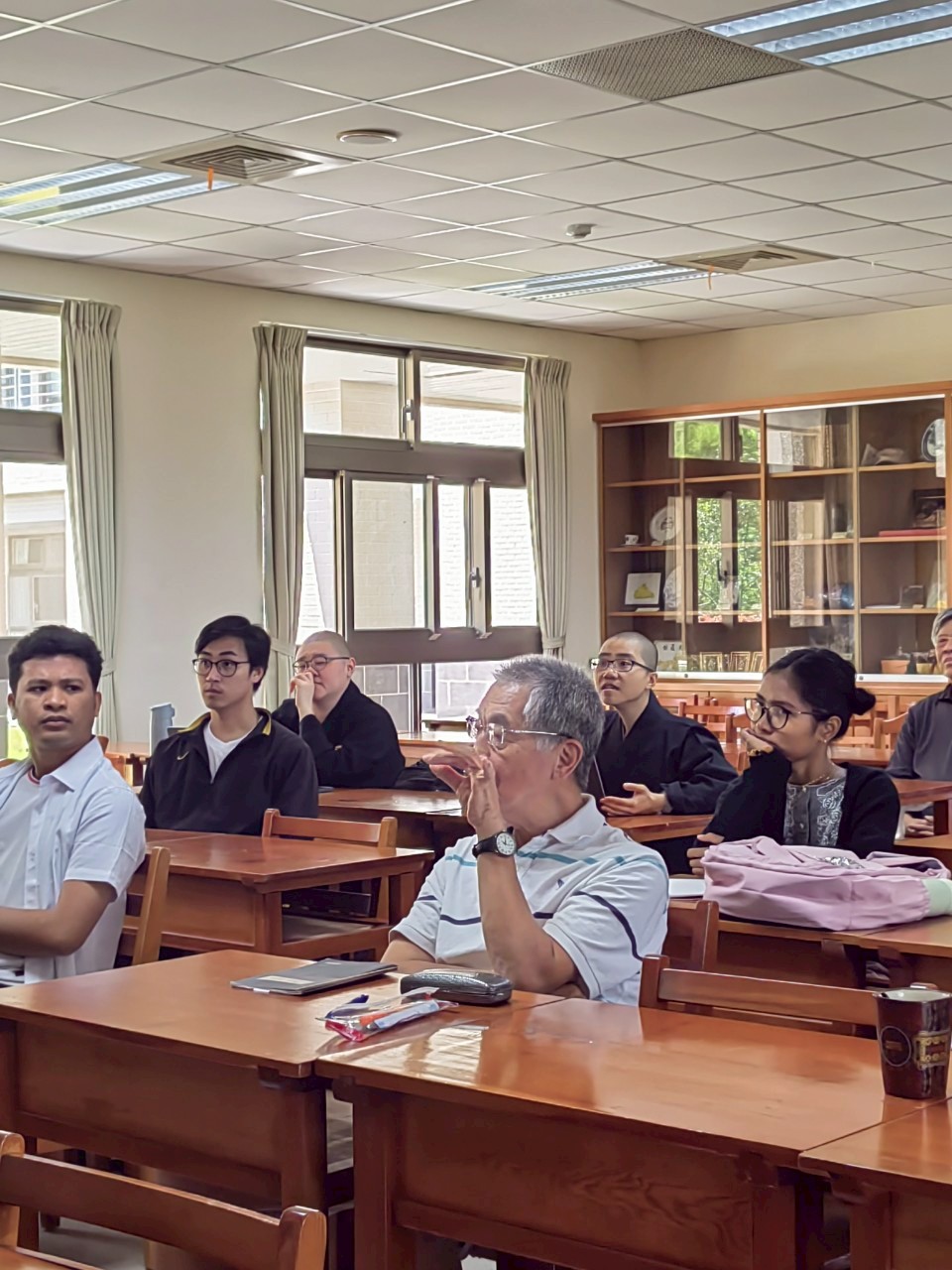
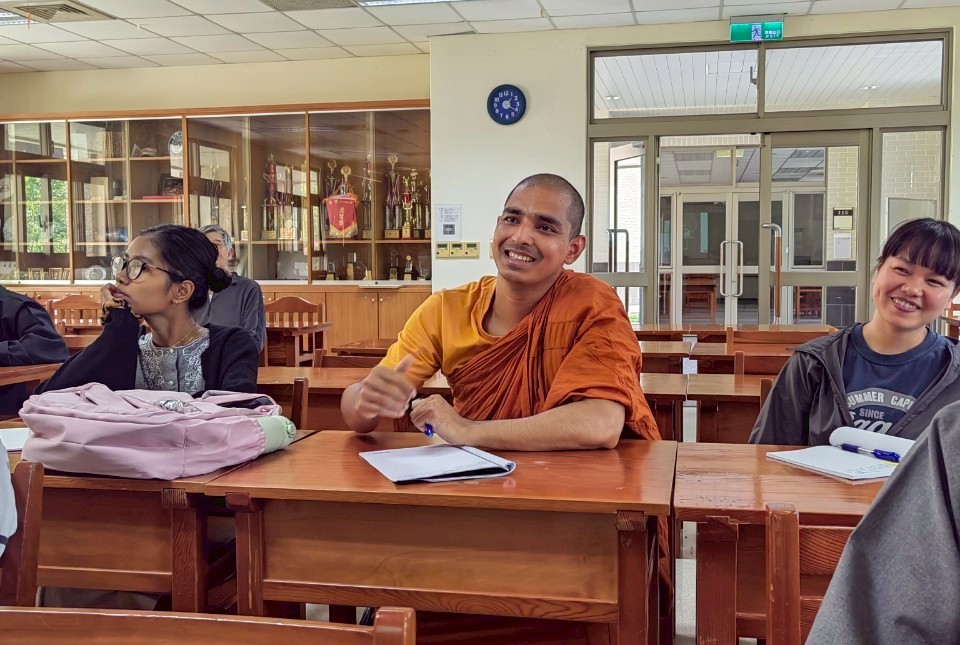
During the Q&A session, students asked: "What is the definition of spirituality? Can this term, which comes from a Christian background, be applied to an Asian religious tradition like Buddhism? Does it risk misleading our understanding of Buddhism?" Others were curious about the specific content of chaplaincy training programs in Western universities.
Reinke responded that these questions are precisely the focus of his research. He argued that the term "spirituality" has been reinterpreted within the context of globalization; it is no longer limited to a specific religious framework but instead offers an open space for dialogue, allowing Buddhism to participate in the sphere of public care in its own unique way. Furthermore, he believes the concept of spirituality needs to be redefined and focused through actual fieldwork and case studies. Current chaplaincy curricula in Western universities often combine techniques in listening, caregiving, and psychological counseling with education in the classics and practices of specific religions. However, the complex reality of on-site care requires chaplains or spiritual counselors to practice client-centered listening, companionship, acceptance, and flexibility, rather than merely preaching their own religious doctrines.
Finally, Reinke emphasized that his research utilizes "multi-sited" and "multiple-position" fieldwork methods to understand the local practice of Buddhist spiritual care across interconnected social scenes. He seeks to explore how "better" Buddhist end-of-life care can be practiced under the pressures of global modernity.