(Reported by Ven. Yan Ying, Center for Buddhist Studies, Fo Guang University, Yilan)
From November 11 to 12, the "Workshop on Goddess Belief and Religious Exchange" was jointly organized by the Center for Buddhist Studies at Fo Guang University (FGU), the Center for the Study of Chinese Religions at National Chengchi University (NCCU), and the FGU College of Buddhist Studies. The workshop originated from the integrated research project "Goddesses and Women: Gender Reflections on Contemporary Taiwan and Traditional Chinese Religious Systems," funded by the Ministry of Science and Technology (now NSTC). The two-day workshop was divided into "Special Lectures" and "Fieldwork." Invited experts included Professor Chang Hsun (Director and Research Fellow, Institute of Ethnology, Academia Sinica), Professor Lee Yu-chen (Director, Graduate Institute of Religious Studies, NCCU), Assistant Professor Lin Chen-yuan (Graduate Institute of Religious Studies, NCCU), Assistant Professor Lu Chia-hui (Department of Medicine, I-Shou University), and Chair Cheng Wei-yi (Department of Buddhist Studies, FGU).
Through special lectures and on-site fieldwork sharing, the scholars discussed Taiwanese female deities, beliefs, forms of religious medicine, and fieldwork experiences. On the following day, they led faculty and students from the College of Buddhist Studies to conduct fieldwork in various areas of Yilan County. Over 70 faculty members and students participated enthusiastically over the two days.
The "Special Lectures" began enthusiastically on the 11th at Yunshuixuan, FGU College of Buddhist Studies, focusing on two main themes: "Goddess Belief" and "Religious Exchange." The host, Professor Lin Hsin-yi, Executive Secretary of the FGU Center for Buddhist Studies, opened by expressing her delight at hosting the workshop at the College. She explained, "In the past, Buddhist studies have tended to focus on classics, literature, and doctrinal discussions. However, phenomena related to Buddhism, Taoism, or folk beliefs happen every day in Taiwan; they are living traditions in development. Many issues within them are worthy of deep exploration." She expressed hope that students would deeply explore these different facets in the future.
"Religious Exchange": Southeast Asian Buddhism and Folk Religion
First, Professor Lee Yu-chen presented "Buddhist Anthropology: A Review of Theravada and Han Buddhism Research." She introduced and contrasted the differences between Southeast Asian Buddhism and Taiwanese Buddhism, clarifying that while China has maintained a Bhikkhuni lineage to this day, Myanmar and Sri Lanka have a Bhikkhuni culture but no lineage; although there are female practitioners in monasteries, they are not equal to Bhikkhus. Professor Lu Chia-hui lectured on "Affect and Care Practices in Folk Religious Medicine." She categorized medicine into professional medicine (Western medicine, scientific Chinese medicine), family medicine (mutual care among family and friends), and folk religious medicine (massage, knife therapy, etc.). However, she posited that folk religion and its medicine are more like a lifestyle. Different deities, like Western doctors, have different consultation times, specialties, and treatment methods, subject to individualized variations in belief. Finally, she pointed out that the key to the "efficacy" (lingyan) of folk healing is not faith, but rather the social logic and human relationships inherent in the doctor-patient bond, offering reflections on the relationship between affect and medicine.
"Goddess Belief": Taiwan's Mazu Belief and Linshui Furen
Professor Chang Hsun discussed "The Origins and Changes of Mazu Belief in Taiwan," introducing the stories of Mazu's miracles, the rise of the belief, and the background of its introduction and spread in Taiwan. She explained how Mazu belief culture in Taiwan is closely related to modern society across political, economic, and cultural spheres. Finally, Professor Lin Chen-yuan spoke on "Linshui Furen Belief and Female Religious Practice." He provided an overview of the "Linshui Furen Belief" and explained the "Lushan Sannai Method" (閭山三奶法)—a "Ritual Therapy of the Two Gates of Daoism and Dharma." He pointed out that religious medicine is an important tradition in Chinese religious medicine, providing supplementary background knowledge for the next day's fieldwork.
Fieldwork in Local Communities
On November 12, the group proceeded to the Yilan area for fieldwork. Led by Professors Lin Chen-yuan, Lee Yu-chen, Chang Hsun, Lin Hsin-yi, and Cheng Wei-yi, they visited Nan-tian Temple in Nanfang'ao and Luyuan Temple in Luodong to understand the Golden Mazu belief in Su'ao's Nan-tian Temple and the Linshui Furen belief in Luyuan Temple. Finally, a comprehensive discussion was held at the Lanyang Branch Temple.
At Nan-tian Temple in Nanfang'ao, Chairman Chen Zheng-xin and Vice-Chairman Lin Chi-shan personally led the tour. The first floor enshrines the Meizhou Mazu, the second floor features a modern Jade Mazu, and the third floor houses the Golden Mazu. The Golden Mazu was crafted from a full gold body, but because the face and hands melted during production, only these parts are not pure gold. In addition to the Meizhou Mazu, the first floor also houses a "Soft-body Mazu" and a "Deputy Mazu" to facilitate Mazu's tours. The temple organized a discussion after the visit, where students asked diverse questions regarding Mazu's iconography features, care for the elderly, sustainable community development, and financial sources, gaining a deeper understanding of Nan-tian Temple.
Luyuan Temple was founded in 1959 by Hsu Wan-chih, Li Bing-nan, and Huang Tzu-wei, originating from experiences of spiritual healing. The first floor enshrines the Sannai Furen (Three Ladies), the second floor the Queen Mother of the West, and the third floor the throne of Patriarch Hongjun Laozu and an exhibition of religious paintings by believer Wei Shu-yen.
Comprehensive Discussion: Highlights and Key Topics
During the comprehensive discussion , student Nguyen Thi Anh Tuyet from Vietnam shared that goddess beliefs also exist in Vietnam, such as the Mother Goddesses of Heaven, Earth, Water, and Mountains/Forests, and that these folk beliefs also adopt Buddhist rituals. Student Wan Chang-hui asked, "When a spirit medium (jitong) is possessed, they tiptoe and cannot be pushed down, exhibiting spiritual movement. Is the 'Higher Self' controllable?" Professor Lee Yu-chen replied that somatic sensation is a process from sensing to recognizing to reacting. Our understanding of bodily learning experiences and body techniques is still insufficient, and differences exist between knowledge systems.
Additionally, the group explored topics such as the "Five Religions in One" feature of Luyuan Temple, the differences in spirit possession between Taoism and folk beliefs, comparisons of deity possession in Vietnam and Taiwan, and changes in the status of women in temples. As the group encountered spirit medium performances by pilgrimage groups at both temples during the visit, students became interested in spirit possession. Professor Chang Hsun explained the origins of "Ji" (divination/mediumship) and compared the definitions of internal and external spirits in Shamanism and Taoism.
Students observed that the receptionists at Luyuan Temple were all women, prompting a discussion on women's status in temples. Professor Lee Yu-chen argued that women have not reached a dominant status, as men still handle tasks like receiving the flag or inserting incense during possession rituals; however, women do have more opportunities for expression. Furthermore, the appearance of female mediums and younger mediums in various places reflects changes in temple belief culture.
Many students expressed that this workshop and fieldwork experience opened new horizons, revealing that the diverse elements of common people's lives have evolved over a long time in response to human needs. Following this event, they felt better equipped to deeply understand the interrelationships between folk beliefs, Taoism, and Buddhism.
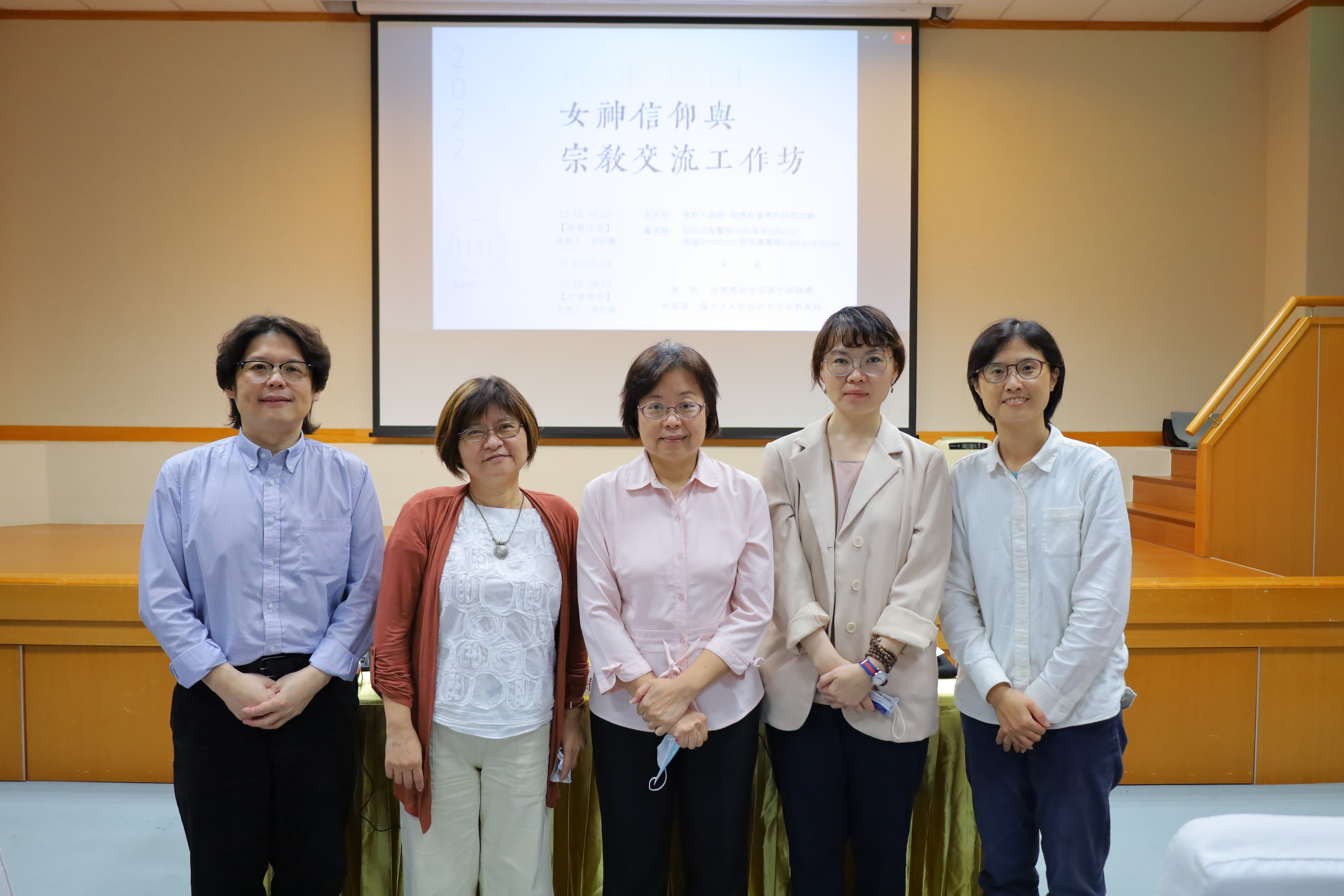
From left to right: Lin Chen-yuan, Lee Yu-chen, Chang Hsun, Lu Chia-hui, Lin Hsin-yi.
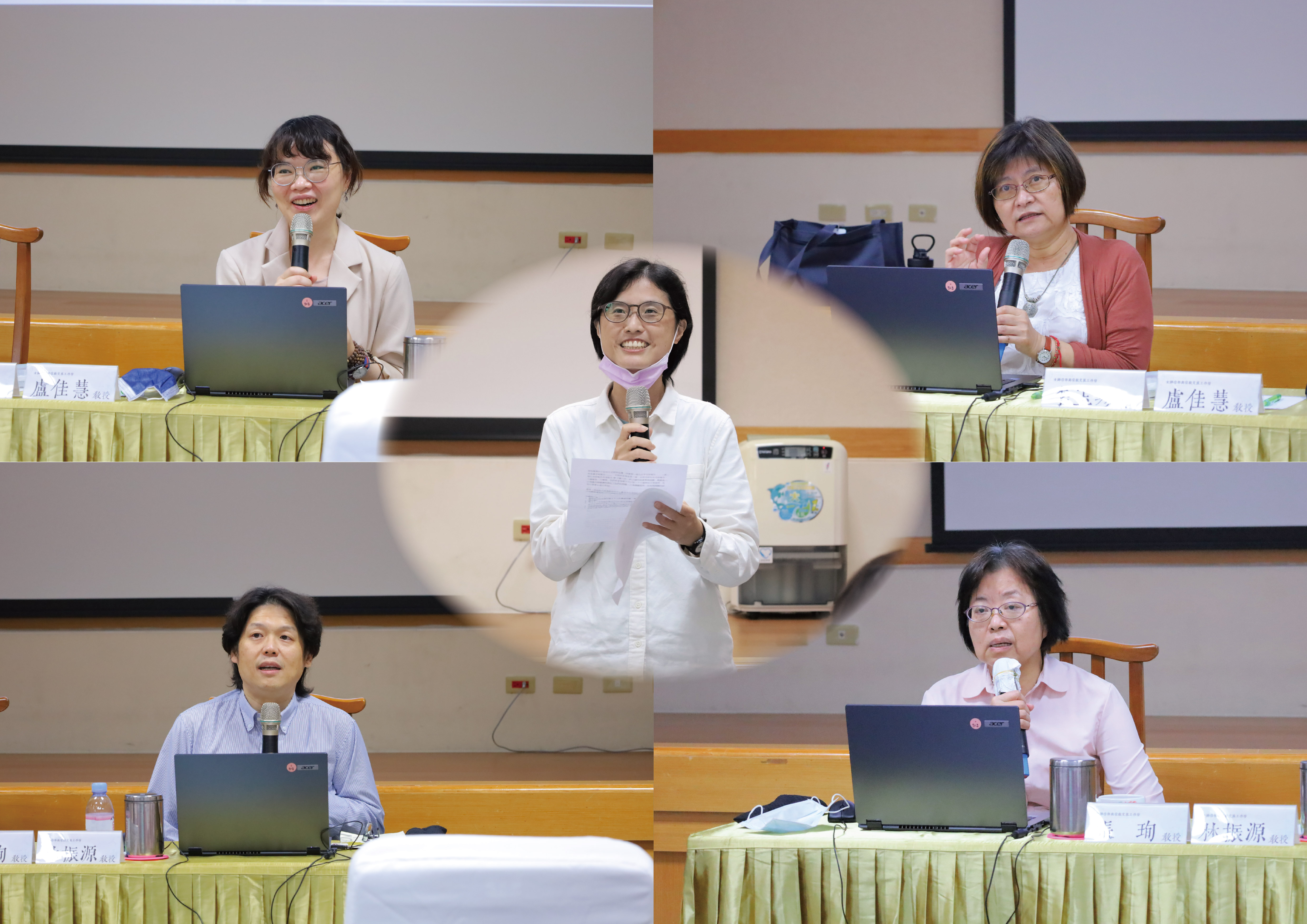
Five professors introduced and shared on the main themes of "Goddess Belief" and "Religious Exchange."
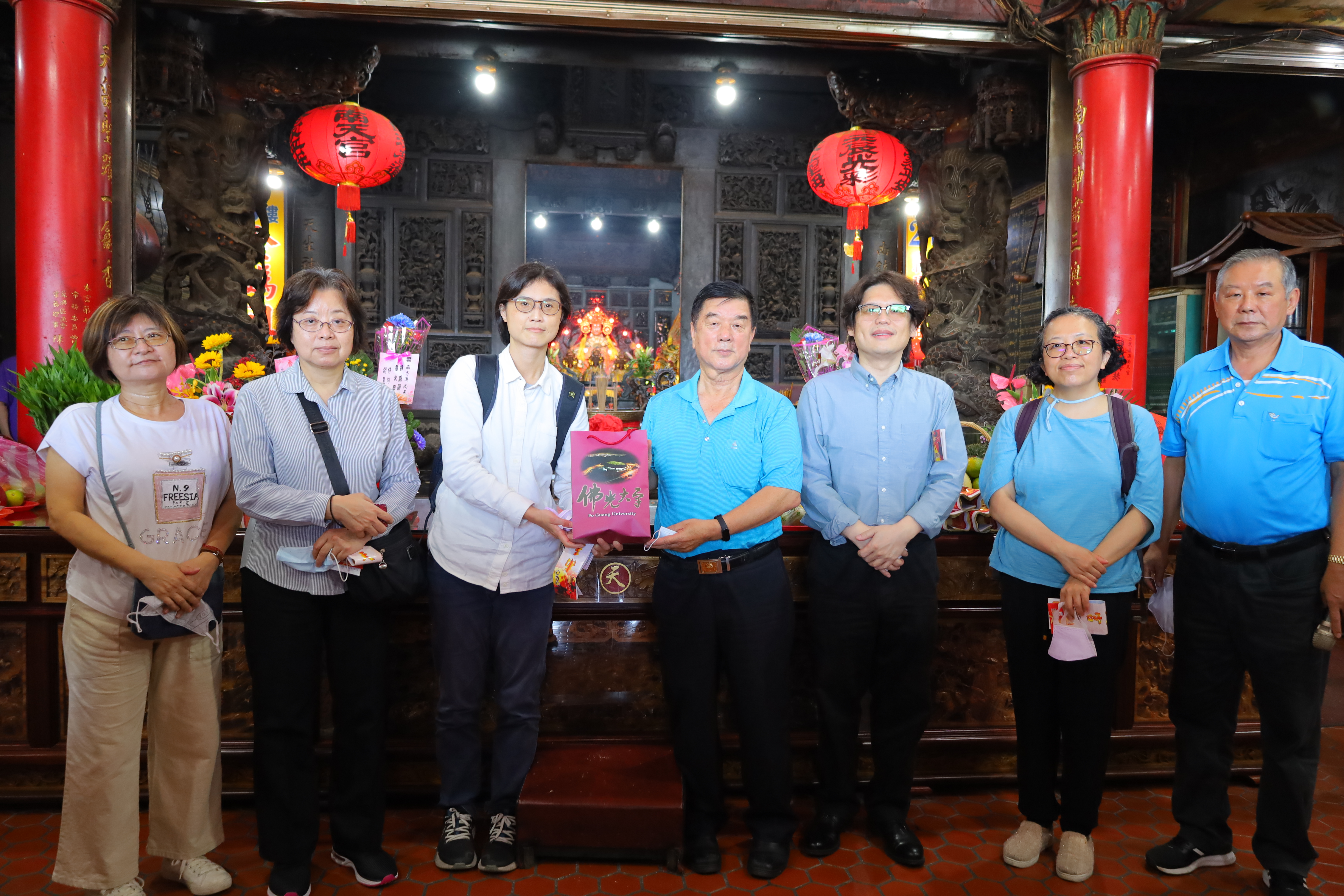
The Center for Buddhist Studies presented the Fo Guang Journal of Buddhist Studies and gifts to Nan-tian Temple in Nanfang'ao. From left: Lee Yu-chen (NCCU), Chang Hsun (I-Shou University/Academia Sinica), Lin Hsin-yi (Executive Secretary, FGU CBS), Chen Zheng-xin (Chairman, Nan-tian Temple), Lin Chen-yuan (NCCU), Cheng Wei-yi (Chair, FGU Dept. of Buddhist Studies), Lin Chi-shan (Vice-Chairman, Nan-tian Temple).
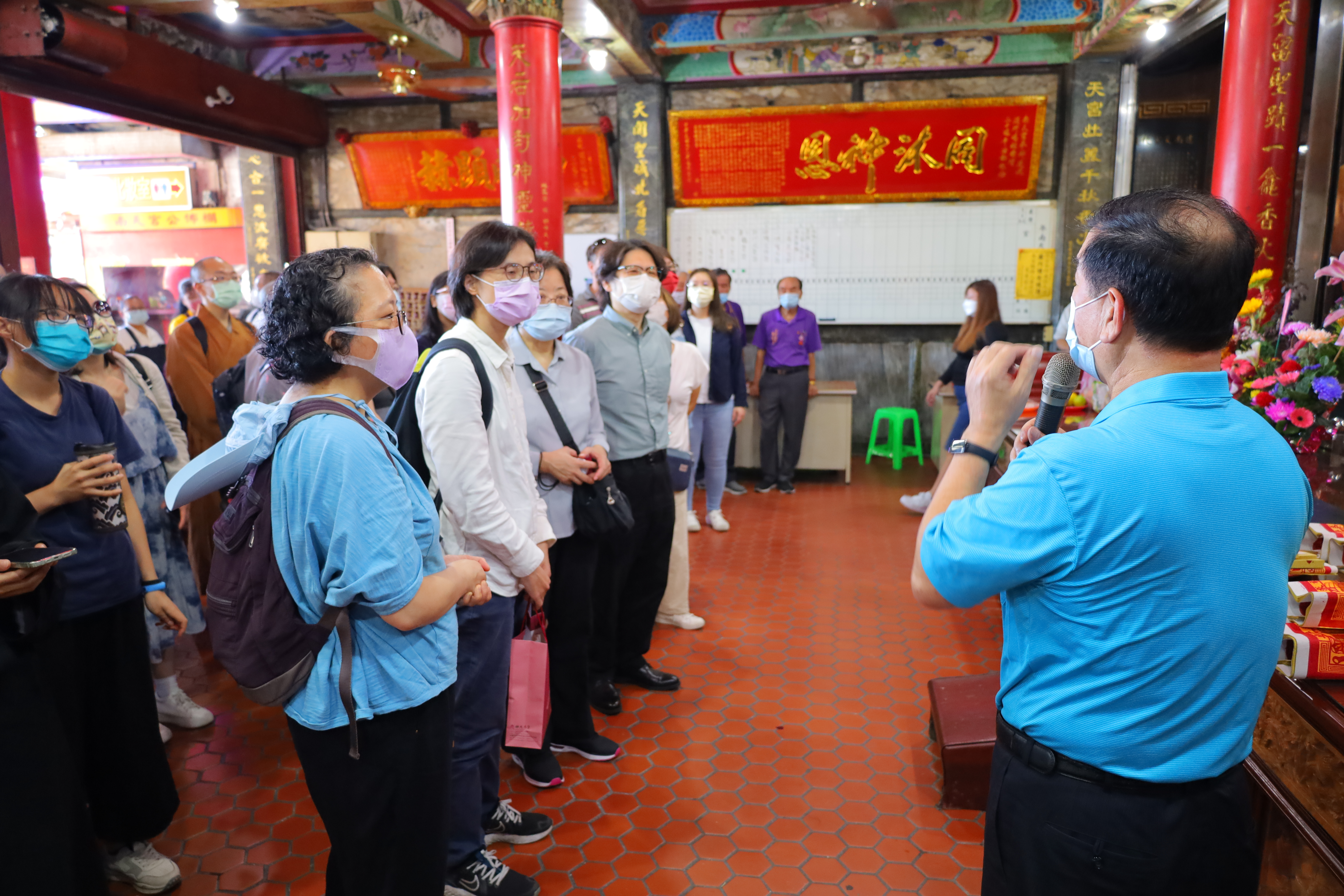
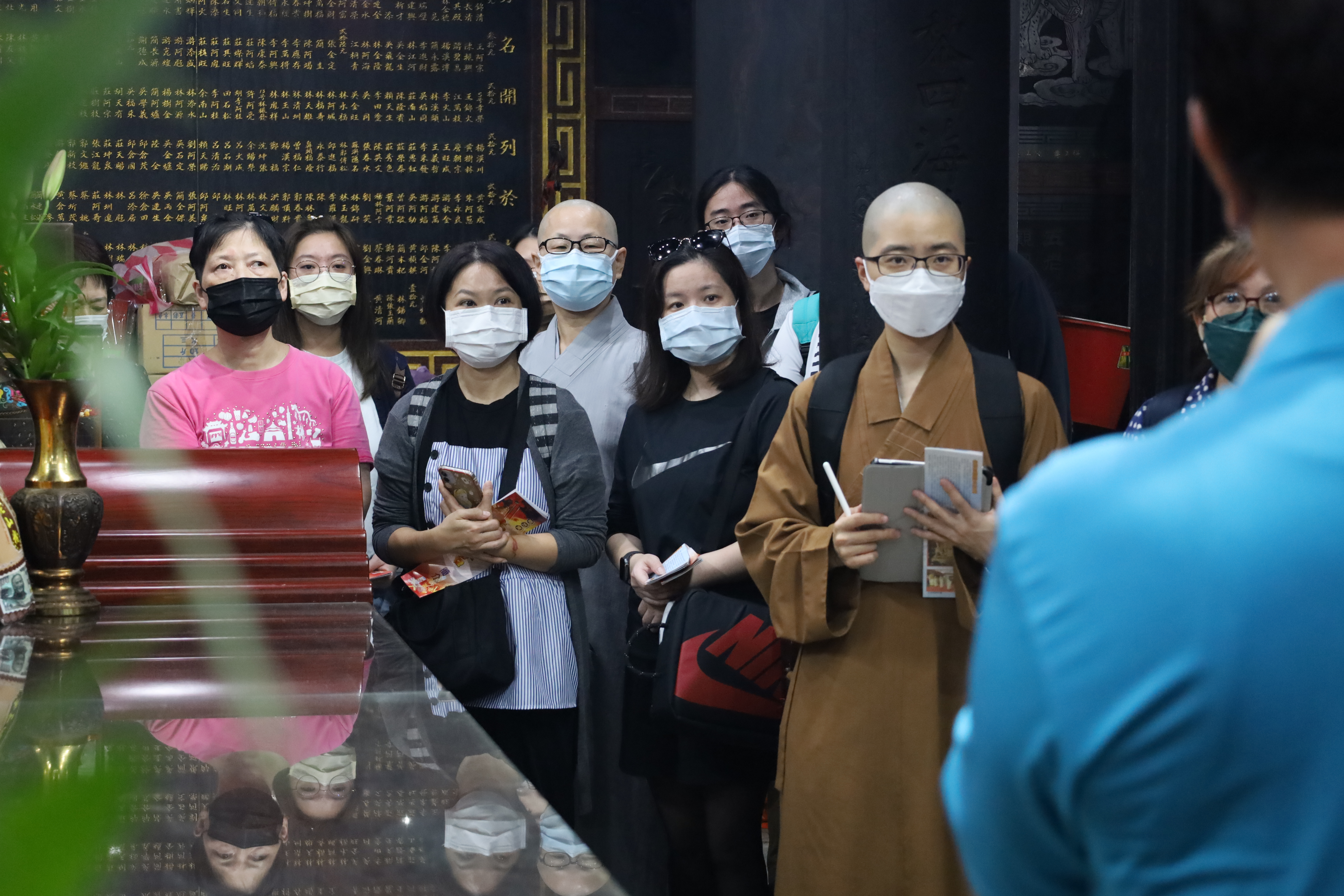
Students visiting Nan-tian Temple, guided personally by the Chairman.
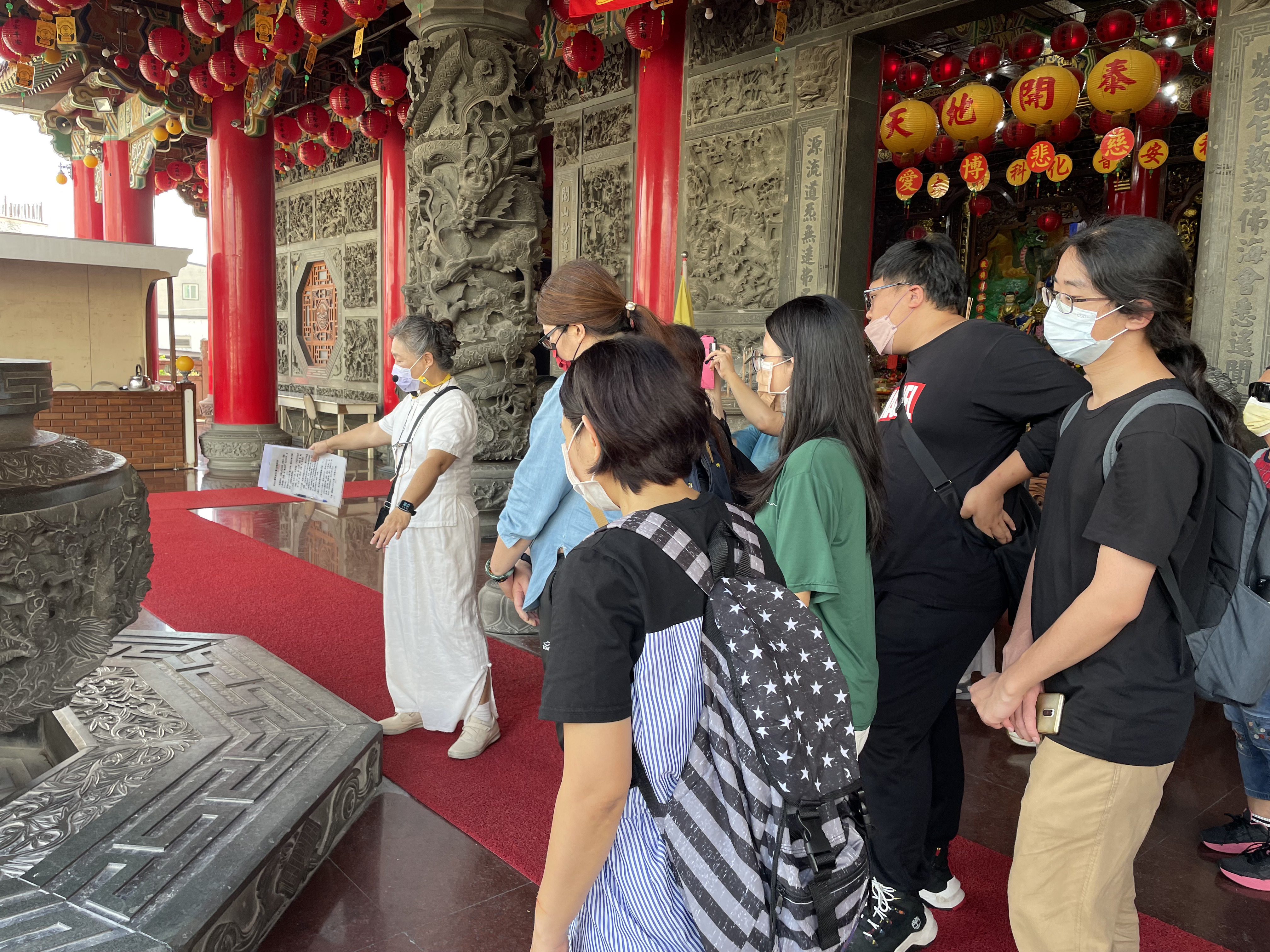
Students visiting Luyuan Temple in Luodong, with a detailed tour provided by volunteers.
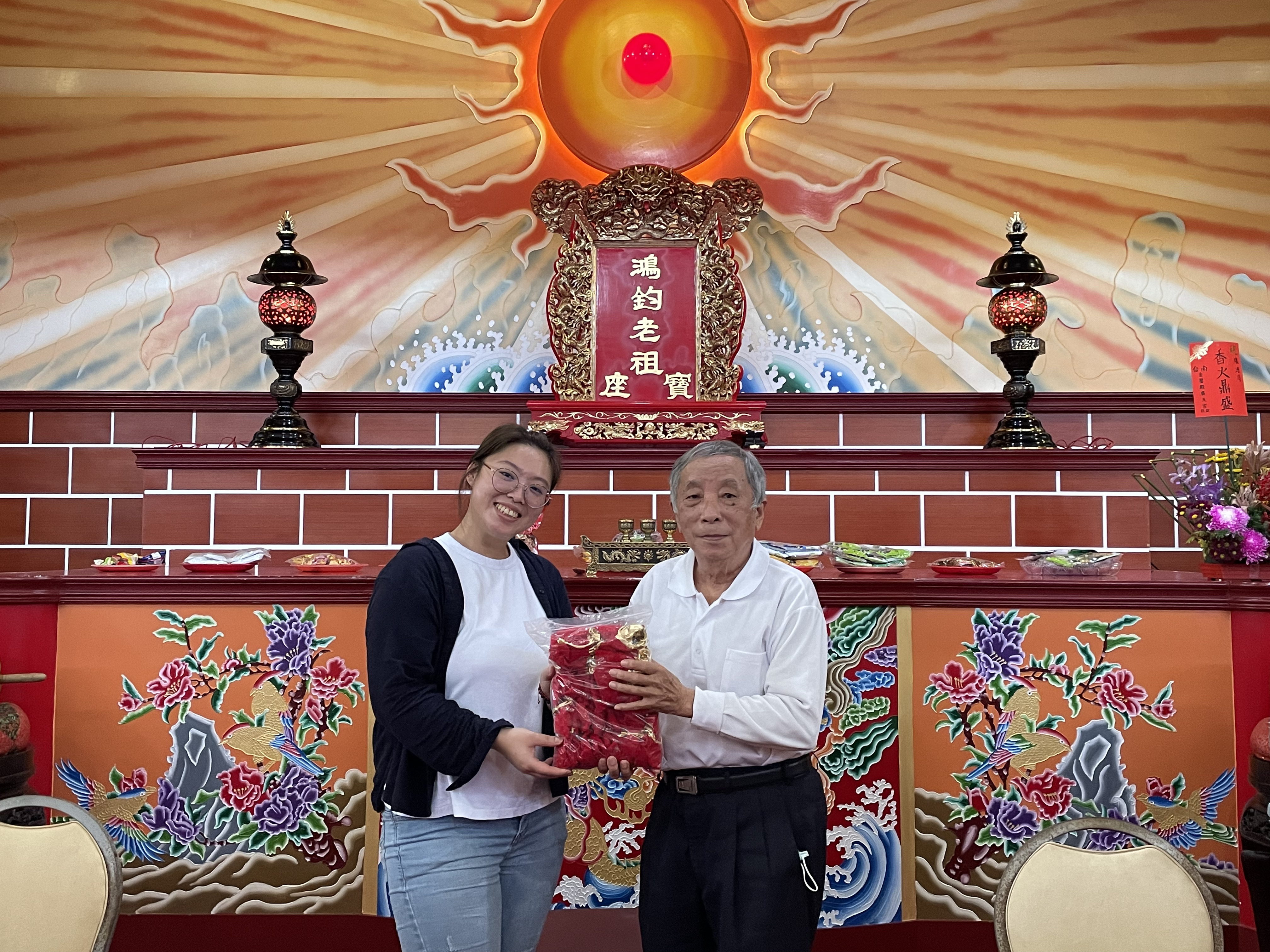
Huang Chin-chi, Chairman of Luyuan Temple in Luodong, presented gifts to all participants of the visit.
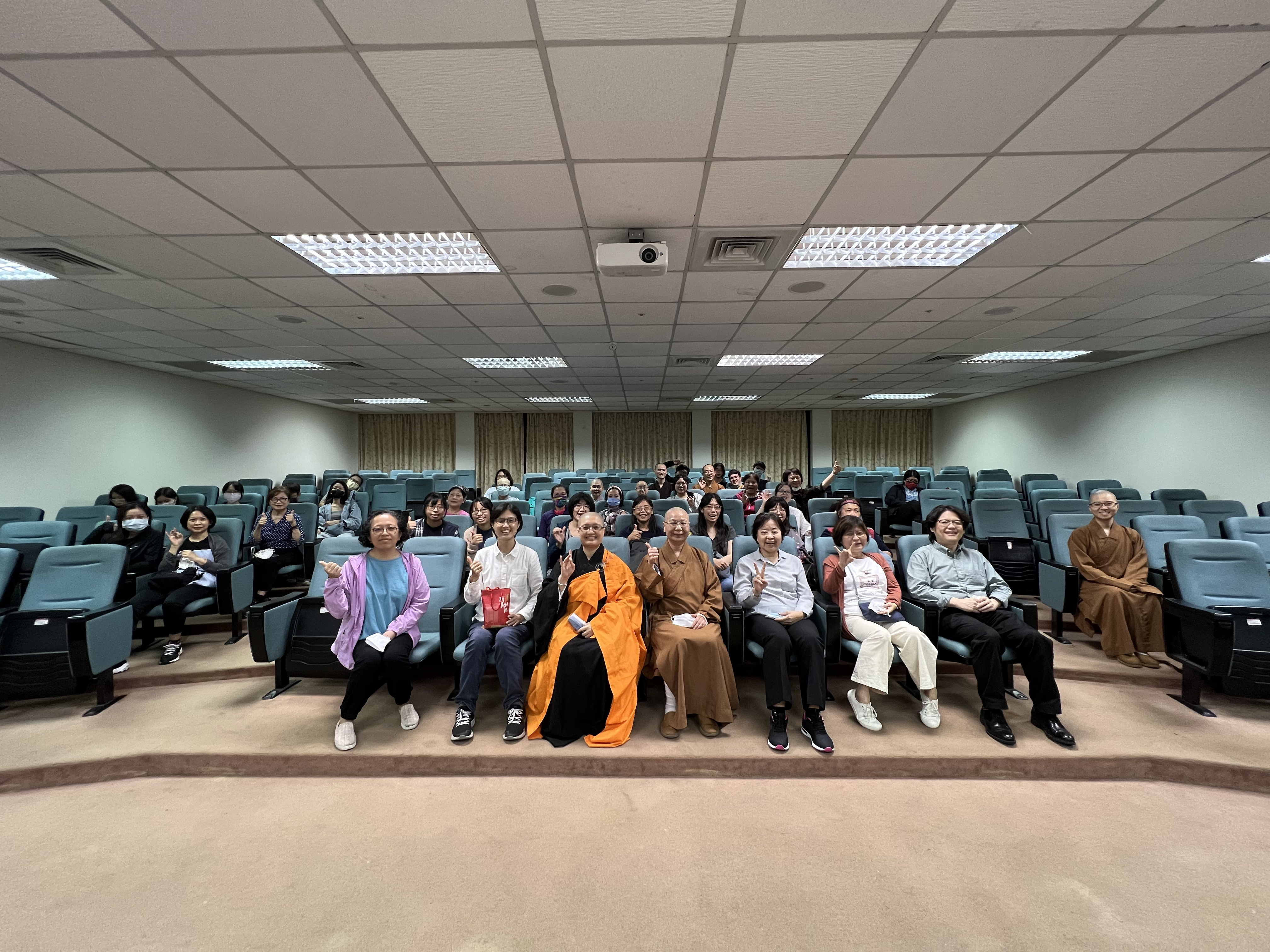
The final comprehensive discussion at Lanyang Branch Temple; students returned with a wealth of knowledge.