Life and death mark the beginning and the end of the human body’s journey, serving as profound issues that everyone must value and reflect upon. On June 20, 2024, the Center for Buddhist Studies held the final session of this semester's "Buddhist Teaching Workshop" expert lecture series, centered on the theme "Life, Death, and Medicine: A Cross-Religious Panel on Bioethics."
The panel featured three distinguished speakers representing Buddhism, Judaism, and Modern Medicine: Venerable Professor Jue-Guan of the Department of Buddhist Studies at Fo Guang University; Dr. Rabbi Cody R. Bahir of the Taipei Jewish Community; and Professor Tsai Fu-Chang of the National Taiwan University College of Medicine.
⬛️Reincarnation and the Cycle of Life
Venerable Jue-Guan began by sharing the Buddhist definition of death, the afterlife, and death-related rituals. Buddhism views death (referred to as wang-sheng or rebirth) as the conclusion of one phase of life. If one maintains good energy and spiritual alignment with the Buddha before passing, one transitions to the start of the next phase. After death, one enters the cycle of reincarnation. The destination of the next life is determined primarily by three factors: Karma accumulated in the past, Vows held for the future, and Efforts made in the present (this lifetime).
Regarding Buddhist funeral rites, while respecting the traditional meaning of "preparation, funeral, mourning, and sacrifice," the structure primarily focuses on "Chanting Sutras, Reciting the Buddha’s Name, and Dedicating Merit." This approach permeates the entire funeral process, eliminating secular red tape. Finally, Ven. Jue-Guan shared Venerable Hui Kai's "Five 'Musts' (Ten-Thousands) for being at ease with life and death" to encourage the audience and called for the promotion of Advance Care Planning (ACP) and medical decisions.
⬛️Jewish Mourning Rituals and Afterlife Traditions
Rabbi Cody R. Bahir explained that in Judaism, the Hebrew Bible (or Tanakh) contains no description of heaven or life after death, viewing death as the end of life on earth. The Mishnah Ohalot outlines criteria for determining death: the majority opinion relies on the cessation of breathing, while a minority opinion focuses on the cessation of the heartbeat.
The Rabbi explained that Judaism believes the soul does not perish with the body. Instead, based on one's deeds in life, the soul is either rewarded or sent to purgatory for punishment. Those who are rewarded may be reborn, with their souls further purified in the new life. Conversely, those who continue to do evil after being granted four opportunities to repair their souls will fall into purgatory for punishment. Judaism believes the soul undergoes a multi-stage journey after death, with specific mourning rituals corresponding to these stages over time.
In Jewish funeral rites, the deceased must be buried on the day of death. Relatives then observe a seven-day mourning period known as Shiva. Starting from the day of the funeral, mourners refrain from ordinary greetings, wearing new clothes, cutting hair, shaving, or listening to music for entertainment. Furthermore, the Kaddish (prayer) is recited again on the eleventh month after death and on subsequent anniversaries (Yahrzeits).
⬛️ Medical Cases and Practical Discussion
The session concluded with Professor Tsai Fu-Chang, who presented two medical definitions of death:
-
Traditional Cardiopulmonary Death: Irreversible cessation of circulatory and respiratory functions.
-
Brain Death: Irreversible loss of all brain functions, including the brainstem.
He illustrated these concepts with three medical scenarios: Persistent Vegetative State (PVS), Euthanasia, and Brain Death & Organ Donation. He also discussed a topic currently debated in modern society: Voluntarily Stopping Eating and Drinking (VSED) as a means of a "good death."
Through this cross-disciplinary exploration, the three professors discussed definitions and perceptions of life and death, highlighting the differences between their religious and cultural perspectives.
During the Q&A session, many students shared their own experiences and questions, engaging in a lively interaction with the professors. The discussion resonated deeply with the audience, allowing them to shift their view of death from a negative perspective to a positive understanding of the nature of life and death.
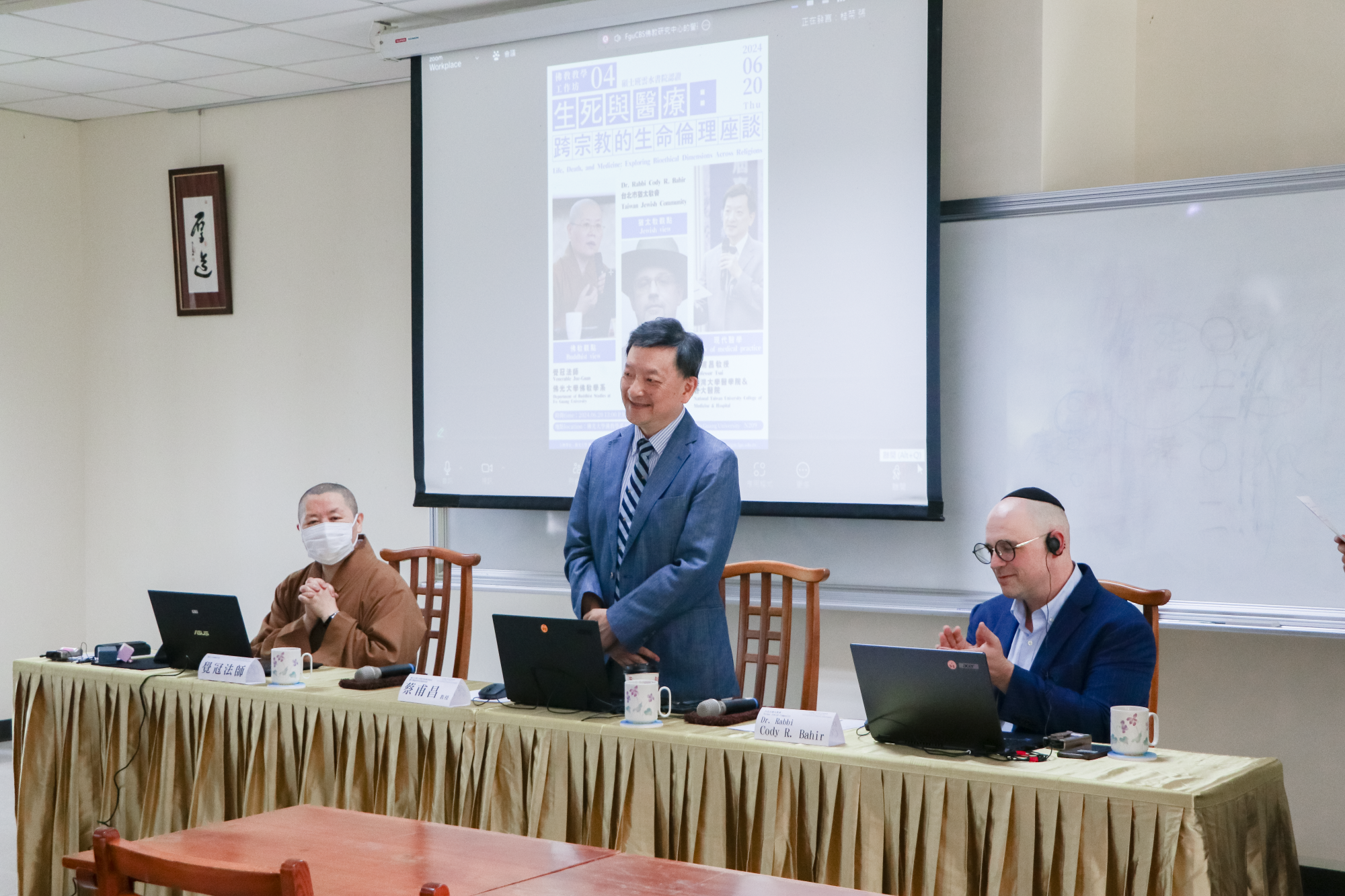
(From left) Venerable Jue-Guan, Professor Tsai Fu-Chang, and Rabbi Cody R. Bahir.
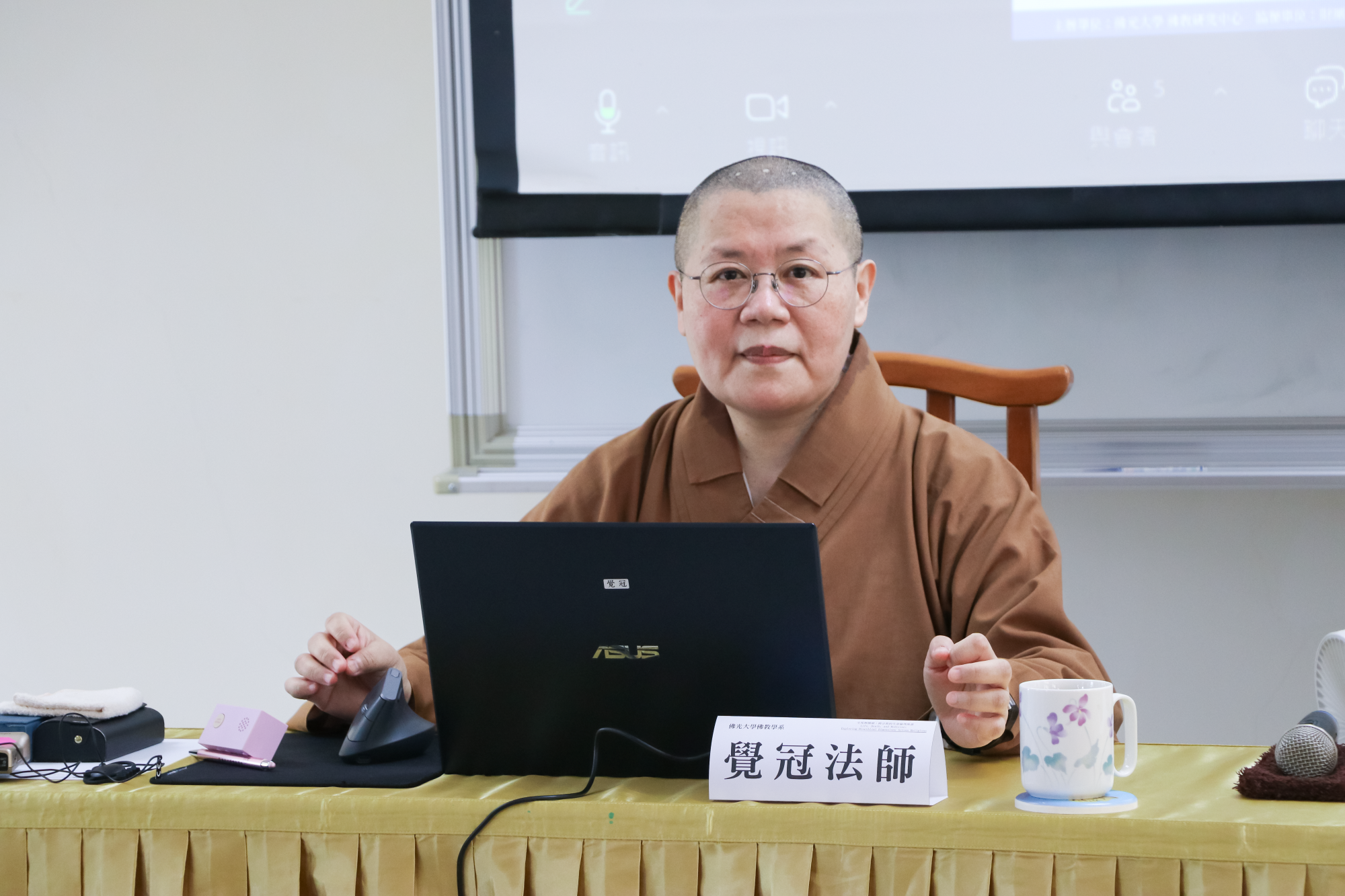
Venerable Jue-Guan shares the Buddhist perspective.
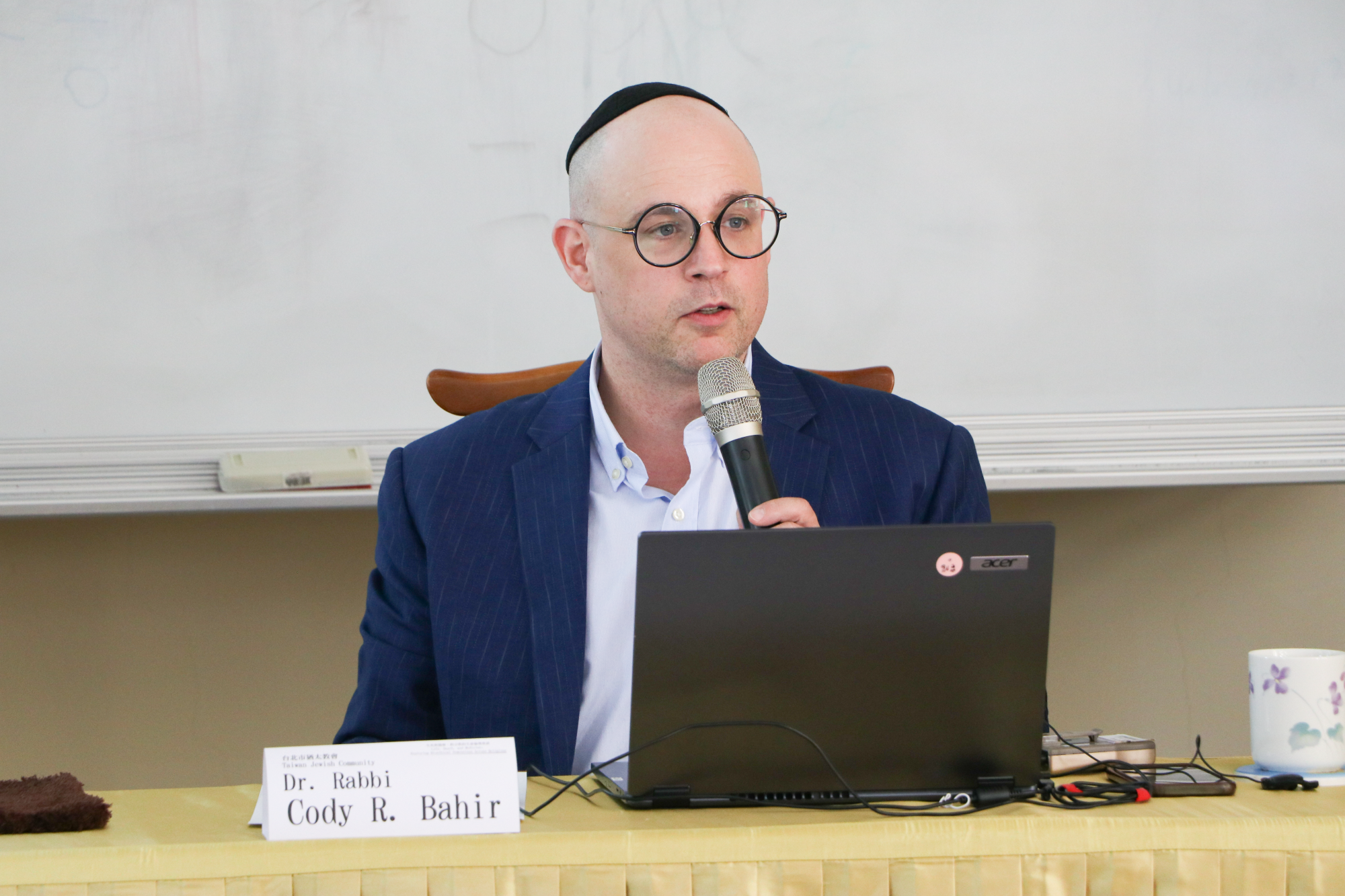
Rabbi Cody R. Bahir shares the Jewish perspective.
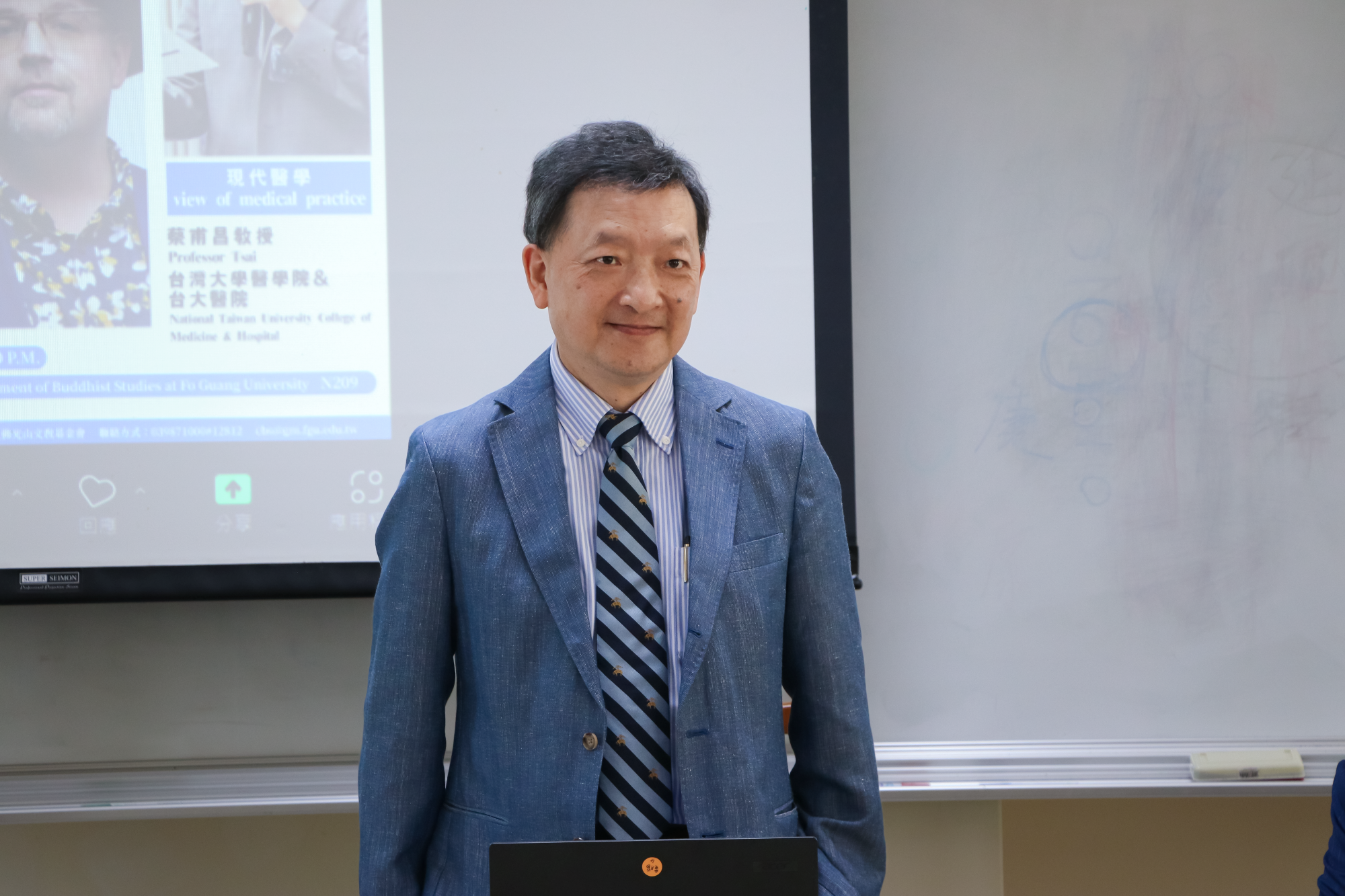
Professor Tsai Fu-Chang discusses modern medicine and presents three case studies.

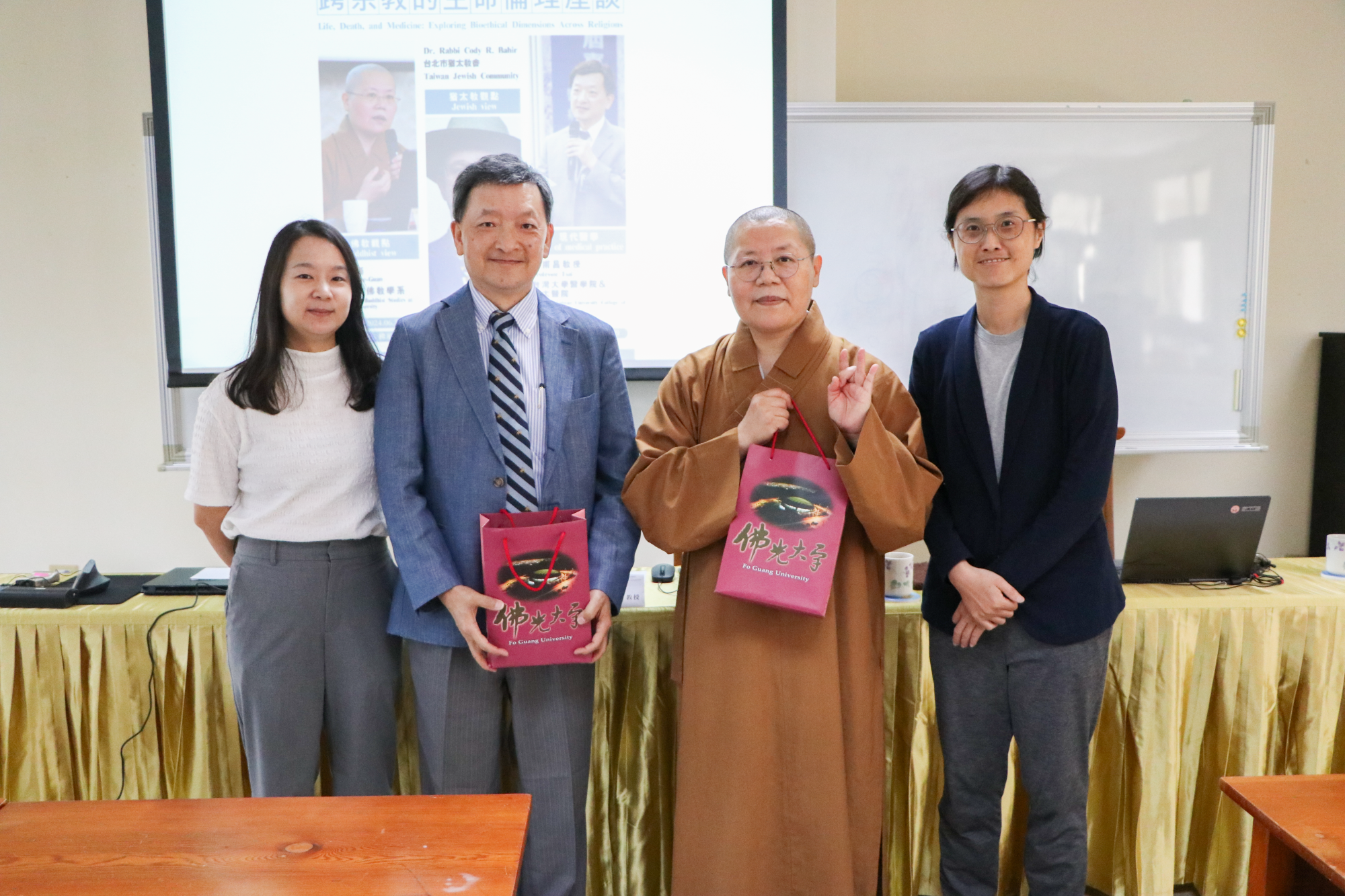 Ms. Lin Hsin-Yi, Executive Secretary of the Center, presents gifts including the Fo Guang Journal of Buddhist Studies to the speakers.