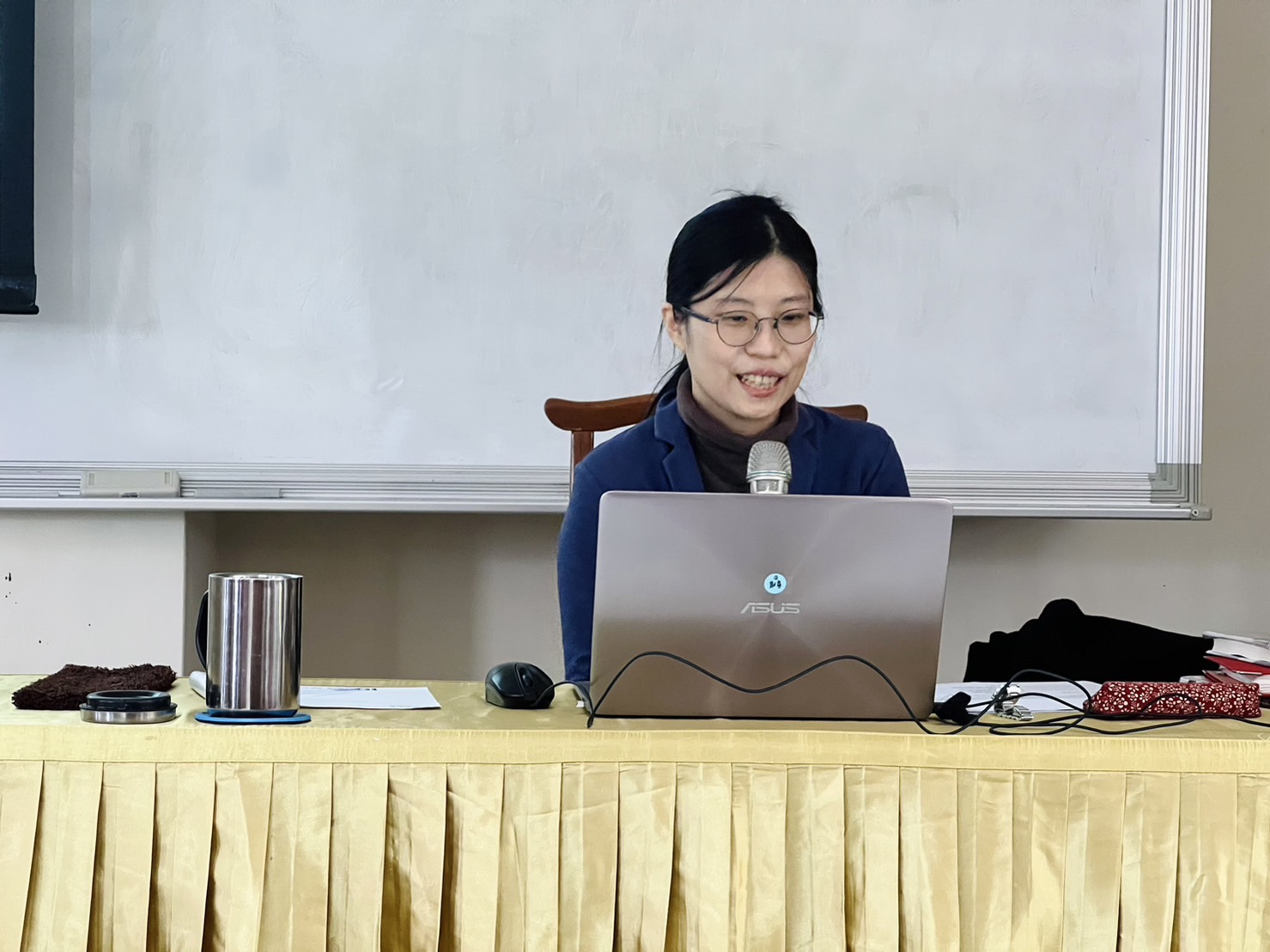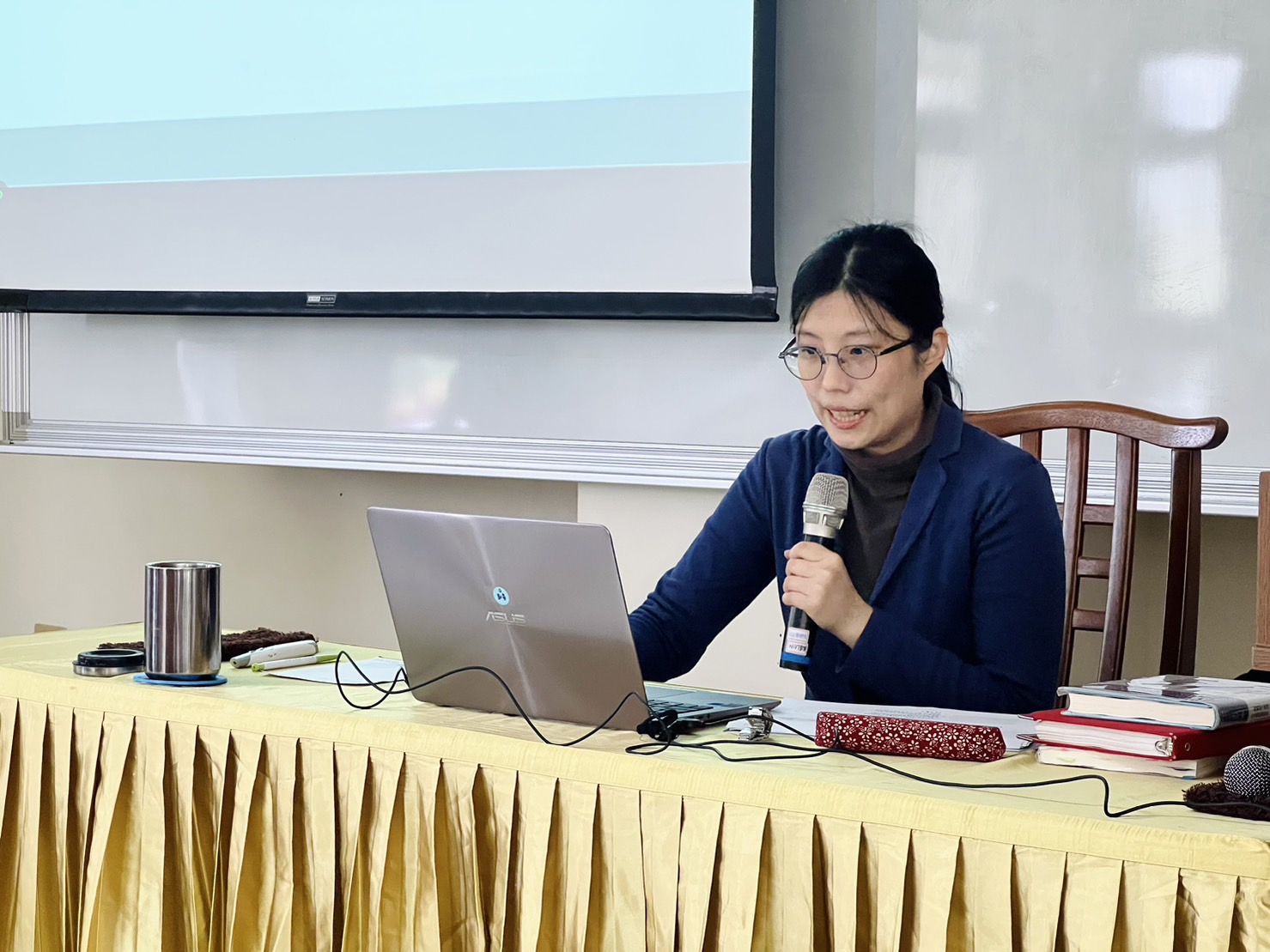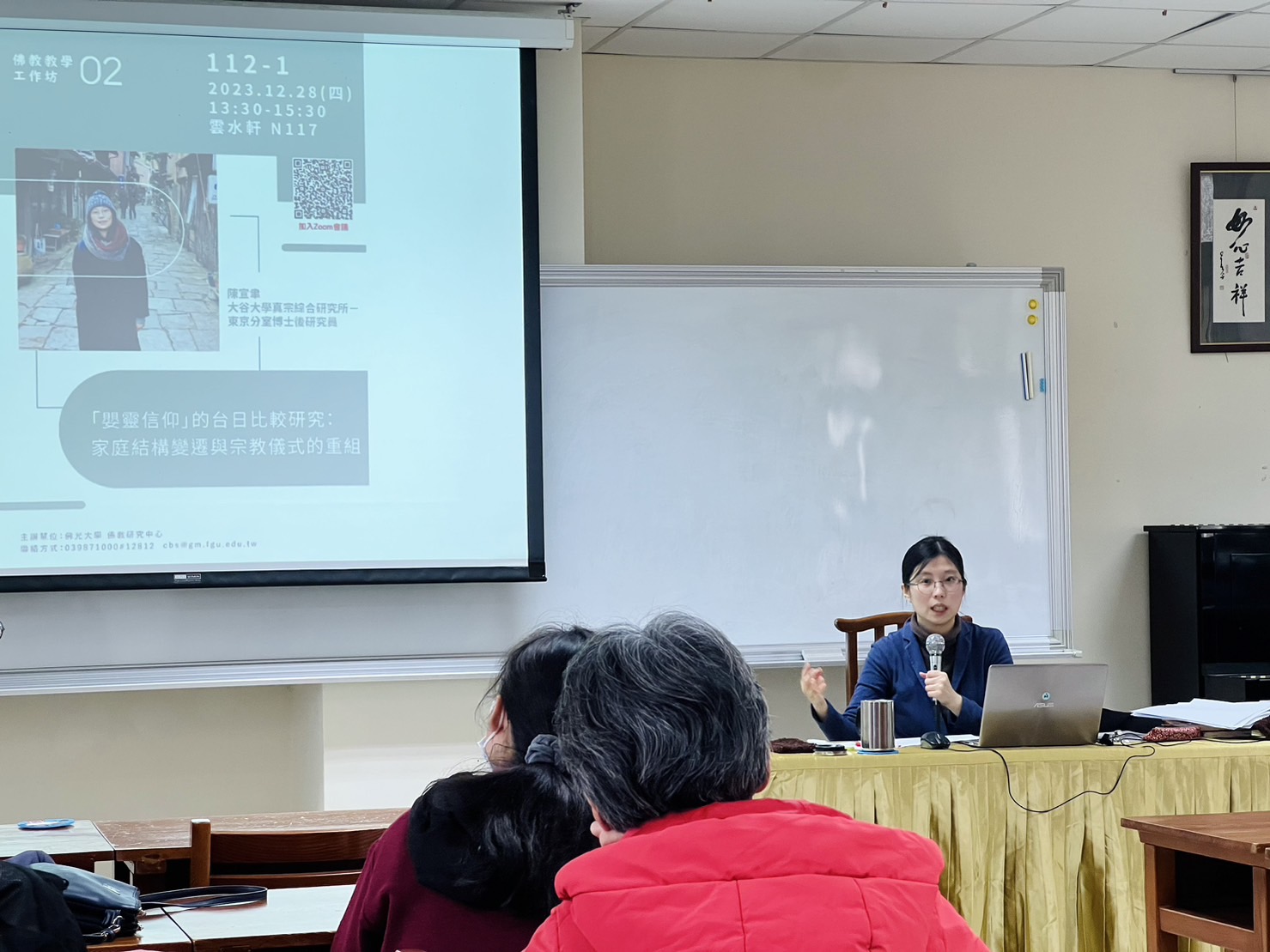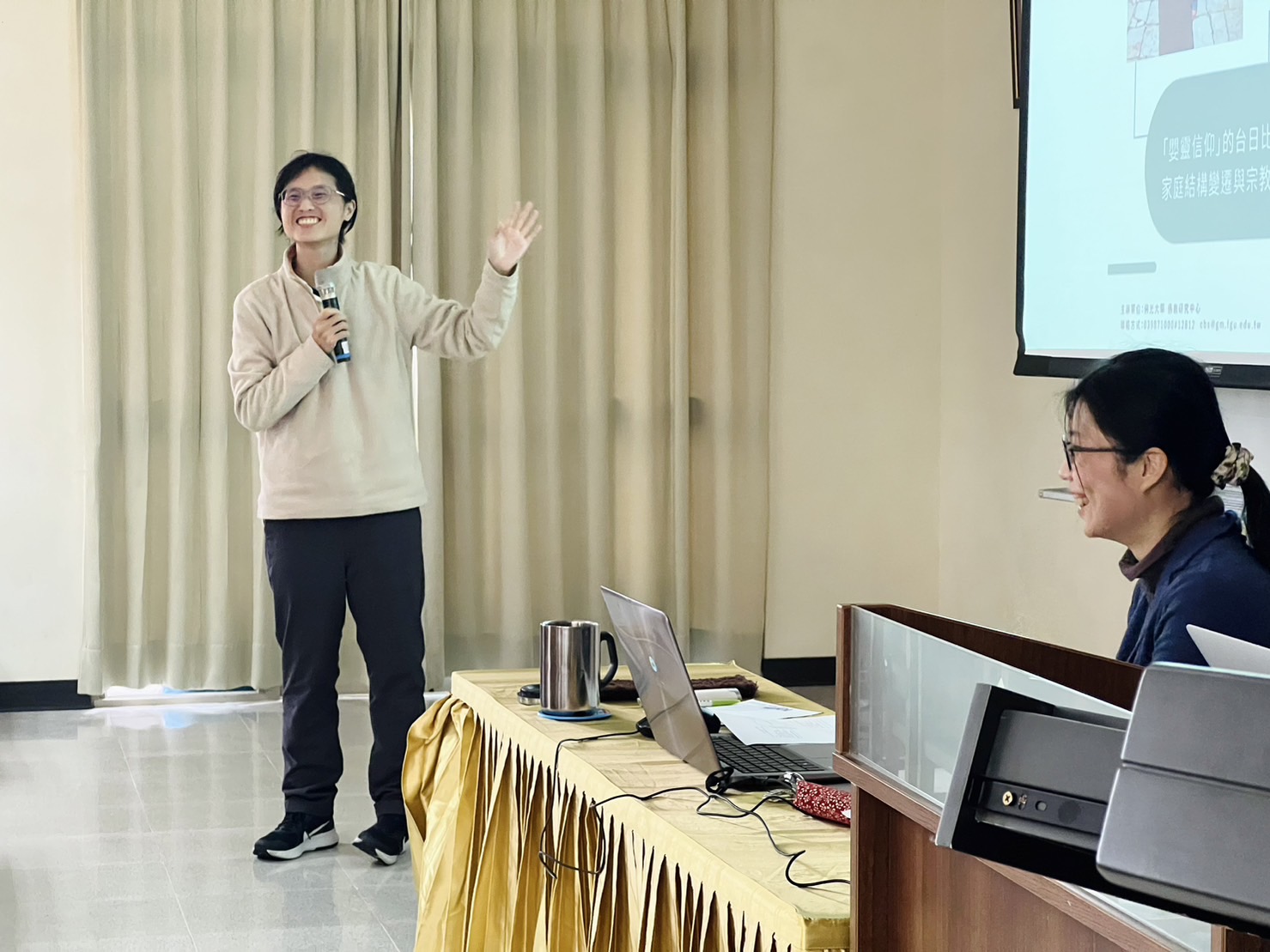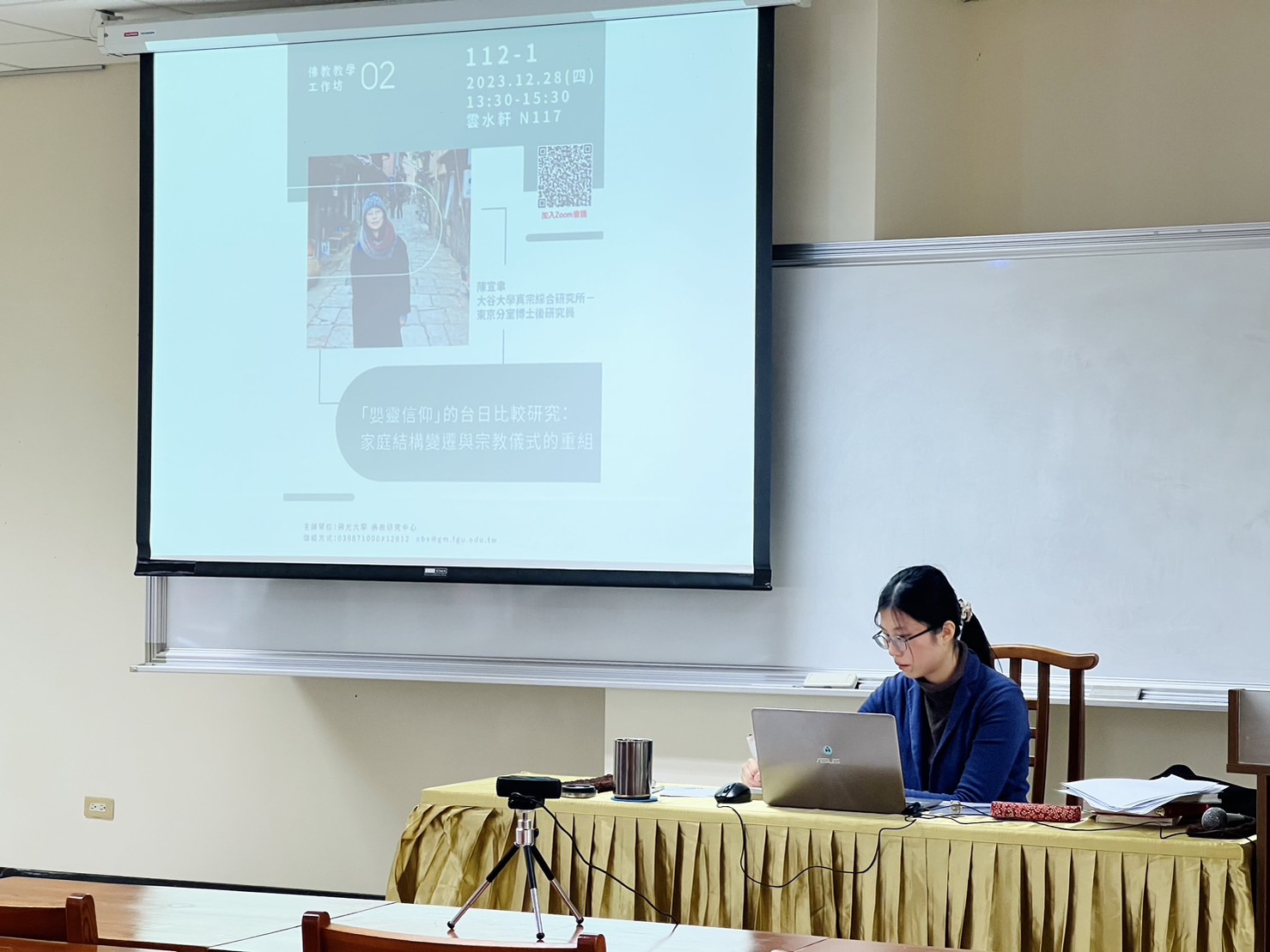

Dr. Chen Xuan-Yu (陳宣聿), a Postdoctoral Researcher at the Shin Buddhist Comprehnsive Research Institute of Otani University, visited the College of Buddhist Studies on December 28, 2023. She delivered a lecture titled "A Comparative Study of 'Infant Spirit Belief' in Taiwan and Japan: Changes in Family Structure and the Restructuring of Religious Ceremonies." This event served as the final expert lecture for the "Buddhist Teaching" workshop of the 112th Academic Year, hosted by the Center for Buddhist Studies at Fo Guang University. The session was introduced by Lin Hsin-Yi (林欣儀), Executive Secretary of the Center for Buddhist Studies, with approximately 40 faculty members and students attending both in-person and online.
Professor Lin Hsin-Yi opened the session by explaining that "Mizuko kuyo" (fetus memorial service) is a practice in Japan for dealing with aborted or stillborn infants. While this topic is rarely studied, the issue of "Yingling" (infant spirits) became widely known in Taiwan during the 1980s following an increase in medical abortions and miscarriages.
Researcher Chen Xuan-Yu stated that her interest in the topic began during her time as an exchange student in Japan. Seeing small Jizo statues (associated with Japanese Mizuko kuyo) in temples reminded her of the infant spirit beliefs in Taiwan, sparking her research intent. She subsequently conducted in-depth fieldwork, visiting temples in Taiwan and sites performing Mizuko kuyo rituals in Japan.
"Infant spirits" (Yingling) refer to the spirits of fetuses from miscarriages, stillbirths, and abortions, as well as neonates who die shortly after birth. Researcher Chen used the Longhu Temple in Miaoli, Taiwan—known as the "Ancestral Temple of Infant Spirit Worship"—as an example. In the morality books (shanshu) published by the temple, one can see depictions of vengeful aborted fetuses. She also noted the theory that "Infant Spirit Belief" in Taiwan actually originated from Japan.
Regarding Japan, she cited the representative Shiunzan Jizo-ji in Saitama Prefecture. Japanese Mizuko kuyo connects the figure of Jizo Bodhisattva with children, evolving into the now-common worship of Mizuko Jizo. This practice originated from offerings made by individuals with personal experiences of abortion for the souls of the aborted fetuses.
Researcher Chen argued that the popularity of infant spirit beliefs is not merely about the "marketing of guilt" or the increase in abortion numbers. Instead, it reflects a shift in the view of fetal life. The reduction in the number of children and changes in family structure have altered life experiences. Amidst the trends of treating pregnancy as a medical condition and the visualization of the fetus (via technology), the image of the fetus has shifted from being an appendage of the mother to an independent entity separate from the maternal body.
This lecture examined the process of the emergence of infant spirit beliefs in Taiwan. In addition to reviewing previous research regarding the theory of Japanese transmission, the discussion returned to the social background concerning the changing views on fetal life.
During the session, students not only asked questions but also shared their own diverse experiences, resulting in a lively exchange with the speaker.
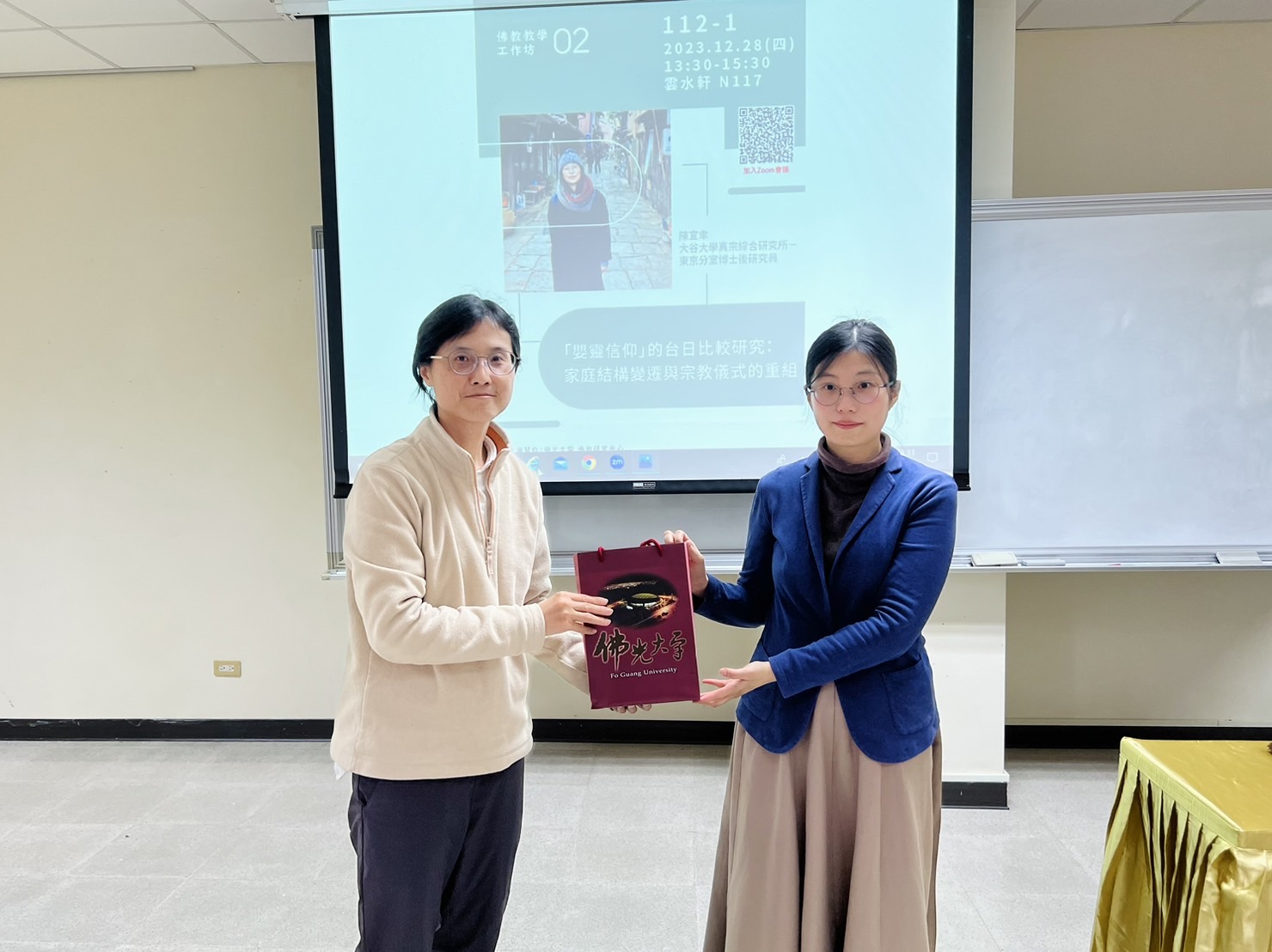
Lin Hsin-Yi (left), Executive Secretary of the Center for Buddhist Studies, presents a souvenir to the speaker, Researcher Chen Xuan-Yu (right).