Can beauty aid in cultivation and liberation? Or does it constitute a form of indulgence and hindrance?
As part of the Fo Guang University Center for Buddhist Studies' 2022-2023 research project "Texts, Action, and Healing: Reading and Interpretation of Buddhist Classics and Practical Education," Professor Johanna Liu, Professor Emeritus of the Department of East Asian Studies at the University of Toronto, was invited to speak at the College of Buddhist Studies on March 8, 2023. She delivered a lecture titled "Shanshui (Landscape), Beauty, and Cultivation." The session was introduced by the project director and Dean of the College of Buddhist Studies, Professor Chao-Shun Guo, with approximately 70 faculty members and students in attendance.
Professor Liu began by introducing the concept of the Anthropocene, a term coined by Crutzen and Stoermer modeled after geological epochs. The term refers to an era shaped by human intrusion and alteration of the world. This concept has gained widespread attention, influencing discussions and reflections across culture, science, politics, and interdisciplinary humanities over the last twenty years.
"If we view the world through anthropocentrism, does the Shanshui (landscape) described by [Master] Huiyuan disappear?" Professor Liu proposed that in the "Anthropocene Turn," landscapes are no longer merely objects to be viewed; instead, they serve as a medium to critique the trauma humans have inflicted upon the earth. Furthermore, advanced technology has allowed previously unseen starry skies and deep seas to enter the global stage, further prompting reflections on landscape and cultivation.
She then discussed "Cultivation" from three perspectives:
-
Self-Cultivation: While it may seem like a confinement of the human being, it can also be viewed as opening another path toward reality.
-
Desire: Desire can be divided into the ability to desire (subjective), the object of desire, and what is desirable. Sentient beings are often trapped by the "object of desire" and cannot escape. However, it is from this very point that one understands "desire" can also refer to life’s most primal energy, which changes with time and space.
-
Redemption: This is the act of freeing oneself from the "object of desire." This process is not achieved overnight but is gradually developed through daily life.
"Redemption is the realization of the aesthetic experience." Professor Liu emphasized that aesthetic experience is not merely a pleasurable experience derived from beautiful forms, nor is beauty the essence of things. Rather, it is the continuous elevation of relationships between people and things, and the realization of a connection with Ultimate Concern, enabling one to step out of the limitations of their inherent existential situation and gain new insights.
Consequently, beauty possesses a paradoxical nature; it always occurs on the edge of self-destruction. As Laozi said, "When all under heaven know beauty as beauty, then there is ugliness." People easily fall into what they perceive to be beauty, but true beauty is a value reconstructed after the destruction of the self. Much like Van Gogh’s paintings, the aesthetic experience exists amidst ambiguous terror. Similarly, in religious beauty, the sacred is presented within a finite world, awing and elevating the individual. "When the holy image of Guanyin becomes a figure of salvation from suffering, the sacred has not departed; rather, it has returned to the ordinary."
Finally, Professor Liu led the audience in reading Master Huiyuan’s Preface to the Poems on Stone Gate by the Monks of Lu Mountain. She pointed out that the landscapes described therein do not correspond to actual physical scenery; instead, they require reading the "ten thousand things" (all phenomena) by stripping away anthropocentrism, serving as an allegory for cultivation.
Huiyuan’s writing presents a journey where nothing specific is seen: "Mist and dust gather, and the myriad forms hide." This highlights that aesthetic experience is not gained by capturing specific scenery, but by a state of merging with the transformation of all things. Aesthetic experience cannot be named by language: "Truly there is flavor within, yet it is not easy to speak of." Beauty is accompanied by joy, yet one does not actively seek it: "Though there is joy, pleasure is not sought; yet there is delight throughout the eternal day." Therefore, cultivation should be joyful.
Only by realizing the Way amidst secluded landscapes can one encounter the beauty found in nature; conversely, if one lingers on the images of scenery, "The Nine Rivers appear like a belt, and the hills become shackles"—all become fetters.
Huiyuan committed the landscapes he saw to writing so that future generations "might realize deeply and reach far." The Preface expresses the sentiments: "Raising my head to the cloud towers, faint as if near the Great Purity" and "Immortals transform along with things; better yet that both are obliterated/obscure." All things are like the void; only by having no attachments can one advance in cultivation.
In conclusion, Professor Guo responded with the imagery from the Avatamsaka Sutra (Flower Garland Sutra): "In a single mote of dust, the great thousand worlds appear." He noted that the process of experiencing all things is cultivation itself. Cultivation is not a solitary endeavor; while the common Buddhist saying of "delivering all sentient beings" seems practically impossible, if one views oneself within a vision connected to the whole through Dependent Origination, one realizes that their own cultivation is intimately linked with all things.
During the session, Assistant Professor Tseng Chih-Mien and Assistant Professor Lin Hsin-Yi of the Department of Buddhist Studies, along with other students and faculty, engaged in exchanges with Professor Liu.
The 7th Interdisciplinary Expert Lecture will be held on April 19, featuring Professor Hsu Sheng-hsin from the Department of Chinese Literature at National Taiwan University. For details, please visit the official website: https://cbs.fgu.edu.tw
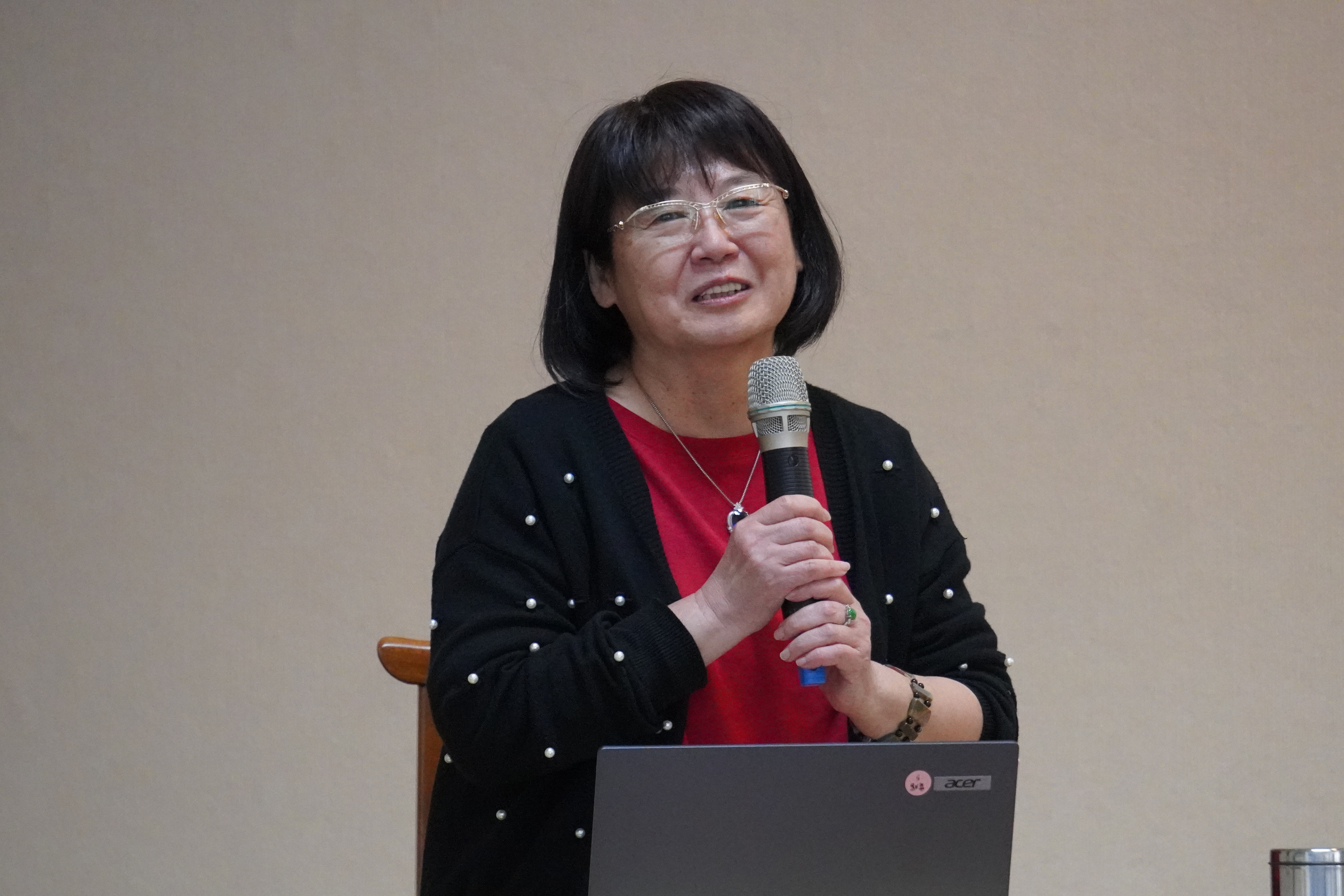
Professor Emeritus Johanna Liu arrives to speak on "Shanshui, Beauty, and Cultivation."
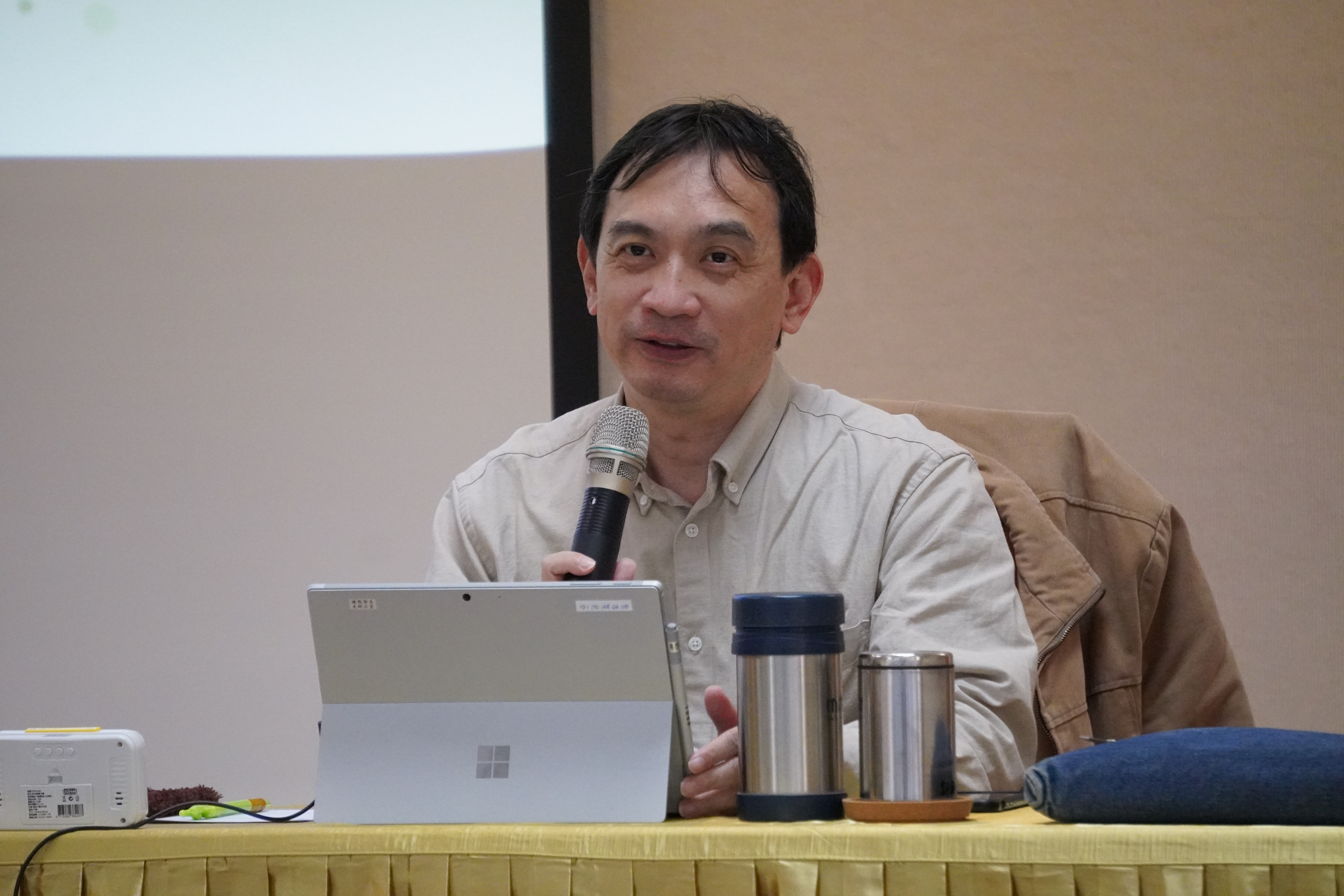
Professor Chao-Shun Guo, Dean of the College of Buddhist Studies at Fo Guang University, serves as the moderator, focusing on the issue of "Can beauty aid in cultivation and liberation?"
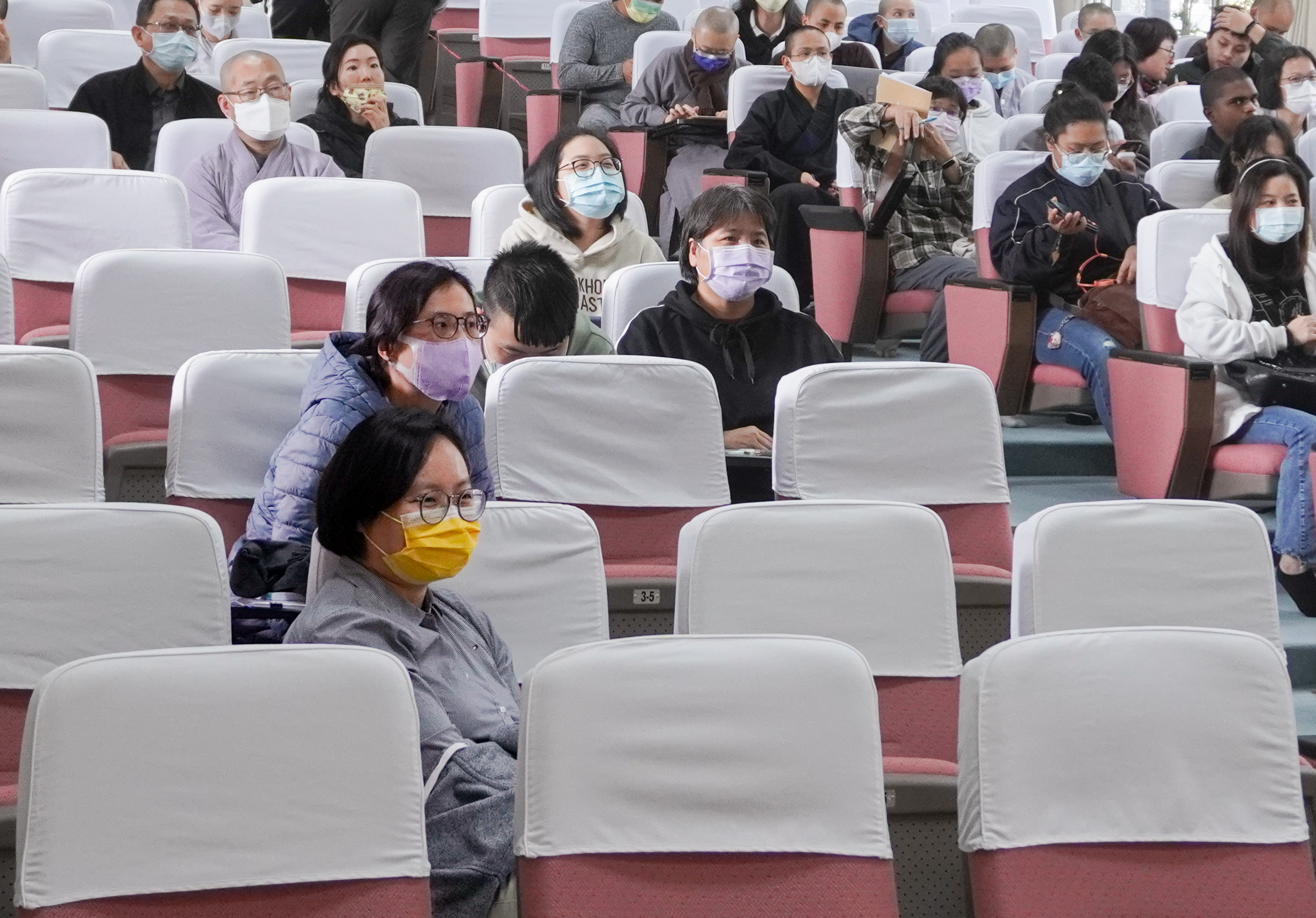
The lecture attracted 70 faculty members and students from both inside and outside the university.
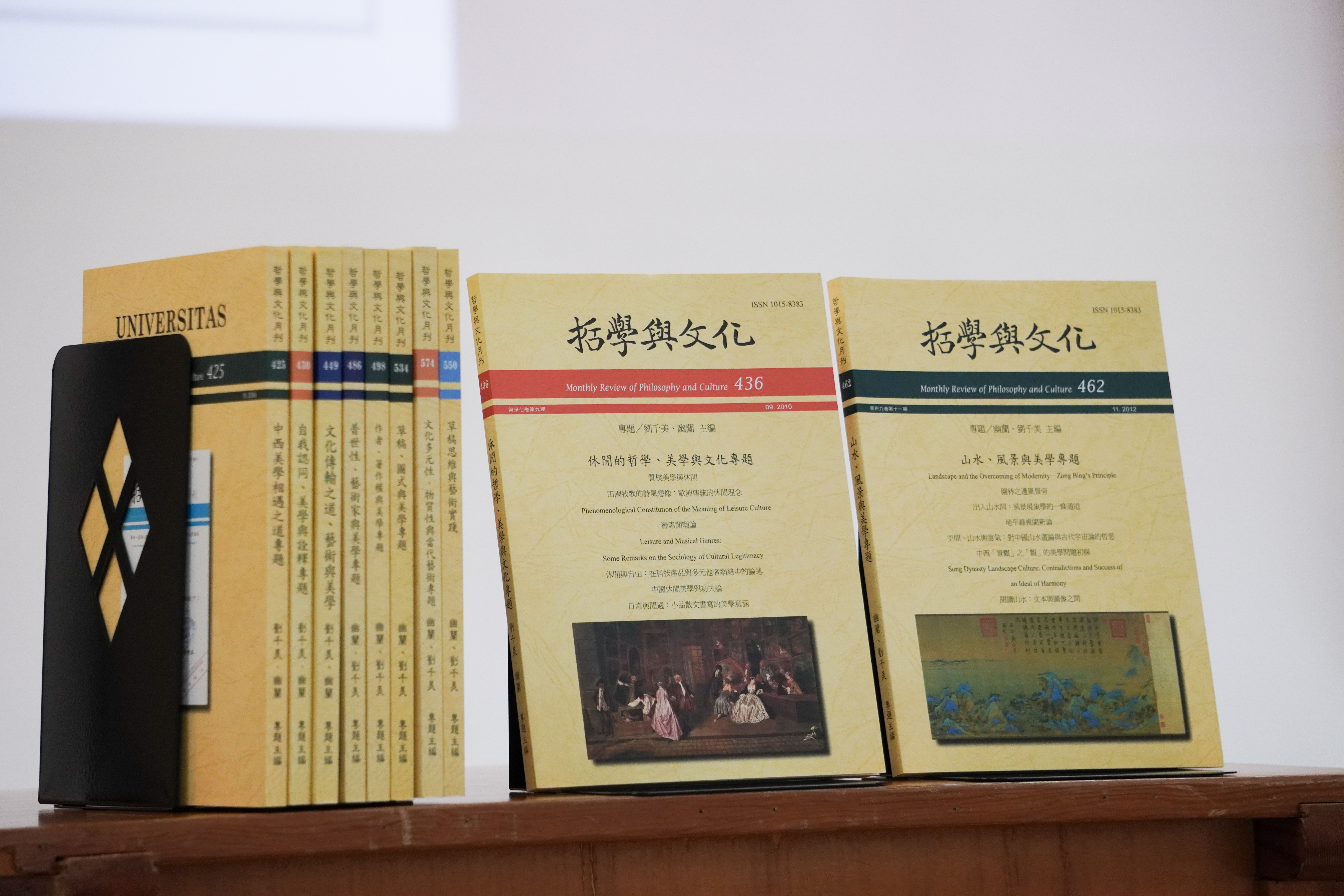
Professor Johanna Liu donates ten volumes of Philosophy and Culture, which she edited.

Professor Chao-Shun Guo presents a gift to Professor Johanna Liu on behalf of the Center.