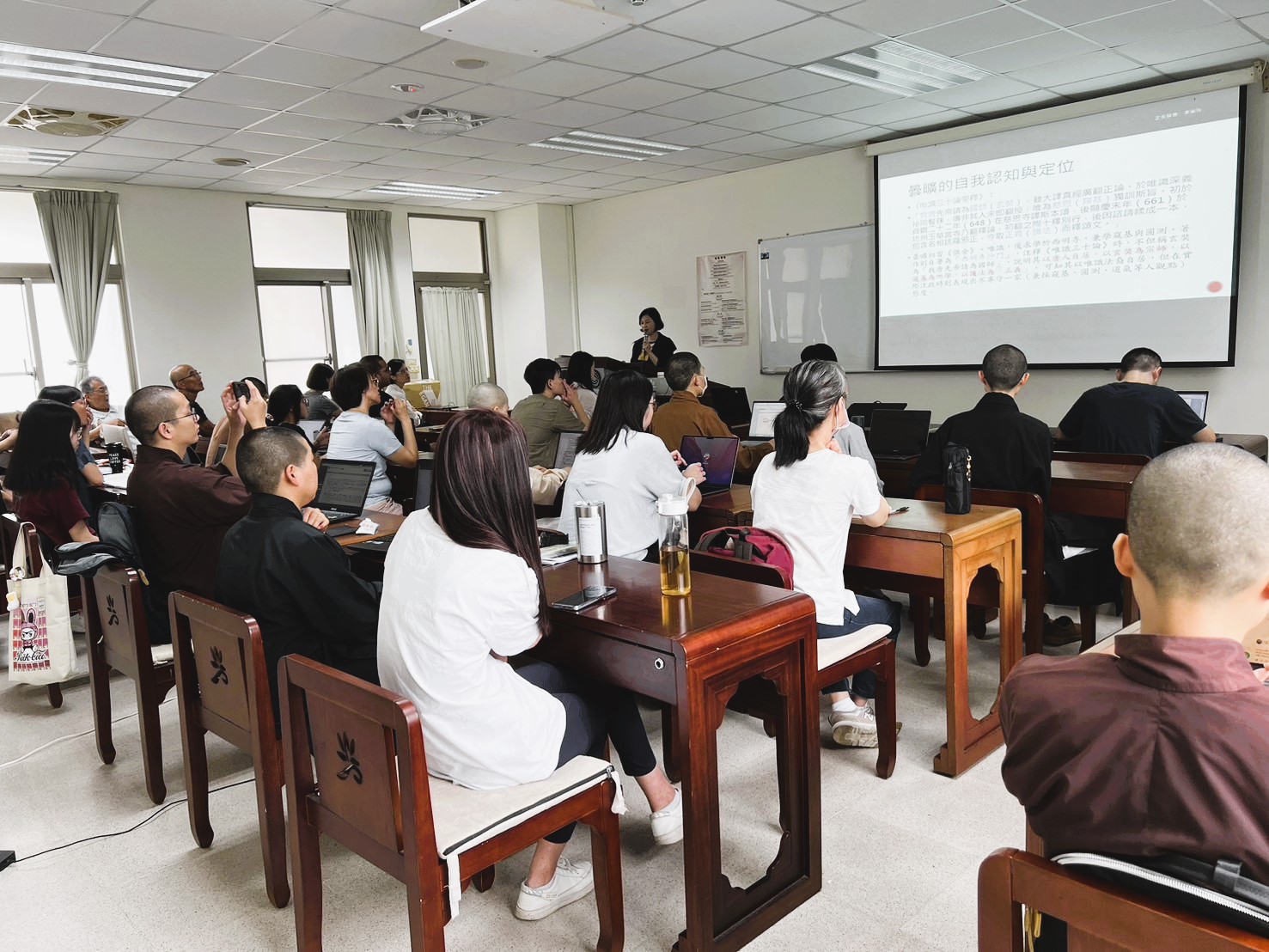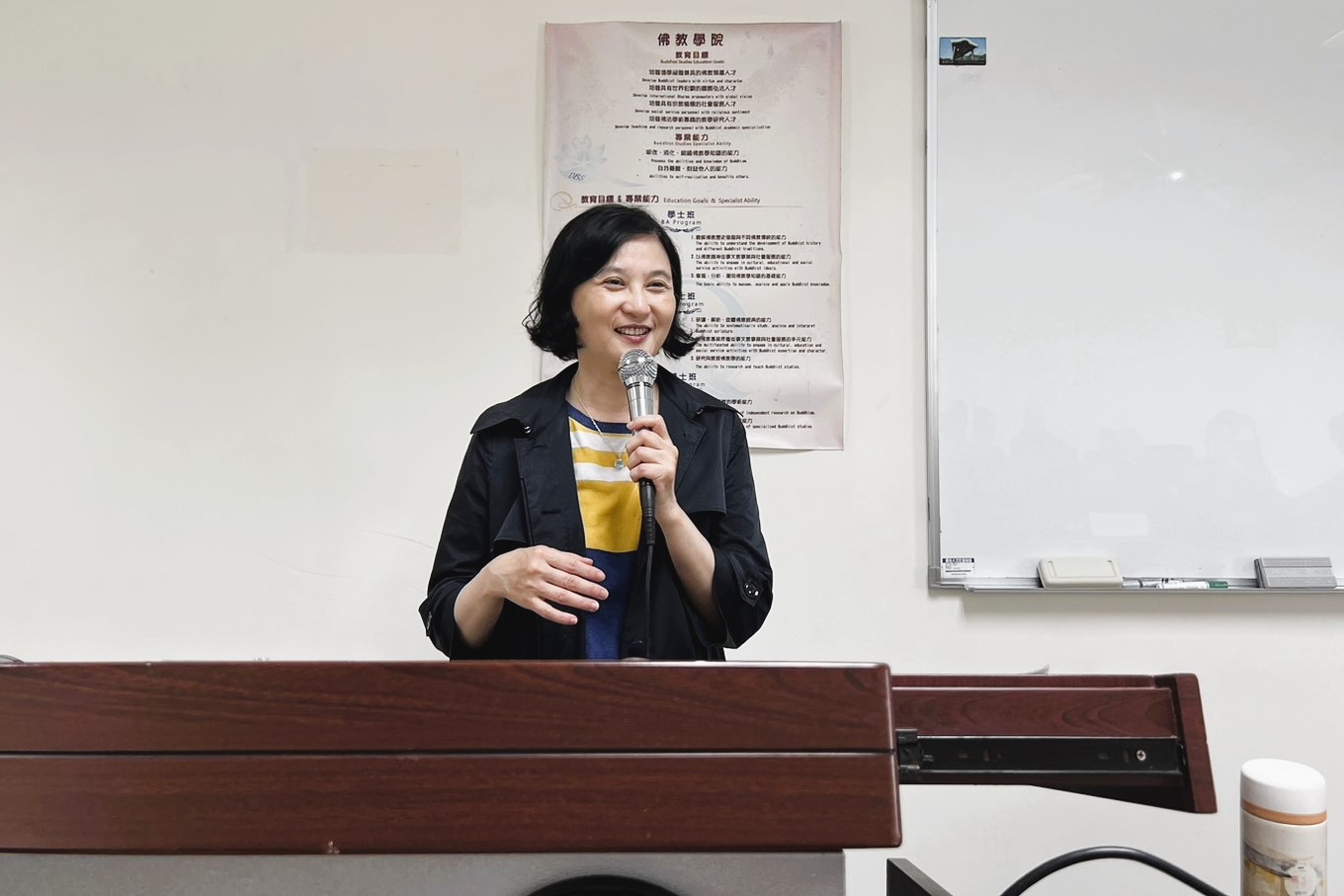
On June 11, as part of the "Buddhist Teaching Workshop" for the 112th Academic Year, the Center for Buddhist Studies at Fo Guang University invited Professor Li Hsing-Ling from the Department of Chinese Literature at National Taiwan Normal University to deliver a lecture titled "Tan Kuang(曇曠), the Yogācāra Scholar in Tang Dynasty Dunhuang Manuscripts." Professor Li, originally a specialist in the Lotus Sutra and hermeneutics who later shifted her focus to Dunhuang manuscript research, addressed an audience of approximately 40 faculty members and students.
The central figure of this lecture was Tan Kuang (曇曠), a monk of the Faxiang法相 ( Yogācāra) School during the Tang Dynasty. Professor Li began by noting that Buddhism flourished in the Tang Dynasty. Tan Kuang, a scholar-monk specializing in doctrinal exegesis (義學 Yi-xue), was one of the most important figures in the history of Buddhist development in the Hexi region and Dunhuang. Another key figure was Fa Cheng, a monk known for translating Buddhist texts between Chinese and Tibetan. Professor Li argued that their influence in the Hexi region and their contributions to Dunhuang studies are comparable to Master Jizang吉藏 (for exegesis) and Master Xuanzang玄奘 (for translation). Both deserve a significant place in the history of the Faxiang School. However, Tan Kuang’s works were not included in historical Chinese Buddhist canons; it was not until the modern era that his works, copied in Dunhuang manuscripts, were compiled into Volume 85 of the Taisho Canon. Consequently, very little was known about this Yogācāra scholar in the past.
Professor Li analyzed Tan Kuang by examining his self-narrated biography found in Dunhuang documents and his surviving works. The manuscripts, written by disciples as they listened to his teachings, reflect the characteristics of translation and commentary studies in the Tang Dynasty, making them incredibly precious research materials.
Professor Li posited that Tan Kuang’s Faxiang thought possessed an inclusive and unconstrained character. Through his commentaries, one can trace the composition of his thought, which incorporates influences from Kuiji, Yuance, Fazang, and Daoyin.
The unearthing of Tan Kuang's works provides an opportunity to rethink certain established conclusions in Buddhist history. For instance, the Dunhuang manuscripts contain Tan Kuang's commentary on the Siksananda version of the Awakening of Faith in the Mahayana, a work dating to the early 8th century. This finding challenges the skepticism of scholars like Lu Cheng and Venerable Yin Shun, who had questioned the authenticity of this version, suggesting it was a forgery by Chan descendants after the 9th century.
Additionally, using texts such as The Gist of the Diamond Sutra and Broad Commentary on the Awakening of Faith as examples, Professor Li explained the standard formats for transcribing Dunhuang scrolls. At the end of the lecture, she provided rich online resources for Dunhuang studies, encouraging more people to join the field of research in the future.
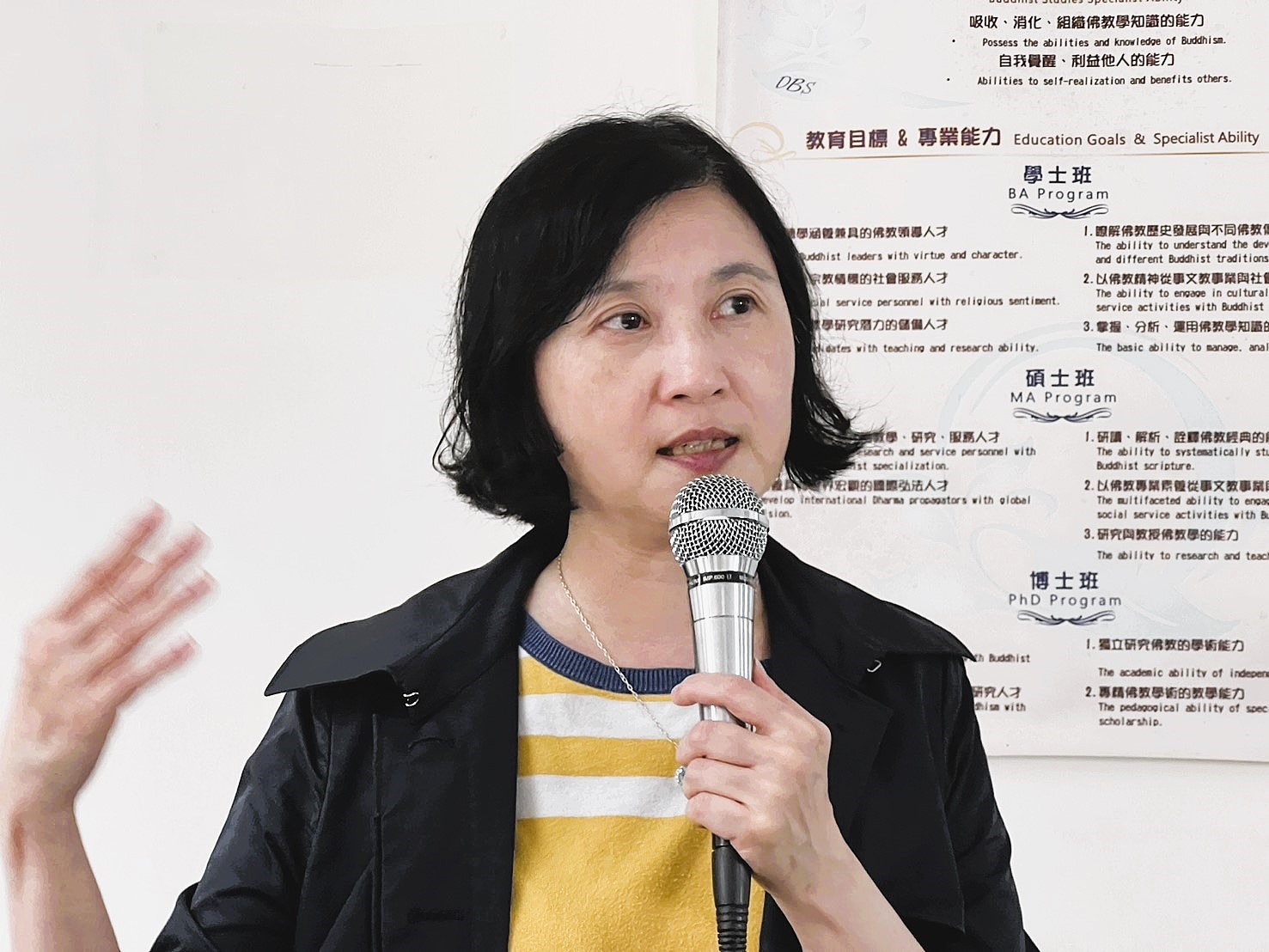
Professor Li Hsing-Ling lectures on "Tan Kuang, the Yogācāra Scholar in Tang Dynasty Dunhuang Manuscripts."
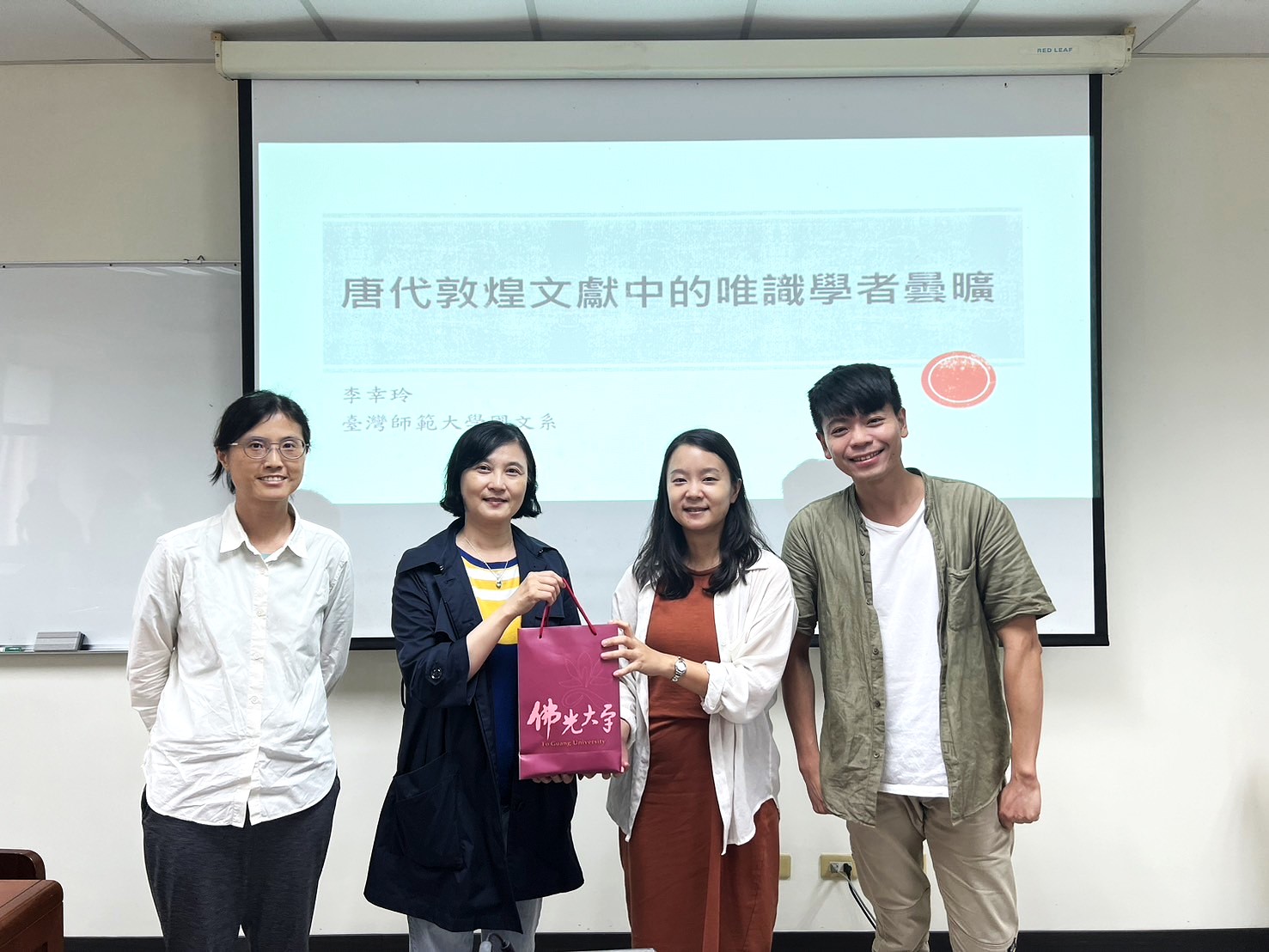
Lin Hsin-Yi, Executive Secretary of the Center (first from left), and Assistant Professor Jian Ru-En of the Department of Buddhist Studies (third from left) present a token of appreciation to the speaker.