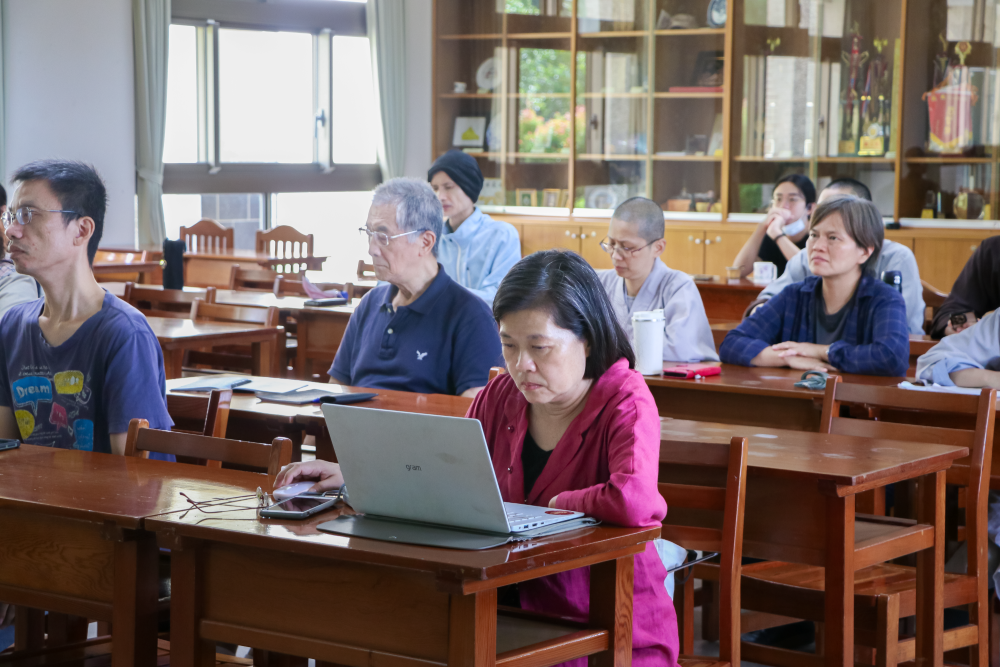
On October 17, 2024, the Center for Buddhist Studies at Fo Guang University hosted a lecture titled "The Dilun School in Dunhuang Manuscripts." The featured speaker was Dr. Liu Tanjing, a Postdoctoral Researcher from the Department of Chinese Literature at National Taiwan Normal University. The event attracted numerous students who gathered to explore the manifestation of the Dilun School (Dasabhumika School) in Dunhuang manuscripts and its impact on the development of Buddhist thought.
Dr. Liu’s research focuses on the core doctrines of the Dilun School and their evolution from the Northern and Southern Dynasties through the Sui and Tang periods, specifically the divergence and ideological characteristics of the Northern and Southern Dao factions. Through the analysis of Dunhuang documents, he provided an in-depth discussion of key concepts such as Tathagatagarbha (Buddha-matrix), Alayavijnana (Storehouse Consciousness), and Dharmadhatu-pratityasamutpada (Dependent Origination of the Dharma Realm). He also compared the differing standpoints of the Dilun School and the Shelun School (Samgraha School), clarifying how these schools influenced the theoretical construction of Buddhism during that era.
During the lecture, Dr. Liu introduced his methodology for researching Dunhuang manuscripts, emphasizing the importance of textual organization and philological verification. He detailed the challenges and breakthroughs encountered in his study. For example, the content and authorship of many Dunhuang documents are unclear, making it difficult to determine if specific manuscripts belong to the Dilun School. To address this, he employed methods such as analyzing lineages, the usage of terminology (mingxiang), and ideological stances to identify the scholastic affiliation of the documents.
Dr. Liu further pointed out distinct ideological differences between the Northern and Southern Dao factions. The Southern Dao faction placed greater emphasis on Tathagatagarbha and the theory of Dharma-realm Dependent Origination, asserting that the Buddha-nature of sentient beings and the Tathagatagarbha are the root of all dharmas. Conversely, the Northern Dao faction tended to center on Alayavijnana, emphasizing that Alayavijnana generates dharmas. These differences not only reflect the internal ideological division within the Dilun School but also laid the foundation for the development of later Buddhist schools.
At the conclusion of the lecture, Dr. Liu presented his latest research findings—an analysis of Dilun School literature in the form of Yi-zhang (Doctrinal Compendiums). By comparing the terminology used in these compendiums, he discovered eight instances of shared terminology and highlighted the critical role these terms play in the doctrinal interpretation of the Dilun School. This research serves to supplement content missing from transmitted (received) texts, further deepening the academic community's understanding of Dilun School thought.
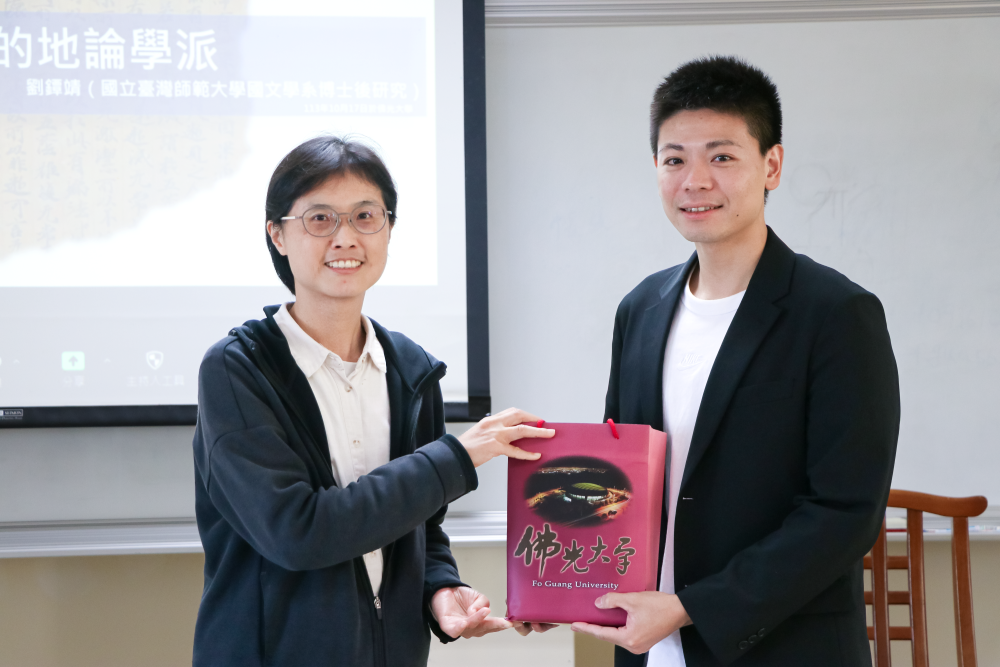
Lin Hsin-Yi, Executive Secretary of the Center for Buddhist Studies at Fo Guang University (right), presents the Center's journal as a gift.
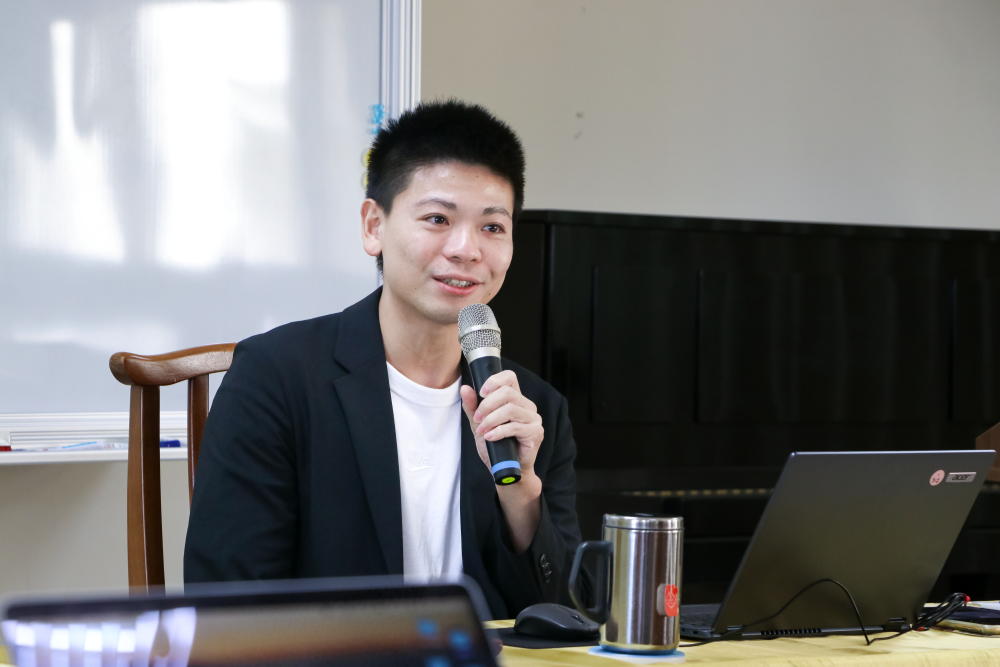
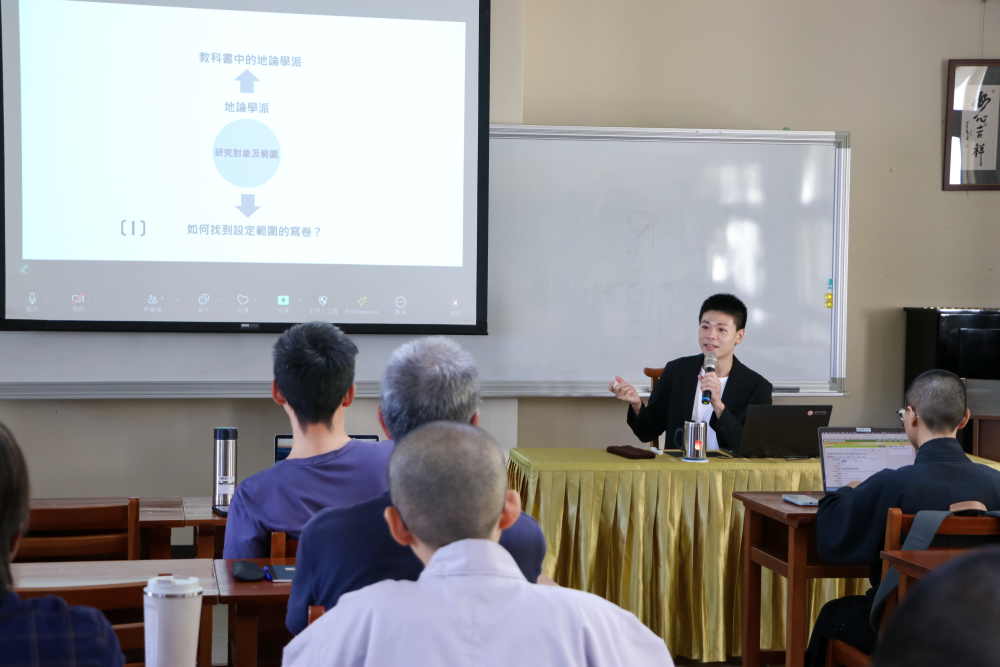
Dr. Liu Tanjing, Postdoctoral Researcher at the Department of Chinese Literature, National Taiwan Normal University, begins the lecture by introducing the Dilun School.